

For 2026 budgeting in San Antonio, plan excavator equipment hire pricing in three bands (bare machine, no operator): mini excavators commonly land around $180–$400/day, $580–$1,300/week, and $1,300–$3,600 per 4-week period depending on operating weight, tail swing, and whether the quote is a published rate sheet versus an account-specific contract. Published examples include a 3,500 lb mini excavator at $218.50/day, $584.25/week, $1,296.75/4-week and a 6,000–7,500 lb mini at $232.75/day, $622.25/week, $1,344.25/4-week on a Sunbelt price sheet, while another published sheet shows a 3,500 lb mini at $180/day, $720/week, $2,150/month and a 7,500 lb mini at $325/day, $1,300/week, $3,600/month. For full-size track excavators, published examples include 30–34K class at $622.25/day, $1,596.00/week, $3,367.75/4-week and 45–49K class at $631.75/day, $1,952.25/week, $4,759.50/4-week. As a market cross-check (not a guaranteed quote), DOZR reports San Antonio marketplace averages of about $421/day, $1,295/week, and $2,811/month across mixed excavator sizes. National providers (for example, United Rentals, Sunbelt Rentals, and Herc Rentals) and strong regional independents in the I-35 corridor can all support San Antonio excavator rental; final equipment hire cost typically moves more on freight, attachments, and run-time than on the base day rate.
| Vendor | Daily Rate | Weekly Rate | Review Score | Website |
|---|---|---|---|---|
| Sunbelt Rentals | $770 | $2 155 | 9 | Visit |
| United Rentals | $704 | $1 810 | 9 | Visit |
| Herc Rentals | $514 | $1 534 | 8 | Visit |
San Antonio excavator hire rates are usually negotiated around (1) machine class and configuration, (2) billing period and included run-time, (3) attachments and wear items, and (4) logistics (delivery, pickup, and off-rent rules). Because Bexar County projects often combine tight residential access with hard caliche/limestone conditions, it is common to see the “real” rental cost swing by 25%–60% once you add a hydraulic thumb, breaker, and freight versus a straight bucket-only mini excavator dropped at the yard.
Even within “mini excavator rental,” your equipment hire cost changes materially between a 3,500 lb unit for utility trenching and a 7,500 lb unit that can carry larger buckets and handle rockier spoils. Published examples show that a step up in class can add $50–$150/day in many markets, and San Antonio is no exception when fleet availability tightens seasonally. If your scope needs a reduced-tail-swing (RTS) machine for fenced backyards or commercial infill, budget a premium versus a conventional tail unit, and confirm bucket pin size so you do not pay “emergency swap” freight mid-job.
Most professional excavator equipment hire agreements treat the base rate as one-shift usage. United Rentals states that rental rates are for normal “one-shift” usage based on 8 hours/day, 40 hours/week, and 160 hours per four-week period, and also notes that rental charges accrue during Saturdays, Sundays, and holidays. Herc’s terms similarly describe one-shift maximums (8/40/160) and specify overage billing math (see below). If you are planning a second shift (or weekend production) to beat schedule, treat the excavator as a metered cost item, not a “flat weekly” cost.
Operational note for San Antonio: heat and concrete/utility phasing frequently push contractors into early starts plus late finishes. If your operator runs 10–11 hours/day during a peak week, confirm the rental house’s “double shift” rules before the machine shows up. United’s terms describe multipliers of 1.5x for double shift and 2.0x for triple shift.
Use the bands below as planning ranges for excavator equipment hire costs in San Antonio in 2026. These ranges assume a credit-approved contractor account, normal wear and tear, and no specialty buckets included. Where you see “4-week,” that aligns to common rental billing cycles even when the field team says “monthly.”
Reality check: If you are getting a surprisingly low base rate, verify whether the quote is a “published contract schedule” that assumes specific delivery terms, limited included hours, or excludes standard surcharges. Conversely, if your base rate looks high, confirm whether a bucket, thumb, or hydraulic coupler is bundled.
Attachments are one of the fastest ways an “excavator rental San Antonio” budget blows up, especially for limestone, demolition, or trench safety requirements. Published examples:
San Antonio-specific consideration: caliche/limestone pockets can turn “standard trenching” into “breaker-required” within a single lot. If your geotech is uncertain, carry a contingency line for a hammer for at least 2–3 days even if you do not pre-order it (because same-day mobilization freight can cost more than the attachment itself).
Freight is frequently the largest non-obvious line item for excavator equipment hire. A published Sunbelt sheet shows a delivery structure of $120 each way + $3.25 per loaded mile for listed equipment categories, which illustrates the “base + mileage” freight model many branches use. A San Antonio-area provider advertises flat delivery tiers such as $75 each way (0–15 miles), $125 each way (16–30 miles), and $175 each way (31–50 miles).
Off-rent timing matters: United Rentals’ terms state that rental charges end when the equipment is returned during business hours or picked up after the customer notifies United that the equipment is “off rent” and obtains an off-rent confirmation number. In practical terms, your field supervisor’s “we’re done with it” does not stop billing until dispatch confirms off-rent and pickup is scheduled. For San Antonio projects with tight downtown access or base restrictions (e.g., near Lackland/Fort Sam areas), pickup windows can slip, so build the process into your closeout plan.
Use this list to pressure-test your excavator rental quote and prevent avoidable add-ons. (Fees vary by vendor and account; treat these as common cost drivers to ask about, not guaranteed charges.)
Scenario: A site utility crew needs a 3,500–6,000 lb mini excavator for 10 calendar days to trench for conduit and a short water tie-in on the north side of San Antonio. The job has HOA noise limits, so production is 7:30 a.m.–4:30 p.m., but there is one Saturday push to make inspection. Access is through a 36-inch gate, so you specify a compact unit with rubber tracks and confirm bucket width before delivery.
Result: For this type of field reality, the difference between a controlled rental (planned freight + planned off-rent + controlled attachments) and an uncontrolled rental (late pickup + surprise hammer + over-hours) is often $900–$2,500 on a short-duration mini excavator hire in San Antonio.
Use these line items as an estimator/rental coordinator checklist for excavator equipment hire costs in San Antonio (adjust quantities and rates to your scope):
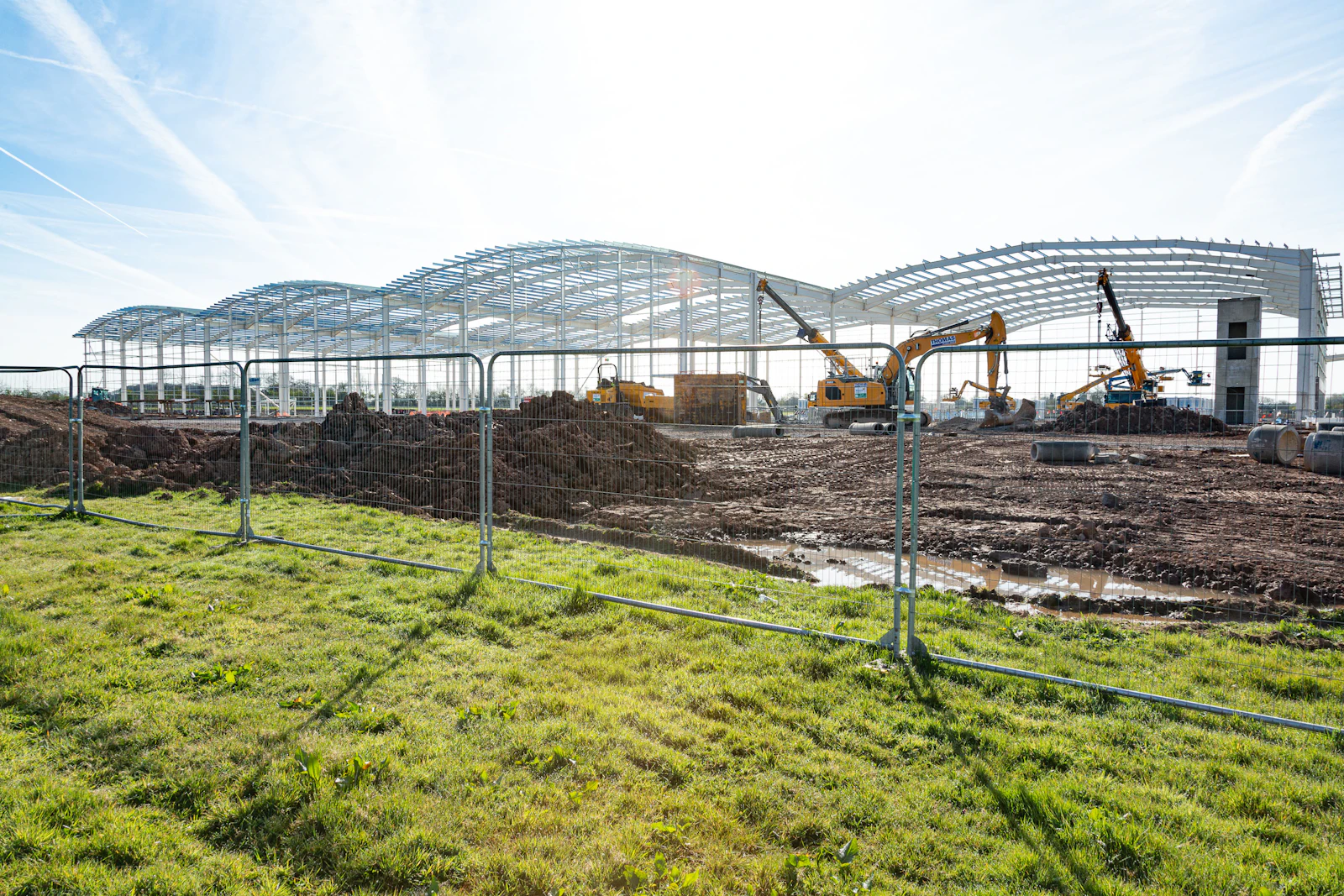
San Antonio projects commonly introduce three local realities that shift excavator rental cost even when the published day rate looks competitive: (1) broad metro geography (jobs in Helotes, Schertz, Converse, New Braunfels corridor), (2) hard material variability (caliche/limestone lenses), and (3) delivery/pickup constraints in dense areas (downtown access, staged lanes, school zones, base-adjacent security). These factors tend to show up as freight, attachment days, and “kept it two extra days” billing rather than as a higher base rate.
If your schedule has uncertainty, a weekly or 4-week term often protects you from expensive “extension by the day” behavior. Many rental models effectively follow a “week is cheaper than 5+ days” logic; marketplace guidance notes weekly and monthly rates can materially reduce effective day cost. If you routinely run into inspection delays, the cheapest excavator equipment hire strategy is usually to secure the lower term early, then off-rent as soon as the machine is no longer production-critical.
When the field asks for “just two extra hours,” that can become an over-hours invoice line item. Herc’s terms describe overage being billed at 1/8 of the daily, 1/40 of the weekly, and 1/160 of the 4-week charge (plus tax) once you exceed one shift usage. For San Antonio summer work, where idling with AC and frequent repositioning are normal, plan a buffer of 10%–15% over-hour contingency if you are near the included-hour limits.
Even when the excavator is towable (small minis), delivery still matters because your operator time is expensive and jobs are spread out across the metro. If a vendor uses a base-plus-mileage model like $120 each way + $3.25 per loaded mile, a 25-mile one-way delivery can add roughly $201.25 each way in mileage alone (25 x $3.25), plus the base, before you consider after-hours or failed-delivery charges. If the vendor uses flat zones similar to $75/$125/$175 each way by distance, you can often reduce cost by staging equipment to a nearer yard or aligning multiple drops/picks in one corridor day.
Dispatch cutoffs: many branches treat requests after mid-afternoon as next-day at best. If you must have a same-day swap (e.g., bucket pin mismatch), carry an allowance for an “expedite” of $150–$300 plus incremental mileage.
Most rental agreements incentivize “full out / full in” and clean returns, but the field reality in San Antonio is caliche fines and sticky clay that pack tracks quickly after rain, plus concrete splash on curb/gutter work. United’s terms describe a refueling service charge when the machine is returned not full. Herc’s terms reference cleaning charges for equipment returned with excessive dirt/concrete/paint.
In San Antonio, a breaker/hammer is the most common “surprise” attachment. Published examples show a mini-class hydraulic hammer at $251.75/day, $636.50/week, $1,448.75/4-week. If your work only needs hammering for a short interval, it can be cheaper to (a) schedule hammer days tightly, or (b) subcontract a specialized rock trenching crew for 1 day rather than carrying the hammer idle for 4–6 days. Conversely, if you have recurring limestone hits across multiple pads, renting the hammer for a full week often beats repeated mobilization and freight.
From a rental coordinator’s perspective, the “own vs hire” decision in San Antonio usually hinges on utilization consistency and transport readiness. If you are renting the same mini excavator for 18–26 weeks/year across multiple crews, your annualized rental time charges can approach the cost of ownership once you add freight and damage waiver. If your utilization is spiky (stormwater repairs, emergency utility hits, short-duration trenching), excavator equipment hire stays economically favorable because you avoid idle depreciation and maintenance scheduling.
Use these as internal allowances (verify per vendor contract):
If you want, share the target excavator size (e.g., 3.5-ton mini vs 20-ton track excavator), expected duration, and whether a thumb/hammer is required; the budgeting approach above can be tightened into a quote-ready cost model with the right allowances for San Antonio freight and off-rent behavior.
