

For retaining wall construction in San Antonio, 2026 mini excavator equipment hire typically plans in the following indicative ranges: about $200–$500 per day, $640–$1,800 per week, and $1,700–$4,750 per 28-day “month” (often billed as a 4-week rate). Expect the tighter end of the range on smaller 1–2 ton minis for access-constrained backyards and the higher end on 4–6 ton (and larger) machines when you need reach, lift, and breakout in caliche/limestone soils. National rental houses and strong regional yards both compete in the metro; your delivered, all-in cost is usually driven less by the base rate and more by freight, waiver/insurance, and the attachment package (thumb, buckets, breaker) required to build a wall efficiently.
| Vendor | Daily Rate | Weekly Rate | Review Score | Website |
|---|---|---|---|---|
| United Rentals | $425 | $1 700 | 9 | Visit |
| Sunbelt Rentals | $410 | $1 640 | 9 | Visit |
| Herc Rentals | $395 | $1 580 | 8 | Visit |
| The Home Depot Tool & Truck Rental (Compact Power) | $360 | $1 440 | 8 | Visit |
| HOLT CAT Rental | $450 | $1 800 | 9 | Visit |
2026 planning ranges by common size class (machine-only, before freight/fees):
These ranges are best used for budgeting and bid estimating; confirm your quote’s included bucket(s), hour meter allowance, and delivery window.
Retaining wall construction pushes mini excavator rental cost upward when you need (1) material handling precision (block, boulders, timbers), (2) drainage trenching behind the wall, and (3) tighter grade control for base prep. In practice, that often means a 2–4 ton unit at minimum, frequently a 4–6 ton for commercial wall sections or where you’re reaching over existing improvements. The cost impact is usually in the accessory and productivity items rather than the bare machine: a hydraulic thumb (or clamp) to place rock and handle pipe, a grading/ditching bucket for shaping base and backfill, and sometimes a breaker for caliche/limestone lenses. Budget adders are commonly (planning allowances): hydraulic thumb $75–$150/day, $225–$450/week, $600–$1,200/4 weeks; grading bucket $35–$75/day; and quick coupler $25–$45/day when you’re switching buckets frequently. (Confirm whether the yard bundles any of these into a “retaining wall package.”)
Access also drives your rate class selection. A “cheaper” 1–2 ton mini may fit through a 36 in. gate, but if it adds 2 extra days of production, the weekly rate advantage disappears fast. Conversely, if the site has a narrow drive and finished flatwork, paying a bit more for rubber tracks, a zero-tail swing configuration, and track mats can reduce damage risk and avoid cleaning/repair back-charges later.
Most professional rental schedules still assume shifts and meter hours, even when quotes present as day/week/4-week. A common framework is: 1 day = one 8-hour shift in a 24-hour period; 1 week = five 8-hour shifts over seven days; 1 month = twenty 8-hour shifts over 28 days. If your retaining wall scope requires extended days (e.g., concrete footing pour cutoffs, inspection timing, or limited neighborhood work windows), clarify the overtime billing rule in advance so you don’t discover it on invoice.
Billing details that routinely move totals by 10–30% on mini excavator equipment hire: (a) weekend/holiday counting (some yards treat Saturday as a billable day even if operations are limited), (b) off-rent procedure (whether charges stop when you call off-rent versus when the unit is physically picked up), (c) minimum rental terms for delivered equipment (often 1-day minimum, sometimes 2-day minimum during peak demand), and (d) meter-hour caps before overtime (frequently after 8 hours/day, 40 hours/week, or 160 hours/4 weeks—confirm on the quote). For San Antonio projects, delivery windows also matter: missing a 2–4 hour delivery/pickup window can trigger extra standby freight, an additional trip, or an extra day’s rent if the machine can’t be retrieved before cutoff.
Delivery / pickup (freight): In the San Antonio metro, a per-trip fee is typical and is often distance-based. As a 2026 planning range, budget $75–$200 each way for in-metro moves; confirm the yard’s “local” mileage radius and whether the freight line includes both delivery and pickup or is quoted per leg. For estimating, also carry a contingency for out-of-zone mileage (commonly $4–$8/mile beyond the included radius) and tight time windows (after-hours or weekend freight surcharges often run $75–$150).
Damage waiver / rental protection: Many yards apply a damage waiver as a percentage of the rental charge (planning range 10–15%). Example: a published waiver practice for mini excavator rentals is 10% of the rental cost (note: waivers commonly exclude negligence and may not cover certain components). Decide early whether you’re accepting the waiver or providing your own inland marine / rented equipment coverage and certificate requirements to the rental provider.
Fuel / refuel: Diesel minis are usually delivered full and expected back full. If the unit returns short, plan for (a) the yard’s posted fuel price (often higher than retail) and (b) a refuel service charge (commonly $35–$65). For wall builds, idle time can be significant when you’re setting grade stakes, placing geogrid, or waiting on delivery trucks—so track consumption and set a refuel plan. If you select an electric mini excavator for indoor/noise constraints, confirm charge expectations and any recharge fee (often $45–$95) if returned below the required state of charge.
Cleaning and return condition: Retaining wall work can generate sticky clay and wet caliche fines that pack undercarriage and tracks. Carry a cleaning allowance of $150–$350 if the machine comes back muddy, and $300–$600 if there’s heavy caked material requiring pressure washing and extra labor. Also plan small but real consumables exposure: missing bucket teeth may be back-charged (commonly $25–$60 each), and damaged hydraulic quick-connect caps/lines can become a time-and-material charge. The cheapest “rate” is rarely the cheapest hire if the return condition is unmanaged.
Taxes: San Antonio’s combined sales tax rate is commonly cited at 8.25%; verify how your vendor applies tax to rent, waiver, and freight lines (application can vary by line item and contract structure). For bid math, carrying 8.25% on taxable lines is a defensible starting assumption.
For retaining wall construction, attachment selection is where mini excavator hire costs become “all-in.” If you want to control overruns, define the attachment package on the PO instead of leaving it open-ended at dispatch. Typical planning adders (confirm with your rental provider):
Also confirm what comes “standard.” Many quotes include one toothed bucket; everything else is an adder. If your foreman expects both a trenching and grading bucket on-site, put both on the order so the truck isn’t making a second trip (second-trip freight is a common avoidable cost).
Freight radius and traffic timing: San Antonio delivery pricing is usually built around an in-metro radius; once you’re outside the core area (e.g., far NW growth corridors, hill country edges, or south-side rural transitions), the per-trip fee often steps up. Plan a realistic delivery window and avoid “must be there at 7:00 AM sharp” unless you’re willing to pay for it; a tight window can create premium freight or dry-run exposure if the gate isn’t open when the driver arrives.
Caliche/limestone productivity: When you hit hard lenses, a breaker might look expensive on paper but can prevent multi-day delays. If you carry $250/day for a breaker and it saves even 0.5–1.0 day of base machine time (often $300–$450/day in the 2–6 ton classes), it can be neutral-to-positive—especially if you’re holding crews or material deliveries.
Heat and dust-control impacts: Summer heat drives operational constraints: crews shift earlier, and machines may idle more for hydraulic warm-up/cool-down and coordination. If you’re working adjacent to occupied properties, dust mitigation (watering, keeping spoil piles managed) reduces complaints and stoppages that turn a “weekly” rental into an unintended multi-week rental. The cost control action here is schedule discipline: plan excavation, pipe placement, and backfill sequencing to off-rent immediately after the last compaction lift, not “sometime next week.”
Scenario: 60 linear feet of segmental block wall, average 4 ft exposed height, with 12–18 in. embedment, perforated drain line, and backfill placement. Tight residential access but no gate restriction; working hours limited to 8:00 AM–5:00 PM per neighborhood rules. Mini excavator is used for trenching the leveling pad, handling drain rock and pipe placement, and backfilling in lifts.
Budget outcome (planning total, before tax): using midpoints above, you’re often in the $2,600–$3,400 all-in range for equipment hire + attachments + freight for the week, assuming no overtime hours and clean return. Add San Antonio sales tax where applicable (often up to 8.25% on taxable lines) and you can easily see $200–$300 swing from tax treatment alone—so confirm the taxable base in your quote.
Operational constraints that protect the budget: (1) schedule delivery after layout is complete so the meter starts when you can dig, (2) confirm off-rent cutoff time (many yards require same-day notice by early afternoon), (3) stage drain rock so you don’t pay excavator time waiting on material trucks, and (4) photograph undercarriage and bucket condition at delivery and at pickup to prevent disputes.
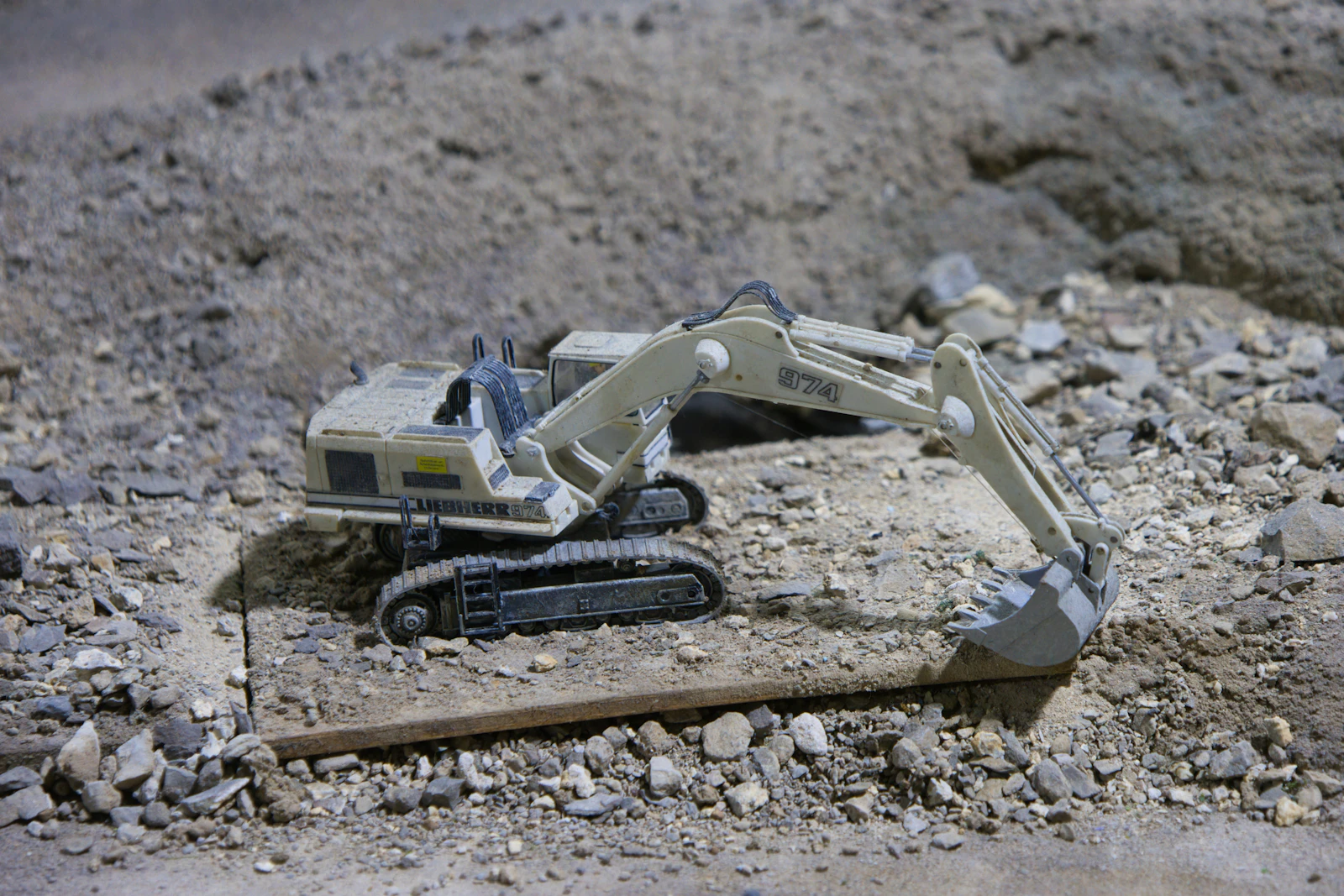
The most reliable way to control compact excavator equipment hire cost on retaining wall construction is to manage “clock time” more than unit pricing. Weekly and 4-week rates usually improve value, but they can also hide schedule drift: if inspection delays or material shortages add even 2–3 idle days, you can lose the savings you thought you secured. Build a simple off-rent trigger into the plan (e.g., “off-rent immediately after last backfill lift behind wall is compacted”) and assign one person—typically the superintendent or rental coordinator—to place the off-rent call before the vendor’s cutoff time. Also align delivery with readiness: having the mini excavator show up 24 hours before utility locates are cleared is a common self-inflicted overrun.
Freight is frequently the largest “non-obvious” line item on mini excavator hire. Two practical San Antonio tactics: (1) choose a broader delivery window (2–4 hours) unless the jobsite is truly time-critical, and (2) ensure the drop/pick location is accessible without waiting on a locked gate or a parked material truck. Rental platforms and many rental agreements also flag additional fees such as dry-run fees, rush fees, towing if equipment is stuck, and penalties when pickup can’t occur due to access issues—these are real risks on residential wall sites where streets are tight and staging changes daily. Carry a contingency for an avoidable second trip (often another $150–$250) and plan your staging so the driver can load without delay.
Some San Antonio suppliers offer bare equipment hire, while others can provide delivery “with operator.” If your wall scope is technically demanding (tight offsets, utilities, or critical grade tolerance) and your crew doesn’t have a confident excavator hand, operated rental can reduce risk—at a higher hourly outlay. As a planning allowance only, operated mini excavator service is commonly budgeted at $120–$175/hour with an 8-hour minimum, plus mobilization that can run $150–$300 depending on distance and scheduling. The key estimator question is whether that premium avoids (a) rework of the leveling pad, (b) over-excavation and extra base material, or (c) utility incidents. If you go operated, confirm whether the machine is billed portal-to-portal, whether standby is billable, and who supplies fuel.
For retaining wall construction, the “right” mini excavator class is the smallest unit that completes: trench excavation, base shaping, drainage trenching, and controlled backfill placement without stalling in hard material. Using the 2026 San Antonio rate bands as a guide, stepping from a 2–4 ton to a 4–6 ton may add roughly $90–$140/day in base rate, but it can also reduce cycle times and eliminate a breaker add-on on some soils. Conversely, stepping down to 1–2 ton may save $80–$120/day but can add days and increase handling risk for larger blocks or boulders. For bid purposes, default to 2–4 ton for small-to-medium wall packages and 4–6 ton where you expect hard digging or heavier lifts; then validate against access constraints.
Mid-rental attachment changes often trigger incremental freight or a “swap trip,” and those swaps rarely happen on your preferred schedule. If your wall design includes drain rock, pipe, and filter fabric, the hydraulic thumb is not a luxury—it’s a productivity tool. If you foresee any caliche/limestone risk, deciding on a breaker up front is usually cheaper than burning two extra dig days and then adding a breaker late (and paying extra freight). As a planning range, treat a breaker at $175–$325/day as a “risk buy-down” line item you can drop if test holes confirm soft digging.
To keep hire charges clean at the end of the wall build, set these closeout steps as standard work: (1) take date-stamped photos of the hour meter, undercarriage, bucket, and any attachment serial plates; (2) clean obvious mud and rock from tracks/rollers so you don’t inherit cleaning labor; (3) refuel to the return requirement; (4) stage the machine in a pickup-accessible location with no overhead obstructions; and (5) call off-rent with a named person and timestamp. If your rental agreement stops billing when you call off-rent (common on many contracts, but not universal), that call time is money—don’t wait until “tomorrow morning.” If billing stops only when picked up, then prioritize a same-day pickup window and confirm availability early.
When you finalize an equipment hire budget for San Antonio retaining wall work, treat tax as a line item, not an afterthought. A combined 8.25% sales tax rate is widely cited for the city; however, how it applies to freight and waiver varies by vendor structure and invoicing. The cleanest approach is to request an “all-in, delivered” quote with tax treatment shown, then mirror that structure in your estimate so your PO aligns with invoice reality.
