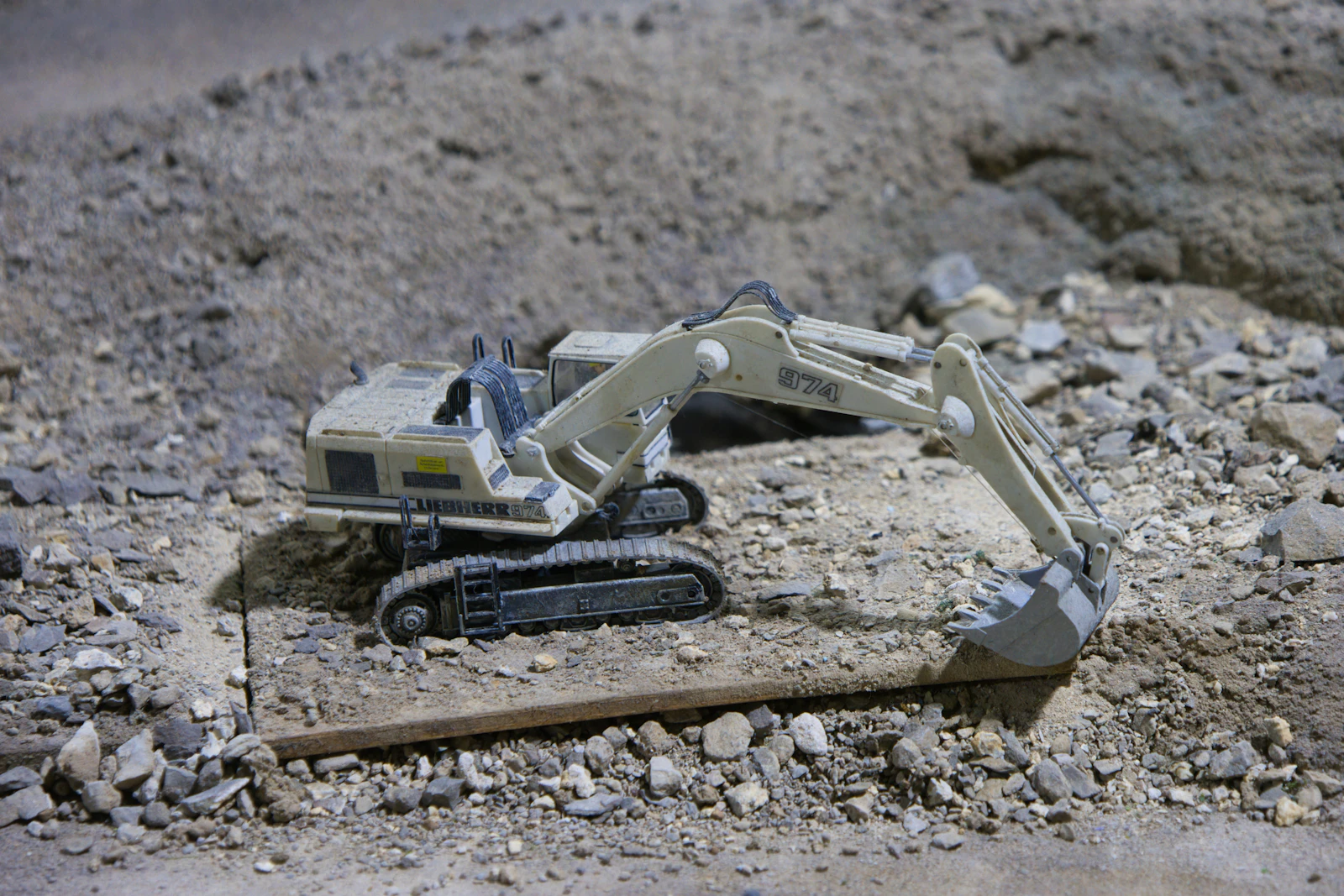
Mini Excavator Hire Costs San Antonio 2026
For 2026 planning in San Antonio, budget mini excavator equipment hire in the following base machine ranges (before delivery, attachments, damage waiver, fuel/cleaning, and overtime): $200–$500/day, $640–$1,800/week, and $1,700–$4,800 per 28-day/month. On aggregator snapshots, the citywide average often lands near $394/day and $1,050/week across suppliers. National and local fleets (for example, United Rentals and Sunbelt, plus regional independents around the I-35/I-10 corridor) typically quote by calendar time with hour caps (commonly 8 hours/day, 40 hours/week, and 160 hours/28 days), which matters for trenching and backfilling where cycle times and travel between cuts can push hours higher than expected.
| Vendor |
Daily Rate |
Weekly Rate |
Review Score |
Website |
| United Rentals |
$280 |
$750 |
9 |
Visit |
| Sunbelt Rentals |
$225 |
$795 |
9 |
Visit |
| Herc Rentals |
$369 |
$945 |
9 |
Visit |
What drives mini excavator rental pricing for trenching and backfilling in San Antonio?
Mini excavator hire rates in San Antonio move up or down based on three practical variables: machine class (operating weight and dig depth), attachments and support gear (buckets, thumb, compaction, trench safety), and logistics (delivery radius, site access windows, and off-rent rules). For trenching and backfilling, the cheapest “mini” is rarely the lowest total cost if it forces longer trench time, over-hour charges, or rework from poor backfill compaction.
San Antonio-specific cost drivers that frequently show up in quotes and change the total equipment hire cost:
- Soils and rock: Caliche and mixed limestone can increase tooth wear and slow production. Expect higher attachment utilization (narrow trenching bucket, ripper tooth, or hydraulic breaker) and more frequent “return condition” scrutiny for bucket cutting edges.
- Heat load: Summer peak temperatures (often 95–105°F on-site) can reduce operator efficiency and increase idle time. That can push you closer to hour-meter overage even if the rental period stays the same.
- Urban access: Downtown and near-projects around Loop 410/I-37 often need tighter delivery windows. After-hours or constrained access can add dispatch fees and waiting time charges.
2026 hire rate bands by size class (use these for estimating)
Use these planning bands to match the machine to the trench profile and backfill method. The point is to align cost with productivity so you avoid paying “cheap day rates” while burning schedule.
- 1–2 ton micro/mini (tight access, shallow utility trenching): plan $225–$375/day, $750–$1,200/week, $1,900–$2,900/28 days.
- 3–4 ton mini (common for utilities, light civil, trench + backfill on small sites): plan $300–$500/day, $900–$1,650/week, $2,200–$4,200/28 days. Supplier rate sheets and cooperative contracts commonly show daily/weekly/4-week structures in this neighborhood (example: $320/day, $880/week, $1,965/4 weeks for a mini-ex class listing).
- 5–6 ton “mini/midi” (deeper cuts, faster spoil handling, more stable backfill placement): plan $450–$650/day, $1,400–$2,400/week, $3,600–$6,500/28 days.
Assumption note: These are planning ranges for 2026 in USD for the San Antonio market. They assume a standard bucket and normal wear, with pricing varying by availability, transport distance, and whether the quote is “walk-in” versus negotiated under a master rental agreement.
Attachments and trenching/backfilling adders you should price separately
For trenching and backfilling, attachments are where estimates commonly miss. Many suppliers include one general-purpose bucket, but trenching often needs a narrow bucket (clean trench bottom), plus a backfill/cleanup bucket or grading blade support.
Typical 2026 planning adders for mini excavator rental with trenching and backfilling packages in San Antonio:
- Trenching bucket (12 in. to 18 in.): $25–$60/day or $90–$220/week (sometimes included if it is the “standard” bucket size for that unit).
- Extra bucket (24 in. to 36 in. cleanup): $35–$85/day or $140–$300/week.
- Hydraulic thumb (highly recommended for pipe placement, trench shield handling, and debris control): $75–$160/day or $250–$600/week.
- Quick coupler: $40–$95/day or $150–$350/week (often worth it if swapping buckets multiple times per shift).
- Hydraulic breaker (when caliche/limestone or old concrete is expected): commonly $200/day or $700/week as a planning figure.
- Auger drive (if trenching includes piers or sign bases): $175–$275/day plus bits at $25–$60/day each.
- Backfill compaction support (separate equipment but often required for spec): plan for a reversible plate at $70–$140/day or a small trench roller at $250–$450/day if density requirements are tight.
Delivery, pick-up, and access costs (where San Antonio projects get surprised)
Unless you self-haul, delivery and pick-up are usually the most immediate non-negotiable line items in equipment hire cost. In the San Antonio area, typical budgeting looks like:
- Base delivery/pick-up within a “standard” radius: $150–$250 each way (common for sites within roughly 15–25 miles of the yard).
- Outside radius mileage: $4.50–$7.00 per loaded mile (or a zone-based step rate) beyond the included distance.
- After-hours / weekend dispatch: add $175–$325 when you request delivery outside normal yard dispatch windows.
- Jobsite wait time: some suppliers charge after 30–60 minutes on site; budget $90–$140/hour for truck/driver standby if your gate access, escort, or laydown area is not ready.
Operationally, downtown deliveries and any work near controlled-access facilities (including some JBSA-adjacent zones) can require named driver paperwork and tight appointment windows. If your trenching crew is not ready to receive the machine, you can pay both “wait time” and lose half a day of production while still paying the day rate.
Hour caps, overtime, and off-rent rules (the hidden mechanics of equipment hire cost)
Trenching and backfilling often runs long on the clock but looks “short” on the calendar. Make sure your team aligns on these items before you issue a PO:
- Hour caps: plan on 8 engine hours/day, 40 hours/week, and 160 hours/28 days. If your operator idles to manage trench safety checks, traffic, or utility locates, the meter still runs.
- Overage rate: budget $45–$75 per hour above the cap, depending on size class and contract terms.
- “Weekend” billing nuance: many suppliers treat Saturday/Sunday as billable calendar days on short terms, but some offer a “Friday PM to Monday AM” structure if you stay under the hour cap. Confirm in writing before planning a weekend trench push.
- Off-rent cutoff: common cutoff times are 8:00–10:00 AM. If you call off-rent after cutoff, you may pay an extra day even if the machine sits.
Hidden-fee breakdown (line items you should carry in every estimate)
To keep mini excavator equipment hire costs predictable, carry explicit allowances for the following. These are the items that most often appear on closeout invoices for trenching/backfilling scopes.
- Damage waiver (DW): typically 10%–15% of the rental charges (rental only, or rental + some accessories). Some contracts list it explicitly alongside daily/weekly/monthly rates.
- Refundable deposit / authorization: frequently $500–$2,000 depending on account history and whether you have net terms.
- Fuel / refuel surcharge: if returned below the agreed level, budget $6–$9 per gallon equivalent billing (or a “yard posted fuel price” approach).
- Cleaning fee (mud, clay, concrete slurry): $95–$250 is a common range; trench work in wet clay can exceed that if the undercarriage is packed.
- Track and undercarriage damage: packed caliche and curbs can tear rubber tracks; carry a risk allowance of $150–$300 for “minor track damage” exposure on tight urban sites (actual charges vary by condition and contract).
- Missing accessories/documentation: $25–$75 admin/processing is not unusual when decals, manuals, or keys are missing.
San Antonio trenching and backfilling: selecting the right mini excavator to reduce total hire cost
The correct machine for a trenching/backfilling package is usually driven by trench depth, spoil placement distance, and whether you are backfilling with imported material that must be compacted in lifts. A 1–2 ton unit can be perfect for backyard access, but it can become cost-inefficient on commercial sites if you are constantly repositioning, swinging long to load spoils, or trying to place select backfill precisely around utilities.
Practical planning guidance for minimizing equipment hire cost per linear foot of trench:
- If you need a trench box/shield: verify the bucket + thumb combination can handle placement. A thumb adder of $250–$600/week is often cheaper than burning labor hours trying to rig and spot by hand.
- If spoils must be stockpiled 20–40 ft away: size up to a 3–4 ton class; the incremental base hire rate can be offset by faster cycle times and fewer “overtime hours” above cap.
- If the cut crosses caliche/limestone: plan breaker time. Even a single day breaker rental (around $200/day) can prevent multi-day delays that cost far more than the attachment.
For budgeting, treat the mini excavator as a system: base machine + the two buckets you actually need + logistics + compaction support + the contract terms that control hour-meter overages and off-rent timing.
Example: 7-day trenching and backfilling package (realistic San Antonio constraints)
Example: You’re trenching and backfilling for a small commercial service run on the Northeast side (inside Loop 1604), with a 7-day schedule, one operator, and a requirement to maintain access for tenants. The site allows deliveries only between 7:00–9:00 AM and forbids staging in fire lanes.
- Base mini excavator hire (3–4 ton class): $1,175/week (planning figure consistent with local posted weekly pricing).
- Trenching bucket + cleanup bucket: $180/week combined allowance.
- Hydraulic thumb: $450/week allowance (for setting spoils, handling trench shield corners, and keeping labor out of the trench).
- Delivery + pick-up: $225 each way = $450 (tight delivery window; include a contingency for wait time).
- Damage waiver: 12% of rental charges (base + attachments; confirm your contract basis).
- Hour cap exposure: you project 48 engine hours for the week vs a 40-hour cap, so you carry 8 overtime hours at $55/hour = $440.
- Cleaning allowance: $150 (expansive clay + rain risk).
Why the constraints matter: If your crew misses the 7:00–9:00 AM window, you can pay $90–$140/hour wait time or get bumped to the next day—then you still pay calendar time while losing trench production. Also, if you call off-rent after the supplier’s morning cutoff (often 8:00–10:00 AM), you may buy an extra day even if the unit is idle.
How to structure a PO so your equipment hire cost closes out clean
Rental coordinators can reduce mini excavator hire cost risk by putting the billing mechanics directly on the PO and requiring the same items on the supplier ticket.
- State the rate type: “Weekly rate (7 days) with 40-hour cap; overage billed at $__/hr.”
- Define attachments included: bucket sizes, thumb, quick coupler, hydraulic breaker (if needed), and any spare teeth.
- Spell out delivery window: include site contact, gate code, and an explicit “no wait time authorized beyond ___ minutes without approval.”
- Require documentation at drop/pick: photos of hour meter, fuel level, and condition (undercarriage/track).
Budget Worksheet (mini excavator equipment hire cost allowances)
Use this as a no-surprises allowance set for trenching and backfilling scopes in San Antonio. Adjust up/down based on duration and soil.
- Base mini excavator hire (select class): $225–$650/day, $750–$2,400/week, or $1,900–$6,500/28 days.
- Delivery + pick-up: $300–$500 total (typical), plus mileage at $4.50–$7.00/loaded mile outside standard radius.
- Damage waiver: 10%–15% of rental charges.
- Deposit/authorization (if applicable): $500–$2,000.
- Trenching bucket allowance: $90–$220/week.
- Cleanup bucket allowance: $140–$300/week.
- Hydraulic thumb allowance: $250–$600/week.
- Quick coupler allowance: $150–$350/week.
- Breaker contingency (caliche/limestone): $200/day or $700/week.
- Fuel/refuel contingency: $6–$9/gal equivalent billing if returned low.
- Cleaning contingency: $95–$250 (higher if mud packs the undercarriage).
- Hour-meter overage: $45–$75/hour above the cap (carry at least 5–15 hours if schedule is uncertain).
- After-hours dispatch (if needed): $175–$325.
- Wait time contingency (access risk): $90–$140/hour after the included wait period.
Rental Order Checklist (what to confirm before the truck rolls)
- PO includes: base rate (day/week/28-day), hour cap, overage $/hr, and damage waiver %.
- Delivery address verified; include nearest cross-streets and a 30-minute call-ahead requirement.
- Delivery window/cutoffs confirmed (especially if your site only accepts between 7:00–9:00 AM).
- Off-rent procedure confirmed in writing (who calls, cutoff time, and whether “call off-rent” stops billing immediately).
- Attachment list confirmed: bucket sizes, thumb, coupler, teeth count, any spare teeth/pins.
- Return condition requirements confirmed: fuel level, cleaning expectations, and photo documentation at pick-up.
- Site constraints documented: underground utility locate status, trench shield plan (if applicable), and haul path to avoid curbs/track damage.
- Indoor/occupied-site controls (if applicable): dust suppression plan and track mat requirements (carry $25–$75/day allowance for mats if needed).
Practical ways San Antonio teams reduce mini excavator hire costs without cutting scope
- Right-size by trench geometry, not just access: If trenching is continuous and spoils must move, a 3–4 ton unit can lower total cost even with a higher day rate.
- Bundle the “must-have” attachments up front: Adding a thumb mid-rental can trigger extra delivery charges or lost production days waiting for the attachment.
- Manage calendar time: Align delivery for the first workable hour, and plan off-rent the day before demobilization so you call off-rent before the morning cutoff.
- Control meter hours: Avoid long idle periods with the machine running during inspections, traffic control, or utility coordination; that is where hour overages are born.
Market note for 2026 planning
Expect availability and rate pressure to vary around weather events (heavy rain periods that compress schedules) and major local work pushes. If you are forecasting a multi-week trenching/backfilling phase, asking for a 28-day rate early can materially reduce the effective daily cost versus stacking weekly renewals. For high-confidence budgeting, use the published/aggregated San Antonio ranges as a baseline and then apply your project’s logistics multipliers (delivery, hour caps, and attachments) as the true drivers of equipment hire cost.