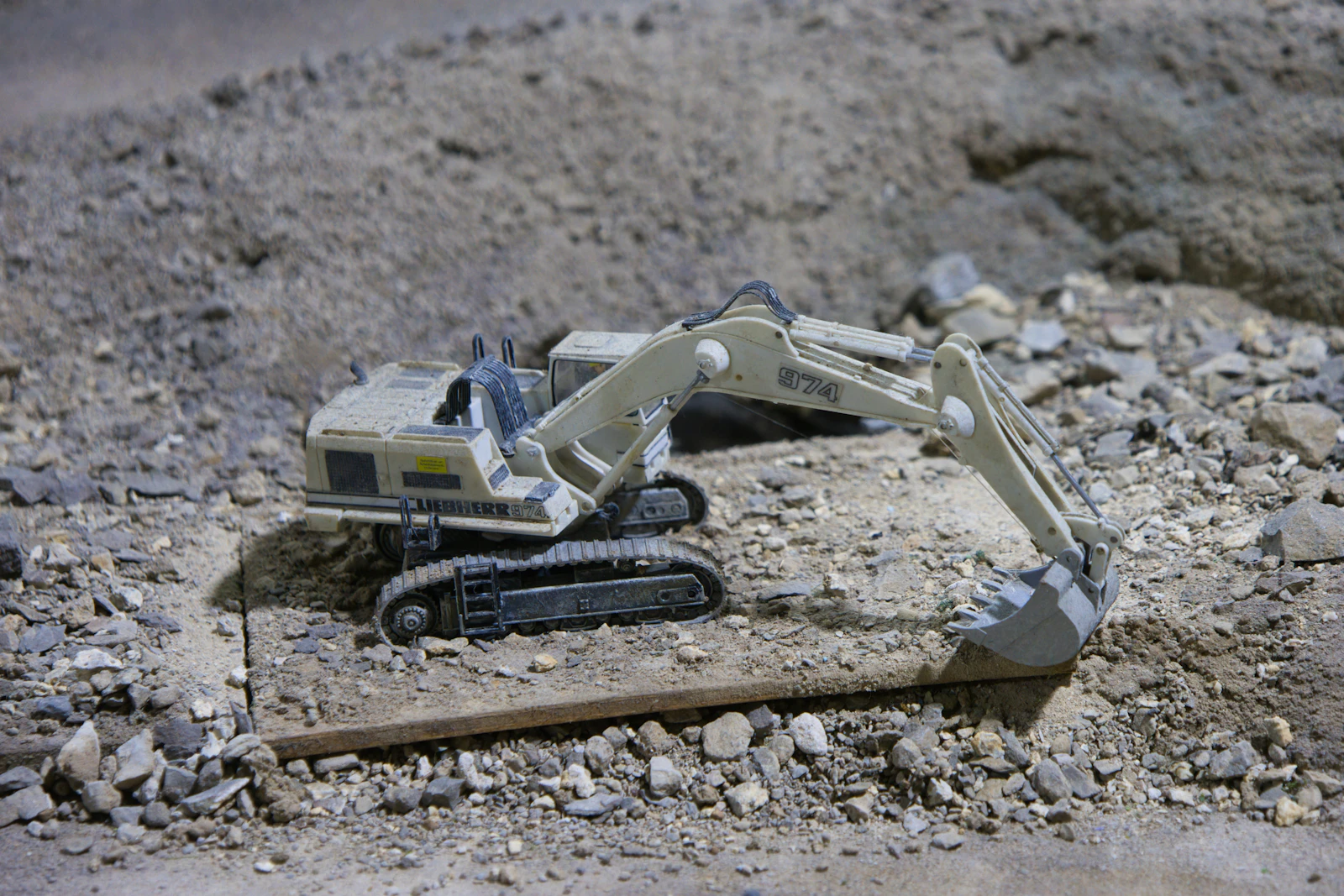
Mini Excavator Rental Rates San Diego 2026
For San Diego commercial tenant improvement (TI) work in 2026, planning budgets for mini excavator equipment hire typically land in these working ranges (machine only, one shift): 1–2 ton class $280–$420/day, $900–$1,250/week, and $2,200–$3,200 per 4-week period; 3–4 ton class $330–$525/day, $1,050–$1,600/week, and $2,700–$3,900 per 4-week period; and 5–6 ton class $450–$650/day, $1,400–$2,050/week, and $3,700–$5,200 per 4-week period. Marketplace averages and listings for San Diego commonly cluster around the mid-$400s/day and roughly $1,400–$1,500/week for larger minis, with 4-week pricing often near the low-$3,000s depending on class and availability. Major rental fleets with San Diego coverage (for example, national providers and regional yard networks) generally quote daily, weekly, and 28-day rates online once the delivery ZIP and dates are entered, then finalize pricing after confirming availability, haul, and requested options.
| Vendor |
Daily Rate |
Weekly Rate |
Review Score |
Website |
| United Rentals |
$321 |
$850 |
8 |
Visit |
| Sunbelt Rentals |
$320 |
$880 |
9 |
Visit |
| Herc Rentals |
$321 |
$837 |
9 |
Visit |
| The Home Depot Tool Rental (San Diego) |
$299 |
$899 |
9 |
Visit |
What Drives Mini Excavator Equipment Hire Cost on San Diego TI Projects?
On TI scopes, the lowest advertised mini excavator hire rate is rarely the final cost. Budget accuracy comes from matching the machine class and configuration to access constraints (alleys, loading docks, courtyards), production targets (LF/day of trench, cubic yards/day of spoils), and site rules (noise windows, dust control, and haul routes). Cost drivers that routinely move the needle in San Diego include:
- Weight class and tail swing: Zero tail swing and reduced tail swing minis can price higher than conventional swing in the same tonnage because they solve tight TI access and reduce strike risk near façade lines.
- Undercarriage and track type: Rubber tracks for finished hardscape or parking structures can be non-negotiable. A torn track return can be a material backcharge risk if you are running over demo debris; this often justifies budgeting an RPP/damage waiver rather than self-insuring.
- Hydraulic auxiliaries: If you need a breaker, auger, or compaction wheel, confirm auxiliary flow and coupler type. Mismatches create same-day swap charges and lost time that functionally increases your per-hour equipment hire cost.
- Transport logistics: Downtown TI deliveries can be more expensive due to staging limitations, time-of-day restrictions, and the need for a smaller delivery truck or escort for curb occupancy. Build logistics cost as a first-class line item, not a contingency.
San Diego-Specific Cost Considerations for Commercial Tenant Improvement
Three local realities change the true mini excavator rental cost profile for San Diego TI work:
- Delivery windows and traffic: If you are working in Downtown, Mission Valley, or near UC San Diego, early AM delivery windows may be required to avoid congestion and site safety conflicts. Missing a window can trigger a $150–$300 re-delivery or reschedule charge (treat this as a realistic exposure when coordinating with property management and security).
- Dust-control requirements: TI scopes adjacent to occupied space may require additional controls (zipwalls, negative air, floor protection) that impact how you mobilize the mini. If the mini excavator is entering a finished courtyard or tight interior-adjacent area, budget $75–$250 for track cleaning/pressure wash at return if the yard rejects the condition.
- Coastal soils and corrosion exposure: Coastal sand (for example, in Point Loma or near the coast) can increase track wear and make backfill compaction more demanding. Inland caliche/hardpan pockets (common on some older pads) can increase tooth wear; budget $35–$85 for consumable wear allowances (teeth/pins) if you expect abrasive conditions.
Rate Structure Assumptions You Should Put in the Estimate
When you translate a quoted day/week/4-week rate into an estimator-friendly equipment hire cost, be explicit about billing assumptions:
- Shift definition: Many major providers define a basic day as one shift of 8 hours/day, 40 hours/week, and 160 hours per 4-week period. Overages are typically billed as an hourly fraction of the period rate (for example, 1/8 of the daily rate per excess hour on a daily rental).
- Month length: Many online systems use a 28-day or 4-week month, not a calendar month.
- Minimum billing: For specialty-configured minis (hydraulic thumb, angle blade, enclosed cab), a 2-day minimum is common even if you pick up. Plan mobilization accordingly so you are not paying idle days while waiting on inspections or layout.
- Off-rent cutoff: If you call off-rent after the branch cutoff (often early afternoon), you may be billed another day even if the machine is physically done. Treat the off-rent time as a schedule milestone.
Attachments, Options, and Adders That Commonly Apply
Commercial TI trenching and exterior utility tie-ins frequently require more than a standard toothed bucket. In 2026 planning ranges, the following adders are common in Southern California postings and yard quotes, and they can exceed the base mini excavator hire cost if you are not careful about duration:
- Hydraulic breaker: budget $250/day, $775/week, or $2,000 per 4 weeks when separately line-itemed.
- Auger drive (skid steer style) or excavator auger package: budget $150–$175/day, $400–$500/week, and $900–$1,000 per 4 weeks depending on bit sizes.
- Compaction wheel: budget about $125/day, $500/week, and $1,250 per 4 weeks for an 18-inch class wheel.
- Bucket swaps: even if a standard bucket is included, additional trench buckets (12-inch, 18-inch) are frequently billed as separate line items. If your scope is split between narrow utility trench and wider footing over-ex, expect $20–$45/day per additional bucket in many rate environments (confirm with the yard).
- Hydraulic thumb: when not included, budget $75–$150/day (or a negotiated weekly/4-week equivalent). On TI demo (curb removal, landscape boulders, small CMU features), a thumb often pays for itself in reduced labor and cleaner loadout.
- Blade and rubber mats: if you need finish protection, budget $8–$15/day per ground protection mat when rented, or include a purchase allowance if mats are repeatedly used across multiple TI suites.
Hidden-Fee Breakdown (What Changes the Real Equipment Hire Cost)
Use the list below as a standardized hidden-fee screen during quote review. These items often appear on the invoice even when they were not discussed in the initial call:
- Delivery and pickup: in San Diego County, a common planning allowance is $175–$350 each way for a mini excavator delivery within a typical metro radius, with distance, access, and time-of-day increasing cost. For longer runs (for example, North County to South Bay), add mileage at roughly $3.50–$6.50 per loaded mile or a zone surcharge. If you miss a scheduled pickup because the machine is blocked in, expect an additional trip charge.
- Transportation surcharge: some providers apply a transportation surcharge that can include a fixed component (for example, a published 9% fixed component with a minimum charge) plus a variable diesel-linked component.
- Damage waiver / rental protection plan: budget 10%–18% of rental charges unless you are providing a certificate that satisfies the rental company’s requirements. Clarify whether the waiver applies to attachments (breaker hoses and couplers are frequent TI failure points).
- Environmental/administrative fees: common range 2%–5% of rental, sometimes capped, sometimes not.
- Fuel and refuel: if returned below the required fuel level, budget diesel at $6–$8/gal plus a $25–$45 service/convenience fee. If the mini is delivered full and you return it low, this is an avoidable invoice surprise.
- Cleaning: track cleaning, cab cleaning, or undercarriage wash can land at $75 light clean to $250+ for heavy mud/concrete slurry. TI demo dust and adhesive residue can also trigger cleaning charges if you are using the mini in mixed-use lots near occupied storefronts.
- Late return / extra day: if your pickup is scheduled and you miss the cutoff, budget a penalty equal to 1 additional day or a late fee in the $75–$200 range depending on the yard’s policy and the class of machine.
- Overtime usage: if you run beyond a standard shift, overage can be billed at an hourly fraction of the daily/weekly/4-week rate (for example, 1/8 of the daily for each hour beyond the included shift on a daily rental).
Example: 3-Week TI Utility Trench With Tight Downtown Access
Scenario: You are trenching 240 LF of 18-inch-deep electrical/low-voltage in a rear service corridor for a TI buildout near Downtown San Diego. Access is through a 7 ft gate with a 15-degree turn, and the landlord only allows deliveries 6:00–7:00 AM.
Equipment plan and costs (planning-level):
- Machine: 3–4 ton zero tail swing mini excavator at $1,250/week for 3 weeks = $3,750 (assumes one shift).
- Delivery/pickup: tight-window delivery $325 each way = $650 (higher than suburban TI due to window risk and staging).
- Hydraulic thumb: $110/day for 10 working days = $1,100 (used for debris handling and clean loadout).
- Extra trench bucket (12-inch): $25/day for 10 days = $250.
- Damage waiver: 14% of rental charges (machine + attachments rental only) ≈ $714 (budget placeholder).
- Environmental/admin: 3% ≈ $153 (budget placeholder).
- Cleaning contingency: $150 (corridor dust and debris exposure).
Planning total: approximately $6,767 before tax and before spoils export, plates, and restoration. The key operational constraint is the delivery window: if the first attempt fails and you incur a re-delivery at $250, your effective weekly equipment hire cost increases even if the base weekly rate does not.
Budget Worksheet (Estimator-Ready Line Items)
Use this as a practical budgeting artifact for mini excavator equipment hire cost on San Diego TI scopes (adjust quantities to your schedule):
- Mini excavator hire (select class): ____ days at $____/day, or ____ weeks at $____/week
- Mobilization: delivery $____ + pickup $____ (include window premium if applicable)
- Attachments: breaker $____/day, thumb $____/day, trench bucket $____/day, auger $____/day
- Damage waiver / RPP: ____% of rental subtotal
- Environmental/admin fees: ____% of rental subtotal
- Fuel allowance: ____ gallons at $____/gal + service fee $____
- Cleaning allowance at return: $____ (light) to $____ (heavy)
- Overtime usage allowance: ____ hours at $____/hour (based on rental agreement overage structure)
- Downtime contingency (swap-out / service call): $____ (or ____% of rental)
- Documentation/admin: photos, condition report, and closeout labor: ____ hours at $____/hr
Rental Order Checklist (Rental Coordinator Workflow)
- Confirm job address, site contact, and gate/clearance constraints (minimum width, turning radius, overhead height)
- Confirm delivery window and building rules (dock reservation, COI requirements, security badging, and curb occupancy needs)
- Specify machine class, tail swing, track type, and bucket set (standard + trench bucket sizes)
- Confirm auxiliary hydraulics and coupler type for each attachment
- Validate billing: day/week/4-week structure, shift hours included, overtime formula, weekend/holiday billing rules, and off-rent cutoff time
- Confirm transport pricing: delivery/pickup fee, mileage or zone, and any transportation surcharge terms
- Insurance: provide COI or elect damage waiver; confirm deductible exposure and excluded items
- PO: issue PO with not-to-exceed amount and authorized signature list
- On delivery: record hour meter, take photos of undercarriage, couplers, bucket teeth, glass, and decals; capture delivery ticket signature
- During use: enforce refuel/recharge expectations, daily walkarounds, and indoor dust-control requirements
- Off-rent: call off-rent before cutoff; clear access for pickup; photograph return condition and hour meter; keep pickup ticket for closeout
Bottom line for San Diego TI teams: treat mini excavator equipment hire as a bundle of (1) machine time, (2) logistics time, and (3) protection/return-condition risk. Getting those three right typically saves more than chasing a slightly lower day rate.
How to Reduce Mini Excavator Hire Cost Without Slowing the TI Schedule
Cost control on mini excavator rental for commercial tenant improvement is mostly operational discipline. In San Diego, where delivery windows and site access frequently drive cost, you can reduce total spend without negotiating the day rate down to the bone.
Plan the Mobilization Like a Critical Path Activity
If a mini excavator shows up before layout is ready, you pay idle equipment hire cost. If it shows up after demo is complete, you create schedule drag and rework. A few practical tactics:
- Bundle mobilizations: If you need a mini excavator plus a breaker plus plates or ground protection, try to align delivery so you are not paying two mobilizations. Avoid a second trip charge of $175–$350 each way by ensuring accessories are on the same ticket.
- Lock down a pickup plan: Build a hard internal deadline for off-rent calls. If your job closes at 3:30 PM but off-rent cutoff is earlier, you may lose a full day’s savings.
- Define an access responsibility: If the GC cannot keep the pickup path clear, you risk a dry-run pickup. Even a conservative $200 failed pickup charge is meaningful against a weekly rate.
Use the Right Rental Term: Daily vs Weekly vs 4-Week
For TI, weekly is often the economic sweet spot. In practice:
- If you need the mini for 3 days, compare the quoted 3-day extension versus a full week. It is common for a week to be only modestly higher than multiple days once fees are applied.
- If you need it for 18–25 days, the 4-week term can reduce the base rate, but only if you avoid overtime hours and avoid extra mobilizations.
- Be explicit that many online systems treat the month as 28 days, not a calendar month, which affects pro-rating and extensions.
Control Overtime Hours and Second-Shift Usage
Running a mini excavator into extended hours can silently convert a competitive weekly rate into a premium effective hourly equipment hire cost. Many agreements define one shift as 8 hours/day and bill excess hours using a formula tied to the daily/weekly/4-week rate (for example, 1/8 of daily per excess hour on daily rentals). If your TI team anticipates night work (mall TI, hospital TI, or occupied campus work), pre-negotiate a second-shift structure instead of absorbing punitive overages.
Make Return Condition a Managed Process
Return condition is one of the fastest ways to lose savings on mini excavator equipment hire:
- Refuel standard: If the machine was delivered full, plan to return full. Budgeting $6–$8/gal diesel is often cheaper than yard refuel plus the $25–$45 service fee.
- Undercarriage inspection: Before pickup, remove wire, strapping, and rebar tie-offs from the undercarriage. A $90 cleaning fee is common; a damaged track is not.
- Bucket teeth and pins: If you were trenching in hardpan, inspect teeth and retainers before off-rent. A small consumables backcharge (for example, $35–$85) is manageable; a missing bucket pin or coupler component can be much larger and delay closeout.
Insurance and Damage Waiver: Treat It as a Cost Choice
For commercial TI, the decision is usually not whether there is risk, but who owns it. If you carry your own coverage, you still need to satisfy the rental provider’s requirements and document condition to defend against disputed damage. If you select a waiver, budget it as a percentage of rental (often 10%–18%) and confirm whether it covers attachments and hoses. Also confirm whether theft coverage requires specific site security (fencing, lockout, GPS, or inside-gated storage). A stolen mini can turn a low equipment hire cost line into a significant loss event.
Where San Diego Teams Commonly Underscope TI Support Costs
Mini excavator rental pricing is only part of the TI earthwork package. If you want a realistic equipment hire cost forecast, consider these common misses:
- Surface protection: In retail or mixed-use centers, you may need floor protection or mats. Even at $10–$15/day per mat, a 10-mat layout for 14 days becomes $1,400–$2,100.
- Spoils handling: If you cannot stockpile on site, you may need additional equipment time waiting for haul-off. That converts to idle rental hours or extra days.
- Permits and curb occupancy: For curbside drops in dense zones, permit and traffic control requirements can force delivery to a narrower window that raises transport costs and re-delivery risk.
Negotiation Notes (Professional, Non-Promotional)
When you request quotes for mini excavator hire rates in San Diego, you will typically get better results by negotiating structure rather than only rate:
- Ask for delivery included within a defined radius, or ask for a not-to-exceed delivery amount with pre-approval required above it.
- Request a weekly cap on attachment charges if the attachment will remain on rent the full term (breaker and thumb charges can otherwise dominate).
- Confirm whether the provider applies a transportation surcharge and how it is calculated; some providers publish surcharge components and minimums.
- For multi-suite TI programs, ask for a program rate with consistent specs (same class, same bucket set). Standardization often reduces swap-outs and downtime more than it reduces the day rate.
Quick Reference: 2026 Planning Numbers You Can Reuse
For internal budgeting consistency (not vendor-specific promises), many San Diego TI estimators carry these planning allowances alongside the base mini excavator rental rate range:
- Delivery: $175–$350 each way (metro), plus mileage $3.50–$6.50 per loaded mile for longer runs
- Damage waiver/RPP: 10%–18% of rental
- Environmental/admin: 2%–5% of rental
- Fuel: $6–$8/gal plus $25–$45 service fee if refueled by yard
- Cleaning: $75–$250+
- Missed pickup / re-delivery exposure: $150–$300
- Overtime: billed as an hourly fraction tied to the daily/weekly/4-week rate when usage exceeds 8 hours/day or 40 hours/week in many agreements
If you want this mini excavator equipment hire cost model to hold up during closeout, the most important discipline is documentation: hour meter at delivery and pickup, condition photos, and a clear off-rent timestamp. That administrative rigor is often worth more than a small discount on the base day rate.