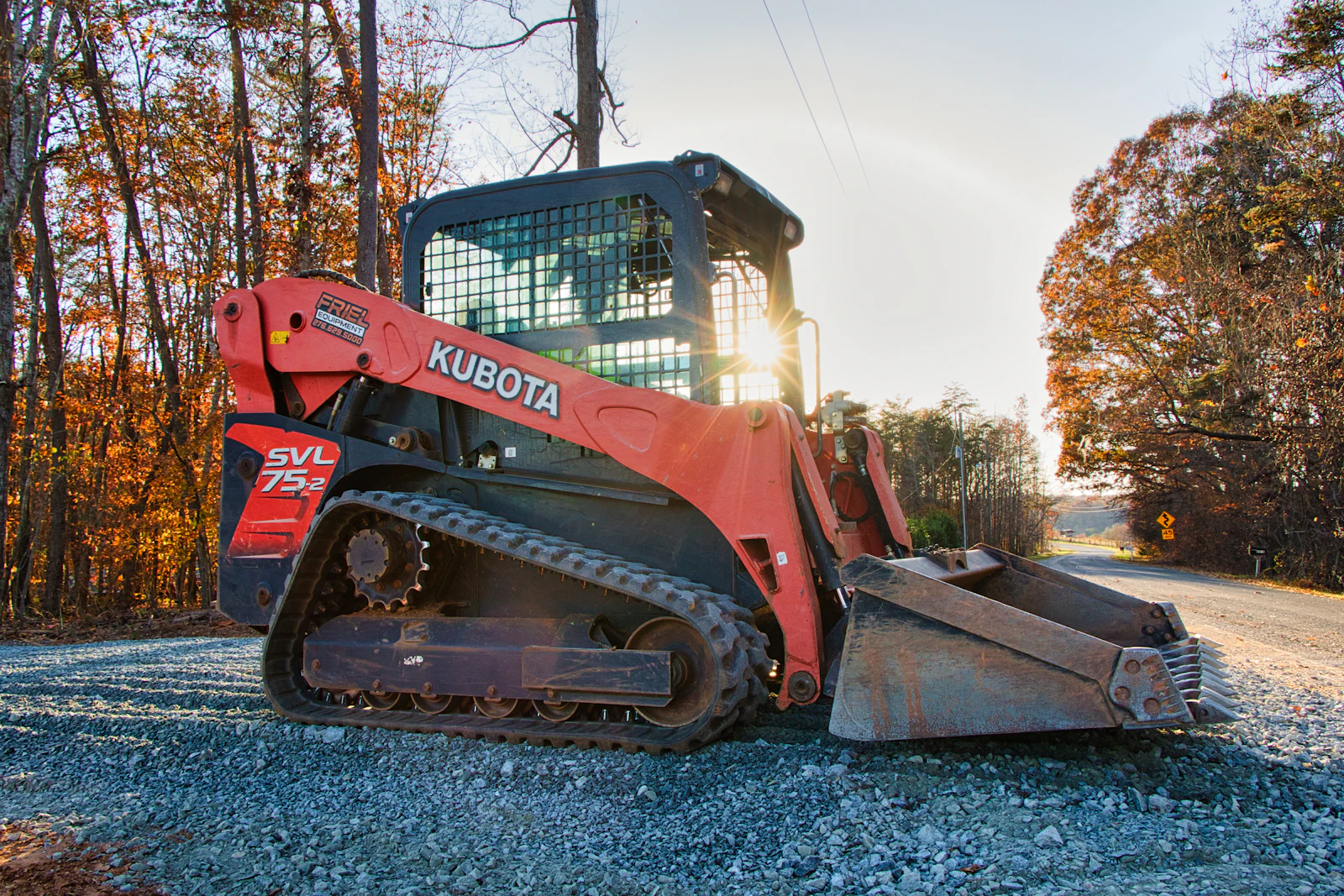
For Phoenix contractors budgeting skid steer loader equipment hire in 2026, plan on $180–$325/day, $700–$1,150/week, and $2,050–$3,350/4-week (monthly) for most wheeled skid steers in the 700–2,600 lb rated operating capacity class (ROPS/cab, standard-flow). Compact track loaders (CTLs) commonly budget at $250–$450/day, $1,000–$1,350/week, and $2,800–$4,050/4-week depending on lift class and whether high-flow hydraulics are required. Phoenix availability and delivery logistics typically run through national fleets (United Rentals, Sunbelt Rentals, Herc) plus Arizona-strong regionals (Sunstate Equipment) and independents such as T&T Rentals, Summit Rentals, and Rent A Loader Phoenix—so your net hire cost is usually driven as much by transport windows, attachments, and off-rent rules as by the base machine rate.
| Vendor |
Daily Rate |
Weekly Rate |
Review Score |
Website |
| T&T Rentals |
$250 |
$1 000 |
10 |
Visit |
| Summit Rentals |
$197 |
$620 |
10 |
Visit |
| Motor City Rentals & Sales |
$325 |
$1 050 |
8 |
Visit |
| DOZR |
$350 |
$1 004 |
4 |
Visit |
skid steer loader rental
The ranges below are intended for 2026 planning and estimating in Phoenix. They assume: (1) “monthly” pricing is billed as a 4-week/28-day period with hour caps, (2) rates are for the machine only (delivery, fuel, tax, and loss/damage waiver are commonly excluded), and (3) you are renting on an established credit account (cash customers may see deposits and different authorization requirements). Many rental programs price by an hour-limit structure such as 8-hour day / 40-hour week / 160-hour 4-week, with overtime billed pro-rata (example policies exist in published rental rate guides).
2026 Phoenix budget ranges by common class (base unit, standard bucket, standard-flow unless noted):
- Ultra-compact / gate-access units (approx. 700–1,100 lb lift class): $180–$230/day, $620–$750/week, $1,700–$2,100/4-week. Local, publicly posted examples include $180/day compact units and $197/day for a Bobcat S70-class unit.
- Mid-size wheeled skid steers (approx. 1,450–2,350 lb lift class): $240–$300/day, $720–$900/week, $2,160–$2,800/4-week (cab can push upper range). Benchmarks published in rental rate guides show $240–$260/day for several 1,450–2,674 lb lift classes.
- Large-frame wheeled skid steers (approx. 2,675–4,499 lb lift class): $340–$370/day, $1,020–$1,110/week, $3,060–$3,330/4-week. Published benchmarks also show a measurable delta for high-flow in this size band.
- Compact track loader (CTL) alternatives (approx. 2,600–4,874+ lb lift class): $370–$450/day, $1,110–$1,350/week, $3,330–$4,050/4-week, with high-flow at the top end for planer/mulcher work.
What Drives Skid Steer Equipment Hire Costs in Phoenix?
For rental coordinators in Phoenix, the biggest cost drivers usually fall into four buckets: (1) machine spec (lift class, cab/ROPS, tracks, and high-flow), (2) attachments and accessory compliance (forks, grapple, breaker, auger package, dust-control), (3) logistics (delivery radius, jobsite access, delivery cutoffs, off-rent processing), and (4) risk allocation (damage waiver, tire/track responsibility, cleaning/contamination, refuel policy).
- Wheeled vs. CTL: If you’re on decomposed granite, loose fill, or need lower ground pressure, CTL productivity can justify a higher weekly rate. If you’re on finished pavement, wheels often reduce surface risk and mobilization complexity.
- Cab and A/C in extreme heat: Phoenix summer production drops fast without cab A/C. A cabbed unit can carry a daily premium and also helps reduce downtime and safety interruptions (heat stress protocols).
- High-flow hydraulics: High-flow is commonly required for cold planers, mulchers, certain brooms, and higher-output trenchers. Published benchmarks show high-flow variants priced above standard-flow in several lift classes.
- Hour caps and overtime: If your superintendent is running 10–12 hour shifts, overtime can turn a “cheap daily” into an expensive week. Some published rental policies prorate overtime at 1/8 of the daily rate per hour over 8.
Local Phoenix Reference Points You Can Use to Sanity-Check a Quote
Even when national fleets require a formal quote, Phoenix has enough publicly posted local pricing to sanity-check your budget before you issue a PO:
- Compact skid steer examples: $180/day, $720/week, and $2,100/month (4-week) have been posted for a compact skid steer class.
- Track skid steer examples: $250/day, $1,000/week, $2,800/month (4-week) has been posted for CTL models (e.g., JD 317G / Kubota SVL65-class).
- Alternate compact example: $197/day, $620/week, and $1,700/month (4-week) has been posted for a Bobcat S70-class unit.
- Delivery policy example (independent fleet): flat $100 delivery & pickup within 10 miles of a Glendale yard has been published, with mileage-based pricing beyond that radius.
Operational note for Phoenix: Treat these as planning anchors, not guaranteed market prices. Rates move with seasonal demand (spring grading, monsoon cleanup, municipal work), and Phoenix-area delivery costs often increase when you’re pushing out to the far West Valley or East Valley during peak traffic windows.
Attachments, Add-Ons, and “Small” Line Items That Add Up
Attachment pricing is where skid steer loader hire costs commonly overshoot the estimator’s first pass. If you need hydraulic attachments, confirm (1) coupler style, (2) high-flow requirement, and (3) whether the rental house includes hoses/couplers or bills adapters separately.
Typical 2026 planning adders (confirm exact rates on quote):
- Pallet forks: plan $35–$85/day or $120–$240/week (fork pricing varies widely by fork class; published equipment guides show forks priced as a separate rental line item in some categories).
- Auger drive (powerhead): plan $90–$200/day; auger bits often price separately (example: $50/day per bit in some published guides).
- Hydraulic breaker/hammer: plan $200–$350/day depending on class; published rate sheets show breakers around $205/day as a benchmark.
- Grapple / rock grapple: local public examples show $100/day for a grapple-type attachment; heavy-duty grapples and demolition grapples can be higher.
- Angle broom / sweeper: plan $150–$215/day depending on broom width and wear charges (brush wear can be billed separately).
- Trailer (if you self-haul): plan $110/day for a 14K equipment trailer class from local postings; other rate guides show skid steer trailer pricing like $130/day.
Delivery, Pickup, and Mobilization Costs Around Phoenix
Delivery is where Phoenix skid steer equipment hire costs can swing by several hundred dollars—especially with short-duration rentals.
- Flat-rate local delivery example: $100 delivery & pickup within 10 miles (then mileage-based).
- Typical metro planning range (most rental houses): budget $125–$275 each way inside a normal service radius, then $3.50–$6.50 per loaded mile outside the radius (higher if after-hours or constrained access).
- Delivery windows/cutoffs: many branches schedule deliveries in AM/PM windows; late-day drops can slip to next business day. If you need before 7:00 AM or after 3:00 PM site access, budget an after-hours premium of $75–$150.
- Downtown Phoenix and active sites: if spotters, lift gates, or jobsite escorts are required, budget an additional 0.5–1.0 labor hour at $95–$165/hr for a driver/yard assist add-on (varies by vendor and union/non-union requirements).
Phoenix-specific considerations that affect net cost:
- Heat management: extreme summer temps can require shorter operator cycles and more idle/cooldown—overtime hours may accrue without proportional production unless you right-size the machine.
- Dust and silica controls: if you’re brooming, milling, or cutting in occupied areas, you may need water tanks, sprayers, or vac attachments; failure to plan dust control can create cleaning charges and downtime.
- Monsoon cleanup: short-notice storm response can trigger minimum charges or weekend billing if you don’t off-rent before cutoff times.
Hidden-Fee Breakdown
Use this section as a quote audit checklist when you’re comparing skid steer loader hire costs in Phoenix. Published rental policies commonly note that rates do not include delivery, pickup, fuel, tax, or loss/damage waiver, and that billing can continue until the unit is returned/checked-in or pickup is called in.
- Loss/Damage Waiver (LDW) / Rental Protection: commonly 10%–15% of the rental rate (often with a minimum). Clarify if tires/tracks and glass are excluded.
- Overtime hours: if you exceed the hour cap, budget $25–$60 per hour depending on machine class. One published approach prorates overtime at 1/8 of daily rate per hour over 8 (e.g., a $240/day unit implies $30/hr overtime).
- Weekend/holiday billing: common structure is “Saturday/Sunday count as days” unless the vendor offers a “weekend special.” Budget a weekend minimum of 2 days if delivery Friday and pickup Monday.
- Fuel / refuel: diesel units are often delivered full and must be returned full (a policy explicitly stated by at least one local Phoenix-area provider). If not returned full, budget a refuel service charge of $45–$95 plus fuel at $5.00–$8.00/gal.
- Cleaning: light washdown can be $125–$225; caked mud/concrete slurry can be $250–$450. Some published policies state customers will be assessed a cleaning charge if the unit is returned excessively dirty.
- Tires/tracks responsibility: many policies place track damage and flats on the customer (beyond normal wear). Budget a contingency of $150–$600 for track-related incidents on rocky desert lots.
- Late return / holding over: common charges are $75–$150/day if the unit misses a scheduled pickup or is not accessible during the agreed window.
- Off-rent rules: some vendors require call-off by a morning cutoff (often 9:00–10:00 AM) to stop billing that day; if you call off after cutoff, expect an extra day charge.
Example: Phoenix Sitework Package With Real Constraints
Example: You need a CTL (65–75 HP class) for 10 working days on a townhouse pad in North Phoenix. Access is gated; deliveries must be before 7:30 AM, and the site requires dust suppression during dry sweeping.
- CTL base hire: budget $1,000/week with a $250/day overage for the 3 extra days (planning total $2,250 for two weeks). This aligns with publicly posted local CTL pricing.
- Pallet forks: $60/day for 10 days = $600 (planning).
- Rock grapple: $100/day for 3 days = $300 (publicly posted local attachment example).
- Dust control: water tank + hose kit allowance $75/day for 5 days = $375 (planning).
- Delivery/pickup: constrained early delivery window premium $125 + transport $200 each way = $525 (planning).
- LDW: 12% of base rental lines (machine + attachments) ≈ $414 (planning).
- Cleaning contingency: $225 (planning).
Planning total: $2,250 + $600 + $300 + $375 + $525 + $414 + $225 = $4,689 (before tax). This is why Phoenix skid steer loader equipment hire costs should be budgeted as a package, not just a day rate.
Budget Worksheet
- Base skid steer/CTL hire: ________ (use day/week/4-week structure)
- Attachment package allowance: $250–$1,250 (forks, grapple, auger, breaker, broom as required)
- High-flow upgrade allowance: $10–$35/day (if required by attachment class)
- Delivery & pickup: $250–$550 total (metro) / add $3.50–$6.50 per loaded mile beyond radius
- Fuel & refuel contingency: $150–$450 (plus $45–$95 service if returned low)
- Loss/Damage Waiver: 10%–15% of rental lines
- Cleaning contingency: $125–$450
- Overtime hours: $150–$900 (assume 5–30 overtime hours at $30/hr equivalent on a $240/day class)
- Surface protection (if on finished pavement): $50–$200 (mats/plywood allowance)
- Track/tire risk contingency: $150–$600 (job-dependent)
Rental Order Checklist
- PO details: machine class (ROC), cab/ROPS, tracks vs wheels, high-flow yes/no, coupler type, bucket size, requested attachments
- Billing structure: confirm day/week/4-week rates, hour caps (e.g., 8/40/160), and overtime method
- Insurance/LDW: COI requirements; confirm LDW rate and exclusions (glass, tracks, tires, theft)
- Delivery instructions: site contact, gate code, delivery window, lowboy clearance, offload area, and whether a spotter is required
- Condition documentation: photos at drop and pickup; record hour meter at receipt and off-rent
- Fuel policy: confirm “full-to-full” and approved fuel type; plan onsite fueling method (cans vs transfer tank)
- Return condition: remove debris from undercarriage, broom/vac dust from cab, and clean couplers; stage in accessible pickup area to avoid a missed pickup charge
Where you source the machine in Phoenix (national branch vs independent yard) can change the final equipment hire cost through different transport models, hour-cap enforcement, and attachment availability. National networks such as Sunbelt Rentals and United Rentals maintain Phoenix-area branches and fleets, which can be useful when you need consistent spec control across multiple jobsites.
How to Keep Phoenix Skid Steer Loader Hire Costs Predictable in 2026
Once you’ve set a realistic base rate, the goal is to prevent “invoice drift.” In Phoenix, drift most often comes from (a) missed off-rent cutoffs, (b) unplanned overtime hours during long summer shifts, and (c) attachment swaps that force a spec change (standard-flow to high-flow) mid-rental.
- Schedule around off-rent rules: If your vendor requires same-day call-off by 9:00–10:00 AM to stop billing, set a superintendent reminder and assign off-rent authority to a backup PM. A single missed cutoff can add $200–$450 for one extra day depending on class.
- Pick the billing period that matches the workface: If you truly need a skid steer for 6–8 working days, a weekly rate is typically safer than stacking dailies. Benchmarks show that moving from $250/day to $750/week can reduce effective daily cost if you cross the 3-day mark.
- Control hours to avoid overtime: If your operator will run 10 hours/day, and the policy prorates at 1/8 of daily per extra hour, a $260/day unit implies $32.50 per overtime hour. Two overtime hours per day for 5 days is $325/week—often more than the cab upgrade you declined.
Rate Structure Details Estimators Should Confirm (Before the PO)
Published rental policies in rate guides commonly state that rental charges continue until the unit is returned and checked in, or until notice is given that equipment is ready to be picked up, and that units returned outside regular business hours remain the customer’s responsibility until the next business day. These details matter in Phoenix because jobsites often restrict access after 3:00–4:00 PM.
Confirm these items explicitly:
- What counts as “monthly”: confirm it is a 4-week period and whether it resets on calendar month end.
- Hour caps: common caps include 8-hour day, 40-hour week, 160-hour 4-week.
- Overtime formula: examples include 1/8 daily per hour beyond 8.
- Weekend billing: whether Saturday/Sunday are billed at full daily rates, and whether “weekend idle” is exempt.
- Damage allocation: whether you’re responsible for flats and track damage (many policies assign this to customer beyond normal wear).
Attachment Strategy: Avoid Mid-Rental Spec Changes
In Phoenix, it’s common to start with grading and material movement, then discover you need an auger, breaker, or broom. That can trigger a high-flow change order, additional delivery runs, and new damage-waiver exposure. Avoid this by locking your attachment plan upfront:
- Standard “sitework” package (planning): bucket included + forks ($35–$85/day) + 74-inch grapple ($100/day seen locally) for demo/brush + one trailer day ($110/day seen locally) if self-hauling.
- “Utilities” package (planning): auger drive ($90–$200/day) + bit ($50/day) + extension ($10/day benchmark) when you need deeper holes.
- “Concrete demo” package (planning): breaker ($205–$350/day) plus dust control allowances and stricter cleaning contingencies.
Phoenix Logistics Notes That Change Equipment Hire Cost
- Service radius norms: If you’re working far West (Surprise/near the 303) or deep East Valley, your “metro delivery” can shift into mileage pricing. Budget an extra $75–$250 for long-haul within the greater Phoenix area on short rentals.
- Jobsite access and staging: If the unit can’t be staged for pickup, you can lose a day. Plan a pickup staging area and add a $75 allowance for a spotter if your safety plan requires it.
- Return-condition documentation: Take 8–12 photos at pickup (four sides, cab, coupler, bucket edge, undercarriage). This reduces disputes that lead to back-charged cleaning or damage items.
When “Monthly” Skid Steer Equipment Hire Beats Weekly in Phoenix
If you’re holding the machine across inspections, utility locates, or phased pours, a 4-week rate can be the lowest-risk approach—even if the machine idles a few days. Using published benchmark structures as an example:
- A $250/day / $750/week / $2,250/4-week class implies a break-even of about 9 daily charges versus a 4-week term.
- A CTL class at $395/day / $1,185/week / $3,555/4-week implies a break-even of about 9 days as well.
However, the monthly choice only works if you control (1) overtime hours, (2) weekend billing, and (3) damage/cleaning exposure—because those items can erase the monthly discount quickly.
Invoice Control Tips for Skid Steer Loader Equipment Hire
- Set a weekly “meter photo” rule: require the foreman to send hour-meter photos every Friday. If you’re tracking against a 40-hour week cap, you’ll catch overtime before it hits the invoice.
- Pre-authorize cleaning: If you know you’re working in wet clay or concrete slurry, negotiate a flat cleaning charge (e.g., $225) rather than “time and materials.”
- Fuel discipline: If the vendor is full-to-full, put a 10-gallon diesel can onsite and require end-of-shift top-off to avoid Monday morning refuel charges. A local provider explicitly states full-tank return expectations.
- Attachment compatibility check: confirm coupler style and hydraulic flow before delivery. A wrong coupler can cost $75–$150 in swap logistics plus a lost half-day of production.
If you want, share your expected duration (days/weeks), whether you need tracks, and the attachment list (forks/grapple/auger/breaker/broom). I can tighten the Phoenix skid steer loader equipment hire cost budget into a bid-ready range with contingencies for delivery windows, overtime, LDW, and cleaning—without relying on vendor-specific “teaser” pricing.