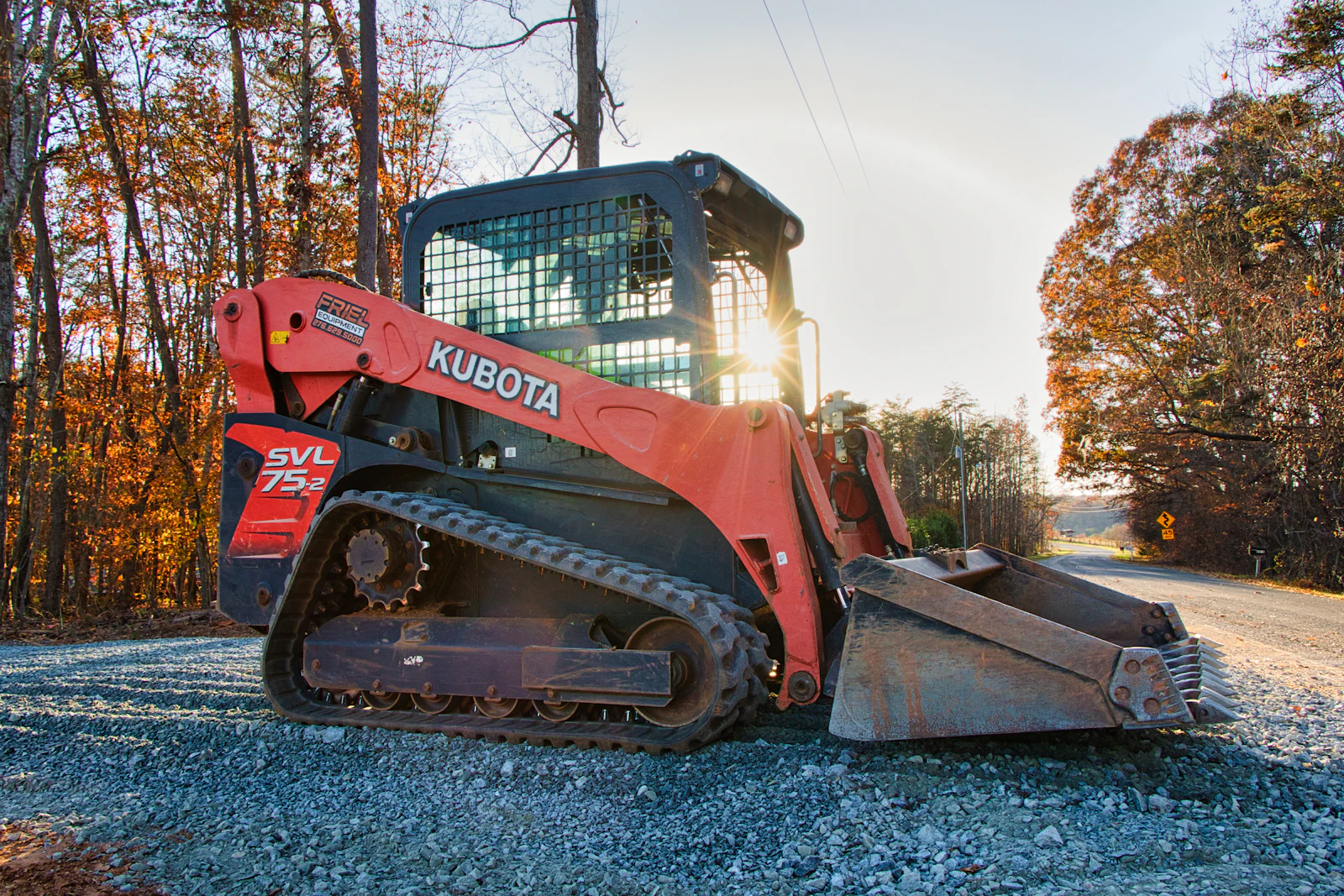
Skid Steer Loader Rental
2026 planning ranges for San Antonio skid steer loader equipment hire typically land around $200–$450/day, $640–$1,600/week, and $1,700–$4,300/month, with the spread driven mainly by whether you’re hiring a wheeled skid steer versus a compact track loader (CTL), the rated operating capacity (ROC), cab/AC, and whether you need high-flow hydraulics for specialty attachments. These are budget ranges (not guaranteed quotes) and assume standard rental billing structures (hour limits, off-rent rules, delivery, and consumables) that are common across major rental networks serving San Antonio—including national fleets (e.g., United Rentals, Sunbelt, Herc) and regional dealer-backed rental yards—where final pricing is typically set by fleet availability, term length, and jobsite logistics.
| Vendor |
Daily Rate |
Weekly Rate |
Review Score |
Website |
| United Rentals |
$420 |
$1 100 |
9 |
Visit |
| Sunbelt Rentals |
$405 |
$1 050 |
9 |
Visit |
| Herc Rentals |
$395 |
$1 020 |
8 |
Visit |
| EquipmentShare |
$390 |
$1 000 |
8 |
Visit |
| The Home Depot Rental (Compact Power) |
$360 |
$900 |
9 |
Visit |
San Antonio Skid Steer Hire Rate Ranges For 2026 (How To Budget Daily, Weekly, Monthly)
For estimating, treat the “headline” skid steer loader rental cost per day as only the starting point. Most rental agreements convert day/week/month based on hour-meter caps (common structures are 8 hours/day, 40–44 hours/week, and 160–176 hours/4-week month), with additional engine hours billed as overtime. Published rate cards from established equipment renters show this exact concept (e.g., one published schedule states rates are based on 8 hr day, 44 hr week, 176 hr month), and it also lists attachment adders and cleaning charges that commonly appear on invoices.
Planning ranges (San Antonio, 2026) by machine class—use these to build a ROM (rough order of magnitude) estimate before you request formal quotations:
- Wheeled skid steer (approx. 1,500–1,800 lb ROC; open ROPS or basic cab): $200–$325/day, $700–$1,150/week, $1,900–$3,100/4-week.
- Wheeled skid steer (approx. 2,000+ lb ROC; enclosed cab/AC common): $250–$400/day, $850–$1,450/week, $2,300–$3,800/4-week.
- Compact track loader (CTL) / tracked skid steer (more flotation, more undercarriage exposure): $300–$475/day, $1,050–$1,650/week, $2,800–$4,300/4-week.
- High-flow CTL for demanding attachments (mulcher, high-flow planer, large broom): $450–$750/day, $1,600–$2,700/week, $4,000–$6,800/4-week (availability-sensitive).
Assumptions for these 2026 planning ranges: (1) standard bucket included unless otherwise specified, (2) hour-meter caps apply, (3) delivery/pickup and protection products (damage waiver) are not included, (4) fuel is customer responsibility, (5) you off-rent with proper notice and return in acceptable condition.
What Drives Skid Steer Equipment Hire Costs In San Antonio?
San Antonio has a few local realities that move real-world equipment hire costs even when the base skid steer rental rates look similar on paper:
- Heat and idle time: Summer heat can increase idle time (AC running while waiting on trucks/trades). If your contract bills overtime hours beyond the cap, plan an overtime line item (often $35–$70 per excess hour depending on class and term).
- Caliche/limestone and abrasion: Many South/Central Texas sites are hard on tires and cutting edges. Plan for cutting-edge wear and clarify whether the bucket edge is considered consumable; tire damage is commonly back-charged if deemed abuse or non-normal wear.
- Downtown access + JBSA protocols: Tight downtown delivery windows and any military base access requirements can add cost through scheduled delivery appointments, longer turn times, and re-delivery charges if a driver is turned away.
Wheeled Vs Tracked Skid Steer: When Paying More Actually Lowers Total Hire Cost
In San Antonio, a tracked skid steer (CTL) often carries a higher base rental rate, but can reduce total cost if it prevents downtime on soft subgrade after rain, improves productivity on rough limestone fill, or reduces rutting remediation. Conversely, if you’re operating mostly on stabilized base or paved areas, wheeled skid steers typically win on cost and reduce undercarriage exposure.
Also budget for surface protection: if you’re inside a warehouse or finished site, you may need track mats or specific non-marking requirements. If your scope includes indoor work, align dust control and protection expectations up front to avoid cleaning and surface-damage disputes at return.
Attachment And Accessory Adders That Change Skid Steer Hire Pricing
Most cost overruns in skid steer loader hire come from attachments and “small” accessories that are operationally mandatory. A published rental schedule for a high-flow skid steer shows attachment pricing can be material (for example, 48" HD forks and a brush cutter/mower are separate line items with their own day/week/month rates), which mirrors what most rental systems do even when the base machine rate is competitive.
- Pallet forks: budget $35–$85/day, $120–$260/week.
- 4-in-1 bucket: budget $75–$160/day, $250–$520/week.
- Auger drive: budget $90–$180/day, $300–$650/week; add bits typically $15–$45/day each (6", 9", 12" common).
- Hydraulic breaker: budget $200–$450/day, $700–$1,600/week (often requires a higher-hydraulic-capacity or specific coupler setup).
- Trencher: budget $175–$350/day, $600–$1,250/week depending on chain and depth.
- Sweeper/broom: budget $150–$325/day, $500–$1,150/week (dusty sites may trigger added cleaning expectations).
Hidden-Fee Breakdown For Skid Steer Loader Equipment Hire
To keep your skid steer loader rental cost per day estimate from being under-scoped, carry explicit allowances for the invoice drivers below (these vary by vendor and contract—confirm on quote):
- Delivery/pickup: commonly $125–$250 each way inside a core radius, or a base fee plus mileage (often $4–$8/loaded mile). Tight access or liftgate/rollback needs can add $75–$150.
- Minimum rental charge: some accounts see a 1-day minimum even for short use; others see a 4-hour minimum for certain tools—verify for your class of skid steer.
- Damage waiver / rental protection plan: budget 10%–15% of the time-and-material rental charges (machine + attachments). This is not the same as liability insurance.
- Environmental/service fees: budget 3%–7% on top of rental lines where applicable by vendor policy.
- Fuel and refuel service: many rental programs deliver full and expect full; if not, plan refuel at roughly $6–$9/gal equivalent with a $35–$75 service minimum.
- Cleaning: budget $75–$250 for routine wash-down exposure on muddy sites; severe cleaning is often billed hourly (one published schedule shows $75/hour for excessive cleaning).
- Late return / extra day triggers: budget a penalty of 25%–100% of a daily rate if a machine misses the agreed return time and blocks the next dispatch.
Delivery Windows, Off-Rent Rules, And Weekend Billing (Where Schedules Become Costs)
Operational constraints routinely change equipment hire cost more than the base rate:
- Delivery cutoffs: if you can’t receive by typical afternoon cutoffs (often around 2:00–4:00 PM), you may slip to next-day delivery and effectively add a standby day to your plan.
- Off-rent notice: many rental agreements require same-day notice to stop billing; if you call off-rent late, you commonly pay through the next business day pickup.
- Weekend/holiday billing: if you take delivery Friday and return Monday, some contracts bill a minimum weekend block unless you negotiate “weekend no-charge” terms. Plan a 10%–20% weekend premium or a 2-day minimum exposure if you can’t schedule pickup.
- Meter-hour overages: if the crew runs 10 hours/day on a rate that assumes 8, plan 2 overtime hours/day at your agreed overtime rate.
Procurement-style rental terms commonly describe the conversion logic (daily converts to weekly once accumulated daily charges hit the weekly cap, etc.), but that conversion only helps if you manage off-rent timing and hour limits.
Example: 5-Day Downtown San Antonio Skid Steer Hire With Tight Logistics
Scenario: You need a CTL (tracked skid steer) for debris handling and light grading behind a downtown commercial renovation. Constraints: delivery must occur between 7:00–9:00 AM, no staging overnight on the street, and the GC requires photo documentation at off-rent.
- Machine (CTL) weekly rate allowance: $1,200–$1,650.
- Pallet forks weekly allowance: $160–$260.
- Delivery + pickup: $175–$250 each way (downtown access/appointment risk), total $350–$500.
- Damage waiver: assume 12% of rental lines (machine + forks), roughly $160–$230.
- Cleaning exposure: carry $150 allowance (dusty demolition alley + track wash-out).
- Overtime hours: crew runs 2 extra hours/day for 3 days (6 hours). At $45–$65/hour, add $270–$390.
Budget outcome (typical): even with a “$1.2k–$1.65k weekly” headline, the realistic all-in equipment hire budget for this week commonly lands around $2,290–$3,180 once delivery, protection, cleaning, and overtime are included.
Budget Worksheet (Skid Steer Loader Equipment Hire)
- Base skid steer (wheeled) or CTL (tracked): $_____ (use day/week/4-week term)
- Attachment 1 (forks / 4-in-1 / auger / breaker): $_____
- Attachment 2 (as needed): $_____
- Delivery + pickup allowance: $350–$500 (local) or $_____ (mileage-based)
- Damage waiver / rental protection: 10%–15% of rental lines = $_____
- Environmental/service fees: 3%–7% of rental lines = $_____
- Fuel/refuel exposure: $100–$350/week (scope-dependent) or $_____ (if vendor refuels)
- Cleaning exposure: $150–$300 (dust/mud) + contingency
- Overtime hours: (planned hours − included hours) × $35–$70/hour
- Jobsite protection (mats, plywood, track-out control): $75–$250
- Contingency (access delays, re-delivery, weather): 5%–10%
Rental Order Checklist (For Skid Steer Hire Coordinators)
- PO details: correct job number, cost code, approved not-to-exceed amount, and authorized operator list.
- Machine spec lock: wheeled vs tracked, ROC class, cab/AC requirement, high-flow requirement, coupler type, tire/track preference.
- Attachments: confirm compatibility, hydraulic requirements, and whether hoses/couplers are included.
- Insurance: COI requirements, additional insured, waiver vs liability coverage clarification.
- Delivery plan: site contact, gate code, delivery window, laydown area, forklift assist if needed, and JBSA/downtown access rules if applicable.
- Off-rent process: cutoff time, who is authorized to off-rent, required photos (all sides, hour meter, attachments), and where to email documentation.
- Return condition: fuel level policy, debris removal expectations, track/undercarriage wash requirements, and damage reporting within 24 hours of delivery.
How To Reduce Skid Steer Equipment Hire Costs Without Increasing Risk
Once you have workable 2026 skid steer rental rates for San Antonio, the next savings usually come from tightening the operational plan rather than pushing for a lower day rate:
- Right-size the term: if you’re at 4–5 days of use, price weekly; if you’re at 3+ weeks, price 4-week/monthly. Conversion terms are common, but you still need to manage off-rent timing to actually realize the cap.
- Control overtime hours: align deliveries early and material supply so the skid steer isn’t running long idle days. Cutting 10 overtime hours at $55/hour saves $550 with no negotiation required.
- Bundle attachments only for the days you need them: keep forks for the full term, but rent a breaker for 2 days instead of 7 if demolition is front-loaded.
- Negotiate weekend rules: if the skid steer will sit Saturday/Sunday, request a weekend structure that prevents a “hidden” 2-day charge when pickups can’t occur until Monday.
Insurance, Damage Waiver, And Deposits (Budget The Gap)
Most rental coordinators see confusion between liability insurance requirements and a damage waiver/rental protection product. For budgeting:
- Damage waiver: carry 10%–15% of rental lines (machine + attachments). It often reduces your exposure for accidental damage but can include exclusions (undercarriage, tires, abuse, loss/theft).
- Deposit / authorization hold: if you’re not on established account terms, plan a refundable deposit or card authorization in the $500–$2,000 range for a skid steer class (varies by vendor and machine value).
- Undercarriage/tire exposure: tracked units can carry higher “wear and tear” scrutiny. Hard caliche sites increase the need for end-of-rental documentation (photos/video) to avoid disputes.
Fuel, Cleaning, And Return Condition Charges (Common Closeout Surprises)
Return-condition expectations are where equipment hire costs frequently escalate after the work is done:
- Fuel: if not returned full, budget a refuel service equivalent of $6–$9/gal plus a $35–$75 service minimum.
- Cleaning: plan at least $150 on muddy jobs. For heavy buildup (concrete spatter, clay-packed undercarriage), some published schedules show “excessive cleaning” billed at $75/hour, which can turn into $150–$450 quickly if the machine needs multiple hours.
- Track-out/dust-control compliance: if your GC requires wash-down or street sweeping, budget a separate cleanup scope. A small sweeper attachment can be $150–$325/day, but may be cheaper than municipal complaints or re-cleaning inside finished areas.
San Antonio Operational Notes That Affect Real Equipment Hire Cost
Local planning considerations for San Antonio equipment hire (especially for skid steers) that estimators should carry as allowances:
- Temperature-driven scheduling: plan early shifts; avoid leaving machines idling in the afternoon. If your rental agreement includes hour caps, idle time still counts on the meter.
- Delivery radius realities: many yards price a core radius, then add mileage; if your job is on the far edge of the metro or you have multiple drops, build a delivery contingency of $150–$300.
- Access constraints: downtown alley access can require smaller units or careful placement; if you require a specific narrow width, expect availability premiums or schedule constraints.
When Ownership Beats Hire (And When It Doesn’t) For Skid Steer Loaders
If you consistently need a skid steer 18–22 billable days per month and can keep utilization high, ownership can outperform monthly equipment hire—especially if you already have transport and maintenance capacity. However, for short-duration scopes, variable attachment needs (breaker/auger/trencher), or uncertain start dates, rental typically remains the lower-risk option because you can (a) scale up to high-flow as needed, (b) avoid downtime risk, and (c) shift major repair exposure to the rental provider.
Quick Quote Request Template (Send To Your Rental Rep)
Use this to tighten quotes and reduce back-and-forth (which often leads to rushed, expensive dispatches):
- Jobsite: San Antonio, TX (address + delivery window)
- Machine: wheeled skid steer or CTL; ROC class; cab/AC; high-flow (yes/no)
- Term: start date/time, end date/time; expected hours/day
- Attachments: forks / 4-in-1 / auger + bit sizes / breaker / trencher / broom
- Commercial terms: day/week/4-week rate, included hour caps, overtime rate per hour, damage waiver %, environmental/service fees %, delivery/pickup pricing, off-rent cutoff time
- Return conditions: fuel policy, cleaning expectations, documentation required (photos of machine + meter)
2026 Market Reality Check (Why Your Skid Steer Hire Quote May Not Match Last Year)
Online 2026 pricing guides emphasize that the quoted daily rate is rarely the real daily cost once you include delivery, fuel, damage waiver, and attachments; treat your estimate as an all-in plan rather than a single line item.
For San Antonio specifically, budget risk tends to concentrate in (1) high-demand weeks where fleet availability pushes you toward premium models, (2) downtown or controlled-access deliveries that trigger re-delivery or waiting charges, and (3) tracked undercarriage exposure on abrasive sites. If you include the allowances and checklists above in your estimating workflow, you’ll usually produce a tighter NTE (not-to-exceed) and avoid end-of-rental closeout surprises.