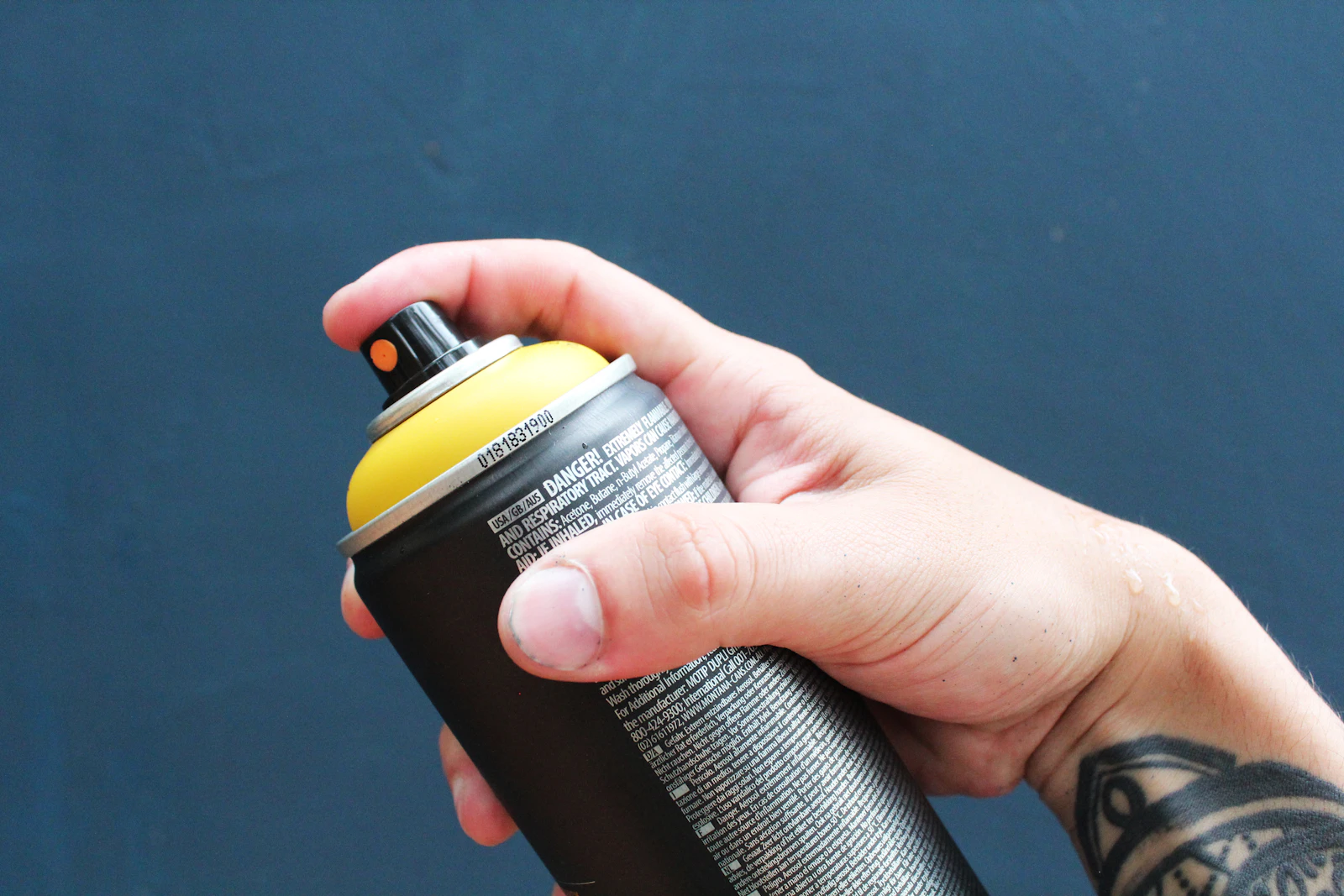
Airless Sprayer Rental Rates in Austin (Daily/Weekly) — 2026 Costs
Construction Cost Hub – Austin
Price source: Costs shown are derived from our proprietary U.S. construction cost database (updated continuously from contractor/bid/pricing inputs and normalization rules).
Eva Steinmetzer-Shaw
Head of Marketing
For Austin drywall taping and finishing crews, 2026 budgeting for airless sprayer equipment hire typically lands in three practical tiers: (1) compact electric “bucket-feed” airless units for PVA primer and light coatings, (2) higher-output contractor carts for faster cycle times, and (3) specialty/cordless airless units when power or access is constrained. As a planning range for Central Texas in 2026, expect $80–$175/day, $300–$600/week, and $900–$1,650/28-day month for the sprayer package (unit + standard gun + a basic hose), with rates moving up when you need longer hoses, additional guns, or higher GPM output. These ranges align with posted daily/weekly/monthly rates seen nationally for airless sprayers (e.g., ~$75–$109/day, ~$240–$439/week, ~$720–$912/month, and up to ~$1,610/28 days for some cordless packages).
| Vendor |
Daily Rate |
Weekly Rate |
Review Score |
Website |
| Sunbelt Rentals (Austin, TX branches) |
$95 |
$315 |
8 |
Visit |
| United Rentals (Austin, TX) |
$100 |
$350 |
9 |
Visit |
| The Home Depot Tool Rental (Austin, TX stores) |
$93 |
$372 |
9 |
Visit |
Airless Sprayer Rental Rates Austin 2026
Budget ranges (USD) for Austin airless sprayer hire in 2026 (assumes electric 120V airless sprayer suitable for primer/paint; does not assume texture pumping or dedicated drywall mud spraying):
- Daily: $80–$175/day (most common “contractor-grade” planning range)
- Weekly: $300–$600/week (often priced at ~3–4.5 days)
- Monthly (28-day billing cycle): $900–$1,650/28 days
How these ranges were set: posted rate cards in multiple U.S. rental markets show airless sprayers commonly advertised around $75/day $80/day and $320/week $80/day, $240/week, $720/month $86/day, $314/week, $912/month and a cordless package as high as $160/day, $537/week, $1,610/28 days. Austin-area branch pricing can land above or below these markers depending on fleet availability, jobsite delivery requirements, and whether your account uses contractor rate agreements.
What Rental Coordinators Should Specify for Drywall Taping and Finishing
For drywall finishing workflows, the airless sprayer is usually supporting PVA primer, drywall sealer, and topcoat paint after sanding and dust control—so the cost outcome depends on whether you’re hiring a basic unit or a production setup. In your RFQ or PO notes, specify:
- Target coating type: PVA primer vs. high-build vs. enamel topcoats (affects tip sizes, filtration, and cleaning time).
- Output class: “Bucket-feed contractor airless, ~0.5 GPM class” is a common baseline; examples of published specs include ~0.54 GPM and up to 3,300 psi in this equipment category.
- Hose length requirement: 50 ft standard is common; confirm if you need 100–200 ft (long runs change pressure drop and tip performance).
- Power constraints: 120V/15A circuits in tenant spaces vs. generators (plan for a dedicated circuit where possible).
- Dust-control plan: occupied renovation (medical/office) can require additional masking time and HEPA control; this is a cost driver through labor time and extended rental days.
Typical Add-On Hire Costs and “Hidden Fees” That Move the Invoice
To keep your airless sprayer equipment hire cost in Austin predictable, treat the base rate as only one component. The items below are common across rental houses and should be line-itemed in your internal estimate as allowances (actuals vary by branch and contract terms).
Hidden-Fee Breakdown
- Minimum charges / short-term minimums: some shops publish short minimums like 2-hour $49.50 and 4-hour $74.25, or a defined “minimum” before a day rate applies.
- Cleaning deposits: published cleaning deposits can be $75 (held at checkout and refundable if returned clean) or a separate $150 cleaning deposit model.
- Refundable equipment deposits: some specialty sprayer providers publish a flat $500 deposit requirement.
- Damage waiver (optional): plan 10%–15% of the rental rate (common structure across equipment categories; confirm your account’s waiver rules and exclusions).
- Late return / after-hours penalties: budget 25% of daily rate if returned after cutoff, plus an after-hours processing fee of $25–$75 if the branch requires staff call-out (policy varies).
- Weekend/holiday billing: if you take the unit Friday PM and return Monday AM, many branches charge a weekend package (example published: $129 weekend on a unit with an $86 day rate).
- Delivery/pickup: for Austin metro, budget $85–$175 each way for standard weekday delivery within a typical local radius; add $3–$6/mile beyond that radius depending on dispatch model and toll routing.
- Same-day delivery premium: if you miss dispatch cutoff, plan a $50–$125 premium (or next-day only) and confirm gate codes and delivery windows.
- Consumables you will almost always buy (not hire): tips ($15–$45 each), tip guards ($12–$25), manifold/pump filters ($10–$25), and pump lube ($8–$20).
- Accessory hire adders: extra 50 ft hose section ($10–$25/day), hose whip ($5–$12/day), pressure roller kit ($15–$35/day), extra gun ($20–$45/day).
- Clog/abuse charges: if returned with dried coating in pump/filters, plan a non-refundable cleaning fee of $90–$250 depending on teardown time and replacement parts needed.
- Lost/damaged components: missing gun/hose can trigger replacement charges; for budgeting, carry $150–$450 exposure for a gun/hose set and $10–$40 per missing fitting/guard.
Austin-Specific Cost Drivers That Commonly Change the Rental Duration
Austin jobsite realities tend to change the number of billable days more than they change the base day rate. In 2026, plan around these local operational constraints when you schedule airless sprayer hire for drywall finishing:
- Downtown access and staging: parking and freight-elevator windows can compress work time. If the sprayer arrives after your access window, you can lose a full billable day. Build a 1-day float for delivery variability on tight downtown projects.
- Heat and drying behavior: Central Texas heat accelerates skinning for some products; crews may stop/start more often for tip changes and filter cleaning. The operational impact is often an extra 2–4 labor-hours across a week, which can push you into an additional rental day if production slips.
- Occupied interiors and dust-control: drywall sanding dust plus spraying requires stronger containment. The containment scope can add $150–$400 in masking materials per area and—more importantly—extend schedule, increasing hire days.
Example: 3-Day Drywall Prime-and-Paint Cycle in Austin (Realistic Numbers)
Scenario: 18,000 sq ft tenant improvement near the Domain, Level 2 finish, PVA prime + two topcoats. Work restricted to 7:00 PM–6:00 AM (night shift). You need one primary airless sprayer and a backup plan to avoid downtime.
- Sprayer hire (primary unit): 3 days at $125/day allowance = $375 (within the 2026 Austin planning band).
- Weekend package risk: if your third day lands on a weekend return, carry $129 weekend as an alternate to a single day rate.
- Extra hose section: 3 days at $15/day = $45 (to reach multiple suites without relocating the cart).
- Damage waiver: 12% of rental subtotal (assumption) = ~$50.
- Delivery/pickup: $125 each way allowance = $250 (night access requires coordination; confirm delivery window).
- Cleaning deposit exposure: carry $75–$150 held on card (refundable if returned clean).
- Consumables (purchase): two tips ($30 each) + two pump filters ($18 each) = $96.
- Estimated equipment-related total (not including paint/material): ~$862–$916 depending on waiver and weekend handling.
Operational constraint that changes cost: If the GC requires off-rent to be processed only during business hours and you finish at 3:00 AM, you can easily carry the unit an extra day. Clarify off-rent notification timing and the branch’s return cutoff before you commit to the schedule.
Budget Worksheet (No Tables)
- Airless sprayer hire (base): $80–$175/day; $300–$600/week; $900–$1,650/28 days
- Delivery and pickup allowance: $170–$350 round trip (add mileage $3–$6/mile beyond local radius)
- Damage waiver allowance: 10%–15% of hire subtotal (or per your MSA)
- Cleaning deposit/fee exposure: $75–$150 deposit; $90–$250 cleaning fee if returned dirty
- Accessory hire adders: extra hose $10–$25/day; extra gun $20–$45/day; roller kit $15–$35/day
- Consumables (purchase): tips $15–$45 each; filters $10–$25 each; fittings/guards $12–$25
- Schedule float: 1 extra day at planned day rate (downtown access, punch-list callbacks, or cure time impacts)
- Closeout documentation: $0 direct, but assign 0.5 labor-hour to photograph return condition and serials
Rental Order Checklist (PO, Delivery, Return)
- PO scope notes: “Airless sprayer for PVA primer/topcoat; latex/water-based only unless approved.”
- Requested package contents: unit + gun + 50 ft hose + suction tube + basic wrench set + manual.
- Accessory requirements: confirm tip sizes needed for primer vs. topcoat; confirm whether tips are included or purchased.
- Delivery instructions: site address + contact + phone, gate code, dock height, after-hours rules, and required delivery window.
- Condition-at-delivery: photograph serial number, hour meter (if present), hose condition, and fittings.
- Off-rent rules: confirm cutoff time for same-day off-rent; confirm weekend billing policy and whether Monday return triggers weekend charges.
- Return condition expectations: flushed with appropriate fluid, filters cleaned, exterior wiped, hose drained/coiled, all parts returned.
- Closeout proof: return ticket + photos + note any pre-existing damage to avoid back-charges.
Next, the cost discussion continues with rate-structure strategy (day vs. week vs. month), how to control cleaning risk, and how to right-size equipment for drywall finishing so you don’t over-hire output you can’t feed.
How to Choose Day, Week, or 28-Day Hire for an Airless Sprayer
From a rental coordinator’s perspective, the most common cost mistake is renting an airless sprayer “day by day” while the job is effectively a week-long commissioning and punch-list cycle. If you expect any of the following, price the week (or 28-day) from the start:
- Multiple mobilizations: prime now, paint later, then touch-ups after MEP trims.
- Area release constraints: the GC turns over rooms in phases, forcing stop/start.
- Occupied-space rules: spray windows limited to nights/weekends, which can extend elapsed duration even if spray time is short.
Published market examples illustrate why: a day rate around $80–$109/day can scale to $240–$439/week (roughly 3–4 days) and to $720–$912/month (m—but some higher-end or cordless setups run $1,610 per 28 days. For Austin 2026 planning, that means you can often save by committing to the right time band early, provided you can control cleaning/return risk.
Controlling Cleaning Risk (The Fastest Way to Avoid Back-Charges)
Cleaning is a major swing factor in airless sprayer hire cost. Several rental shops publish cleaning deposits such as $75 or $150 and some vendors require a broader deposit model (e.g., $500) for certain sprayer systems. Even when you get the deposit back, the time cost is real—especially on drywall sites where dust contamination is common.
Practical controls that reduce cost exposure:
- Assign a “sprayer owner” each shift: one person responsible for filter checks every 30–60 minutes during continuous spray.
- Plan flushing time as a line item: carry 45–90 minutes at the end of each spray window for flush-down and packing (prevents “we’ll do it tomorrow” extra-day rental outcomes).
- Specify return condition in your internal closeout: photos of clean suction tube, clean filters, and empty hose reduce disputes.
- Do not rely on “quick rinse” in occupied TI: you may be required to dispose of rinse water appropriately; budget a controlled cleanup station.
Accessories and Configuration: What Changes the Hire Cost the Most
For drywall taping and finishing support work, the most common configuration upgrades are hose reach, additional guns, and rolling attachments for touch-up. These adders can cost less than an extra rental day—so they’re often worth it if they reduce relocation time:
- Extra hose reach: budget $10–$25/day per extra section to reduce cart moves and elevator trips.
- Second gun for production: budget $20–$45/day (and plan for matching tips/filters).
- Pressure roller kit: budget $15–$35/day if you’ll be back-rolling in tight corridors or around sensitive finishes.
- Tip strategy (purchase): plan $15–$45 per tip and assume at least 2 tips per week for primer + topcoat workflows (more if crews are learning or if drywall dust is heavy).
Delivery, Cutoffs, and Off-Rent Rules (Where Austin Projects Lose Money)
In Austin, the invoice often increases due to elapsed-time issues rather than equipment complexity. The key is aligning branch cutoffs with your jobsite access rules:
- Delivery window alignment: if your site only accepts deliveries 7:00 AM–9:00 AM, confirm the branch can hit that window or your “day 1” becomes unproductive but still billable.
- Off-rent notification timing: set an internal rule that the superintendent (or foreman) initiates off-rent before 2:00 PM local time (use your vendor’s stated cutoff if different).
- Weekend billing: if you keep possession across weekend, you may be charged a weekend package; published examples show weekend pricing like $129 where the day rate is $86.
- Downtown constraints: traffic and loading restrictions can justify budgeting a $50–$125 same-day dispatch premium if you miss standard dispatch (confirm policy per branch).
Operational Fit: Avoid Over-Hiring Output You Can’t Feed
Higher-output units can look attractive, but drywall finishing support work frequently bottlenecks on masking, room release, and cure time—not pump output. If your crew will only spray in short windows, a mid-tier unit at the lower end of the Austin range ($80–$120/day) may reduce risk, because it’s cheaper to keep as a standby for punch-list callbacks. Conversely, if you are truly production-spraying large areas, step up to a contractor cart and reduce elapsed days.
Use this decision rule:
- If you expect < 4 hours of actual trigger time/day: prioritize easy cleanup and predictable deposit terms over max GPM.
- If you expect full-shift spraying: prioritize higher output and longer hose reach to avoid relocations (often the real schedule killer).
Cost Management Notes for Drywall Finishing in Tenant Spaces
- Indoor dust-control requirements: if required, budget additional masking materials ($150–$400 per work area) and recognize the schedule impact can add 1 extra rental day even when spray time is unchanged.
- Refuel/recharge expectations: for cordless airless units, you may be billed for missing batteries/chargers or for damaged packs; carry $200–$600 exposure depending on kit.
- Return-condition documentation: a 5-minute photo set at pickup and return can prevent a $90–$250 cleaning charge dispute (allowance range reflects typical teardown/cleaning exposure noted earlier).
When It’s Cheaper to Extend Hire vs. Remobilize
For drywall taping and finishing, re-mobilization risk is high: you may need to re-mask, re-stage, and re-brief tenants. If your schedule has a known punch-list phase within 7–10 days, it can be cheaper to keep the sprayer on weekly terms rather than return and re-rent—especially if return cutoffs or weekend billing will cause extra day charges. Compare:
- Option A (return and re-rent): 2 separate day rentals + 2 deliveries can add $250–$500 in logistics alone.
- Option B (keep on week rate): weekly pricing is often ~3–4.5 day rates, which can be a net save if it prevents re-delivery and schedule slips.
If you want, share your estimated spray days, whether the site is occupied, and whether you need delivery or will “will-call” pickup. I can tighten the Austin 2026 hire allowances (still as planning ranges) for a small TI crew vs. a production paint subcontractor workflow.