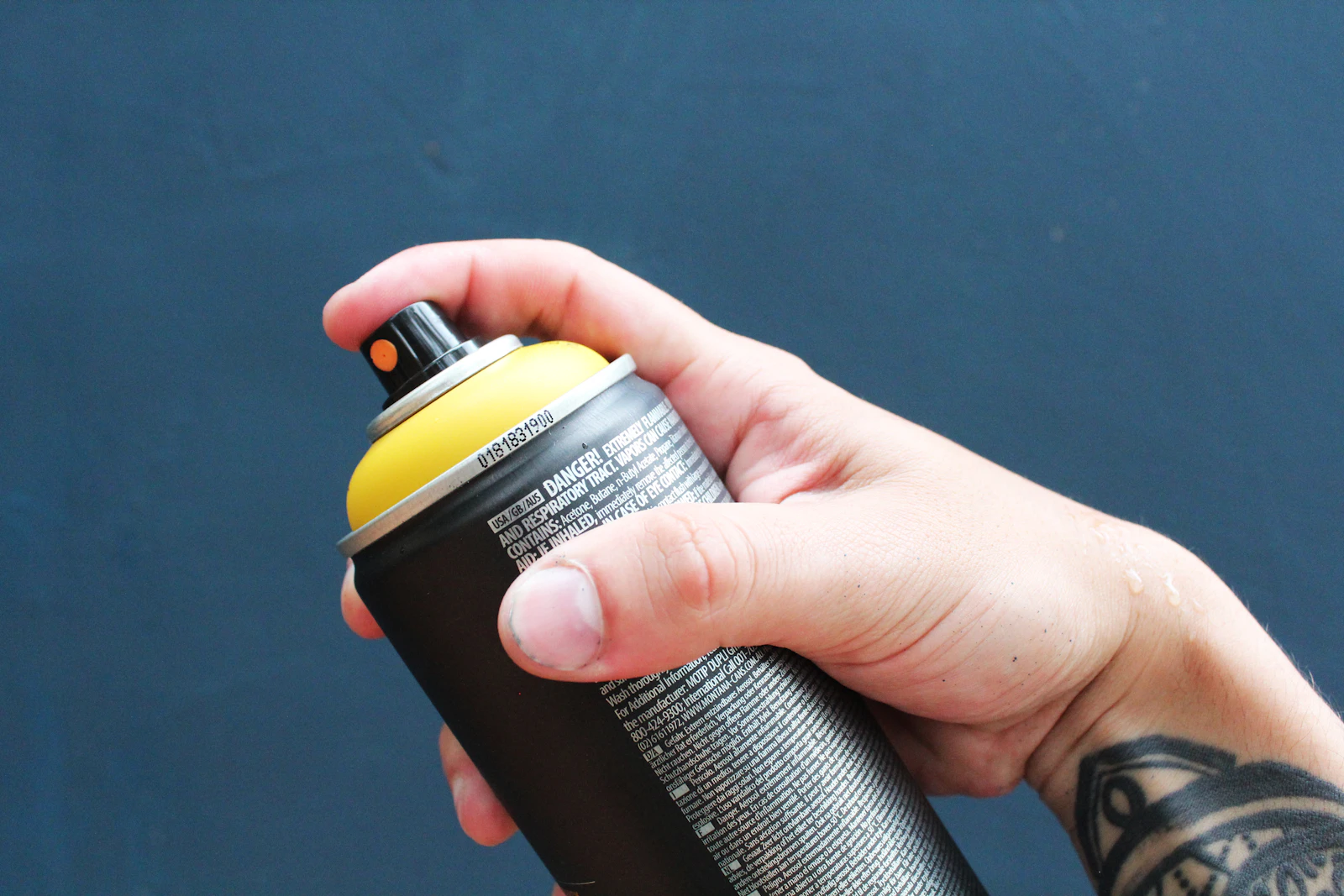
Airless Sprayer Rental Rates San Diego 2026
For San Diego airless sprayer equipment hire supporting drywall taping and finishing scopes (typically PVA primer, sealers, and finish coats after sanding), 2026 budget planning ranges are commonly $90–$135 per day, $320–$450 per week, and $850–$1,250 per 4-week/month for an electric contractor-grade airless unit (roughly 0.47–0.54 GPM class) with a standard 50' hose and gun. These are estimating ranges—not a guaranteed quote—built from current published catalog rates and typical San Diego metro rental practices (counter pickup vs. delivery, minimum terms, and return-condition expectations). In San Diego, large national houses (e.g., United Rentals, Sunbelt, Herc) and local yards in East County/North County all compete in this band, but the final hire cost is usually driven by consumables, cleaning risk, delivery logistics, and off-rent rules more than the base day rate.
| Vendor |
Daily Rate |
Weekly Rate |
Review Score |
Website |
| United Rentals |
$95 |
$285 |
9 |
Visit |
| Sunbelt Rentals |
$117 |
$347 |
8 |
Visit |
| The Home Depot Tool Rental |
$118 |
$472 |
9 |
Visit |
| Herc Rentals |
$115 |
$360 |
8 |
Visit |
Published Rate Anchors You Can Use to Calibrate 2026 Hire Budgets
If you need defensible anchor points for internal estimating, the following published rates (outside of any negotiated account pricing) help bracket realistic contractor airless sprayer hire expectations. Pine Valley Rental & Sales (San Diego County) lists an airless paint sprayer at $71/half-day, $109/day, $383/week, and $958/4-week. Cal-West Rentals (CA) publishes $95/day, $315/week, and $900/four-week for a Graco-class airless sprayer. Angeles Rentals (CA) publishes $75/4 hours, $100/day, $400/week, and $1,200/month, and also shows a delivery structure of $50 + $5/mile (useful as a logistics allowance reference even when you’re not using that specific yard). Stanford Home Centers publishes $95.75/24-hour, $285.75/week, and $855.75/month for a Graco Rental Pro-class unit.
What Affects Airless Sprayer Equipment Hire Costs for Drywall Taping and Finishing?
On drywall taping and finishing projects, an airless sprayer is often brought in for speed and uniformity once the board is taped, coated, sanded, and ready for primer/paint. The hire cost you actually pay in San Diego typically shifts with the following job realities:
- Material viscosity and tip/filter setup: PVA primer and standard interior paints generally run fine on a mid-size electric airless. High-build primers can push you toward a higher-output unit or larger tip, which increases both base rate and cleaning risk.
- Finish level and rework tolerance: Level 4 vs. Level 5 expectations change masking time and overspray containment—often adding a day of rental when the crew loses spray time to protection and punchlist touch-ups.
- Continuous vs. intermittent use: If the sprayer will sit while coats cure or while other trades work, pay attention to off-rent timing. Many branches bill by the day from checkout/dispatch to check-in, not “trigger time.”
- Power and access constraints: Running 120V equipment in tenant improvements can require dedicated circuits. If power is unreliable, you may need an on-site generator allowance, which can exceed the sprayer’s daily hire cost.
- Dust-control requirements: Drywall sanding dust is the number-one driver of avoidable cleaning charges. If the sprayer is staged in the same zone as sanding, plan for more filter clogs and longer flush time at return.
Typical Add-Ons That Change the Real Hire Cost (Line-Item These Early)
For airless sprayer hire for drywall taping and finishing, most cost overruns come from “small” extras that are easy to miss on the PO. Budget these as separate allowances (and confirm what is included vs. billed as consumable):
- Additional hose length: if you need an extra 50' hose for corridor work or multi-room pulls, some catalogs show $15/day and $60/week for a 50' paint sprayer hose.
- Tip/guard consumables: allow $18–$45 per reversible tip (common change-out when spraying primer then topcoat), plus $12–$25 for spare tip seals.
- Extension wand(s): allow $8–$15/day each for 12"–24" extensions to keep operators off ladders on lid work.
- Pressure roller kit: when the GC requests “spray-and-backroll” on fresh drywall, allow $20–$35/day for roller kit components (and plan labor impact).
- Manifold filter sets: allow $10–$25 per filter (finer mesh for lacquers/paints; coarser for primers).
- Wet-film gauge / QC items: allow $8–$20 for basic QC consumables if your foreman wants consistent coverage documentation.
Hidden-Fee Breakdown
To keep your equipment hire cost predictable, confirm these charges in writing before release and again at return (many are assessed at check-in, after the equipment is inspected):
- Minimum hire term: common minimums are 4 hours or 1 day. A published example shows $75/4 hours before a daily rate applies.
- Weekend billing: many branches treat Saturday/Sunday as billable days unless you have a negotiated “weekend special” (verify whether a Friday pickup and Monday return is billed as 1 day, 2 days, or 3 days).
- Late return penalty: plan an internal allowance of 25% of daily rate if returned after cutoff, or 1 extra day if returned next morning (policy varies by branch).
- Cleaning/flush fees: allow $75–$250 if the unit comes back with dried primer/paint, clogged filters, or compound contamination. Drywall dust plus overspray residue is a common trigger.
- Damage waiver / rental protection: budget 10%–15% of rental charges (sometimes capped) unless your MSA states otherwise.
- Deposit / credit card pre-auth: for non-account rentals, allow $200–$500 depending on the unit and policy.
- Missing parts and “kit completeness” charges: allow $20–$60 for missing small items (filters, guards, pickup tube screens) and $75–$175 for a missing gun or hose, depending on make/model.
- Consumable restrictions: some yards restrict certain coatings (e.g., epoxies, hardeners). If prohibited material is used, you can see a “reconditioning” charge—carry $150–$400 contingency for worst-case disputes.
San Diego-Specific Cost Considerations (Delivery, Access, and Overspray Risk)
San Diego is generally friendly to year-round painting/finishing, but local operating conditions still impact the airless sprayer hire cost you will actually carry on a drywall project:
- Downtown / Coastal access: deliveries to Downtown, Little Italy, Mission Valley, and beach communities often require tighter delivery windows and paid parking/curb management. Carry a $25–$85 parking/escort allowance on top of any delivery fee if the site lacks a laydown zone.
- Wind and coastal overspray controls: near the coast, afternoon winds can force schedule shifts (masking stays up longer; spray windows get shorter). This can add +1 day of rental if your production sequence slips.
- HOA / tenant-improvement documentation: many multi-tenant properties require COI, after-hours noise limits, and strict elevator protection. If after-hours work is required, plan a 10%–20% labor premium and consider whether the rental yard supports early AM will-call pickup to avoid paying an extra day.
Example: Drywall Taping and Finishing—3,500 SF Medical Office TI in San Diego
Scenario: 3,500 SF suite in Mission Valley, Level 4 finish, PVA primer + 2 coats eggshell, work restricted to 6:00 PM–6:00 AM, with dust-control expectations due to adjacent occupied suites.
- Base equipment hire: plan a mid-size electric airless at $109/day (published benchmark) for 3 days = $327.
- Weekend handling: if pickup Friday and return Monday, confirm billing; if billed as 3 days, your $327 holds; if billed as 4 days, add +$109.
- Extra hose (access and staging): add one 50' hose allowance at $15/day for 3 days = $45.
- Consumables: allow $60 for two tips + seals, $25 for filters, and $30 for masking adders attributable to spray method (estimator choice: place these in “spray method consumables,” not equipment hire).
- Cleaning risk: because sanding is concurrent, carry $150 cleaning contingency; reduce this by isolating the sprayer in a clean staging room and documenting flush procedure.
- Delivery vs. pickup: if you can’t stage a pickup vehicle due to after-hours restrictions, allow a delivery structure similar to published examples (e.g., $50 + $5/mile) or your local branch’s schedule.
Takeaway for rental coordinators: on a small TI, the sprayer’s base hire might be only a few hundred dollars, but the total “spray package” cost is governed by (1) whether weekend days are billed, (2) hose/accessories, and (3) cleaning/return condition. If you cannot guarantee a clean return, it can be rational to carry a higher monthly-rate model (or add a spare unit day) to protect schedule.
Budget Worksheet
Use the following as a no-table worksheet for budgeting airless sprayer equipment hire costs on San Diego drywall taping and finishing projects (adjust quantities and day counts to match your sequence):
- Airless sprayer (electric, contractor grade): $90–$135/day x ____ days
- Weekly conversion check (if >= 5 billable days): $320–$450/week x ____ weeks
- 4-week/month option (if continuous): $850–$1,250/4-week x ____
- Extra 50' hose: $15/day or $60/week x ____
- Tip/guard consumables: $18–$45 each x ____
- Extension(s): $8–$15/day each x ____ days
- Damage waiver / rental protection: 10%–15% of rental subtotal
- Cleaning contingency (dust/primer residue): $75–$250
- Deposit / pre-auth (if required): $200–$500
- Delivery & pickup allowance (if not will-call): $85–$175 each way (or branch schedule); add mileage if outside core service radius
- After-hours / weekend return premium (if applicable): $25–$150 allowance
- Lost/missing parts allowance: $20–$60 small parts; $75–$175 hose/gun risk
Rental Order Checklist
Before you release the PO for airless sprayer hire in San Diego, use this field-ready checklist to reduce surprises at return:
- PO includes: base unit, hose length, gun, guard, tip(s), filters, extensions, and any pressure-roller kit components required by spec.
- Confirm billing clocks: checkout time, daily cutoff (e.g., 3:00–5:00 PM), weekend billing rules, and off-rent notification requirements.
- Delivery requirements: site contact, gate code, loading dock rules, elevator reservation, parking/curb access plan, and delivery window (include penalties if missed).
- Insurance: COI requirements (property management), damage waiver election, and responsibility for theft/vandalism while on-site.
- Condition at pickup: photos of serial plate, hour meter (if present), hose condition, gun trigger safety, and included accessory checklist.
- Return condition: confirm flush requirements (water vs. solvent), “return clean” expectations, and documentation (flush log + photos) to dispute cleaning fees.
- Operational plan: designate a clean staging area away from sanding dust; store tips/filters in labeled bags to avoid missing-part charges.
When an Airless Sprayer Is the Wrong Rental for Drywall Finishing
Keep your estimating clean: a standard airless sprayer is ideal for primers and paints on finished drywall, but it is often not the right tool for spraying joint compound or heavy textures unless you step up to a dedicated texture sprayer/pump package. If your scope includes orange peel, knockdown, or sprayed skim materials, confirm material compatibility and consider budgeting a texture rig separately; otherwise, you risk (a) slow production, (b) tip blowouts, and (c) significant cleaning/reconditioning charges that wipe out any perceived savings in base equipment hire.
How to Get Better Weekly and Monthly Equipment Hire Outcomes in San Diego
For drywall taping and finishing contractors, the best savings usually come from billing alignment, not from chasing the lowest posted day rate. In San Diego, your rental coordinator can typically reduce total airless sprayer equipment hire cost by tightening these operational controls:
- Convert at the right time: if your branch converts automatically, confirm whether it converts at 5 billable days to a weekly rate or at 7. If it does not auto-convert, ask for it explicitly before invoice close.
- Sequence coats to avoid “dead days”: if primer is sprayed, then you wait a day for other trades, then you return for topcoats, you may accidentally pay for an idle day. If schedule forces gaps, consider returning the sprayer between phases and re-hiring—unless your delivery costs are high.
- Standardize accessory kits: missing guards, clogged filters, and crushed hoses are common backcharges. A standardized “sprayer kit” (tips, filters, extension, wrenches) reduces replacement hits like $20–$60 per incident.
- Negotiate a cleaning protocol instead of hoping: agree in writing what “clean” means. If the branch expects a fully flushed unit and dry exterior, build a 0.5–1.0 hour demob task into the foreman’s closeout checklist.
Return-Condition Controls That Protect Your Deposit and Reduce Backcharges
Most airless sprayer disputes are preventable. For San Diego tenant improvements, where drywall dust is constant, the key is to treat return condition like any other closeout deliverable:
- Flush immediately after final coat: do not let primer dry in the pump overnight. A next-day cleanup often triggers the $75–$250 cleaning band (or worse if reconditioning is required).
- Bag and tag consumables: place the gun, guard, tips, and filters into labeled bags at pickup. Missing-part charges frequently fall into the $20–$60 range even when the unit itself is fine.
- Photo documentation: take 6–10 photos at pickup and return: unit, hose ends, gun, serial tag, and the accessory kit laid out. This is especially useful when multiple crews share the same equipment hire.
- Cutoff-time discipline: if your branch cutoff is mid-afternoon, plan a 2-hour buffer for traffic and site demob. Returning after cutoff commonly adds +1 day of billing regardless of how little you used the sprayer that day.
Delivery and Pickup Allowances for San Diego (When Will-Call Isn’t Practical)
San Diego drywall finishing work often happens in occupied buildings, tight parking zones, or after-hours windows—conditions that make will-call pickups risky. If you need delivery, carry a realistic allowance and confirm whether you’re being billed for “delivery,” “pickup,” and “environmental/handling” separately. A published delivery structure from a California rental supplier shows $50 + $5/mile as a transparent example of how charges can be constructed; your local branch may use a different schedule, but the concept is the same: a base trip charge plus mileage outside a core radius. For estimating, many contractors carry $85–$175 each way within the metro area, plus $4–$8/mile beyond an agreed service radius, then reconcile to actuals once the branch confirms.
Drywall Taping and Finishing Notes: Avoid Paying for the Wrong Spec
In scopes where the spec reads “spray and backroll,” clarify whether the GC expects backrolling on primer only or on all coats. If backrolling is required on topcoat, you may add $20–$35/day in roller kit/accessories plus additional labor time—sometimes erasing the schedule benefit of spraying. If the goal is uniform texture appearance on repaired areas, it can be cheaper to hire the sprayer for 1–2 focused days and roll the balance rather than carrying a weekly hire through patchwork phases.
Ownership Vs. Equipment Hire: Break-Even Guidance for San Diego Crews
If you’re running steady TI volume, compare equipment hire cost against ownership with realistic utilization. As a sanity check, if your “all-in” rental spend (base hire + typical accessories + expected cleaning risk) averages $150–$220 per rental day, and you rent 25–40 days/year, your annual spend can land in the $3,750–$8,800 range before delivery. At that point, ownership can make sense only if you have: (1) consistent maintenance discipline, (2) secure storage to reduce theft risk, and (3) a plan to avoid downtime when the pump needs service. Many drywall finishers still prefer hire because it externalizes maintenance and reduces the “one bad clog” event that can kill a production day.
2026 Planning Notes for San Diego Equipment Hire Budgets
For 2026 forecasting in San Diego, plan for variability rather than assuming a single “standard” rate. Published catalog rates in the market already span from sub-$100/day offerings to $109/day benchmarks and up to $135/day for some models/regions, with weekly and 4-week rates scaling accordingly. The practical approach for estimating managers is to (a) carry a mid-range day rate, (b) treat cleaning and weekend billing as the true risk items, and (c) document your return condition so the invoice matches your budget. If your drywall taping and finishing pipeline includes coastal high-rises, medical offices, or schools, also include access/escort allowances and delivery-window risk, because those logistics frequently add more cost than the sprayer itself.
If you want, share your expected spray days (primer-only vs. primer + topcoat), site area (Downtown vs. North County vs. East County), and whether you need delivery. I can convert that into a tight 2026 equipment hire allowance with a low/most-likely/high range tailored to your sequence—still with no vendor tables.