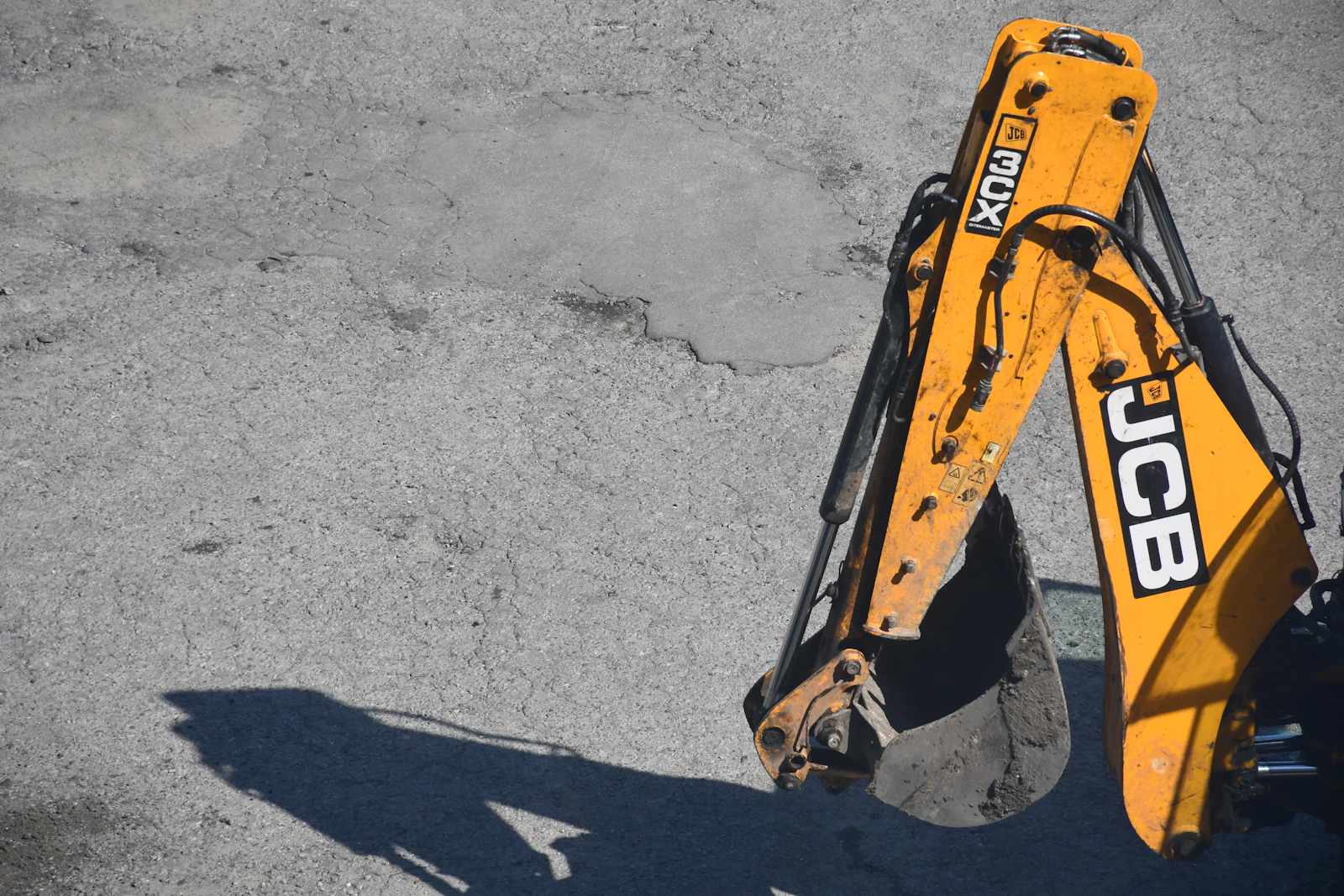
Backhoe Loader Rental Rates Atlanta 2026
For backhoe loader equipment hire in Atlanta in 2026 (bare machine, no operator), most contractors should plan budgeting around $350–$650 per day, $1,050–$1,850 per week, and $2,600–$5,200 per 4-week/month for a typical 4x4, 90–100 HP class backhoe suitable for trenching and backfilling. These are planning ranges assuming one-shift utilization (8 hours/day, 40 hours/week, ~160 hours/4-weeks), normal wear-and-tear, and standard buckets; specialty attachments, delivery logistics across the I-285 perimeter, and return-condition charges commonly move the final invoice materially. In the Atlanta metro you’ll typically source this class of machine through national fleets (e.g., United Rentals, Sunbelt Rentals, Herc Rentals, EquipmentShare) and strong regional yards, with pricing most sensitive to spec (Extend-A-Hoe/extendable dipper, 4WD, aux hydraulics, ride control) and how cleanly your team manages off-rent timing and return condition.
| Vendor |
Daily Rate |
Weekly Rate |
Review Score |
Website |
| United Rentals (Atlanta – branch D06) |
$520 |
$1 450 |
8 |
Visit |
| Sunbelt Rentals (Kennesaw / Atlanta metro – Branch #10) |
$510 |
$1 425 |
7 |
Visit |
| Herc Rentals (Atlanta – Southland Cir NW) |
$525 |
$1 475 |
9 |
Visit |
| Yancey Rents (Kennesaw / Marietta – Cat Rental Store) |
$575 |
$1 500 |
9 |
Visit |
How Atlanta Hire Pricing Compares to Published Benchmarks (And Why Your Quote Will Vary)
Published rate sheets and national “typical cost” ranges are useful for setting a 2026 budget, but your actual Atlanta hire rate will vary with branch availability, delivery radius, and spec. As one concrete benchmark, Ahearn Rents publishes a 90–99 HP backhoe loader at $500/day, $1,250/week, and $2,750/month (market-dependent, subject to their terms and availability).
On the broader market side, 2026 “typical” backhoe rental ranges are often cited across the industry at roughly $280–$1,000/day, $800–$3,500/week, and $2,200–$8,000/month, capturing everything from smaller tractor-loader-backhoe formats to larger, higher-spec machines. Use the top end for high-demand periods, special configurations, or when you need a very specific machine (e.g., Extend-A-Hoe + 4WD + aux hydraulics + quick coupler) on short notice.
What Drives Backhoe Loader Equipment Hire Costs for Trenching and Backfilling in Atlanta?
Backhoe loader hire is rarely just “the day rate.” For trenching and backfilling in Atlanta’s mixed soils (including heavy red clay), the cost drivers that most often change the invoice are operational: delivery constraints, shift/overtime usage, attachments, and return-condition exposure. If you’re budgeting a utility trench, drainage tie-in, or short-run storm line, align the backhoe spec with production targets and restoration scope—otherwise you’ll pay twice (once in hire, then again in labor inefficiency).
- Machine class and spec: 70–80 HP 2WD units may price lower but can struggle in wet Atlanta clay or uneven access; 90–110 HP 4x4 with Extend-A-Hoe is typically the “safe default” for trenching and backfilling, especially when spoils management is tight.
- Aux hydraulics readiness: If you need a hydraulic thumb or breaker capability, confirm the machine has the proper auxiliary lines and controls—retrofit swaps can trigger re-delivery charges.
- Attachments and wear parts: A standard 24 in. trench bucket may be included; a 12 in. bucket, 36 in. cleanup bucket, or a coupler can add cost.
- Delivery across the metro: Atlanta traffic and delivery windows (often constrained to early AM or mid-day) can create higher mobilization if the yard must hold a driver or miss a cut-off.
- Return condition and cleaning exposure: Red clay, concrete splatter, and asphalt millings are common triggers for cleaning charges if not addressed before pickup.
2026 Planning Allowances: The Line-Item Costs That Commonly Get Missed
Below are budgeting allowances that rental coordinators in the Atlanta market commonly carry for backhoe loader hire on trenching/backfill scopes. These are not “guaranteed fees”—they are estimating guardrails to prevent margin erosion when the invoice arrives.
- Delivery (one way): plan $150–$325 per trip inside ~20 miles; for outlying counties or tight site access, carry $325–$550 per trip.
- Fuel/Refuel service: if returned short, carry $6.00–$8.50 per gallon plus a $35–$75 service/admin charge.
- Damage waiver / rental protection: commonly 10%–15% of the time charge (varies by account terms, insurance, and equipment class). If you rely on a rental protection plan, verify the cap and exclusions before you trench near utilities.
- Cleaning fee exposure: budget $150–$450 if the machine comes back with caked clay, mud packed into stabilizers, or concrete/asphalt residue.
- Weekend/holiday billing behavior: if you take delivery Friday and off-rent Monday, many contracts still bill the weekend unless you off-rent within the vendor’s cut-off and the yard is open for pickup.
- Minimum rental term: even when you “need it for half a day,” it’s common to get a 1-day minimum; for some accounts/branches, plan a 2-day minimum on peak-demand weeks.
- After-hours or appointment delivery: carry $100 for a timed appointment window and $150–$300 for after-hours coordination (varies by yard and traffic constraints).
- Tire damage exposure: carry $250–$600 per tire incident for cuts/sidewall damage, especially around demo debris or scrap.
Shift Limits, Overtime, and Metered Use: Why “One Extra Hour” Can Matter
Most rental structures assume a standard shift (commonly 8 hours/day, 40 hours/week, 160 hours per 4 weeks). If your trenching crew runs long, you can trigger overtime calculations that convert into meaningful dollars. One common structure in the market is to bill excess use at a fraction of the base rate (e.g., 1/8 of the daily rate per extra hour on a daily rental, 1/40 of the weekly rate per extra hour on a weekly rental, and 1/160 of the 4-week rate per extra hour). The practical takeaway for Atlanta trench/backfill: if you’re planning extended days for utility inspections, lane closures, or DOT window work, cost the extra hours explicitly rather than assuming you’ll “absorb it.”
Attachment Adders for Trenching and Backfilling (Budget Ranges)
Backhoe loaders earn their keep on trench/backfill scopes when you match the attachment package to the work. In 2026 Atlanta budgeting, these are common adders rental coordinators carry (verify availability and hydraulic compatibility):
- 12 in. trench bucket: $25–$60/day or $100–$220/week.
- 24 in. general-purpose bucket (if not included): $0–$40/day depending on contract package.
- 36 in. cleanup / ditching bucket: $35–$85/day.
- Quick coupler: $45–$110/day (often worth it if you’ll swap buckets more than once a day).
- Hydraulic thumb (if available): $75–$150/day.
- Hydraulic breaker package: $250–$450/day (plus grease/bit wear; confirm the carrier/backhoe aux flow spec).
Hidden-Fee Breakdown (What Typically Shows Up After the “Rate”)
For professional equipment hire cost estimating, treat the base rate as only one component. The fees below are the usual suspects that change total cost on Atlanta trenching/backfilling work.
- Delivery / pick-up: flat fee vs. mileage. If mileage-based, a planning allowance of $4.00–$7.00 per loaded mile is commonly used when you cannot get a firm quote.
- Environmental/administrative surcharges: some contracts include a small surcharge line item; carry 2%–6% of rental time as a conservative allowance if you can’t confirm.
- Fuel or recharge surcharges: backhoes are typically returned full; if not, expect pump price plus markup (budget $6.00–$8.50/gal as noted above).
- Damage waiver vs. full insurance: waiver is not the same as insurance; confirm whether your COI is accepted or whether a rental protection plan applies and what it caps.
- Cleaning: heavy clay on undercarriage/stabilizers and cab contamination can trigger $150–$450.
- Late return / off-rent timing: if you miss a cut-off, you may eat another day; carry 1 additional day contingency if inspections are uncertain.
Atlanta-Specific Operating Constraints That Change Rental Cost
Atlanta is not “hard” for backhoes, but it is costly when logistics are unmanaged. Three recurring local considerations that affect total hire cost:
- Delivery windows and traffic reality: If your site is inside/near I-285 or Midtown/Downtown corridors, assume stricter delivery windows. If the site can’t accept delivery within a vendor’s standard window, budget a timed-delivery surcharge (often modeled at $100–$150) and add float so the driver doesn’t wait (standby can become chargeable).
- Clay soil + rain = cleaning + tire risk: Wet red clay increases “stuck time,” increases track-out, and increases cleaning exposure. If your erosion-control plan requires washout or pad maintenance, include $150–$300 jobsite washdown labor/consumables to avoid a $300+ yard cleaning invoice.
- Dust-control indoors / near occupied facilities: For trench/backfill around campuses, hospitals, or data centers, you may need a cleanup bucket, ground mats, and stricter return documentation. Budget $25–$60/day for mats (or $150–$300/week) if you cannot stage on stabilized ground.
Example: 9-Calendar-Day Trenching and Backfilling Scope in Atlanta (Realistic Cost Build-Up)
Scenario: 250 LF utility trench for a 6 in. line, average 5 ft depth, spoils stockpiled and then backfilled/compacted. Site is in the Atlanta metro with limited laydown; delivery must be between 9:30 AM–11:30 AM to avoid school traffic. You need a 90–99 HP 4x4 backhoe with Extend-A-Hoe and a 12 in. trench bucket plus a 24 in. bucket.
- Hire term selection: Plan 1 weekly rate + 2 daily rates (because the job spans a weekend and inspection timing is uncertain). Using 2026 planning ranges, carry $1,250/week + 2 × $500/day = $2,250 time charge planning basis (benchmark-style budgeting).
- Delivery + pickup: $250 in + $250 out = $500.
- Timed delivery window: $125 allowance (because of restricted acceptance window).
- Attachments: 12 in. bucket at $45/day for 7 billable days (carry $315).
- Damage waiver / rental protection allowance: 12% of time charge (carry $270 on $2,250).
- Fuel exposure: assume 2.5 gal/hr, 6 hrs/day average productive run time, 7 days = ~105 gal. If you fuel yourself, budget at your internal rate; if you risk vendor refuel, carry 105 × $7.25/gal = $761 (planning exposure, not always a rental invoice line).
- Cleaning contingency: $250 (clay conditions + rain risk).
Planning total (hire-related + common allowances): $2,250 + $500 + $125 + $315 + $270 + $250 = $3,710 (excluding tax and excluding fuel if you self-fuel). The operational constraint that matters most here is the inspection-driven off-rent timing: if you cannot off-rent before the vendor’s cut-off and pickup slides by one day, add $350–$650 exposure immediately.
Budget Worksheet (No-Tables) for Backhoe Loader Equipment Hire in Atlanta
Use this as a quick estimator worksheet for trenching and backfilling. Adjust line items to your account terms and project controls.
- Backhoe loader hire (time): ____ days at $____/day; ____ weeks at $____/week; ____ 4-weeks at $____/4-weeks
- Delivery: $____ inbound + $____ outbound (include timed window: $____)
- Damage waiver / rental protection: ____% of time charges (allow $____)
- Attachments: trench bucket $____; cleanup bucket $____; coupler $____; thumb $____
- Ground protection / mats: $____/day or $____/week
- Fuel plan: self-fuel (internal rate $____/gal) or vendor refuel allowance $____
- Cleaning contingency: $____ (clay/concrete/asphalt risk)
- Overtime/extra shift allowance: ____ extra hours at $____/hour equivalent
- Standby / waiting time risk: $____ (utility locate delays, inspector windows)
- Return documentation/admin: $____ (photos, condition report, operator sign-off time)
Rental Order Checklist (PO, Delivery, Off-Rent, Return)
- PO and cost coding: PO #, job #, phase code (trenching vs backfill), and who can authorize extensions
- COI and contractuals: certificate of insurance submitted; confirm whether a rental protection plan will apply if COI is not accepted
- Machine spec lock: 4x4; Extend-A-Hoe; aux hydraulics; required dig depth; tire condition requirement
- Attachments confirmed: 12 in. bucket; 24 in. bucket; coupler (if needed); pin sizes verified
- Delivery plan: exact drop location, clearances, gate codes, on-site contact, and acceptance window
- Off-rent rules: vendor cut-off time for same-day pickup; weekend/holiday billing rules; how to place off-rent (phone vs portal) and who documents it
- Return condition: refueled to agreed level; cab cleaned out; clay knocked off; photos of all sides + hour meter at pickup
- Damage reporting: process for reporting tire cuts, glass, lights, stabilizer pads, and bucket teeth wear
Rate Structures and Billing Cycles: Daily vs Weekly vs 28-Day “Monthly”
When you’re managing backhoe loader equipment hire costs for trenching and backfilling, the billing cycle matters as much as the sticker rate. Many fleets treat “monthly” as a 28-day (4-week) cycle, and some will automatically bill you at the least-expensive rate tier as time accrues (e.g., if you cross from 4 days into a week, the week rate applies). This can help—unless you unintentionally keep the machine idle through a weekend due to inspection delays. Build your rental plan around the job’s critical path: locate tickets, utility potholing windows, inspection hold points, and restoration milestones.
Managing Off-Rent in Atlanta: Cut-Off Times, Weekends, and “I Called It In” Problems
Atlanta projects commonly slip because of traffic-driven access constraints and utility coordination. To protect your hire cost, set an internal rule: off-rent is not real until it is confirmed (name, timestamp, and confirmation number/email). Then align your field team’s demobilization with the rental yard’s pickup cut-off.
- Cut-off planning: If pickup must be scheduled by (for example) 12:00 PM for same-day retrieval, missing it can add $350–$650 exposure (another day) even if the work finished at 2:00 PM.
- Weekend billing reality: If you accept delivery Friday afternoon, you may pay Saturday/Sunday unless pickup is possible and off-rent is placed in time.
- Site-readiness: If the machine is blocked by spoils piles, fencing, or parked trucks, you can lose the pickup attempt and still be billed (plus potentially a $75–$175 “dry run” or re-trip allowance depending on contract terms).
Reducing Total Hire Cost with the Right Backhoe Package (Not Just a Lower Day Rate)
For trenching and backfilling, the “lowest day rate” can be the most expensive choice if it reduces production or increases risk.
- Extend-A-Hoe value: If extendable dipper reduces repositioning, you can cut move cycles and reduce the risk of exceeding shift limits. Even a $75–$150/day premium can be offset if it saves one additional billed day.
- 4WD in clay/rain: A 2WD backhoe that gets stuck can convert to costs quickly: tow/assist allowance $250–$750, lost crew time, and potential site damage.
- Coupler + bucket set: If you routinely change buckets (e.g., 12 in. trenching then 36 in. cleanup), paying $45–$110/day for a coupler often reduces labor and pin wear, and improves operator compliance (fewer “we’ll make it work” shortcuts).
Insurance, Damage Waiver, and Rental Protection: Cost Control Without Surprises
From an estimator’s standpoint, treat waiver/protection choices as a decision with measurable cost, not as a checkbox. Some rental protection plans cap customer responsibility for certain damages (subject to conditions and exclusions). Confirm (1) whether your COI is accepted, (2) whether the protection is optional or auto-applied, and (3) whether tires, glass, and theft are excluded or capped. For example, one set of terms describes a rental protection plan that limits certain liabilities to defined caps (often with per-occurrence/per-item constraints and exclusions).
- Budgeting rule: carry 10%–15% of time charges as a waiver/protection allowance until your contract rate is confirmed.
- High-risk activities on trench/backfill scopes: working near structures, in tight access, or near utilities increases damage exposure; consider stronger protection and stricter operator qualification requirements.
Return-Condition Controls: Avoiding Cleaning, Refuel, and “Missing Accessories” Charges
Backhoe loader hire costs often spike at close-out. Set simple closeout controls that match real rental yard billing behavior.
- End-of-rent photos: take 12–20 photos (all sides, cab, buckets, tires, hour meter) and store with the PO.
- Cab clean-out: remove trash and paperwork to avoid a $50–$150 cab/detail charge.
- Clay removal: knock off heavy clay from stabilizers/steps; avoid a $150–$450 cleaning line item.
- Refuel expectation: top off to the agreed level; avoid $6.00–$8.50/gal plus $35–$75 service.
- Accessory reconciliation: confirm bucket pins, coupler hardware, and safety items are returned; missing small components can trigger replacement plus admin.
Estimating Notes for Trenching and Backfilling: Productivity and Risk Allowances
To keep the hire budget aligned with reality, pair your equipment hire estimate with production assumptions and inspection risk. For Atlanta utility trenching, include an explicit contingency for:
- Utility locate delays: budget 0.5–1.0 standby day if work is within congested corridors.
- Inspection hold points: add 1 extra day if inspection windows are uncertain (this is often cheaper than scrambling for an extension).
- Weather: a single heavy rain can create a full-day loss plus cleaning exposure; carry 10%–20% schedule float on short-duration trench scopes in spring/summer.
When a Backhoe Loader Is Not the Lowest Total-Cost Choice (Even If It’s Available)
For some Atlanta trenching/backfill scopes, a mini excavator + skid steer can beat a backhoe on total cost—especially if you need continuous trench production and separate backfill/cleanup. However, if your scope is short, access is limited, and you need one machine to dig, place spoils, and backfill, a backhoe can still be the most economical hire—provided you manage delivery timing, off-rent discipline, and return condition tightly.
Actionable Takeaways for 2026 Backhoe Loader Equipment Hire in Atlanta
- Carry realistic all-in allowances: a “$500/day” backhoe can become a $3,500–$4,500 week quickly after delivery, protection, attachments, and cleaning exposure.
- Lock delivery logistics early: in Atlanta, delivery windows are a cost driver—budget $150–$325 per trip (baseline) and add $100–$150 if the site requires a timed appointment.
- Control overtime with planning: if days are likely to run long, cost extra hours up front using the vendor’s overtime logic rather than hoping it won’t be billed.
- Document return condition: photos + hour meter + fuel level documentation prevents disputes and protects your job cost.