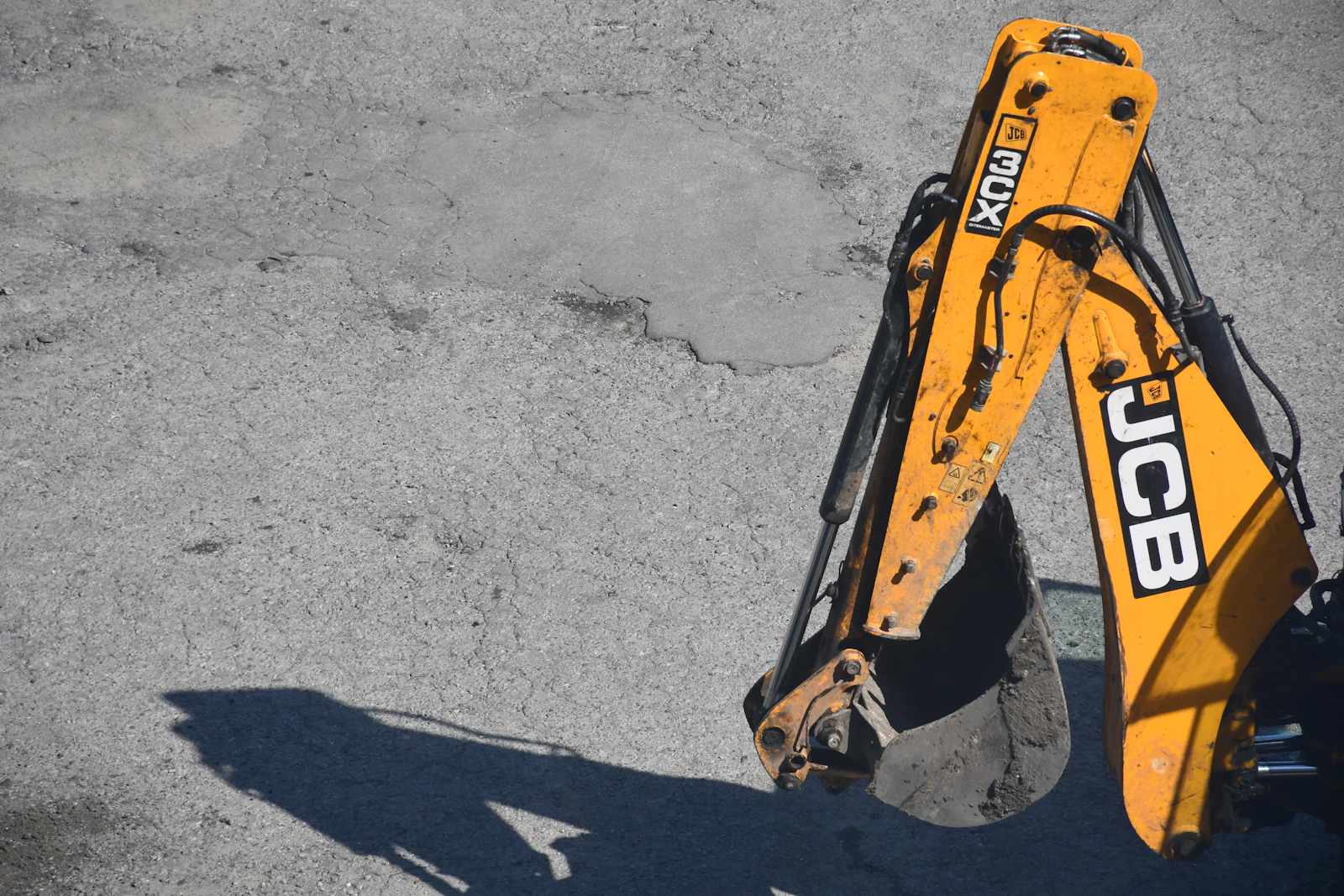
Backhoe Loader Rental Rates in Miami (Daily/Weekly) — 2026 Costs
Construction Costs Miami
Price source: Costs shown are derived from our proprietary U.S. construction cost database (updated continuously from contractor/bid/pricing inputs and normalization rules).
Eva Steinmetzer-Shaw
Head of Marketing
Backhoe Loader Rental Rates Miami 2026
For Miami trenching and backfilling scopes in 2026, plan backhoe loader equipment hire costs in three bands: $275–$475 per day, $950–$1,550 per week, and $1,950–$3,750 per 4-week period (many rental contracts bill “monthly” as a 28-day/4-week term, not a calendar month). The low end is typically a basic 2WD or smaller backhoe configuration on a longer term; the high end is usually 4WD with extendable dipper (extend-a-hoe), enclosed cab/AC, and higher horsepower. For budgeting, it’s common to see posted market examples around the mid-$200s/day and roughly $1,200/week for a standard backhoe loader, with higher-horsepower fleets pricing materially above that—then adjusted upward for 2026 planning based on availability, seasonality, and site logistics. In Miami, national fleets (e.g., United Rentals, Sunbelt Rentals, Herc Rentals) and local independents/marketplaces all compete, so the best rate is often tied to term length, delivery access, and how clean your return condition is.
| Vendor |
Daily Rate |
Weekly Rate |
Review Score |
Website |
| United Rentals |
$475 |
$1 900 |
9 |
Visit |
| Sunbelt Rentals |
$465 |
$1 850 |
8 |
Visit |
| Herc Rentals |
$485 |
$1 950 |
8 |
Visit |
| The Cat Rental Store (Kelly Tractor Co.) |
$525 |
$2 100 |
9 |
Visit |
| Home Depot Rental |
$399 |
$1 596 |
8 |
Visit |
What Drives Backhoe Loader Hire Cost for Trenching and Backfilling in Miami?
Backhoe loader hire rates in Miami move quickly once you shift from “base machine” assumptions to actual trenching-and-backfilling production needs. The cost drivers below are the items that most often change the final invoice—even when the daily rate looks competitive.
- Configuration and productivity: 4WD and extend-a-hoe typically command a premium because they reduce repositions and help in soft shoulders and saturated subgrade. If you need to trench to utilities at depth, the extendable dipper can be the difference between finishing on the weekly rate versus slipping into a second week.
- Dig depth and bucket sizing: A 14–16 ft class machine and a 24 in or 30 in trench bucket usually rents higher than a lighter unit with only a general-purpose rear bucket.
- Cab/AC and operator expectations: Miami heat and humidity make enclosed cab/AC a practical production requirement for longer shifts. Cabbed units commonly carry a higher base rate and higher replacement cost exposure if damaged.
- Term structure (day vs week vs 4-week): For trenching and backfilling, most coordinators target weekly billing unless the work is truly a same-day open/close cut. A “5-day” need often prices better as a weekly, especially if weekend holds are billed.
- Access and logistics: Tight sites in Brickell/Downtown, Miami Beach, and condo podium work can drive higher delivery handling, waiting time, and retrieval constraints.
Typical Add-On Charges Miami Rental Coordinators Should Carry
To keep your backhoe loader equipment hire cost forecast realistic (and avoid change orders later), carry explicit allowances for the items below. These are not “gotchas”—they are normal rental economics that show up whenever trenching and backfilling meets traffic, spoil management, and off-rent timing.
- Delivery and pickup: common planning allowance $175–$425 each way inside the core Miami metro, with $6–$10 per loaded mile when outside a standard radius or when crossing causeways/toll-heavy routes. Add $75–$150 for after-hours/early-morning delivery windows when the site only allows a 6:00–7:00 a.m. laydown slot.
- Minimum rental charge: even on a fast trench/backfill task, many suppliers effectively enforce a 1-day minimum (or a 4-hour minimum if you can truly pick up/return and avoid delivery). As a planning placeholder, carry $275–$475 minimum for the machine alone.
- Damage waiver / rental protection: budget 10% to 18% of time-and-material rental charges if you elect damage waiver (coverage terms vary). If you decline, your internal risk cost should include tire/sidewall exposure and hydraulic line damage.
- Environmental / energy / admin surcharges: carry 3% to 7% as a blended allowance when your vendor applies these as separate line items (varies by supplier and contract).
- Cleaning charges: trench spoils and wet limestone fines can turn into a washout bill. Carry $95–$275 for heavy cleaning if returned with caked mud, concrete slurry, or asphalt tack. (If you need “white-glove” return for a premium fleet, plan toward the high end.)
- Fuel / refuel: if returned short, refuel is commonly billed at a premium to pump price. For estimating, carry $6.50–$9.00 per gallon equivalent for diesel handling/refuel plus a $35–$75 service fee. If your scope includes idling for traffic control, fuel burn is not trivial.
- Meter-hour overages: if your agreement is one-shift and you run extended hours, plan overtime at 1/8 of the daily rate per extra hour (daily), 1/40 of the weekly rate per extra hour (weekly), and 1/160 of the 4-week rate per extra hour (4-week), unless your contract states a different structure.
- Mobilization waiting time: if the driver cannot offload due to no laydown area, carry a detention allowance of $95–$165 per hour after an initial free window (commonly 15–30 minutes).
- Attachment adders: trench bucket $35–$85/day, hydraulic breaker/hammer $250–$525/day, ripper tooth $25–$60/day, compaction wheel $75–$160/day, forks $45–$110/day. (Even if you think you only need the base bucket, trench widths frequently change after utility locates.)
- Wear items & damage exposure placeholders: bucket teeth commonly bill $18–$35 each if missing/damaged; cutting edge damage can be assessed at $150–$450; tire repair/replacement exposure can land anywhere from $250 (plug/patch and service) to $900+ (replacement tire) depending on spec.
Hidden-Fee Breakdown
When a backhoe loader is hired for trenching and backfilling, the base rate is only the starting point. The following line items are where Miami invoices most often diverge from the estimate.
- Delivery / pick-up charges: confirm whether pricing is flat-rate or mileage-based, and whether bridges/causeways/tolls are passed through. If your site requires a smaller truck or special staging, expect an extra $125–$250 handling charge.
- Fuel or recharge surcharges: confirm the return expectation (often “full tank”). If you expect rain impacts and idling, carry a $75–$150 incremental fuel allowance per week for non-productive time.
- Damage waiver vs. full insurance: damage waiver might be 10% to 18% of rental, but may exclude theft, misuse, and some flood/saltwater exposure. If you’re working near tidal zones or coastal neighborhoods, verify exclusions before assuming coverage.
- Cleaning fees (concrete/mud): if trench spoils include slurry or flowable fill residue, pre-plan a washout and photo documentation. Otherwise, cleaning can quickly become $200+.
- Late return penalties: many contracts bill another day if you miss a cutoff (often early afternoon). Carry a “day slip” contingency equal to 1 additional day rate if your scope has uncertain restoration timing.
- Weekend/holiday billing: if you take delivery Friday and off-rent Monday, assume you may pay for Saturday/Sunday unless explicitly negotiated. For Miami, weekend holds are common on roadway and coastal sites due to restricted delivery slots.
Operational Rules That Change Your Off-Rent Date
Rental cost control on trenching/backfilling work is mostly about off-rent discipline. These practical rules affect real cost in Miami more than the advertised rate:
- Off-rent notice timing: many suppliers require same-day call-in by a cutoff (often around 12:00–3:00 p.m.) to stop billing for the next day. If you call after cutoff, expect billing to continue.
- Return condition and sign-off: if the machine is blocked-in by spoil piles, parked cars, or gated access, retrieval delays can add 1–2 extra billed days even if your crew is done trenching.
- Meter-hours vs calendar days: even when billed weekly, meter-hour limits can trigger overtime. Plan for 40 hours/week one-shift entitlement unless your agreement states otherwise.
- Storm plan: in heavy rain or tropical weather, machines can sit idle but still bill. If you are scheduling during peak storm season, carry a weather contingency of 10% to 20% of rental time for schedule slippage on open-cut work.
Budget Worksheet (No Tables)
- Backhoe loader base hire (weekly): allowance $950–$1,550/week × ____ weeks (select 4WD/extend-a-hoe if trench depth/utility offsets require it).
- Delivery + pickup: $350–$850 round-trip (add $6–$10/loaded mile if outside metro radius).
- Damage waiver / protection: 10% to 18% of rental charges (or internal risk reserve if waived).
- Environmental/admin surcharges: 3% to 7% of rental charges.
- Attachments: trench bucket $35–$85/day; compaction wheel $75–$160/day; forks $45–$110/day; breaker (if coral/rock expected) $250–$525/day.
- Traffic control-driven idle fuel: $75–$150/week allowance.
- Cleaning/return condition: $95–$275 allowance (increase if slurry/concrete exposure is likely).
- Detention/wait time: $95–$165/hour after initial free window; carry 1–2 hours on tight urban deliveries.
- Late off-rent contingency: carry 1 extra day at $275–$475 when restoration/inspection sign-off is uncertain.
Example: 5-Day Utility Trench With Weekend Hold in Miami
Scenario: You have a trenching and backfilling scope requiring a backhoe loader Monday–Friday, but the site restricts pickup to Monday due to weekend street closures in a dense corridor. You can either (a) rent daily for five days or (b) rent weekly and accept weekend billing terms if they apply.
- Option A (daily billing): assume $365/day × 5 days = $1,825 base hire.
- Option B (weekly billing): assume $1,250/week base hire, but if weekend hold is billed you may still pay the full week anyway—so weekly usually wins if your “5-day” is actually “7 calendar days on site.”
- Delivery/pickup: $325 each way = $650 (tight access; include 1 hour potential detention at $125/hour = $125).
- Damage waiver: assume 14% of base hire (weekly) = $175.
- Cleaning allowance: $150 due to wet spoil and roadway fines.
- All-in planning number: about $2,350 (plus tax and any contract surcharges), before attachments.
Operational constraint that changes cost: if you miss the vendor’s off-rent cutoff on Friday (e.g., call after 2:00 p.m.), the retrieval may slide to Monday and you can be billed additional time. Build your restoration inspection and utility sign-off schedule around the off-rent cutoff, not the other way around.
Miami-Specific Considerations That Commonly Add Cost
- Access windows and congestion: Miami morning congestion and jobsite gate rules often make 6:00–8:00 a.m. delivery windows mandatory. If your site cannot receive until after peak traffic, the driver may incur waiting charges.
- Coastal/salt exposure and flooding risk: if you’re staging near tidal areas or low-lying streets, confirm whether your damage waiver excludes water intrusion. If exclusions exist, carry a risk reserve or adjust protection selections accordingly.
- Heat/humidity productivity: crews often require cab/AC; if you plan to run extended hours to avoid daytime heat, meter-hour overtime can apply and should be priced into your hire plan.
How to Control Backhoe Loader Equipment Hire Cost Without Losing Production
For trenching and backfilling, the best savings rarely come from chasing the lowest advertised day rate. Cost control is typically achieved by (1) aligning the term (weekly vs 4-week) with real restoration/off-rent constraints, (2) minimizing delivery friction, and (3) preventing return-condition and meter-hour penalties.
Insurance, Damage Waiver, and Risk Cost Planning
Backhoe loader hire is a risk-and-liability product as much as it is a machine rate. In Miami, coordinators should explicitly decide which “risk bucket” they’re using for each job:
- Damage waiver elected: budget 10% to 18% of rental charges. Verify exclusions (theft, misuse, submerged equipment, saltwater exposure, etc.).
- Damage waiver declined: carry internal exposure allowances. Practical placeholders used by many estimators include $250–$500 for tire service risk on urban sites and $150–$350 for hydraulic hose/connector incidents on brushy ROW work (adjust to your loss history).
- Preventative maintenance / per-hour programs: some national fleets disclose a per-hour preventative maintenance (PM) charge on certain equipment categories; if your agreement includes per-hour line items, verify how hours are captured and when billed so you don’t get surprised at month-end close.
Delivery Logistics in Miami: Ports, Condos, and Tight Urban Sites
Delivery is frequently the second-largest cost line after time-based hire. Miami conditions that change delivery cost (and should be written into the PO notes) include:
- Delivery radius assumptions: many suppliers price a flat delivery within a local radius; once you exceed it, mileage fees (e.g., $6–$10/loaded mile) can dominate. Confirm where the “local” boundary is for the yard servicing your site.
- Site access control: if your project requires a COI on file, badge-in, or a spotter, build it into the delivery appointment to avoid $95–$165/hour detention charges.
- Miami Beach/Barrier islands: plan extra lead time for causeway traffic and tight staging; if you need delivery at a specific minute (e.g., lane closure start), after-hours scheduling can add $75–$150.
Attachments and Accessories That Make Trenching and Backfilling More Predictable
Hiring the correct attachments can reduce total cost even if it increases the rental ticket, because it protects the schedule and avoids rework. Common trenching/backfilling adders with planning ranges:
- Trench bucket (narrow): $35–$85/day (helps control over-excavation and backfill volume).
- Compaction wheel: $75–$160/day (reduces the risk of settlement callbacks).
- Hydraulic breaker: $250–$525/day when Miami limestone/coral rock is encountered or when old concrete/asphalt removal is embedded in the trench line.
- Loader bucket upgrades: 4-in-1 bucket or higher-capacity front bucket can add $40–$120/day but may reduce truck cycles for spoil management.
Operational note: if you add hydraulic attachments, confirm whether the base machine is plumbed for auxiliary hydraulics and whether couplers/hoses are included. Missing hoses and damaged couplers often become small but avoidable closeout charges (carry $75–$200 contingency if your sites are rough on hoses).
Return Condition Documentation and Closeout
Most disputes on backhoe loader equipment hire cost are resolved (or avoided) with documentation. For trenching and backfilling projects, set a closeout routine before the machine arrives:
- Delivery inspection: photo the hour meter and all four corners, including buckets/teeth. Note any pre-existing leaks.
- Daily operating log: track meter hours by day to anticipate overtime exposure. If you’re trending toward > 40 hours/week, decide early whether to pay overtime or add a second unit for schedule compression.
- Fuel level evidence: photo fuel gauge at pickup and off-rent; a small shortfall can trigger refuel billing at $6.50–$9.00/gal plus handling.
- Cleaning confirmation: if you wash equipment, document before/after. This is the easiest way to prevent a $95–$275 cleaning line item.
- Off-rent confirmation: get an off-rent number or email confirmation before cutoff (often 12:00–3:00 p.m.) to avoid an extra billed day.
Rental Order Checklist
- PO scope text: specify “backhoe loader equipment hire for trenching and backfilling” plus required configuration (4WD, extend-a-hoe, cab/AC, auxiliary hydraulics).
- Billing structure: confirm day/week/4-week rates and whether “monthly” means 28 days or calendar month.
- Shift and meter-hour rules: confirm one-shift entitlement (commonly 8 hours/day, 40 hours/week) and overtime method.
- Delivery appointment: include site contact, gate instructions, delivery window, laydown location, and whether a spotter is required.
- Certificates and compliance: COI requirements, site orientation, and any municipal restrictions affecting delivery route/time.
- Protection selection: accept/decline damage waiver; if accepted, confirm percentage (plan 10% to 18%) and exclusions.
- Return requirements: fuel return level, cleaning expectations, attachments to be returned, and photo documentation requirement.
- Off-rent procedure: who is authorized to call off-rent, cutoff time, and where the off-rent confirmation will be sent.
2026 Market Notes for Miami Backhoe Loader Equipment Hire
For 2026 planning, Miami backhoe loader hire rates tend to firm up during high-demand periods (major roadway/utility programs, storm recovery, and peak development cycles). If your trenching and backfilling schedule overlaps those demand spikes, consider locking in a 4-week rate early and negotiating delivery terms up front. The practical takeaway: a backhoe loader that is “cheap per day” can still become expensive if it arrives late, cannot be retrieved on time, or comes back with avoidable cleaning/refuel and overtime line items. Build your estimate around term discipline, logistics certainty, and documented return condition—that is where real rental savings typically come from in Miami.