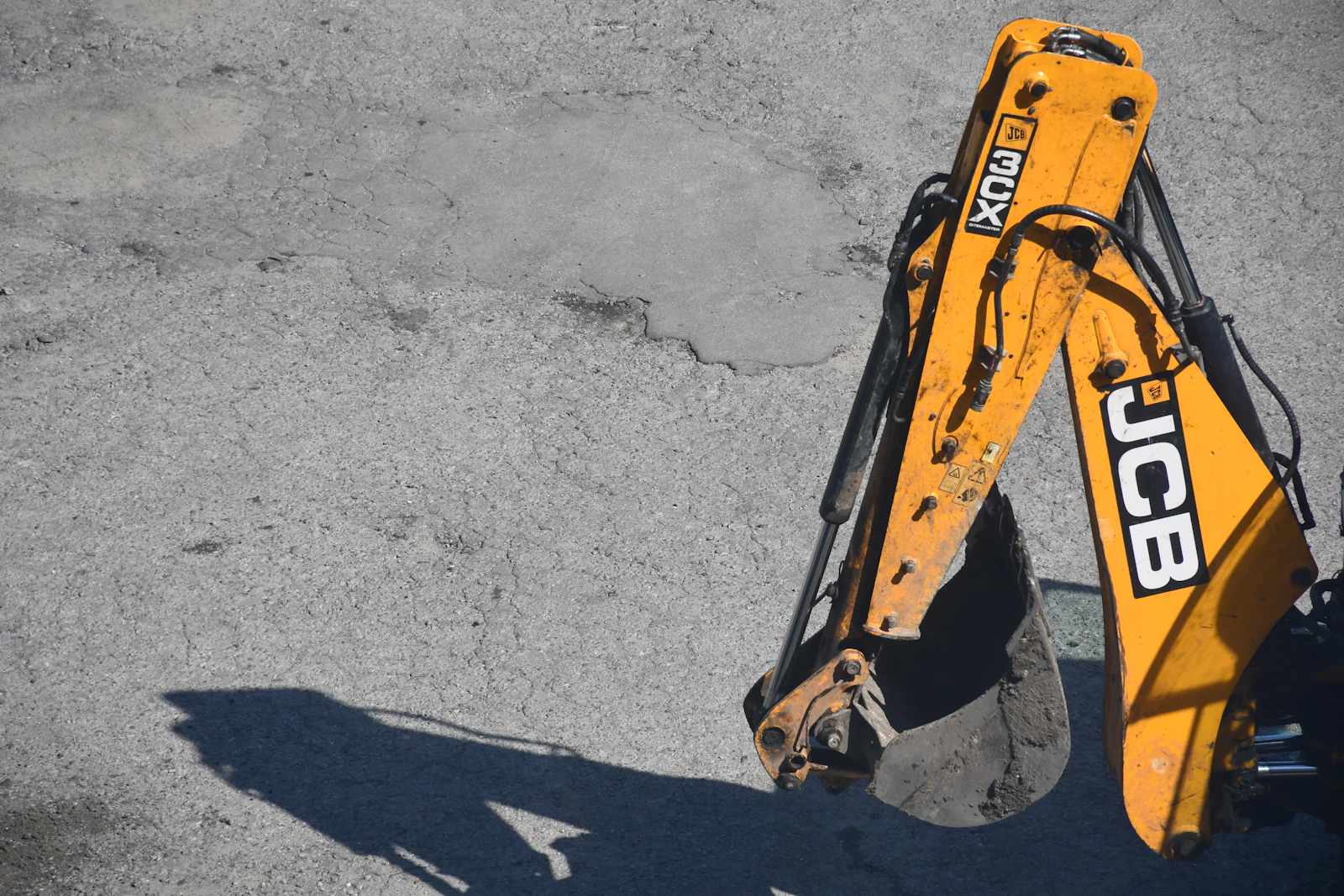
For Raleigh-area trenching and backfilling in 2026, plan backhoe loader equipment hire in the range of $425–$650/day, $1,250–$1,950/week, and $3,200–$5,800 per 4-week period for a mid-size 90–100 HP class machine (typically 4WD) with a standard loader bucket and general-purpose rear bucket. Regional rate cards and published examples commonly show day rates near $500, with weekly rates around $1,250–$1,600 and 28-day rates ranging from the high-$2,000s to around $5,000 depending on configuration and market. These are planning ranges (not guaranteed quotes) and assume one-shift use, normal wear, and no special attachments. In Raleigh, you’ll typically be quoting through national rental houses with Wake County coverage plus regional independents; availability and trucking logistics often drive the final invoice as much as the base rate.
| Vendor |
Daily Rate |
Weekly Rate |
Review Score |
Website |
| United Rentals |
$520 |
$1 560 |
8 |
Visit |
| Sunbelt Rentals |
$510 |
$1 530 |
9 |
Visit |
| Herc Rentals |
$500 |
$1 500 |
9 |
Visit |
| Gregory Poole Equipment Company (Cat Rental Store) |
$550 |
$1 650 |
8 |
Visit |
| The Home Depot Tool Rental |
$329 |
$987 |
5 |
Visit |
Published reference points that help anchor a 2026 Raleigh budget include a posted 90–99 HP backhoe loader rate of $500/day, $1,250/week, $2,750/month from one regional rate sheet, and a separate posted example showing $500/day, $1,600/week, $5,000/28 days for a 4WD extendahoe class unit (delivery, fuel, taxes, and damage waiver excluded). Typical aggregator ranges for the 91–105 HP class commonly land in the high-$200s to ~$500/day depending on geography and options, which aligns with how Raleigh pricing tends to move with fleet age and demand.
Backhoe Loader Equipment Hire Costs Raleigh 2026
Planning assumptions used for the ranges above (so estimators can normalize quotes):
- Machine class: 90–100 HP backhoe loader, typically 4WD, enclosed or open cab depending on availability.
- Dig package: standard rear bucket (often 24–30 in. GP) plus loader bucket (commonly ~84 in.).
- Utilization basis: one-shift usage. Many rental contracts treat one shift as 8 hours/day, 40 hours/week, 160 hours per 4 weeks; overages are commonly billed as a fraction of the base period (e.g., 1/8 of the daily for each additional hour on a daily rent).
- Commercial account: terms assume you can set up billing/insurance in advance (walk-up rentals can price differently and may require larger deposits/holds).
How to read the day/week/4-week rate relationship: backhoe loader hire pricing for Raleigh trenching and backfilling is usually most efficient when you match the term to the actual on-site need, including weather float and inspection time. A common pitfall is paying a 4-week rate when the machine is only truly productive for 9–12 working days due to utility locates, inspection holds, rainouts, or stone deliveries. If your scope is linear trenching with predictable production, weekly is often the sweet spot; if you are coordinating multiple tie-ins (water/sewer/storm) and expect stop-start, the 4-week term can still win if you negotiate flexible off-rent rules and confirm return cutoffs.
What Drives Backhoe Loader Hire Pricing in Raleigh?
Raleigh backhoe loader equipment hire costs are shaped by a few levers that estimators can actually control:
- 4WD vs 2WD availability: In Wake County red clay, shoulder seasons and wet subgrades push contractors toward 4WD. If your PM knows the site will be stabilized and dry, confirming a 2WD unit can reduce cost, but it can also backfire if a rain event turns the excavation into a recovery problem (towing/service calls add real dollars).
- Extendahoe requirement: Extendable dipper stick adds capability (and sometimes adds rate). If your trench spec is consistently under ~10–12 ft and you’re not reaching over spoils/fencing, you may not need it; if you do need it, pricing often trends toward the upper end of the Raleigh range. One published example for an extendahoe 4WD unit shows $500/day, $1,600/week, $5,000/28 days excluding delivery and damage waiver, which is a useful budgeting anchor.
- Cab and comfort package: Enclosed cab/heat/AC typically tightens supply in peak season. In Raleigh summers (high heat/humidity), enclosed cab demand increases and can affect both availability and negotiated rates.
- Fleet age and spec: Newer Tier 4 units, quick couplers, ride control, LED packages, and telematics can carry a premium. If your work is strict trenching/backfill and you can accept an older fleet unit, you may lower the day rate but should budget higher for downtime risk and cleaning/return requirements.
Reference pricing context (not Raleigh-specific quotes): a published rate sheet shows a 90–99 HP backhoe loader at $500/day, $1,250/week, $2,750/month, which sits near the middle of typical planning ranges for this class and helps validate budget baselines.
How Trenching and Backfilling Changes the Hire Price in Raleigh
Backhoe loaders are frequently chosen for trenching and backfilling in Raleigh because they can dig, place bedding, and backfill without a second machine. But trenching/backfilling work changes the cost picture because it reliably triggers adders:
- Bucket selection becomes a cost item: A 24 in. bucket may be included, but a 12 in. trench bucket (or 18 in.) often rents as an attachment. Budget $35–$60/day or $120–$200/week per specialty bucket depending on coupler style and availability.
- Street-plate coordination: If you need to maintain access or satisfy a temporary patch/lane requirement, steel plates can be billed separately. A realistic allowance is $35–$60/day per plate plus $75–$150 handling if the yard loads/unloads separately from the backhoe transport.
- Downtown constraints can increase trucking cost: Urban infill trenching around central Raleigh often requires tight delivery windows (early AM) and may need smaller transport equipment or staged drop locations. After-hours/expedite delivery is commonly quoted at $150–$300 on top of base transport, especially when coordinated around lane closures or restricted work hours.
- Soil conditions affect cleaning and wear: Raleigh’s clay can pack into stabilizers, bucket corners, and tires. If the unit comes back excessively muddy, cleaning is not a theoretical fee—it often appears as $150–$450, and hardened material/concrete splatter can push cleaning above $500 depending on labor time and wash bay policies.
Operational note: for trenching, you’ll commonly idle the machine while waiting on pipe crews, inspectors, or bedding stone. If your contract includes preventive maintenance charges or hour-based fees, that idle time can matter. Some rental programs apply a preventative maintenance (PM) charge on operating hours (commonly a small per-hour charge that can be in the $1–$6 per hour range depending on equipment class and program), so clarify whether your backhoe loader hire is purely time-based, hour-based, or blended.
Common Line-Item Adders That Move Your Backhoe Hire Invoice
For equipment managers building a Raleigh trenching/backfilling estimate, the base day/week/4-week backhoe loader hire rate is only the first line. These are common cost drivers that should be carried as explicit allowances:
- Delivery and pickup: within a typical metro radius, carry $125–$225 each way as a planning allowance. For jobs outside the normal service radius, add mileage at about $4–$7 per loaded mile (or a higher minimum). If your vendor enforces a minimum trucking charge, budget $250–$400 minimum even for short hauls.
- Damage waiver / rental protection: often priced as a percentage of the rental charge. Plan 10%–15% of the base rent unless your master agreement provides different terms.
- Environmental/emissions and admin fees: some national programs apply environmental/emissions surcharges (as revenue, not a government tax) and/or admin line items. If you don’t have negotiated caps, carry 2%–5% as a placeholder so your estimate doesn’t get surprised by small percentage add-ons.
- Fuel/refuel: many yards ship full and expect full. If returned short, refuel is typically billed at a marked-up pump rate; carry $6–$9 per gallon or a minimum refuel fee of $75–$150.
- Weekend/holiday billing: if you take delivery Friday afternoon and return Monday morning, clarify if you are billed for 3 days (Fri/Sat/Sun) or a negotiated weekend rate. The same applies to holiday weekends when return processing is closed.
- Off-rent cutoffs: many branches use a cutoff time (commonly 2:00–3:00 PM) for same-day off-rent. Missing the cutoff can turn a 5-day plan into a 6-day bill.
- Overtime/second shift: if you plan to run beyond one shift, budget explicit overtime. One common method is billing additional hours at 1/8 of the daily rate per hour on a daily rent basis (and similar fractions on weekly/4-week).
Attachments and Options That Matter for Trenching and Backfilling
To keep your backhoe loader equipment hire costs predictable, spec only what the work requires and identify which items are included vs. separately billed:
- Trenching buckets: 12 in. and 18 in. are common adders (budget $35–$60/day each as noted above). If you need both sizes on the same job, confirm whether you are billed concurrently (two attachments on rent) or can swap at the yard without double-renting.
- Hydraulic thumb: for handling riprap, catch basins, or debris around the trench, a thumb can save labor but adds cost; carry $90–$160/day or $250–$450/week.
- 4-in-1 bucket: useful for grading/backfill shaping and cleanup. Budget $75–$125/day if not included.
- Auger drive + bits: if your trenching scope includes sign/guardrail/sonotube holes, carry $140–$220/day for the drive plus $25–$40/day per bit.
- Hydraulic breaker: if you may encounter shallow rock or concrete, breaker pricing can exceed the backhoe adder you expected; carry $200–$350/day plus tool wear policies.
- Tire chains or specialty tires: rare in Raleigh, but if your site is exceptionally muddy, ask about traction options; otherwise budget for recovery instead (see below).
Raleigh-specific practical tip: if your trench route crosses landscaped areas or new curb/sidewalk, include a ground-protection plan. Rental yards frequently offer mats, but even if you source mats elsewhere, the backhoe loader hire cost can still rise due to slower work windows and stricter return-condition documentation.
Example: 2-Week Trenching and Backfilling Package in Raleigh (With Real Constraints)
Scenario: 600 linear feet of utility trench in mixed clay fill, average 36 in. depth, with two street crossings and inspection hold points. Work is in Raleigh metro with a delivery constraint: delivery must arrive before 7:00 AM due to lane-control setup.
- Base equipment hire: plan $1,350/week × 2 weeks = $2,700 for a 90–100 HP 4WD backhoe loader (mid-range Raleigh planning number).
- Trench bucket add: 12 in. bucket at $50/day for 10 billed days = $500 (confirm if the branch bills attachment by day or by calendar day while on rent).
- Street plates: 2 plates at $45/day for 5 days = $450, plus handling $100.
- Delivery/pickup: early window delivery surcharge $200 + standard transport $175 each way = $550 total trucking.
- Damage waiver: assume 12% of base rent ($2,700) = $324.
- Fuel/return: allow a refuel true-up of $120 unless you have on-site fueling and documented full return.
- Cleaning allowance: carry $250 due to red clay buildup risk.
Budgetary total (planning): $2,700 + $500 + $550 + $324 + $120 + $250 + $550 = $4,994 before tax and any inspection/PM/hour-based charges. The key risk items in Raleigh for this scenario are (1) inspection holds that extend the off-rent date past the cutoff time and (2) rain events that turn clay spoils into cleanup labor.
Why this is estimator-relevant: even though the headline backhoe loader hire number looked like ~$2.7k, common trenching/backfilling adders pushed the plan near ~$5.0k. That ratio is typical when delivery windows, street-plate handling, and return-condition compliance are real constraints.
City-Specific Considerations for Raleigh Backhoe Loader Equipment Hire
Keep these Raleigh realities in mind when comparing quotes for backhoe loader rental for trenching and backfilling:
- Delivery radius norms: many branches consider metro delivery “included” only inside a practical radius; if your job is outside Wake County (or deep into multi-stop routes), per-mile or minimum trucking can dominate the delta between vendors.
- Weather-driven utilization: Raleigh’s rain events can shift work from productive digging to standby. If your contract terms bill by calendar day and you cannot off-rent until the crew is ready, carry a contingency of 1–2 extra days at your blended day rate.
- Surface protection and cleanup: clay and landscaped corridors increase the chance of cleaning fees and slow load-out. Build explicit time into the close-out plan for photo documentation of return condition (bucket edges, stabilizer pads, cab interior) to reduce disputes.
Hidden-Fee Breakdown
This section is intentionally detailed because backhoe loader equipment hire cost overruns in Raleigh almost always come from contract details, not the posted day rate.
- Delivery / pickup charges: confirm whether pricing is flat-rate, mileage-based, or a hybrid. If the vendor quotes “$175 each way,” verify if that assumes a standard delivery window (for example 9:00 AM–3:00 PM) and whether early/late windows trigger an added $150–$300 dispatch premium.
- Standby and failed delivery: if the truck arrives and cannot access the drop (gate locked, no offload space, no spotter), failed-delivery or wait-time can be billed. Carry an allowance of $100–$200 per hour for wait time if your site access is uncertain.
- Fuel / recharge surcharges: backhoe loaders are almost always diesel. If you do not have on-site fueling, budget refuel at $6–$9/gal or a minimum service fee of $75–$150. If the vendor offers field fueling, expect a trip fee often around $75–$125 plus fuel.
- Damage waiver vs. full insurance: if you decline the waiver, your COI and contract terms must align (including theft and transport exposures). If you accept it, carry 10%–15% of rental as a budget line and confirm exclusions (tires, glass, vandalism, misuse).
- Cleaning fees: mud-packed undercarriages, clay on steps, and cab debris are common triggers. Budget $150–$450 routine cleaning, and plan higher if concrete, paint, or contaminated soil is involved.
- Late return / extra day risk: ask for the branch’s off-rent cutoff (often 2:00–3:00 PM). If you miss it, an extra day can be billed. Also clarify if weekend days are billed when the branch is closed.
- Meter-hour / shift overage: if your project runs extended shifts, second-shift billing may apply. A common structure is additional hours billed at 1/8 of the daily rate per hour (daily), 1/40 of the weekly rate per hour (weekly), and 1/160 of the 4-week rate per hour (4-week).
- PM/inspection programs: some programs add a small per-hour preventative maintenance charge; published program descriptions note PM charges that can range $1–$6 per hour depending on equipment class and hour basis.
Budget Worksheet (Backhoe Loader Hire – Raleigh Trenching/Backfilling)
Use this as a practical estimator’s checklist of line items and allowances (no tables; adjust to your contract terms):
- Backhoe loader base hire: $425–$650/day, $1,250–$1,950/week, $3,200–$5,800/4-week (select term aligned to schedule reality).
- Damage waiver / rental protection: 10%–15% of base rent (or per your MSA).
- Delivery + pickup: $250–$450 total inside metro; add $4–$7/loaded mile beyond normal radius; carry a $250–$400 minimum trucking charge if your vendor uses minimums.
- Delivery time-window premium (if needed): $150–$300 for early/late delivery windows.
- Trenching bucket adders: $35–$60/day per specialty bucket (12 in./18 in.).
- Street plates / surface protection: $35–$60/day per plate; mats as required by owner (allow $25–$50/day per mat if rented).
- Fuel true-up: $75–$150 minimum or $6–$9/gal if billed by gallon.
- Cleaning allowance: $150–$450 typical; higher if concrete contamination is possible (carry $500+ risk allowance when applicable).
- Overtime/second shift: budget by meter-hour policy; if uncertain, carry an extra 10%–20% utilization cost on weeks with extended hours.
- Downtime contingency: 1–2 extra days of blended daily rate for weather/inspection holds (Raleigh rain + red clay impacts are real schedule drivers).
Rental Order Checklist (PO, Delivery, Off-Rent, Return)
- PO and billing: PO number, job number, cost code for equipment hire, approved not-to-exceed (NTE) amount, tax exemption documents if applicable.
- Insurance: COI meeting contract requirements; confirm whether damage waiver is accepted/declined and document the decision.
- Delivery requirements: exact drop address + GPS pin, contact name/phone, gate access instructions, required delivery window (e.g., before 7:00 AM), and whether a spotter/forklift is needed to offload attachments.
- Jobsite constraints: overhead clearance, pavement/curb protection needs, indoor dust-control requirements if working in enclosed structures (plastic, negative air, cleanup plan), and any restricted work hours.
- Utilization rules: confirm one-shift hours (8/40/160) and the overtime formula; clarify whether idle counts (meter vs. calendar) and whether PM/hour-based charges apply.
- Off-rent process: required notice period, off-rent cutoff time (often 2:00–3:00 PM), weekend/holiday billing policy, and whether pickup is guaranteed next business day.
- Return condition documentation: photos of all four sides, buckets/attachments, cab interior, hour meter, and fuel level; note any existing damage at delivery and report immediately.
- Close-out: confirm all attachments returned, keys/fobs accounted for, and request a preliminary close ticket to reduce post-return billing disputes.
When a Backhoe Loader Is (and Isn’t) the Lowest-Cost Trenching Choice
From a rental coordinator’s perspective, backhoe loader hire in Raleigh is cost-effective when you can use the same unit for (1) trench excavation, (2) bedding placement, (3) backfilling, and (4) light site cleanup without adding a loader or skid steer. However, if your trenching is long and uniform with heavy spoil handling, a mini excavator plus a compact track loader can sometimes beat the backhoe on production—even if the combined day rates are higher—because cycle times improve and the excavator can stay digging while the loader manages spoils.
If you’re evaluating options strictly on equipment hire cost, compare them on $ per linear foot completed, not just day rate. Also consider trucking: two smaller units may require two deliveries (often +$250–$450 per machine), which can erase the productivity advantage on short scopes.
2026 Raleigh Planning Notes for Negotiating Better Hire Terms
- Ask for attachment bundling: if you need a trench bucket and street plates, request a bundled attachment rate for the same rental term to avoid “per-day” stacking.
- Negotiate weekend language up front: if your trenching plan requires keeping the machine staged over a weekend for Monday inspection, negotiate a weekend cap so you don’t pay three full days for two non-working days.
- Align off-rent with inspection schedule: if inspections are typically called by noon, structure pickup windows so you can off-rent before the cutoff time and reduce “one extra day” surprises.
- Confirm what “month” means: many rental programs price by a 28-day (4-week) period rather than a calendar month. Make sure your schedule and your estimate use the same definition to avoid a silent 2–3 day gap.