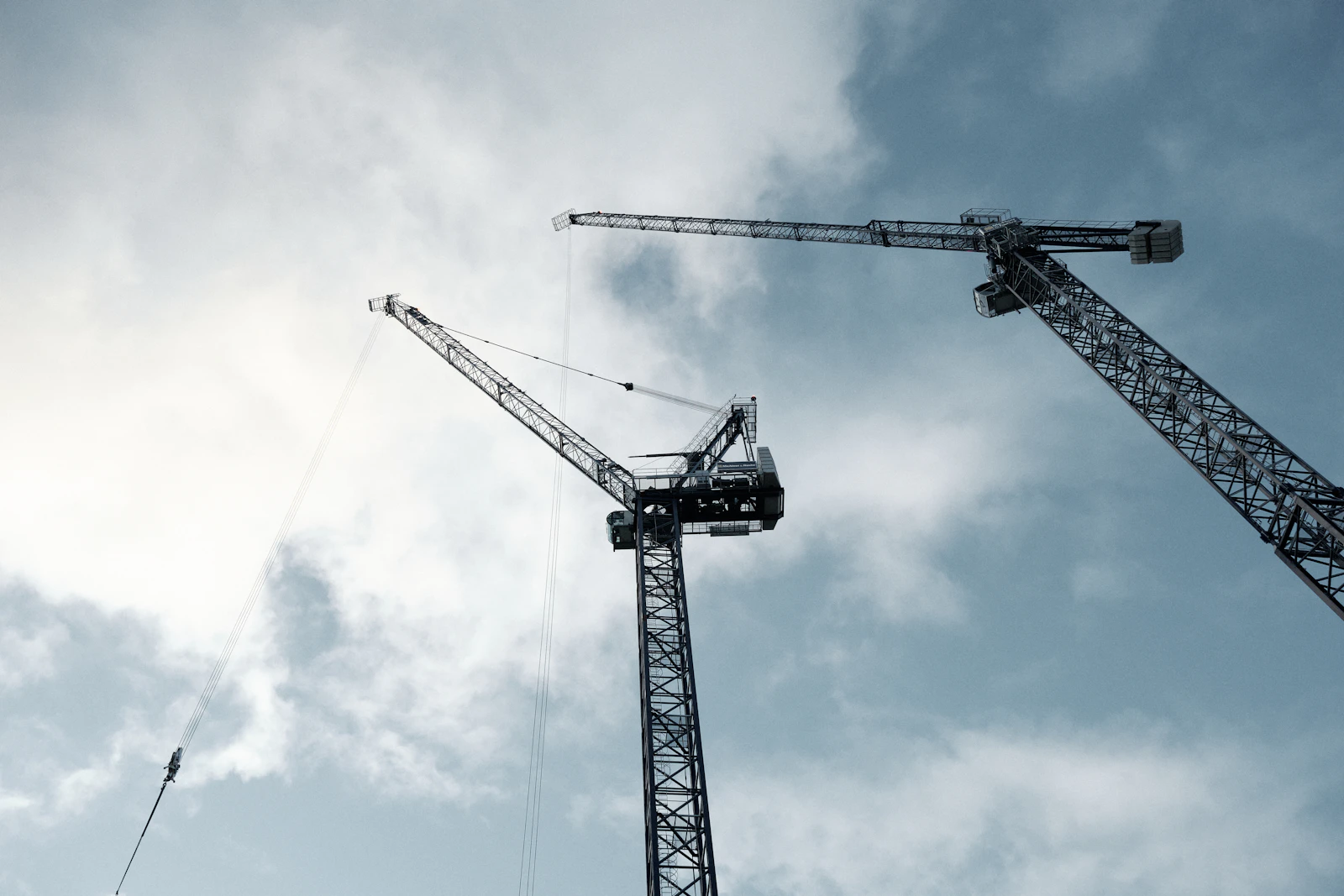
Boom Lift Rental Rates Fort Worth 2026
For Fort Worth, Texas (DFW) planning in 2026, boom lift equipment hire commonly pencils out in these working ranges (USD), assuming one 8-hour shift, a 28-day “rental month” (4 weeks), and rates that typically exclude delivery/pick-up, taxes, fuel/charging, and damage waiver: 45–60 ft articulating boom lift hire at $325–$725/day, $950–$2,050/week, and $2,600–$5,400/4-week; 60–65 ft telescopic boom lift hire at $450–$950/day, $1,350–$2,850/week, and $3,600–$7,200/4-week; and 80–86 ft class at $750–$1,450/day, $2,250–$4,250/week, and $6,800–$10,800/4-week. These 2026 ranges align with published “menu” rates seen nationally and in Texas for comparable 60 ft class units (often listed around the mid-$500s/day and low-$3,000s/month before adders), then adjusted for model, availability, and job constraints.
| Vendor |
Daily Rate |
Weekly Rate |
Review Score |
Website |
| United Rentals |
$374 |
$992 |
9 |
Visit |
| Sunbelt Rentals |
$375 |
$896 |
9 |
Visit |
| Herc Rentals |
$407 |
$897 |
8 |
Visit |
| Sunstate Equipment |
$430 |
$1 260 |
9 |
Visit |
| Hoyer's Equipment Rentals |
$300 |
$1 100 |
10 |
Visit |
For procurement context only (not pricing promises), Fort Worth contractors typically source boom lift rental through national rental houses and local yards that can support tight delivery windows, swap-outs, and roof-work accessories. If you’re coordinating boom lift hire for green roof installation, total spend is rarely just the machine rate: the deciding cost drivers are usually delivery logistics (downtown access, time-window restrictions), surface protection (mats and tire requirements), wind and weather downtime risk, and off-rent rules that govern when billing stops.
How Green Roof Installation Changes Boom Lift Hire Costs
Green roof scopes push boom lift equipment hire costs upward for reasons that don’t show up in a “daily/weekly/monthly” quote. The work is roof-adjacent, often over finished façades and waterproofing membranes, and it can require repeated mobilizations as trades cycle through (membrane, drainage board, media, irrigation, pavers, plantings). That combination increases the probability of (a) short-duration extensions that price at the most expensive rate tier (extra days billed at daily rate), and (b) chargeable accessories and compliance items you may not need on other elevated work.
Budget for roof-friendly access and protection items as part of the boom lift hire package, such as:
- Ground/roof protection mats: commonly $25–$60 per mat per week (or a project allowance), plus handling time if the rental house won’t place them.
- Non-marking tire requirement (when indoors or on sensitive finished surfaces): can constrain availability and increase the base rate by 5%–12% versus a standard rough-terrain unit in peak season.
- Fall protection kit adders (if not supplied by your EHS program): harness and lanyard rental frequently budgets at $10–$25/day per set (or purchase instead).
- Material handling constraints: many rental houses will prohibit lifting palletized media/soil from the platform unless you’ve specified an approved material-handling attachment and within rated capacity—requiring a different lift class (often telescopic) at higher hire cost.
Operationally, green roof work is also more likely to trigger chargeable cleaning and condition issues at return. Plan for a $95–$250 cleaning fee if the chassis and deck return with growth media, mud, adhesive residue, or staining that requires pressure washing/detailing beyond “normal wear.”
What Drives Boom Lift Equipment Hire Pricing in Fort Worth?
Fort Worth boom lift rental pricing is influenced by the same fundamentals as other major markets—fleet utilization, time of year, and machine class—but there are a few local realities that affect the real hire cost on a roof project:
- Delivery radius norms: many DFW branches price a base delivery fee within roughly 20–30 miles, then add mileage outside that radius. If your site is west of Fort Worth or you’re pulling from a Dallas yard due to availability, mileage adders can become material.
- Heat and duty cycle: sustained summer heat can reduce battery runtime on electric booms and push you toward diesel rough-terrain units (higher day rates, plus refuel expectations). Include a charging or refueling plan so you don’t pay “service call” premiums mid-week.
- Wind exposure on rooflines: roof work increases wind exposure; if your team loses production time but keeps the machine on rent, the “effective rate” rises. A practical mitigation is aligning delivery/pick-up windows to your weather window (see the off-rent section below).
To anchor the 2026 planning ranges with real-world reference points, published sample rates for 60 ft articulating boom lifts in the U.S. commonly appear around $575/day, $1,360/week, and $3,175/month on some regional yard listings, while older published lists and contract documents show lower figures for similar classes that typically price higher today due to inflation, transport, and fleet turnover. Use these as context only—Fort Worth availability, tire spec, and delivery constraints often matter more than the headline number.
Model And Powertrain Choices That Move The Rate
For green roof installation, the “right” boom lift is often selected for reach envelope and surface interaction rather than platform height alone. Those choices can shift hire cost by hundreds per day.
- Articulating (knuckle) boom lift hire typically prices lower than a same-height telescopic when you don’t need maximum outreach, but articulation can be essential to clear parapets, set down near roof edges, or reach around setbacks.
- Telescopic boom lift hire often costs more because you’re buying outreach and stability; it can be the safer spec when crews insist on fewer reposition moves with loaded tools.
- Electric boom lift hire (where feasible) can reduce refuel costs and avoid emissions restrictions, but you must budget charging logistics. A common charge if returned undercharged is a $35–$85 recharge/service fee, depending on the vendor’s policy and whether they have to dispatch a driver.
- Rough-terrain diesel 4WD is usually the default for unimproved laydown and perimeter access; if your access route is soft clay after rain, your “cheaper” 2WD spec can become a recovery bill instead.
If you are hiring a 60 ft class unit, validate the exact model family (e.g., Z-60 class vs S-60 class equivalents), because minor differences in outreach and basket capacity can decide whether your crew needs a second unit or a longer rental term—both far more expensive than a slightly higher day rate.
Shift, Overtime, And Weekend Billing Rules To Confirm
Most rental agreements assume a single shift (often 8 hours/day, 40 hours/week). If your green roof schedule includes early starts, late finishes, or split shifts to work around crane picks or roof access restrictions, confirm how the rental house bills usage beyond one shift. A common industry approach is to charge excess use at an hourly fraction of the base rate (for example, 1/8 of the daily charge per extra hour on daily rentals, and 1/40 of the weekly charge per extra hour on weekly rentals).
Also confirm the branch’s weekend rules. Some locations offer a “Friday-to-Monday” structure; others bill Saturday and/or Sunday as full days (especially if they’re open for returns). For budgeting in Fort Worth, assume one of these outcomes unless you have written terms:
- Weekend carry: Friday afternoon delivery with Monday morning pickup billed as 1–2 days (best case).
- Weekend billing: Saturday and Sunday billed as 2 additional days (worst case for short scopes).
- After-hours handling: delivery/pick-up outside standard windows can add $150–$350 per event for dispatch/yard labor.
Delivery And Site Logistics In Fort Worth (Real Cost Impacts)
Delivery and retrieval routinely decide whether your boom lift hire stays inside budget. For Fort Worth planning, a realistic allowance structure (confirm with your branch) is:
- Base delivery fee: $125–$275 each way for a 45–60 ft class unit inside typical service radius.
- Heavy/long unit transport (80–86 ft class): $250–$450 each way.
- Mileage adders outside radius: often budget $3.50–$6.00 per mile (one-way) depending on truck type.
- Jobsite wait time (driver can’t offload due to blocked access): $75–$125 per hour after an included grace period (commonly 15–30 minutes).
Fort Worth-specific considerations that change cost: (1) downtown and cultural district deliveries may require tight time windows to avoid congestion, (2) many sites have limited laydown, causing driver wait time and re-delivery charges, and (3) summer heat can shift preferred delivery times earlier in the day, which can conflict with building access schedules.
Insurance, Damage Waiver, And Deposit Planning
For boom lift equipment hire, you’ll typically choose between providing your own insurance (COI) or paying a rental protection/damage waiver product. The cost delta is meaningful:
- Damage waiver / rental protection: commonly 10%–15% of the time-and-material rental charges (and sometimes applied to delivery as well, depending on contract language).
- Security deposit (if required for smaller accounts): often $500–$2,500 depending on machine class and credit terms.
- Administrative/environmental fees: budget 5%–10% where applicable; some yards publish specific adders when a COI is not provided.
On roof-adjacent work, clarify responsibility for tire damage and punctures. A single foam-filled tire replacement can be $250–$600 plus service time, and “normal wear” exclusions vary by vendor. Ask for the written tire policy before delivery.
Attachments And Accessories Common On Green Roof Jobs
Accessory adders are frequently overlooked in boom lift hire budgets for green roof installation. Common line items include:
- Jib option (if specifically required): may carry a higher base rate or an adder of $35–$90/day.
- Platform/mesh panels for containment: $25–$50/week when available.
- Tool trays and material hooks: $10–$25/week.
- Traffic control for street-side delivery (if required by site): allowance $150–$400 per mobilization depending on cones/signage and labor.
Finally, align the boom lift class to the ground bearing pressure and access route. If you end up needing plywood protection, steel plates, or composite mats after the machine arrives, you can pay twice—once for emergency sourcing and again for lost rental time while the site is prepared.
Hidden-Fee Breakdown
When you evaluate boom lift equipment hire costs for Fort Worth green roof installation, the “hidden fees” are usually not hidden—they’re just in the service terms. Build these into your estimate so the PO matches the invoice.
- Fuel / refuel (diesel units): if returned not full, budget $6.00–$9.00 per gallon plus a service charge that can run $25–$75 depending on branch practice.
- Recharge / battery condition (electric units): a recharge/service fee commonly budgets at $35–$85 if returned low or if the vendor must dispatch a charger/support call (avoid this with a written charging plan).
- Cleaning: allow $95–$250 for heavy soil/media cleanup on green roof work; if the unit needs degreasing/adhesive removal, some shops will bill higher as “special cleaning.”
- Late return: many agreements convert late time into a full additional day after a cutoff. In practice, assume a cutoff between 12:00–2:00 PM for same-day off-rent/pickup scheduling; missing the cutoff can add 1 full day of rent.
- Off-rent rules: confirm whether billing stops when you call off-rent or when the machine is physically picked up; this can materially change cost if the branch can’t retrieve for 2–3 business days due to trucking capacity.
- Damage waiver limitations: even with waiver, you can still be responsible for deductibles, negligence, or excluded damage. Budget a contingency of $250–$1,000 for incidentals on tight-access roof work (site-specific risk).
Budget Worksheet
Use this as a practical estimator’s allowance list for boom lift hire on a Fort Worth green roof installation phase (edit to match your spec and duration):
- Base boom lift hire: 60 ft articulating boom, 1 week at $950–$2,050 (rate depends on powertrain and availability).
- Delivery and pick-up: $250–$550 total (two-way) for 60 ft class; add mileage if outside service radius.
- Damage waiver / rental protection: 10%–15% of rental charges (or provide COI and confirm any administrative adders).
- Fuel/recharge allowance: diesel $60–$140 (roughly 10–20 gallons), or electric recharge fee avoidance plan with $0–$85 contingency.
- Cleaning allowance: $125 (adjust up if media/mud likely).
- Surface protection: matting allowance $150–$400 (or owner-provided), plus handling labor.
- After-hours / restricted delivery window: $0–$350 contingency.
- Downtime buffer (weather/wind): 1 extra day at $325–$725 to prevent schedule-driven premium extensions.
Rental Order Checklist
For rental coordinators issuing a PO for boom lift equipment hire in Fort Worth, these are the items that most often prevent cost disputes at invoice time:
- PO scope: exact machine class (articulating vs telescopic), working height, outreach requirement, power type (electric/diesel), drive (2WD/4WD), and tire type (non-marking/foam-filled).
- Rate structure: daily/weekly/4-week rates, definition of “rental month” (confirm 28 days), and how partial weeks convert (daily-to-weekly threshold).
- Shift limits: confirm single shift included; document overtime billing method (e.g., hourly fraction of base rate for extra hours).
- Delivery: delivery address, contact, on-site receiving hours, required lead time (often 24 hours), and any site restrictions (gate codes, street closures, spotter requirement).
- Off-rent procedure: cutoff time (often 12:00–2:00 PM), written rule for when billing stops, and who authorizes off-rent calls.
- Return condition: refuel/recharge expectation (e.g., full tank or 80%+ charge), mud/media cleanup requirement, and photo documentation at pickup/drop-off (platform, tires, hour meter).
- Insurance: COI requirements, waiver election, deductibles/exclusions, and responsibility for tires/glass/controls damage.
Example: 60 Ft Articulating Boom Lift Hire For A 5-Day Green Roof Phase
Scenario: A mid-rise in Fort Worth needs a boom for edge detailing, parapet flashing tie-ins, and staged material moves (tools only) over 5 working days. Site has a narrow delivery lane; deliveries must occur before 9:00 AM. Wind holds are possible on 2 afternoons. You choose a 60 ft articulating diesel 4WD to avoid battery/runtime risk.
- Machine hire: 1 week at $1,250 (within the Fort Worth 2026 planning band).
- Delivery + pick-up: $220 each way = $440.
- Damage waiver: 12% of rental charges (assume applied to machine only) = $150.
- After-hours / restricted window: none, because delivery scheduled at 7:30 AM (no premium).
- Fuel: returned short by 12 gallons at $7.50/gal = $90 (avoidable with on-site fueling control).
- Cleaning: light soil/media residue = $125.
Estimated boom lift hire total: about $2,055 for the week. The key operational constraint is the off-rent timing: if you finish Thursday but miss the branch’s 1:00 PM off-rent cutoff, you can easily pay for Friday as an additional day even if the machine is idle.
Cost-Control Tactics That Rental Coordinators Use
- Book by the week when you’re at 3+ days: If you’re realistically going to use the boom 4–5 days, weekly pricing usually beats stacking daily rates—especially when weather risk exists.
- Align delivery/pickup to roof access windows: Avoid driver wait time at $75–$125/hour by ensuring the receiving area is clear, with a designated spotter and a backup laydown location.
- Pre-agree cleaning expectations: For green roof work, add a simple field SOP—brush/blow off media daily, and photograph the deck at off-rent. It’s cheaper than a $250+ shop clean and it reduces disputes.
- Decide diesel vs electric based on a written charging plan: If electric, identify a dedicated 120V/20A or 240V circuit (as applicable) and lock-out protection so you don’t lose a night of charging and pay a service dispatch.
- Control extensions: A 2-day unplanned extension at $500/day is $1,000; sometimes it’s cheaper to convert to a second week at $1,250–$2,050 if you’re close to that threshold—confirm conversion rules before you extend.
2026 Market Notes For Fort Worth Equipment Hire
In 2026, Fort Worth boom lift equipment hire budgets should assume that transport and service capacity (drivers, yard labor, field mechanics) can be as limiting as the equipment itself during peak construction months. That means your costs are often determined by logistics adders and time (missed cutoffs, delayed pickups, weather holds) rather than the headline machine rate. For green roof installation, the most reliable savings come from (1) selecting the correct class the first time (avoid swap-out charges and lost days), (2) managing off-rent precisely, and (3) returning the unit in documented condition with fuel/charge handled on-site.