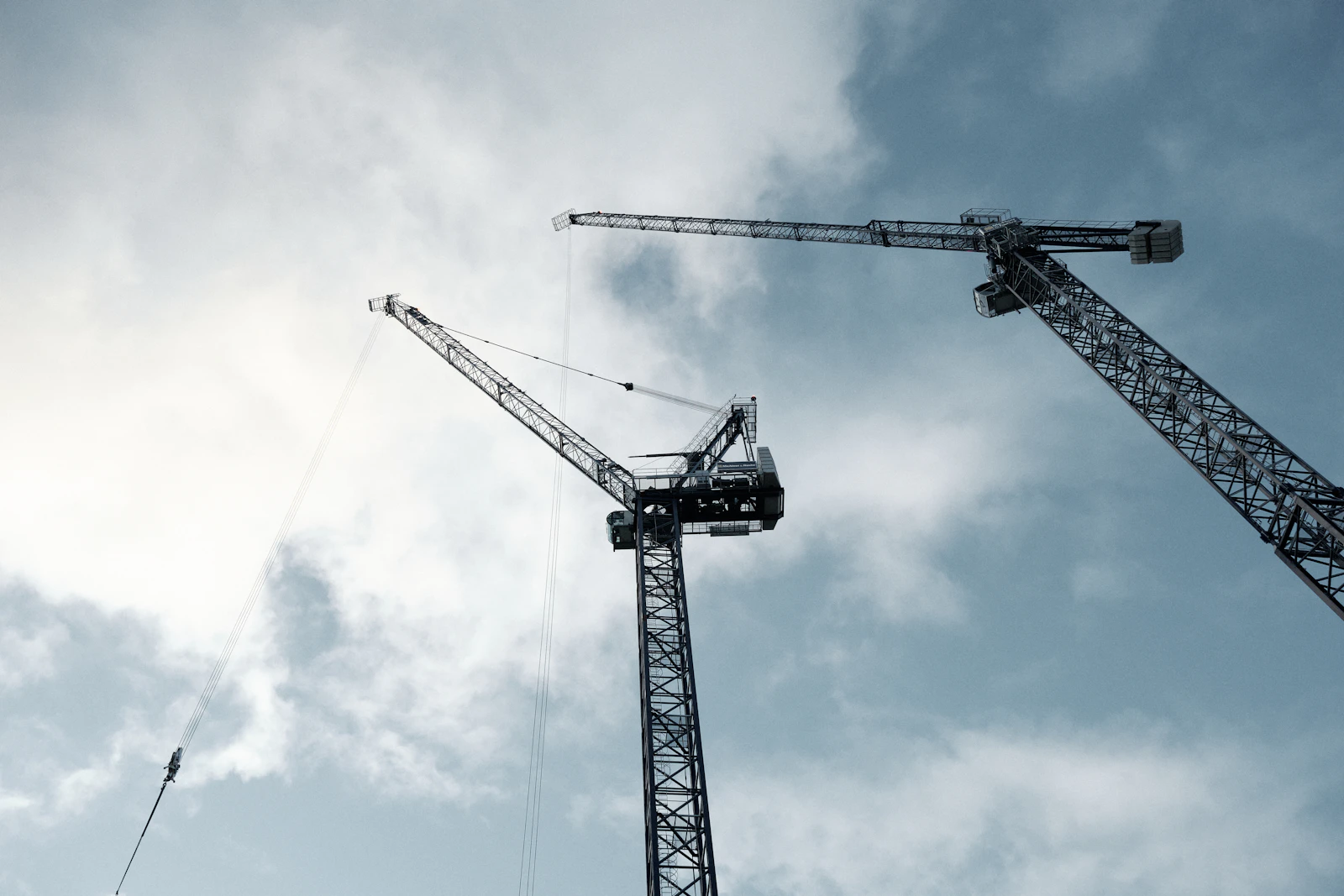
Boom Lift Rental Rates Raleigh 2026
For boom lift equipment hire in Raleigh supporting green roof installation, plan 2026 budget ranges (ex-delivery, ex-waiver, ex-taxes) as follows: a 40–45 ft electric articulating boom lift hire commonly pencils at $275–$425/day, $700–$1,050/week, and $1,700–$2,700/4-week; a 60 ft straight boom lift rental typically lands around $425–$700/day, $1,000–$1,650/week, and $2,100–$3,800/4-week; and a 60 ft diesel articulating boom lift hire for “up-and-over” reach (common at parapets) is often $525–$850/day, $1,400–$2,350/week, and $3,200–$5,500/4-week. For 80 ft class units (when outreach and setback drive the selection), carry $800–$1,250/day, $2,200–$3,400/week, and $4,900–$8,000/4-week. These 2026 planning ranges are based on published rate sheets and public contract schedules (as “book” references) plus modest escalation and local market variance; your actual Raleigh negotiated rate will move with seasonality and fleet availability. Raleigh-area renters typically source from national networks like United Rentals (local branch), Sunbelt Rentals, and regional providers serving Wake County—coordinate early for green-roof windows that can’t slip without membrane exposure.
| Vendor |
Daily Rate |
Weekly Rate |
Review Score |
Website |
| United Rentals |
$450 |
$1 250 |
8 |
Visit |
| Sunbelt Rentals |
$440 |
$1 200 |
9 |
Visit |
| Herc Rentals |
$430 |
$1 180 |
9 |
Visit |
| Gregory Poole (GP Rental) |
$415 |
$1 150 |
8 |
Visit |
What Drives Boom Lift Equipment Hire Cost for Green Roof Installation in Raleigh?
Green roof installation tends to create cost pressure in three places: (1) reach geometry (setback from building edge, parapets, and roof step-backs), (2) schedule density (weather-sensitive phases like membrane protection, growing media placement, and irrigation tie-ins), and (3) site protection (pavers, landscaping, irrigation, and finished hardscape around the building perimeter). In Raleigh specifically, plan around red-clay subgrades that rut quickly after rain (forcing rough-terrain 4x4 selection and/or matting), and downtown/medical-campus logistics where delivery timing, staging, and right-of-way constraints can add soft costs to your boom lift hire total. If any portion of the boom lift has to occupy sidewalk or street frontage, align with City of Raleigh right-of-way/encroachment requirements before you assume “standard” drop-and-go delivery.
Choosing the Right Boom Lift Class for Roof-Edge Work
Most green roof scopes use a boom lift for edge detailing, flashing inspection, irrigation verification, and punch-list access—not for moving bulk growing media (which typically belongs to cranes or telehandlers). Selection errors show up as either (a) daily standby charges while you rebook a larger unit or (b) longer-than-planned rental duration due to slow production from poor positioning.
- 40–45 ft electric articulating boom lift hire: best for tight campuses, indoor/near-building work where emissions and noise matter, and short-reach roof-edge punch work. Expect narrower chassis options, but watch gradeability on wet Raleigh clay.
- 60 ft straight boom lift rental: efficient when you have clear line-of-sight and minimal “up-and-over” needs. Often the lowest-cost way to get a 60 ft class platform height.
- 60 ft diesel articulating boom lift hire: preferred when parapets, setbacks, or overhangs require articulation. Typically higher hire cost than straight booms, but can reduce total cost by eliminating repositioning time.
- 80 ft and up: usually driven by setback (can’t get close due to landscape, drop-off, or restricted loading zones), not just by roof height.
Assumption note (estimating): many rental programs treat “monthly” as a 4-week/28-day billing cycle, not a calendar month. Confirm whether your Raleigh account uses a 28-day month or calendar-month billing before you compare “month vs. 4 weeks” pricing.
Hidden-Fee Breakdown
For boom lift equipment hire costs, the all-in number for a green roof installation rarely equals the base day/week/4-week rate. Build the following recurring adders into your Raleigh estimate (and then delete what your vendor confirms is not applicable):
- Delivery / pickup: published schedules can be structured as a flat charge plus mileage. One published price sheet shows $120 each way plus $3.25 per loaded mile for certain aerial categories (a useful planning reference when your site is outside the core delivery radius).
- Minimum delivery/pickup fees on large units: public contracts commonly carry $125–$200 delivery fees on boom lift categories (planning reference; Raleigh market varies by distance and truck type).
- Dry run / failed pickup: carry $95–$175 if a truck arrives and can’t access the drop zone (locked gate, no escort, poor ground, blocked staging). This is a frequent “quiet cost” on hospital and downtown sites with strict escort rules.
- Damage waiver / rental protection: if you don’t provide a certificate of insurance with rented-equipment coverage, many providers apply a waiver commonly around 10%–15% of rental charges; one example states a 15% damage waiver charge.
- Deductibles / caps (when waiver applies): confirm your deductible exposure—one rental damage waiver example uses $1,000 (under $25k equipment value) and $2,500 (over $25k) as deductibles.
- Environmental / recovery fees: carry 0.75%–1.5% of rent as a planning allowance where applied as a non-tax invoice line.
- Refuel / recharge expectations: most fleets go out fueled/charged to a documented level and must be returned similarly. If not, carry a $25 admin/refuel handling allowance plus local fuel cost pass-through as a budgeting placeholder (confirm with your vendor and contract terms).
- Cleaning fees: for boom lifts returning with mud-caked tires/undercarriage (common after rain on clay) or adhesive/overspray from roofing products, carry $150–$450 for wash/cleanup depending on severity and whether the yard has to pressure wash multiple times.
- Weekend/holiday billing: if your site forces Friday delivery and Monday pickup, confirm whether you’re paying a weekend bundle, two day-rates, or a weekly minimum. Don’t assume “free weekends.”
Cost Drivers Specific to Raleigh Green Roof Logistics
Two to three Raleigh-specific planning items that routinely change boom lift hire totals:
- Downtown staging and right-of-way: if the boom lift must be staged in a constrained loading zone, sidewalk, or lane-adjacent area, allow additional coordination time and potential permitting/encroachment steps.
- Weather-driven ground conditions: after rain, Raleigh’s clay subgrades can force (a) rough-terrain selection and (b) ground protection mats. As an allowance, carry $25–$45 per mat per day and assume you may need 10–20 mats depending on travel path and turning radius (confirm final quantities during site walk).
- Heat and battery performance: summer heat can reduce practical battery duty cycle on electric booms—if you’re planning a full 8–10 hour shift, include either (a) an on-site charging plan or (b) a diesel unit to avoid mid-day production loss.
Budget Worksheet
Use this as an estimator-ready checklist for boom lift equipment hire costs in Raleigh (edit to your project’s reach and duration). Avoid tables in your internal notes by keeping it as line items:
- Base rent allowance (select one): 45 ft electric articulating (5 days) at $700–$1,050/week equivalent; or 60 ft articulating (2 weeks) at $1,400–$2,350/week equivalent.
- Delivery and pickup: $240–$400 base allowance plus mileage (planning reference: $3.25/loaded mile where applicable).
- Damage waiver / rental protection: 10%–15% of rent (or $0 if COI meets requirements).
- Environmental/recovery fee: 0.75%–1.5% of rent.
- Ground protection: mats and plywood allowance $250–$1,200 depending on access path.
- Fall protection consumables: harness/lanyard rental allowance $15–$35/day per worker if not contractor-owned (confirm vendor availability).
- Cleaning/return condition allowance: $150–$450.
- Contingency for dry run / failed pickup: $95–$175.
- After-hours delivery or restricted window premium (if required): $150–$350.
Rental Order Checklist
- PO includes: boom lift class (straight vs articulating), platform height, outreach requirement, power (electric/diesel), tires (non-marking if required), and any jib requirement.
- Confirm billing basis: day/week/4-week, hour-metered shift rules, and weekend/holiday treatment.
- Delivery instructions: exact drop zone, turning radius constraints, overhead clearance, escort requirements, site contact phone, and required delivery window cutoffs.
- Right-of-way needs: confirm whether any portion of delivery/setup impacts sidewalk/lane and whether encroachment/ROW documentation is required.
- Off-rent procedure: who is authorized to call off, and how confirmation numbers are documented (email + job file).
- Return condition documentation: photos of hour meter, fuel level, tire condition, basket rails, and any existing damage before off-rent call.
Example: Boom Lift Hire Cost Build-Up for a 5-Day Green Roof Installation Phase (Raleigh)
Scenario: 6-story building, limited perimeter access due to new landscaping, green roof punch and edge install requires “up-and-over” reach at parapet; work hours constrained to standard daytime operations (no early-morning beeping or extended staging). City coordination required for a short-duration sidewalk occupation during delivery positioning.
- Equipment: 60 ft diesel articulating boom lift hire planned at $1,400–$2,350/week (use weekly, not daily, because you will touch the lift every day).
- Delivery/pickup: allow $300–$550 all-in depending on distance, truck type, and whether you need a specific delivery window. (Planning references include published $120 each way + mileage and public-contract $150 delivery fees on 60 ft class.)
- Damage waiver: if applied at 15% and your rent is $2,000 for the week, add $300.
- Environmental fee: at 1.5% of $2,000, add $30 (or at 0.75%, add $15).
- Ground protection: assume 12 mats at $30/day for 5 days = $1,800 if rented (often contractor-owned—adjust to your reality).
- Cleaning allowance: $250 if the unit works in wet clay and returns with heavy buildup.
- Dry run risk: carry $125 if the pickup arrives without escort or the gate is re-locked.
Estimator takeaway: for green roof scopes, a “$2,000/week” boom lift can quickly become a $3,000–$5,000 week once access controls, mats, and waiver/fees are included—especially if the boom is constrained to one narrow setup area and you lose time repositioning.
Billing Rules That Change Your Effective Boom Lift Hire Rate
Two contract mechanics routinely drive boom lift equipment hire costs up (or down) more than the model selection itself:
- Off-rent timing and confirmation: in at least one major lessor’s published rental/service terms, rental charges end when the unit is returned during business hours or when the lessor picks it up after you notify them the equipment is “off rent” and you obtain an off-rent confirmation number. Operationally, this means your project team should treat the off-rent confirmation number like a closeout document—without it, you may have an avoidable billing dispute.
- 28-day / 4-week “month” vs calendar month: many rate structures define “month” as 28 consecutive days (and some define usage caps, such as 176 hours, before overtime/extra shifts apply). Always reconcile your production schedule against the vendor’s definition of month—especially when a green roof scope is weather-fragmented and you’re tempted to keep the lift “just in case.”
If your boom lift is hour-metered under a shift schedule, confirm whether additional shifts multiply the base rate. One national rate schedule example states: single shift = 0–8 hours, double shift = 9–16 hours at 1.5x, and triple shift = 17–24 hours at 2x. For weekend membrane protection work or a late-day crane coordination push, that multiplier can be more expensive than simply adding an extra day at the day-rate—so run both scenarios before you commit. (g
Safety and Compliance Items That Add Real Cost (Not Optional)
On a green roof installation, the boom lift is typically positioned near finished façade and landscaped setbacks. Any incident becomes both a safety event and a cost event (damage, downtime, rescheduling, and potentially voided waiver coverage). North Carolina guidance for aerial lifts emphasizes using a body harness/restraint with a lanyard attached to the boom/basket and maintaining feet on the basket floor (i.e., no climbing the rails). From a cost-control standpoint, ensure your rental order includes any required fall-protection accessories and that your foremen enforce daily pre-use checks, because an avoidable incident is the fastest path to an unplanned deductible.
Raleigh Delivery Windows, Noise Rules, and Why They Matter to Hire Cost
Delivery and pickup are where “local” becomes expensive. If your site is in a constrained area (downtown, near campuses, or along high-traffic corridors), vendors often quote a base delivery plus mileage, but your jobsite drives the real cost: waiting time, re-delivery, and dry runs. City of Raleigh guidance and permitting pathways for right-of-way occupancy/encroachments are relevant when you need even temporary space to set the lift down, swing a trailer, or block a sidewalk edge. Build time for these approvals into your schedule so you’re not paying an extra week of boom lift rent waiting for a staging solution.
Also note that Raleigh has updated noise ordinance language and enforcement standards in recent years. While a boom lift itself is not always “the loudest thing on site,” the practical effect is that many project teams avoid early/late operations (backup alarms, delivery trucks, and staging activity), which can force midday deliveries and higher congestion risk. The moment you require an after-hours delivery window, carry a premium of $150–$350 as an allowance (confirm with your lessor) because dispatching a dedicated truck and driver outside standard routes is rarely “free.”
Ways to Reduce Boom Lift Equipment Hire Costs Without Under-Specifying
- Do a reach-and-setback sketch before you call for quotes: if you can specify “60 ft articulating with X ft outreach needed” you reduce the risk of swapping units midstream (swap costs often exceed $300–$550 in logistics alone).
- Bundle the rental period to how you actually work: if you will touch the lift 4–5 days in a row, price weekly; if the work is intermittent, consider short weekly bursts rather than keeping a unit idling on rent for 28 days.
- Confirm what stops the clock: train superintendents to obtain the off-rent confirmation number the same day the lift is no longer needed.
- Control return condition: require end-of-shift tire/undercarriage scrape-down when clay is wet. Spending 15 minutes/day can avoid a $250 wash fee and reduce yard damage claims.
- Manage waiver vs COI intelligently: if you routinely rent aerials, it may be cheaper to maintain proper rented-equipment coverage than paying 10%–15% on every invoice—run a 12-month comparison for Raleigh/Wake County utilization.
Bottom line for 2026 planning in Raleigh: treat boom lift hire as a logistics-driven cost, not a simple rate-sheet item. The best outcomes come from aligning the boom class to the roof geometry, locking delivery windows early, documenting off-rent properly, and budgeting transparently for waiver/fees and site protection.