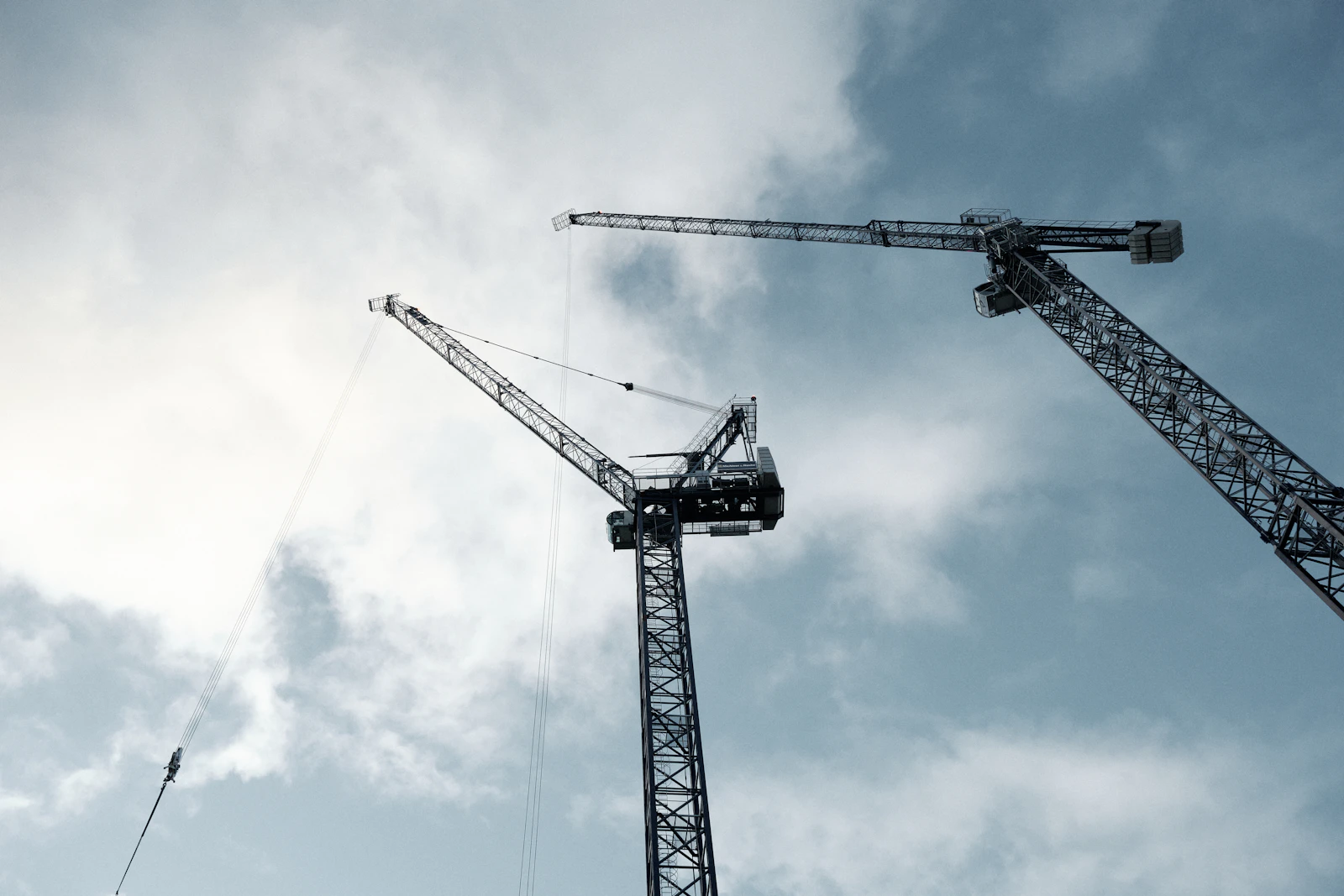
Boom Lift Hire Costs San Antonio 2026
For structural steel erection in San Antonio, 2026 planning ranges for boom lift equipment hire typically land in three bands: $275–$650/day, $825–$1,950/week, and $2,400–$6,300/28-day month for common 45–80 ft classes, with 100–135 ft high-reach units often budgeting $1,500–$2,250/day, $4,500–$6,750/week, and $12,500–$18,500/month. These ranges assume an 8-hour day, 40-hour week, a 28-day billing month, bare machine only (no operator), and exclude tax, delivery, fuel, and protection products. Most steel contractors in Bexar County will quote multiple suppliers (for example, United Rentals, Sunbelt Rentals, Herc Rentals, and capable local independents) because availability, tire spec, and delivery windows can move the total hire cost as much as the base rate.
| Vendor |
Daily Rate |
Weekly Rate |
Review Score |
Website |
| United Rentals |
$374 |
$992 |
9 |
Visit |
| Sunbelt Rentals |
$375 |
$896 |
9 |
Visit |
| Herc Rentals |
$310 |
$655 |
9 |
Visit |
2026 Planning Rate Ranges By Boom Lift Class (San Antonio)
Use the bands below as estimating allowances for boom lift hire pricing in San Antonio. They are intentionally ranges (not “exact vendor rates”) because fleet age, availability, and attachments vary by branch and week. Published examples from major marketplaces and regional rental catalogs show list-price anchors such as ~$260/day for ~34 ft articulating units and ~$1,650/day for ~120 ft telescopic units, which informs these 2026 planning ranges.
- 34–45 ft electric articulating (indoor/low-emission work): budget $275–$425/day, $825–$1,275/week, $2,400–$3,700/month. (A published example shows ~34 ft articulating at $260/day, $562/week, $1,456/month in prior-year pricing.)
- 45–60 ft diesel articulating, RT (typical steel bolt-up reach-around): budget $375–$650/day, $1,125–$1,950/week, $3,300–$6,300/month. (A published 60 ft articulating day rate example is $575/day, prior-year list pricing.)
- 60–80 ft telescopic (straight boom, maximum outreach): budget $500–$950/day, $1,500–$2,850/week, $4,500–$8,700/month.
- 100–135 ft telescopic / high-reach (stadiums, industrial, long-stick steel): budget $1,500–$2,250/day, $4,500–$6,750/week, $12,500–$18,500/month. (A published example shows ~120 ft telescopic at $1,650/day, $4,790/week, $12,007/month in prior-year pricing.)
San Antonio-specific pricing reality check: the city’s footprint (Loop 410 / Loop 1604 corridor and fast-growing suburbs) makes delivery distance and truck scheduling a larger share of total boom lift hire cost than in denser downtown markets. Also, summer heat routinely pushes crews toward earlier start times, which can collide with standard rental yard dispatch windows and create premium delivery charges if you need the machine on-site before normal hours.
What Changes Boom Lift Equipment Hire Cost On Steel Erection Sites?
For structural steel erection, you’re rarely renting “a boom lift” generically—you’re renting a reach solution with specific site constraints that directly change hire costs. These are the cost drivers that typically matter most in San Antonio:
- Articulating vs. telescopic selection: articulating booms usually win on bolt-up where you must reach around columns/bracing, but telescopics may reduce repositioning time on long runs. Fewer moves can offset a higher weekly rate.
- Rough-terrain configuration: 4WD, oscillating axles, and aggressive tires are often non-negotiable on pad edges, laydown yards, and partially improved subgrade. If you must add foam-filled tires, carry a planning adder of $45–$90/day or $180–$360/week for “special tire” spec (varies by supplier and class).
- Platform capacity and basket size: higher-capacity platforms (common for steel tools, bolts, and two-person work) can push you into a different model class and rate band.
- Site access and surface protection: if you’re working inside an existing facility (retrofit steel) or over finished slabs, budget non-marking tires at $35–$60/day and floor protection consumables (plywood/ram board) as a separate line item. Dust-control requirements (plastic, negative air, housekeeping) can also drive cleaning fees at return.
- Schedule risk (weather/wind): steel erection is wind-sensitive. If wind holds you down, you still pay for the machine unless you can off-rent and get it picked up under your supplier’s cutoff rules.
Delivery, Pick-Up, And Off-Rent Rules That Move Total Hire Cost
Delivery is where many “cheap weekly rates” lose. For San Antonio boom lift equipment hire, plan these non-rate cost behaviors into your estimate:
- Typical delivery/pick-up allowance: $150–$350 each way for common boom classes inside a local radius; if you’re outside the practical radius (far West, far North, or beyond), carry $4–$7 per loaded mile as a planning allowance.
- Minimum rental charges: many suppliers effectively enforce a 1-day minimum even if you “need it for a few hours.” (Some regional price lists show 4-hour/8-hour day structures, but it seldom halves your cost.)
- Waiting time / failed delivery: if the truck is turned away (no access, no contact, bad address, gate locked), budget $85–$125/hour standby plus a possible re-delivery fee.
- Off-rent cutoff: carry an operational assumption that you must call off-rent by 2:00–3:00 PM for next-business-day pickup; after-cutoff requests often bill an extra day.
- Weekend and holiday billing: do not assume a “free weekend.” Many rental calendars treat Saturday as 0.5 day (or a full day on hot-demand units) and Sunday as another 0.5–1.0 day if it remains on rent.
- Early delivery / after-hours: if you require delivery before a typical dispatch window to hit a steel pour/erection milestone, budget a premium of $150–$300 for special dispatch, plus possible overtime yard charges.
Hidden-Fee Breakdown (Plan These Into Your Boom Lift Hire Budget)
To keep your boom lift hire cost controllable on a steel erection site, set explicit allowances for the items below. You can delete them later if your quote confirms they’re included.
- Damage waiver / rental protection: commonly 10%–15% of the time/rent subtotal; some suppliers publish protection adders (one example shows 14% added unless you provide a qualifying COI).
- Environmental / administrative fees: carry 2%–5% as a planning allowance if your historical invoices show recurring line items.
- Cleaning fees (mud, concrete splatter, adhesive): $85–$250 per event depending on severity and whether it’s an “operator cleanup” vs. shop labor.
- Refuel charge (diesel/dual-fuel): assume $6–$10 per gallon plus a $35–$75 service/handling fee if returned below the agreed level.
- Battery recharge / charger replacement: for electric booms, budget $40–$120 if returned uncharged or if a charger/cable is damaged/missing (varies widely; treat as a contingency).
- Loss/damage deductible exposure: even with a waiver, many programs leave you with a deductible; carry a project contingency of $250–$1,000 for minor damage risk on congested steel decks.
- Late return penalties: some contracts bill in increments such as 1/8 day or 1/4 day once you pass the return time; as an estimating simplification, carry $75–$150/hour “late/standby exposure” when you’re cutting it close.
Budget Worksheet (Boom Lift Equipment Hire Allowances)
Use this as a starting worksheet for a typical San Antonio structural steel erection package. Adjust class and duration to your bid schedule.
- Base hire – 60 ft RT articulating boom: 1 unit × $3,300–$6,300 per 28-day month
- Optional second unit (peak bolt-up weeks) – 45 ft RT articulating: 1 unit × $2,700–$4,800 per 28-day month
- Delivery + pick-up: $300–$700 (round trip) + mileage allowance if outside core metro
- Damage waiver / protection: 10%–15% of time/rent
- Environmental/admin: 2%–5% of time/rent
- Non-marking tires (if required): $35–$60/day
- Foam-filled tires (if required): $45–$90/day
- Ground mats / cribbing (if needed for subgrade): allow $120–$250/week (small package) as a rental/consumable allowance
- Cleaning contingency: $150
- Refuel contingency: $200
Example: 4-Week Boom Lift Hire Cost For Structural Steel Erection (San Antonio)
Scenario: You’re erecting structural steel for a light industrial expansion near the Loop 1604 / I-35 corridor. The GC requires daily pre-task documentation, strict housekeeping, and a defined off-rent plan. Subgrade is improved but still rutted after rain, so you spec a 60 ft rough-terrain articulating boom. You need the unit on-site Monday 7:00 AM to meet a crane pick sequence, and you expect to off-rent immediately after bolt-up (no “extra week” float).
- Base monthly hire (28-day billing): $3,300–$6,300
- Round-trip delivery/pick-up: $300–$700 (add mileage if outside typical local radius)
- Protection product (damage waiver) at 12% planning factor: $396–$756
- Environmental/admin at 3% planning factor: $99–$189
- Early delivery premium (if required): $150–$300
- Cleaning/refuel contingencies: $350 combined (typical allowance)
Estimated 4-week hire total (planning range): approximately $4,595–$8,895 for one 60 ft RT articulating boom lift, before tax. The controllable levers here are (1) avoiding a missed delivery window that triggers standby and re-delivery, (2) calling off-rent by cutoff so you don’t buy an extra day/week, and (3) returning the unit in documented condition (photos, fuel level, and a clean platform/basket).
How Rental Terms Change Your Effective Boom Lift Hire Cost
On steel erection work, the difference between “weekly” and “monthly” is not just a discount—it’s how quickly your effective daily rate collapses once the machine sits over weekends or weather days. Most suppliers price around a 28-day month, so a “monthly” rate can look attractive until you realize you still need to manage off-rent timing and pickup scheduling. For estimating, treat these as practical rules of thumb:
- Weekly vs. daily economics: if your schedule is uncertain (wind holds, crane reschedules), a weekly rate can be safer than locking into 28 days you can’t use.
- Month billing cycle exposure: when you slip past the end of a 28-day cycle, you can trigger another minimum period (sometimes a full week). Build a float plan that includes an off-rent call on day 24–26 if bolt-up is finishing early.
- Return time cutoffs: if return cutoff is, for example, 4:00–5:00 PM, missing it can convert “return today” into “billed through tomorrow.” Budget overtime trucking risk if your last steel pick runs late.
Insurance, Damage Waiver, And Indemnity Cost Planning
For boom lift equipment hire in San Antonio, the protection product is often one of the biggest invoice adders after delivery. If you provide a qualifying Certificate of Insurance (COI) meeting the rental company’s requirements, you may be able to remove or reduce protection charges; if not, plan to carry them. One published example shows a 14% add-on unless a COI is provided, which is consistent with the 10%–15% planning band many contractors see.
Estimator note: if your company’s insurance program already covers rented equipment (inland marine / contractor’s equipment), confirm whether the rental supplier will accept your COI language without forcing their waiver back onto the ticket. This is often a pre-award commercial/contract step, not a field step.
Fueling, Charging, And Return-Condition Costs (Where Steel Jobs Get Hit)
Structural steel sites create predictable return-condition problems: grinding dust, welding spatter, paint overspray, and mud from laydown yards. Those conditions are manageable if you plan them.
- Diesel refuel expectations: return at the same level received. If the unit comes at half-tank, photograph it on delivery. If you return low, budget $6–$10/gal plus $35–$75 handling.
- Electric boom charging requirements: confirm whether the supplier provides a 110V charger, what plug type is included, and whether the GC can provide secure power overnight. If batteries are repeatedly deep-cycled in high heat, performance can drop; plan for an operational buffer rather than extending the hire due to slow work.
- Cleaning prevention is cheaper than cleaning fees: if you anticipate indoor steel retrofit work, specify platform protection and daily wipe-down to avoid a $85–$250 cleaning hit at return.
- Missing items: budget a small contingency ($50–$150) for lost pins, manuals, or charger leads if your historical loss rate suggests it.
San Antonio Operating Constraints That Affect Boom Lift Hire Cost
Local operating realities don’t show up on a rate sheet, but they change total equipment hire cost:
- Delivery windows vs. traffic patterns: I-10 and I-35 congestion and active construction can compress the “available” delivery times; if the site only allows delivery between 7:00–9:00 AM, you may pay premium dispatch or waiting time.
- Heat impacts and earlier starts: in hot months, steel crews may shift earlier (for example, starting rigging at 6:00–6:30 AM), which can require after-hours drop or a prior-day delivery (meaning you buy extra rent days).
- Dust-control / housekeeping enforcement: industrial and mission-critical facilities around the metro can enforce strict dust-control that, if ignored, turns into chargeable cleaning or downtime that extends the rental duration.
When You Should Upsize (Even If The Daily Rate Is Higher)
For steel erection, the cheapest boom lift hire cost is often the one that finishes sooner. Consider upsizing or switching types when the cost of time exceeds the rate delta:
- From 45–60 ft to 60–80 ft: if your outreach is marginal and you’re constantly re-positioning, a higher rate (for example, an extra $150–$300/day) can be offset by fewer moves and fewer “waiting on lift” delays.
- From electric to diesel RT: if you’re outside on unimproved subgrade, electric units can bog down or require additional ground protection. Ground mats can run $120–$250/week as a small package; sometimes it’s cheaper to rent the right RT boom than to engineer the ground.
Rental Order Checklist (Boom Lift Equipment Hire)
Use this checklist to prevent avoidable charges and schedule slips on your San Antonio boom lift hire order.
- PO and commercial setup: PO number, cost code, rental dates, jobsite address with gate/access notes, COI instructions (send in advance), and who is authorized to call off-rent.
- Equipment spec confirmation: boom type (articulating/telescopic), working height, platform capacity, power (diesel/dual-fuel/electric), tire spec (foam-filled/non-marking), and any required accessories.
- Delivery requirements: requested delivery date/time window, on-site contact phone, delivery path/turning radius confirmation, unload area, and whether a lull/crane is needed (avoid “arrive and can’t unload”).
- Condition documentation: photos at delivery (all sides), fuel/battery level photo, hour meter reading, and any existing damage annotated immediately.
- Operational rules to confirm in writing: off-rent cutoff time, weekend billing rules, late-return increments, refuel/recharge policy, and cleaning expectations.
- Return plan: schedule pickup, ensure machine is accessible (not blocked by steel bundles), remove trash/debris from basket, and photograph final condition + fuel level before the truck arrives.
2026 Market Notes For Boom Lift Hire In San Antonio
For 2026 planning, expect boom lift availability to tighten during peak construction months and around major industrial work pushes, which can shift you from “best rate” to “available rate.” To protect your budget:
- Peak-demand premium: carry a 5%–12% escalation risk on time/rent for high-demand classes (notably 60–80 ft RT and high-reach units) if you’re bidding work that starts in a traditionally busy window.
- Lead time: plan 3–7 business days for guaranteed delivery on specific models/specs (foam-filled, non-marking, high-reach), especially if you need multiple identical units.
- Contingency for schedule slips: include at least 3–5 standby days of exposure in your internal risk register; you may not include it in the client-facing number, but you should track it as a management reserve when steel and crane schedules are volatile.
If you want, share the required working height (e.g., 60 ft vs. 80 ft), indoor vs. outdoor, and the job’s cross-streets/ZIP; I can tighten the 2026 planning range and the delivery/fee allowances to match your likely lift class and travel distance without turning it into vendor-specific “exact pricing.”