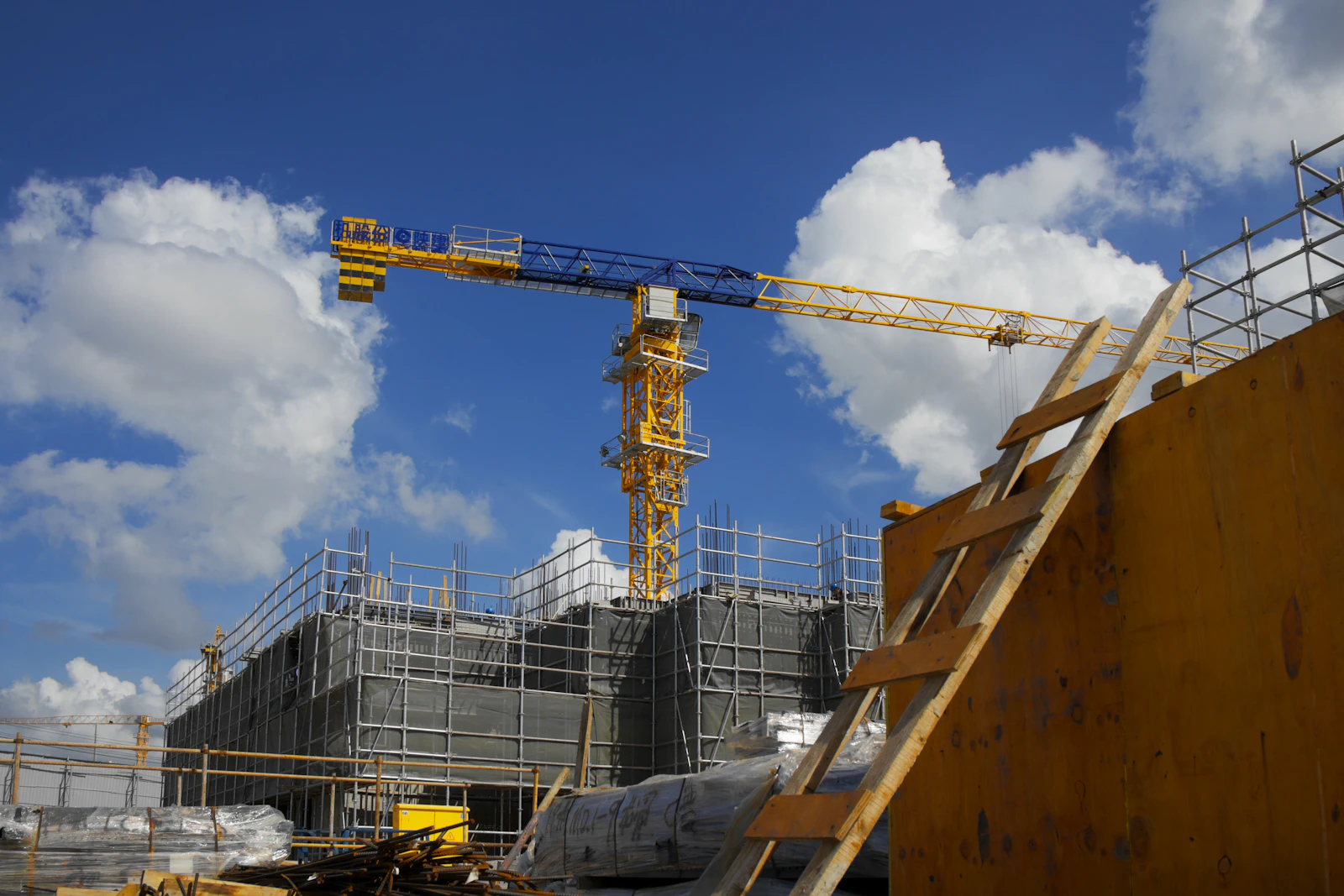
Boom Placer Hire Costs New York 2026
For 2026 planning in New York City (NYC metro), boom placer concrete pump hire typically budgets in the following ranges (USD), assuming a standard single shift (up to 8 pumping hours) with operator and a common boom class: $1,600–$2,600 per day, $6,500–$10,500 per week, and $24,000–$38,000 per month for a mid-reach boom. Larger booms, restricted-access Manhattan sites, night pours, and high-rise logistics push totals materially higher. Note that New York State publishes equipment-only reimbursement schedules for concrete pumping equipment where operator costs are explicitly excluded, reinforcing why NYC “concrete pump hire” is usually structured as a service package (pump + operator + travel + minimums) rather than a simple bare equipment rental.
| Vendor |
Daily Rate |
Weekly Rate |
Review Score |
Website |
| Modern Concrete Pumping Services LLC |
$1 800 |
$9 000 |
8 |
Visit |
| Our Rental Pumps, LLC |
$1 800 |
$9 000 |
8 |
Visit |
| Performance Equipment Rental & Concrete Pumping Services |
$1 800 |
$9 000 |
7 |
Visit |
| KG Concrete Pumping Corp |
$1 800 |
$9 000 |
10 |
Visit |
| All Time Pumping Concrete |
$1 800 |
$9 000 |
10 |
Visit |
What You Are Hiring In New York: Boom Pump Truck Vs. Placing Boom
On NYC projects, the term boom placer is used two ways in procurement conversations:
- Truck-mounted boom pump (most common for “concrete pump hire”): A road-legal pump truck with a placing boom. Hire cost is driven by boom reach (meters/feet), pump output (CY/hr), travel time, and the hourly minimum.
- Separate placing boom (distribution boom) paired with a stationary pump: More common on high-rise cores, podium decks, and long-duration placements where the boom stays on-site. Hire cost shifts toward weekly/monthly equipment hire, erection/jump costs, crane/hoist interface, and strict off-rent rules.
This guide focuses on equipment hire costs for NYC concrete pump hire using a boom placer, while also showing where pricing changes when the “boom placer” is a dedicated placing boom installed on a structure.
2026 Planning Rate Ranges By Boom Size (NYC Metro)
Use these as budgetary equipment hire ranges (not a quote). Assumptions: 1 pump, 1 operator, normal concrete mix supply by others, standard setup, and clear access. NYC conditions (street occupancy permits, limited staging, night work) can override these quickly.
- 28–36 m (approx. 92–118 ft) boom placer concrete pump hire: $1,600–$2,300/day; $6,500–$9,000/week; $24,000–$33,000/month.
- 37–47 m (approx. 121–154 ft) boom placer concrete pump hire: $2,200–$3,400/day; $8,800–$13,500/week; $33,000–$52,000/month.
- 48–58 m (approx. 157–190 ft) boom placer concrete pump hire: $3,200–$4,800/day; $12,500–$20,000/week; $48,000–$75,000/month.
Cross-check / sanity anchor (New York State schedule): NYS equipment rate schedules publish truck-mounted concrete pumping equipment (pump + boom, less chassis) as hourly equipment rates with operator excluded. That structure is consistent with how many NYC contractors still build up a pump hire price: equipment component + labor component + travel + adders.
What Drives Boom Placer Equipment Hire Costs In NYC?
Rental coordinators in New York typically see total hire cost move more from site logistics and time than from the base day rate. The biggest cost drivers below are the ones that create overtime, standby, or remobilization.
Boom reach and output (capacity) selection
- Oversizing the boom to clear parapets, setbacks, or overhead obstructions can add $600–$2,200/day versus a smaller unit, even before overtime.
- Higher-output pump packages (faster CY/hr) can reduce crew standby but often come with a higher minimum or higher hourly over-minimum rate (typical planning: +$50–$120/hour over a base class).
NYC access constraints that change the real bill
- Street occupancy / staging limits: If you only have a narrow DOT window, you may be forced into a night pour, a weekend pour, or a smaller boom with more repositioning. Night/weekend differentials commonly run +10% to +25% on the pump portion, or a flat +$350–$900 per shift depending on the package.
- Bridge/parkway restrictions: Some routes (and some delivery yards) require planning around weight/height limits; “long way around” travel can trigger higher mobilization or additional travel hours.
- Traffic and curbside risk: The chance of missed delivery windows is higher in Manhattan. If the pump is on-site but cannot start, standby is frequently billed at $150–$250/hour after an initial grace period (often 0–30 minutes, contract-specific).
Minimums, pour duration, and overtime rules
Most NYC concrete pump hire packages include a minimum. Two common structures:
- Hourly with minimum: 4-hour minimum is common for smaller to mid booms; larger booms may carry 5-hour or 6-hour minimums. Planning hourly ranges for the pumping portion (operator included) often land around $250–$420/hour depending on boom class and union/non-union conditions.
- Shift rate (day rate): One shift up to 8 hours, with overtime after 8 hours.
Overtime commonly prices at 1.5x after 8 hours and 2.0x after 10–12 hours, or is expressed as an overtime hourly of $350–$650/hour for larger boom packages. In NYC, overtime risk is often more controllable than base rate—by locking concrete delivery slots and enforcing “no truck, no pump” rules when the ready-mix schedule collapses.
Hose, pipeline, and end-hose adders
Even when the boom is the “headline,” accessories can be the difference between a clean invoice and a change order:
- Extra end hose / slickline wear allowance: budget $45–$95/day.
- Additional slickline beyond standard package: budget $6–$12 per foot per week (or an agreed lump sum per pour) when long reach from curb is required.
- Reducer and specialty elbows (common on tight decks): budget $25–$75/day per component as a rental adder if not included.
Hidden-Fee Breakdown
These are the line items that routinely show up on NYC boom placer equipment hire tickets and should be carried as allowances in a 2026 budget.
- Mobilization / demobilization: $450–$1,200 per move within the metro; plus $6–$9/mile beyond a contracted radius, or billed travel time.
- Tolls, congestion, and escorts: Allow $60–$200 per round trip in tolls/fees depending on route and time; add $150–$450 if your site requires flaggers or an escort for backing/positioning.
- Street/curb management costs (project-driven): Meter reservation or curb lane management admin commonly budgets $100–$350 as a soft cost line (separate from any DOT permit costs carried elsewhere in general conditions).
- Cancellation / short notice reschedule: Common planning exposure is $350–$900 if cancelled inside 24 hours; some packages convert the entire minimum to a cancellation fee.
- Washout / slurry containment requirement: If the site cannot provide a compliant washout, budget a vendor-provided washout solution at $125–$350 per shift, plus disposal if required.
- Cleaning fees: “Normal rinse” may be included; heavy cleanup can price at $250–$600. Hardened concrete remediation (chipping/hammering) is often billed time-and-material with a practical minimum—carry $800–$1,800 as a risk allowance on congested pours.
- Fuel/DEF pass-through: If the hire is not all-inclusive, refuel is frequently billed at $7–$10/gal diesel equivalent with a minimum (commonly 10–20 gallons).
- Damage waiver / insurance (equipment-only structures): If you are actually doing equipment-only hire for a placing boom component, budget 8%–15% of the equipment hire as a damage waiver unless your wrap-up or OCIP language replaces it.
- After-hours dispatch: Late-day adders commonly appear as +$250–$750 for dispatch after a cutoff (often 3:00–5:00 PM yard time), especially when the pump must be re-routed around traffic closures.
Example: Midtown Manhattan Night Pour With A 42–47 m Boom
Scenario: 240 CY elevated slab placement, limited curb lane access, approved pump setup window 10:00 PM–6:00 AM, and the boom must stay in one position (no mid-pour reposition due to barricade plan).
- Base shift (42–47 m boom placer concrete pump hire): $2,800 (1 shift, up to 8 hours pumping).
- Night differential: +15% ($420).
- Mobilization/demobilization: $850 (includes NYC travel time allowance).
- Standby risk: 1 hour standby due to delayed ready-mix convoy at $200/hour = $200.
- Washout containment: $250 (site cannot provide compliant washout area).
- Additional end-hose wear allowance: $75.
- Overtime: 1.5 hours over 8 hours at $450/hour = $675.
Planning total (pump hire scope only): $2,800 + $420 + $850 + $200 + $250 + $75 + $675 = $5,270, before any separate traffic control labor, DOT occupancy costs, or GC general conditions. The estimator takeaway is that a “reasonable” NYC day rate can still double once night access, standby, washout, and overtime hit—so the procurement plan (delivery sequence, washout plan, and hard stop times) is part of cost control, not just operations.
Budget Worksheet (Boom Placer Equipment Hire)
Use this as a non-table line-item checklist for a New York concrete pump hire budget (edit to your contract form and pour plan).
- Boom placer concrete pump hire (base): allow $1,600–$4,800/day depending on boom class and shift structure.
- Minimum-hours exposure (if hourly): carry 4–6 hours minimum per mobilization, even if the pour is planned shorter.
- Mobilization/demobilization: allow $450–$1,200 per move.
- NYC tolls/fees allowance: allow $60–$200 per trip.
- Night/weekend differential: allow +10% to +25% (or $350–$900 flat) if access is restricted.
- Standby allowance: allow $150–$250/hour for 1–2 hours on high-risk traffic nights.
- Washout/containment: allow $125–$350 per shift when site washout is constrained.
- Cleaning/hardened concrete risk: allow $250–$600 normal heavy clean; plus a contingency of $800–$1,800 for hardened removal on congested decks.
- Hose/line adders: allow $45–$95/day for end-hose wear and $6–$12/ft/week for extra slickline as required.
- Overtime allowance: allow 1.5x after 8 hours and budget a blended overtime of $350–$650/hour for larger booms.
- Cancellation / reschedule exposure: allow $350–$900 per affected pour if schedule volatility is high.
Rental Order Checklist For Boom Placer Concrete Pump Hire
- PO details: boom class (reach), output requirement (CY/hr target), shift type (hourly-min vs. day rate), and whether standby is billable immediately or after a grace period.
- Insurance/COI: confirm required limits and additional insured language; align damage waiver vs. contractor-controlled insurance program wording (avoid double-paying).
- Delivery window: specify NYC curb access time, gate/flagger contact, and a hard “no later than” arrival time tied to DOT plan.
- Setup constraints: overhead obstructions, sidewalk bridge, power lines, or deck edge protection that affects boom unfolding.
- Washout plan: designate washout location or request vendor washout containment; confirm slurry disposal responsibility.
- Concrete delivery sequencing: ready-mix convoy plan, truck spacing target, and escalation plan if the mix plant slips.
- Off-rent / return rules: define what ends the billable period (pump washed out, lines blown out, operator released, truck leaves site).
- Return condition documentation: photo documentation of hopper/boom cleanliness, any concrete splatter on chassis, and signed tickets noting standby/overtime start-stop times.
If you need NYC procurement to be apples-to-apples, ask for the quote to clearly state: minimum hours, included hose length, overtime trigger, standby trigger, washout inclusion, and travel/mobilization basis. Those five terms control real spend more than a small difference in headline day rate.
How Weekly And Monthly Boom Placer Hire Is Usually Contracted In NYC
Weekly and monthly structures show up in New York in two main cases: (1) repetitive pours where the same boom pump is effectively dedicated, and (2) placing-boom-on-structure scenarios (distribution boom paired with a stationary pump). If your “boom placer” scope is a truck-mounted boom pump, a weekly/monthly number is often just a negotiated conversion of daily/shift work with tighter dispatch guarantees and possibly reduced mobilization per pour. If your scope is a placing boom installed on the building, then you are closer to a true equipment hire agreement with defined on-rent/off-rent milestones.
- 28-day billing vs calendar month: Some fleets treat “monthly” as a 4-week (28-day) cycle. Confirm whether your $/month assumes 20 shift days or a calendar month with weather downtime risk carried by you.
- Off-rent definition: For installed placing booms, off-rent may require demobilization, dismantling, and final inspection—meaning you keep paying until the equipment is physically down and released, not when the last pour ends.
- Crewing: Installed placing booms can separate equipment hire from pump operator labor. NYS schedules explicitly separate equipment from operator cost in published rates, which is conceptually similar to how these contracts are built (even if your commercial terms differ).
Accessories And Requirements That Commonly Add Cost
In NYC, accessories become cost drivers because they solve real constraints: curb distance, parapet clearance, and indoor/adjacent-property cleanliness requirements. Typical 2026 planning adders (USD) include:
- Extra slickline package for long curb-to-core runs: $150–$450/day (or negotiated per foot/weekly equivalent) depending on length and wear responsibility.
- High-pressure line clamps / gaskets / consumables allowance: $40–$120 per pour when billed as consumables rather than included.
- Line blowout / sponge ball / air cleanup allowance: $35–$95 per event if not included.
- Vacuum cleanup or dust-control support (indoor pours, adjacent finished areas): $250–$900 depending on scope and time window.
- Additional labor for hose handling on tight decks: $85–$140/hour per laborer (market-dependent) if the pumping contractor supplies extra hands beyond the operator.
NYC-specific note: When sidewalk sheds, scaffolds, or adjacent property protections limit boom articulation, the “accessory” may not be optional. If you need additional slickline to reach around a shed line, treat it as a required equipment hire adder, not a contingency.
Operational Controls That Reduce Total Concrete Pump Hire Spend
Cost control for boom placer equipment hire in New York is mostly about protecting the minimum and avoiding overtime/standby. Practical controls rental coordinators can implement:
- Lock delivery cutoffs in writing: If the yard cutoff is 4:00 PM, don’t assume you can “add one more pour” at 4:30 PM without triggering a +$250–$750 after-hours dispatch adder.
- Enforce a ready-mix staging plan: Standby at $150–$250/hour is often cheaper than demob/remob, but it is still avoidable with disciplined truck spacing and a backup plant plan.
- Define the off-rent moment: “Off-rent” should be when the pump is washed out, lines are cleared, and the operator is released—otherwise you will pay through cleanup and admin delays.
- Plan washout and return-condition documentation: A $250 heavy-clean is manageable; an $800–$1,800 hardened cleanup event is a preventable hit. Assign ownership for washout, splatter protection, and final photos.
- Separate ‘must pour’ from ‘nice to pour’ items: Optional infill and housekeeping placements frequently push a shift into overtime ($350–$650/hour), erasing any efficiency gain.
Compliance And Documentation Notes For New York City Jobsites
While permitting and traffic control costs are often carried outside the equipment hire line, they directly impact pump productivity and therefore pump hire cost exposure:
- Street occupancy and work windows: If your approved window is short, your risk of overtime rises. Budget night/weekend differentials (+10% to +25%) when the permit effectively forces off-hours work.
- Ticket discipline: Require start/stop times, standby start/stop times, and washout completion times on the pump ticket. Treat tickets like timecards—because they function as timecards in a dispute.
- Neighbor cleanliness requirements: Overspray/splatter protection (poly, pans, berms) costs less than a cleanup back-charge. Carry a small but explicit allowance (e.g., $250–$900) for containment materials and labor when pumping adjacent to finished facades or retail frontage.
Ownership Vs. Equipment Hire: When The NYC Math Flips
For many contractors, owning a boom pump only wins if utilization is consistently high and dispatch is predictable. Industry guidance commonly cites ownership becoming more cost effective around 600–750 hours/year of use over multiple years; below that threshold, renting/hiring preserves cash and avoids under-utilized equipment costs.
In NYC, that utilization hurdle is harder to clear unless you have a steady pipeline of pours that fit the same boom class and can keep the unit productive despite DOT windows, traffic, and job sequencing conflicts. If you are on the fence, a practical hybrid is to (1) keep line pumps or smaller units in-house if they stay busy, and (2) use boom placer concrete pump hire for larger reach classes, night work, and high-risk access jobs where standby/overtime variability is better carried as a project cost than a fixed ownership cost.
For estimating, the most reliable approach is to build a job-specific pump hire budget using: base day/shift + mobilization + minimum exposure + washout plan + overtime/standby allowances, and then negotiate the exact commercial structure once the pour plan and access windows are confirmed.