

Create an itemized estimate for your project, with materials, labor, and quantities you can review and edit.
Create my estimateStart a 7-day free trial. Sign up, then enter your project details.
For Baltimore-area site grading in 2026, plan bulldozer equipment hire in three practical bands (assuming 8-hour single-shift billing and normal ground conditions): small dozers (D3/D4 class) typically budget $325–$750/day, $1,100–$2,600/week, and $2,900–$7,200/month; mid-size dozers (D5/D6 class) $750–$1,250/day, $2,400–$4,200/week, and $6,200–$11,500/month; and larger production dozers (D7+) $1,250–$2,250/day, $4,200–$7,800/week, and $12,000–$22,000/month. These are planning ranges (not quotes) built from posted Mid-Atlantic rate sheets and Baltimore operated-hire schedules; national rental houses and local heavy-equipment providers serving Baltimore (including branches of major rental networks and local firms offering operated dozer hire) can land anywhere inside these bands based on availability, low-ground-pressure (LGP) track requirements, and delivery constraints.
| Vendor | Daily Rate | Weekly Rate | Review Score | Website |
|---|---|---|---|---|
| United Rentals (Baltimore, MD) | $750 | $2 600 | 9 | Visit |
| Sunbelt Rentals (Baltimore, MD) | $725 | $2 500 | 9 | Visit |
| Herc Rentals (Baltimore, MD) | $775 | $2 700 | 8 | Visit |
| JGR Equipment Rental & Sales (Baltimore/Halethorpe, MD) | $675 | $2 350 | 10 | Visit |
| Potts & Callahan, Inc. (Baltimore, MD) — Dozer w/ operator pricing | $1 350 | $6 700 | 8 | Visit |
Bulldozer hire costs for Baltimore site grading swing more from site logistics and track wear risk than from the base day rate alone. The biggest cost drivers you should price explicitly are: (1) dozer size and undercarriage type (standard vs LGP), (2) whether you are hiring bare equipment versus operated bulldozer hire (machine + operator), (3) metered-hours/shift rules (single shift vs double shift), (4) delivery access and timing (downtown delivery windows, alley access, flagging), and (5) return condition (track cleaning, debris removal, and documented pre/post inspection photos).
For Baltimore specifically, expect real cost impact from I-95 congestion and tight urban delivery windows (Inner Harbor, Midtown, and dense rowhome corridors), plus wet subgrades and clayey material that push you toward LGP pads or wider shoes after rain events. If your job is near waterways or low-lying parcels, “no rut” expectations and erosion-and-sediment compliance can also increase the effective hire cost by forcing smaller lifts, reduced tracking, and more frequent cleanup.
Use the following as an estimator’s cross-check for whether a supplier quote is in-family for Baltimore metro. These are not “Baltimore-only” advertised rates, but they anchor your planning to published schedules that frequently influence Mid-Atlantic market pricing.
2026 planning takeaway: For a true D3/D4 class dozer suitable for fine trimming and light-to-moderate grading, your “safe” planning envelope is usually $325–$750/day once you account for cab, undercarriage condition, and the fact that urban Baltimore deliveries often add cost versus yard pickup.
2026 planning takeaway: For Baltimore site grading where you need production (strip topsoil, push fill, shape building pad), budget mid-size dozer hire at $750–$1,250/day, $2,400–$4,200/week, and $6,200–$11,500/month, with delivery/mobilization as a separate line item that can materially change the effective daily cost on short rentals.
In Baltimore, you’ll often see an “operated hire” path used for short-duration grading where the GC wants one PO that includes operator labor, trucking coordination, and a known hourly structure. One Baltimore-based schedule lists dozers as straight-time hourly rates, effective April 1, 2025, with models such as a D3G at $142.00/hour, D4G at $152.00/hour, D5G at $162.00/hour, and D6 at $192.00/hour (rates stated as hourly; additional labor agreement adders may apply). The same schedule notes operational cutoffs such as order by 2:00 P.M. for the following work day and cancel before 6:30 A.M. on the rental date, plus job/union adders like +$3.00/hour in certain agreement scenarios and a +$10 surcharge line item; it also references an 8-hour guarantee for rentals over 30 miles from the shop.
2026 planning takeaway: If you budget operated dozer hire for Baltimore site grading, plan $145–$235/hour for a D3–D6 class depending on size and agreement conditions, and then confirm (a) minimum hour guarantees, (b) standby terms, and (c) whether mobilization is included or billed separately.
Delivery is where Baltimore dozer rentals get “expensive fast” on short terms. Two common pricing patterns show up in rate schedules:
Baltimore-specific cost considerations to carry in your estimate: (1) if your site needs a narrow delivery window (e.g., “arrive 7:00–9:00 only”), budget an after-hours or scheduled-delivery premium (often $150–$350 as an allowance), (2) if your site is in a dense street grid with no laydown, budget flagging/traffic control for the lowboy (commonly 2 flaggers x 4 hours), and (3) if the dozer is heavy enough to trigger routing limits, plan for permit/escort pass-throughs (carry a placeholder of $75–$250 unless your hauler pre-quotes).
To keep bulldozer hire cost forecasting realistic for site grading, price the “non-rate” items as separate allowances on your estimate recap. These are the line items that most often create PO overruns in week 2–4.
For site grading, “bulldozer rental” is rarely just the tractor. Options that change both the day rate and the risk profile include:
Example: 5-day grading package for a 12,000 sq ft infill lot in Baltimore with tight access, wet subgrade, and a required delivery window.
Example total (planning): approximately $7,220 for the week before tax, with the largest controllable levers being (a) whether LGP is truly needed and (b) whether you can accept a “normal delivery window” instead of a hard appointment time.
Use this as an estimator/rental coordinator checklist for building a defensible bulldozer hire budget (no surprises at invoice time).
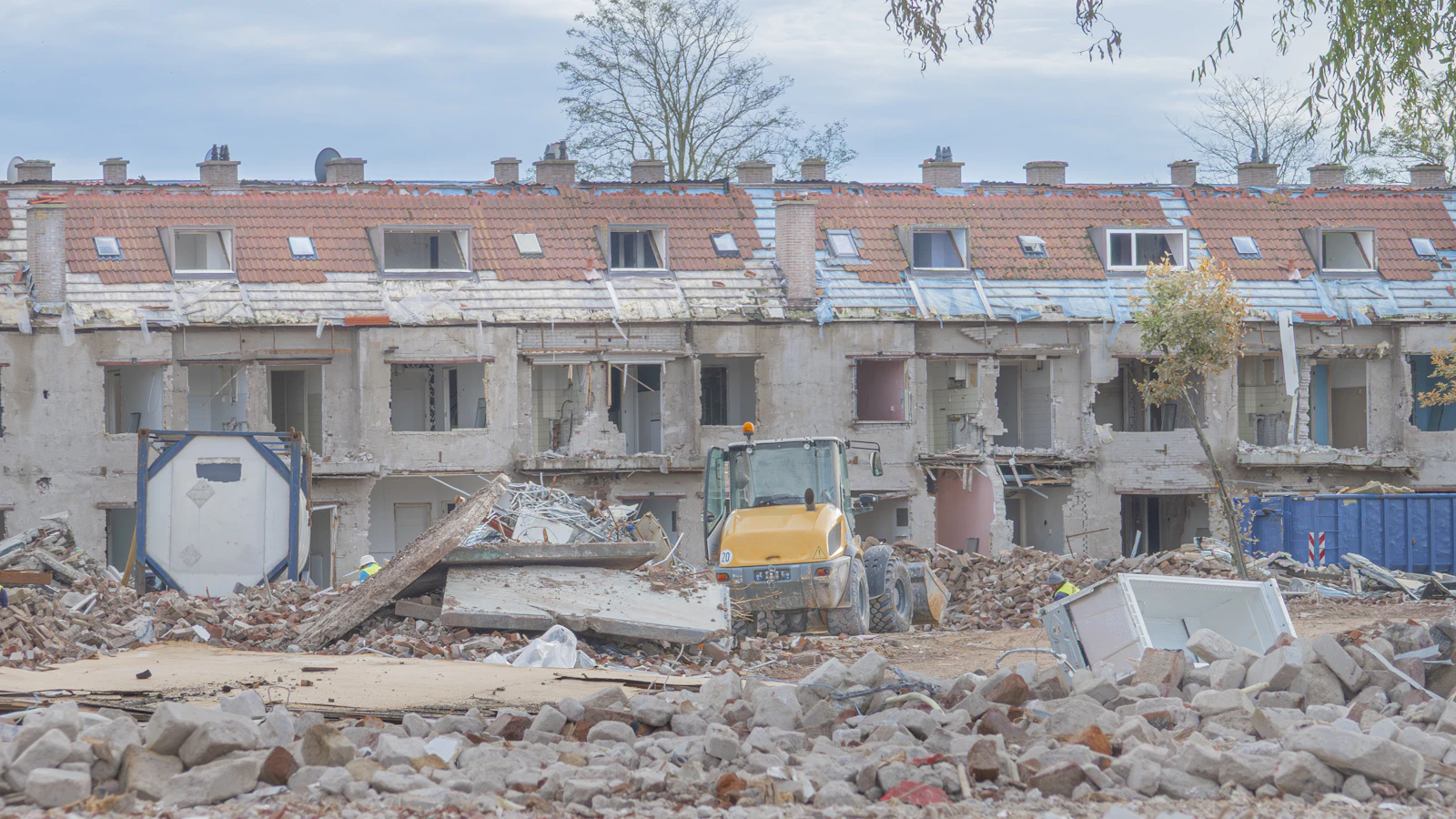
Baltimore isn’t a wide-open greenfield market; many site grading jobs are infill or constrained redevelopment. That changes the real equipment hire cost through logistics, not just the posted rental rate.
On paper, a dozer looks like a simple day/week/month rental. In practice, your first-day cost can spike if the lowboy arrives late and your crew loses half a shift. To manage that exposure, align these items before dispatch:
Cost control comes down to how “off-rent” is defined and documented. Some rental terms state that for delivered equipment, the rental period ends when you notify the supplier the equipment is no longer in use and ready for pickup—supplier pickup delays after proper notification should not continue to accrue rental charges (assuming the unit is accessible at the designated location). For busy Baltimore sites, that means your foreman’s email or portal off-rent ticket is effectively money.
Practical control: set a daily internal reminder for the superintendent to issue the off-rent notice before your supplier’s cutoff (carry 3:00 P.M. as a conservative internal target), and ensure the dozer is parked in a pickup-accessible spot to avoid “failed trip” fees (budget $150–$300 if you can’t guarantee access).
Dozers are undercarriage-heavy assets; track condition is where disputes happen. Avoid post-rental cost surprises by making return condition measurable:
For bulldozer equipment hire costs, you typically have two paths: accept the supplier’s damage waiver/rental protection or provide your own coverage. As a planning assumption, carry 10%–15% of base rental for damage waiver if you choose it, and confirm in writing whether the waiver excludes undercarriage wear, glass, vandalism, or water intrusion. If you provide your own insurance, confirm deductibles and whether “rented equipment” is scheduled or blanket-covered; deductibles of $2,500 or $5,000 can be common in practice, and that changes your risk appetite on tight urban sites with theft/vandalism exposure.
Site grading jobs in Baltimore can compress rapidly when you are chasing a concrete pour or utility inspection. If you plan to run beyond a single shift, confirm whether the dozer is billed by shift multipliers. Published shift schedules for hour-metered equipment commonly reference single shift = 0–8 hours, double shift = 9–16 hours at 1.5x, and triple shift = 17–24 hours at 2x. (g
Planning rule: if you even suspect a weekend push, carry an overtime premium line item (for operated hire) or shift-multiplier allowance (for metered rentals). A single Saturday at double shift can add the equivalent of 0.5 day to 1.0 day of base rental cost depending on the schedule.
For Baltimore site grading, bare dozer rental is not automatically the lowest cost if you must also source an operator, manage mobilization, and carry downtime risk. Operated-hire schedules show hourly dozer pricing in Baltimore with defined ordering/cancellation cutoffs and specific adders (for example, +$3.00/hour in certain labor agreement conditions and a +$10 surcharge line item), which can make the total cost more predictable for short-duration work.
Decision heuristic: if your anticipated duration is under 24–32 operating hours and your site is access-constrained, price both options: (A) bare rental + operator sourcing + delivery + risk, and (B) operated dozer hire with minimum guarantees clearly stated. Choose the option with the lower “all-in” cost and the clearer risk allocation.
