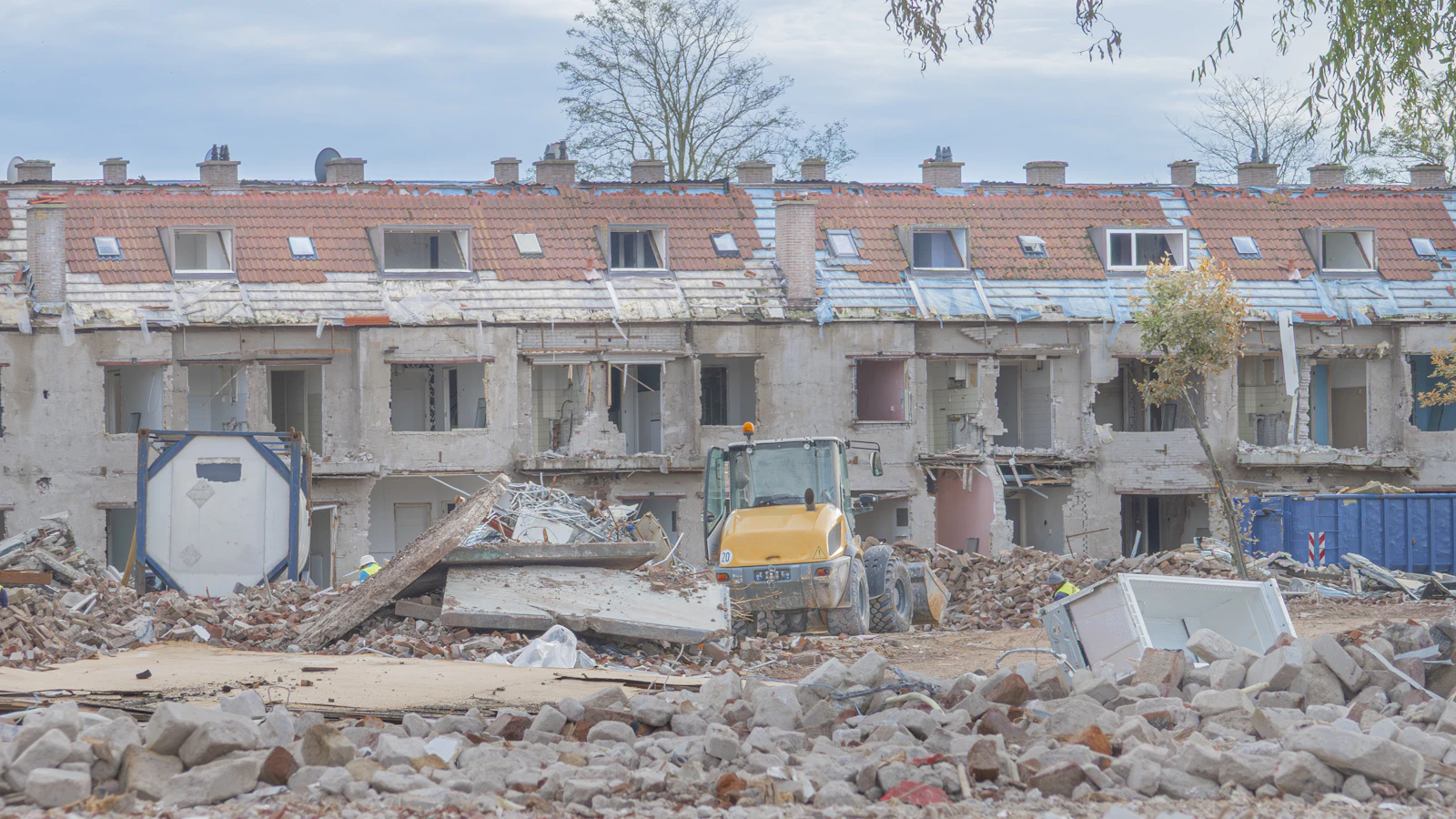
Bulldozer Hire Costs Seattle 2026
For Seattle site grading, 2026 planning budgets for bulldozer equipment hire (machine-only, no operator) commonly land in these bands: $650–$1,900/day, $2,400–$7,200/week, and $7,500–$21,000/month, depending primarily on dozer size class (D3/D4 vs D5 vs D6/D7), track configuration (standard vs LGP), and whether grade-control hardware is required. These ranges assume an 8-hour day, 40-hour week, and ~176-hour monthly meter allowance (a very common structure in published rental terms). In Seattle, expect the upper end more often when you need LGP tracks for wet subgrades, tighter delivery windows, or GPS-ready machines from larger fleets (often sourced through national providers and the local Cat dealer network).
| Vendor |
Daily Rate |
Weekly Rate |
Review Score |
Website |
| United Rentals |
$875 |
$2 950 |
9 |
Visit |
| Sunbelt Rentals |
$850 |
$2 900 |
9 |
Visit |
| Herc Rentals |
$840 |
$2 825 |
8 |
Visit |
| N C Machinery (The Cat Rental Store) |
$900 |
$3 050 |
7 |
Visit |
| EquipmentShare |
$860 |
$2 875 |
9 |
Visit |
Rate Bands You Can Use For 2026 Seattle Site-Grading Estimates
Because “bulldozer” spans a wide operating-weight range, pricing is best carried in size-class allowances. The numbers below are planning-level for Seattle and are meant for bid-day and early procurement budgeting; confirm final rates by model availability, term length, and credit setup.
Small Dozer (Typical D3/D4 Class) – Finish Grading, Tight Residential Pads, Utility Backfill Support
- Day: $650–$1,000
- Week: $2,400–$3,600
- Month: $7,500–$10,500
Benchmark check: published rate sheets in other U.S. markets show smaller dozers in the mid-hundreds per day and mid-thousands per month (e.g., D4-class entries around the $550/day and $4,500/month level). Seattle frequently runs higher after freight/mobilization constraints are added.
Mid-Size Dozer (Typical D5 Class) – Mass Grading Support, Building Pads, Cut/Fill Balancing
- Day: $900–$1,350
- Week: $3,400–$5,100
- Month: $10,500–$15,500
Benchmark check: published sheets show D5-class dozers in the $650–$900/day band and roughly $5,700–$8,100/month band depending on configuration. Use Seattle uplift when the jobsite requires LGP or when yards are tight and you need a newer Next-Gen machine with better visibility and slope-assist packages.
D6/D7 Size Dozer – Production Site Grading, Road Subgrade, Structural Fill Conditioning
- Day: $1,150–$1,900
- Week: $4,600–$7,200
- Month: $14,500–$21,000
Benchmark check: one published D6-size rate example shows $850/day, $3,400/week, $10,200/month (market-dependent). Another rate sheet shows a higher-production dozer class reaching $1,250/day, $3,775/week, $9,500/month. For Seattle planning, the spread widens mostly due to freight (lowboy) and the premium for LGP, ripper, and grade-control readiness.
What’s Included In A Bulldozer Hire Rate (And What Usually Is Not)
Most professional dozer hire pricing for site grading is quoted as machine-only (no operator) and is structured around meter limits. A common industry structure is:
- Daily: up to 8 engine hours
- Weekly: up to 40 engine hours
- Monthly: up to ~176 engine hours
This hour-basis shows up directly in published rental explanations and rate sheets. If your Seattle site grading plan is running 10-hour shifts or a 6-day week, carry overtime hours explicitly (see “Excess Hours” later) rather than assuming “monthly” means unlimited time.
Seattle-Specific Cost Drivers For Bulldozer Equipment Hire On Site Grading
Seattle pricing is rarely just the time rate. For site grading, these city realities frequently move total hire cost:
- Delivery constraints and congestion: lowboy deliveries into SoDo, South Lake Union, downtown corridors, or constrained gate times can add standby/wait time and re-delivery risk. Budget $550–$950 each way inside a typical metro radius, plus $125/hour for truck wait time at a closed gate or missed hoisting window.
- Wet weather and soft subgrades: in fall-through-spring, LGP track configurations are often worth the premium to avoid sinkage and rework; carry +10% to +20% on the base hire rate for LGP where required.
- Track-out and cleaning expectations: Seattle grading sites often face stricter housekeeping around public right-of-way. Carry end-of-rental cleaning exposure; some published rate sheets list $75/hour for excessive cleaning, with thresholds by rental term.
Delivery, Pick-Up, And Lowboy Charges (How They Get You)
Dozers almost always require lowboy mobilization. Vendors will quote either (a) flat mobilization within a radius or (b) a base delivery plus mileage increment.
- Typical Seattle planning allowance: $1,100–$1,900 round-trip (drop + pick) for a standard dozer move within the metro area.
- After-hours / booked window surcharge: $150–$300 when your site requires a specific delivery appointment outside standard dispatch runs.
- Mileage-style example (structure): published rental schedules show delivery pricing such as $400 for 50 miles and $160 per additional 25 miles (market-dependent). Use this as a rate-shape reference when you’re comparing quotes that mix flat and mileage pricing.
Coordination note for Seattle: if the dozer must stage offsite (no laydown area), you may pay a second mobilization—budget another $550–$950 to reposition later in the phase.
Damage Waiver, Insurance, And Deposits
For bulldozer equipment hire, your final invoice typically includes either a damage waiver line or proof of insurance requirements. Plan these as separate cost buckets:
- Damage waiver: commonly 10%–15% of time charges (day/week/month), sometimes excluding transport and fuel.
- Environmental / admin fees: often 3%–6% of time charges (varies by contract).
- Deposit / authorization hold (non-account customers): budget $1,500–$5,000 depending on dozer class and term, especially when the yard is releasing a newer machine with grade-control wiring.
Fuel, DEF, And “Return Full” Reality
Most dozers go out full and are expected to return full; make-up fuel is usually billed at a marked-up shop rate. One published rate sheet explicitly notes units are rented with a full tank and that make-up fuel on return is charged to the renter. For Seattle site grading estimates, carry:
- Dyed diesel make-up (budgetary): $6.50–$8.50/gal invoiced rate if you return short.
- DEF make-up (budgetary): $6–$9/gal if applicable to the model.
- Service call for refuel (if site restrictions apply): $175–$350 dispatch fee plus fuel.
Attachments And Options That Commonly Add Real Money
For site grading bulldozer hire in Seattle, the “base dozer” is rarely the whole story. These are typical adders to plan for:
- Ripper (single-shank): $75–$150/day, $250–$500/week, $700–$1,200/month when not included in the machine spec.
- U-blade / specialized blade configuration: $50–$125/day uplift if the yard has to swap configuration for your production needs.
- GPS/3D grade control hardware subscription: some published rate sheets show separate add-on pricing for grade-control packages (e.g., an Earthworks/3D GPS add-on priced in the low-thousands per week and mid-thousands per month range). Carry a Seattle allowance of $1,250–$3,900/month depending on whether it’s a full 3D kit or a simpler cross-slope system.
Hidden-Fee Breakdown
- Cleaning and decontamination: budget $150–$450 typical; worst-case muddy undercarriage can run $75/hour with multi-hour thresholds by term.
- Excess-hour (overtime) billing: typically calculated at 1/8, 1/40, or 1/176 of the rental rate for the period.
- Late return / missed pickup window: budget $150–$300 dispatch reschedule fee if your site can’t release the machine when the truck arrives.
- Weekend and holiday rules: confirm whether Saturday counts as a billable day (common) and whether Sunday is “free” (not universal). Carry 1 extra day risk if your off-rent lands on a weekend and the yard is closed.
- Undercarriage wear exposure: rock work, demo debris, or long travel distances can trigger back-charges; carry a contingency of $500–$2,000 for longer phases where conditions are abrasive.
Taxes That Apply To Bulldozer Equipment Hire In Seattle
Washington imposes a heavy equipment rental tax collected from the renter on qualifying heavy equipment rented without an operator. The published rate is 1.25% of the rental price, and it is stated to be in addition to retail sales tax. For estimating, treat taxes as their own line item and confirm the jobsite tax code (Seattle rates can differ from adjacent jurisdictions).
How To Keep A Seattle Site-Grading Dozer Rental From Running Over Budget
- Build the delivery window into the schedule: if your gate time is 9:00–10:00 AM only, plan for possible truck standby at $125/hour and avoid “soft” site readiness.
- Right-size the dozer class: paying +$400/day for a D6 when a D5 LGP would meet compaction/production needs can burn $8,000+ over a 4-week grading phase.
- Control excess hours: if your monthly is $15,000, the implied overtime rate is about $85.23/hour ($15,000 ÷ 176). Use this number to police foreman requests for “just one more hour” every day.
- Document condition at off-rent: photo undercarriage, panels, and blade edges at delivery and pickup to reduce dispute time and back-charge risk.
Vendor Procurement Note (Prose Only)
In Seattle, dozer availability for site grading is commonly sourced through national rental fleets (for rapid swaps and coverage) and the regional dealer/rental network (for Cat-class machines, LGP options, and grade-control-ready units). When you solicit quotes, ask vendors to separate (1) time charges, (2) transport, (3) damage waiver, and (4) excess-hour policy in writing—those four lines determine whether your equipment hire cost is predictable.
Excess Hours, Off-Rent Rules, And Why “Monthly” Rarely Means Unlimited Use
For bulldozer equipment hire for Seattle site grading, the fastest way to miss budget is to treat weekly/monthly as “all-you-can-run.” Many rental programs explicitly convert excess usage into an hourly charge using fractions of the period rate (e.g., 1/8 of day, 1/40 of week, 1/176 of month).
- Estimator shortcut you can defend: Hourly overtime allowance = Monthly rate ÷ 176.
- Example conversion: If your D6-size dozer is $18,000/month, carry $102.27/hour for excess hours ($18,000 ÷ 176).
- Shift planning rule: A 10-hour day uses 2 overtime hours/day. Over 20 working days, that’s 40 overtime hours—budget $4,091 on an $18,000/month machine (40 × $102.27) before adding waiver/taxes.
Off-rent timing: confirm whether billing stops when you “call off-rent” (notice given) or when the machine is physically picked up. In Seattle, pickups can slip 1–3 days during peak season or when lowboys are constrained; that can add $1,150–$1,900 in unintended time charges on a D6-class day rate plus a reschedule fee if the site isn’t ready to release the machine.
Example: 6-Week Seattle Site Grading Phase With Real Constraints And Numbers
Scenario: 1.8-acre commercial pad regrade in SoDo with limited laydown, delivery restricted to 7:00–9:00 AM, and wet subgrade requiring LGP. You need one D6-size LGP dozer with ripper and grade-control capability for 6 weeks. The plan runs 10-hour days, Monday–Saturday (60 hours/week).
- Base hire (planning): $6,200/week × 6 weeks = $37,200
- Delivery + pickup (round trip): $1,600 allowance
- Windowed delivery surcharge: $250 (booked gate)
- Truck wait time risk: 2 hours × $125/hour = $250 (if gate isn’t ready)
- Grade-control package adder: $2,800/month × 1.5 months = $4,200 allowance
- Ripper adder: $400/week × 6 = $2,400 allowance
- Excess hours: Weekly allowance is typically 40 hours; planned is 60 hours/week, so excess is 20 hours/week. If weekly is $6,200, implied overtime is $6,200 ÷ 40 = $155/hour (structure consistent with published overtime fractions). Excess cost = 20 × 6 × $155 = $18,600
- Cleaning at return: 4 hours × $75/hour = $300 (muddy undercarriage; published cleaning rate example).
- Damage waiver: assume 12% of time charges (base + overtime + adders) = ~$7,500 (allowance)
- WA heavy equipment rental tax: 1.25% of rental price = ~$800–$900 depending on taxable base (confirm with vendor invoice structure).
Takeaway: In this example, overtime hours alone ($18,600) are roughly the same magnitude as the entire 2-way mobilization plus all cleaning/dispatch friction combined. Put a meter-hour gate in the foreman’s weekly plan if you want predictable equipment hire cost.
Budget Worksheet (Seattle Bulldozer Equipment Hire For Site Grading)
- Dozer hire (base time rate): $_____ (day/week/month term selected)
- Size-class premium allowance (D6 vs D5): $_____ (carry +$300–$600/day if upsizing)
- LGP configuration uplift: $_____ (carry +10% to +20% of time charges)
- Grade control / GPS package: $_____ (carry $1,250–$3,900/month allowance)
- Ripper / blade configuration adders: $_____ (carry $250–$500/week)
- Delivery + pickup (lowboy): $_____ (carry $1,100–$1,900 round-trip)
- Delivery appointment / after-hours surcharge: $_____ (carry $150–$300)
- Truck wait time at gate: $_____ (carry $125/hour × ___ hours)
- Damage waiver: $_____ (carry 10%–15% of time charges)
- Environmental/admin fees: $_____ (carry 3%–6% of time charges)
- Fuel make-up contingency: $_____ (carry 40–120 gallons × $6.50–$8.50/gal depending on term)
- Cleaning contingency: $_____ (carry $150–$450 typical; worst-case $75/hour)
- Excess hour allowance: $_____ (use Monthly ÷ 176 or Weekly ÷ 40)
- WA heavy equipment rental tax: $_____ (1.25% of rental price)
- Retail sales tax (jurisdiction dependent): $_____ (confirm jobsite code)
Rental Order Checklist (For Rental Coordinators And Equipment Managers)
- PO number and cost code(s) for: base hire, transport, waiver, fuel/cleaning, GPS adders
- Requested dozer class and configuration: standard vs LGP; blade type; ripper required (Y/N)
- Grade control requirement: 2D/3D; brand compatibility; base station/rover responsibility
- Term selection and meter basis confirmed in writing (8/40/176 or vendor equivalent)
- Delivery address plus Seattle constraints: gate code, staging plan, delivery window, flagger needs
- Delivery acceptance: photos at drop (all sides, undercarriage, blade edges, hour meter)
- Insurance COI requirements and additional insured language (if required by vendor)
- Operator responsibility confirmed (machine-only) and refuel expectations (full-to-full)
- Off-rent procedure: notice method, cutoff time, and billing stop rule (notice vs pickup)
- Return condition: cleaning standard, debris removal, and documentation at pickup
Common Seattle Procurement Questions That Change The Hire Cost
- Is the jobsite accessible by lowboy at the scheduled time? If not, you’ll see standby at about $125/hour and potentially a redelivery fee.
- Do you need LGP? If yes, carry +10% to +20% on time rates and confirm shoe width availability early (wet-season bottleneck).
- Are you truly using a dozer 176 hours/month? If you’re running 220 hours/month, your excess is 44 hours; at $15,000/month that’s about $3,750 before waiver/taxes.
- Do you need grade-control hardware or just a skilled operator? Grade-control adders can be $1,250–$3,900/month; if the site tolerances don’t demand it, this is an avoidable equipment hire line.
Final Estimating Note
When you compare Seattle bulldozer rental quotes for site grading, normalize every proposal to the same basis: (1) calendar term, (2) included meter hours, (3) excess-hour formula, and (4) mobilization method. This prevents “lowest weekly rate” from becoming the highest total equipment hire cost once overtime, delivery friction, and return-condition charges post.