

Create an itemized estimate for your project, with materials, labor, and quantities you can review and edit.
Create my estimateStart a 7-day free trial. Sign up, then enter your project details.
For foundation repair scopes in El Paso, concrete mixer equipment hire typically plans (2026 budgeting ranges, before tax) at $70–$110/day, $280–$520/week, and $550–$850/month for small electric/portable 4–5 cu. ft. mixers; and $120–$185/day, $430–$750/week, and $900–$1,350/month for towable 9 cu. ft. gas mixers when you need higher daily output. As of March 2026, posted El Paso pricing examples include a 4 cu. ft. electric cement mixer at $56 per 4 hours, $80/day, $400/week, $600/month with a $75 deposit, and a 5 cu. ft. portable mixer at $68 per 4 hours, $95/day, $475/week, $712.50/month. In practice, rental coordinators source from a mix of local independents and national fleets (for example, Sunbelt-type and United-type networks) depending on availability, delivery constraints, and off-rent rules.
| Vendor | Daily Rate | Weekly Rate | Review Score | Website |
|---|---|---|---|---|
| United Rentals | $115 | $345 | 9 | Visit |
| Sunbelt Rentals | $115 | $345 | 8 | Visit |
| Herc Rentals | $115 | $345 | 8 | Visit |
| The Home Depot Tool Rental (El Paso #522) | $55 | $200 | 8 | Visit |
| El Paso Tool Rental, LLC | $95 | $475 | 10 | Visit |
Planning note: the ranges above assume standard wear-and-tear use, normal business-hour returns, and no extraordinary cleanup. Actual equipment hire costs can move materially based on weekend billing, delivery windows, accessory requirements (power, chutes, wheel kits), and return condition documentation—items that show up as “small” line items but routinely swing the final invoice for foundation repair crews.
Foundation repair pours in El Paso are often production-limited by access and placement logistics (tight side yards, interior slab cut-and-patch, pier pad excavations, or beam-pocket repairs) rather than pure mixer capacity. That means the “right” mixer is the one that matches your crew’s placement rate, batch size control, and power/fuel realities on the specific address.
Rental term math (4-hour vs day vs week) is the first driver. In El Paso, the difference between a 4-hour minimum and a full-day charge can be the difference between “same-shift patch” economics and “we should have gone weekly.” For example, posted local rates show $56 per 4 hours for a 4 cu. ft. mixer and $68 per 4 hours for a 5 cu. ft. mixer, which can be cost-effective only if your placement plan is realistic and the return window is achievable.
Access and mobility constraints drive whether you pay for towable capacity you cannot use. A 9 cu. ft. towable can be a bargain per cubic foot if it can be positioned close to the excavation or slab opening; if not, your true cost becomes mixer hire plus added handling (wheelbarrows, track barrow, extra labor hours). This is especially relevant in foundation repair where spoil piles, rebar staging, and shoring can consume the same space the mixer needs.
El Paso environment and scheduling also matter: high temperatures can compress workable time, encouraging earlier starts and increasing the chance you bump into rental counter hours. Budget for schedule rigidity (pickup early, return same day) rather than hoping for informal grace periods. Also plan for desert dust: fine material gets into frames and drums, raising cleanup time and the risk of cleaning charges if hardened residue is found on return.
The following items are where concrete mixer equipment hire costs typically “leak” on foundation repair tickets. Some are explicitly published in local terms; others are common planning allowances that should be confirmed on the PO before dispatch.
Sunday and after-hours rules are a real cost driver in El Paso scheduling. One local provider states rentals cannot be picked up or returned on Sundays—if your foundation repair pour runs long on Saturday, your “day rate” can become a weekend-plus scenario depending on the contract.
Off-rent timing should be treated like a scope line item. Align internal production targets to the lessor’s cutoff times (often mid-afternoon for same-day check-in) to avoid triggering an extra day or an automatic extension. Local published terms also state there are no refunds or credits for early returns, so returning early does not necessarily rescue cost if the job compresses.
Fuel/power expectations: Many small mixers are electric and require stable power. If the foundation repair site has limited circuits (occupied residence, shared panel, or temporary power), plan a contingency for power management rather than assuming you can run saws, vacuums, and the mixer on the same circuit. For gas mixers, plan for fuel handling and spill control; some rental yards store equipment without fuel for safety, which shifts responsibility to the crew at pickup.
Dust control and indoor protection: Interior slab cut-and-patch work often requires plasticing, negative air, or HEPA vac support. Even though those are not “mixer costs,” they affect mixer selection (smaller mixer inside garage/driveway versus towable staged further away) and can add labor hours that make a longer hire term cheaper than repeated short-term rentals.
Scenario: A crew is repairing (12) pier pads and a short grade beam segment, targeting roughly 1.0 yd³ total placed volume over two shifts. Assume bag mix yield at 0.6 ft³ per 80 lb bag (so ~45 bags for 27 ft³, plus waste and over-excavation contingency).
Equipment hire plan (illustrative): Rent a 5 cu. ft. portable mixer at $95/day. If you truly return within two daily terms, base mixer hire is $190. Add a $75 deposit hold exposure (cashflow impact, not always a final cost). If returned dirty, add a potential $50 cleaning fee. If the crew misses the return time, published terms allow for a $75/day late fee or an automatic extension billed as a full day. These are the avoidable costs that should be managed with return photos and a defined washout process before demob.
Operational constraints (El Paso reality): Schedule mixing to beat afternoon heat and protect set time; stage water and bags under shade; assign one person solely to batching and washdown so the mixer is not returned with hardened residue around the drum lip and dump latch. Build the return run into the plan—especially if the lessor has reduced hours or closed days that could force an extra rental day.
Foundation repair frequently includes non-shrink grout, flowable fill, or smaller-volume patch materials that mix faster with a drill-driven mud mixer than in a drum mixer. If your scope includes both concrete and patch/grout, it can be cost-effective to add a low-cost mixing tool rather than tying up the drum mixer for small batches. One local posted example shows a 24-inch mud mixer at $36 per 4 hours, $50/day, $250/week, $375/month. This is not a substitute for a drum mixer on larger batch work, but it can reduce the time your concrete mixer sits idle and can lower your effective equipment hire cost per placed cubic foot.
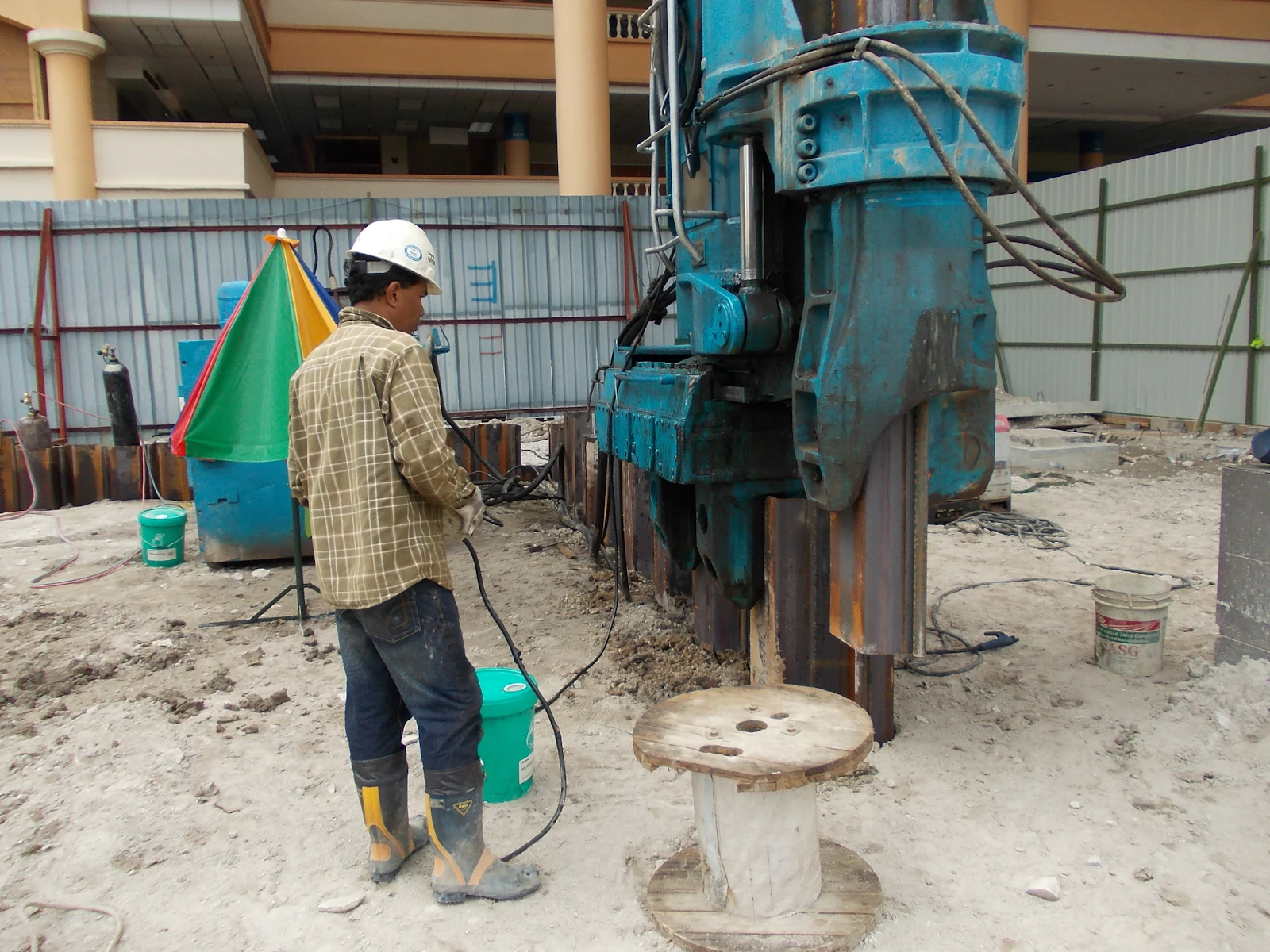
If your foundation repair program is consistently placing enough volume that a small mixer becomes the bottleneck (multiple underpins per day, long grade beam runs, or repeat pier pads with stable access), towable 9 cu. ft. mixers can reduce labor-hours-per-yard even if the day rate is higher. Published market examples show day rates in the $140–$169/day band and weekly rates in the $430–$450/week band for a 9 cu. ft. towable mixer, with monthly examples around $935–$1,020/month depending on provider and program. Use these as planning anchors, then validate the El Paso branch quote because tow logistics, seasonal demand, and fleet mix can move the number.
Cost reality check: a towable mixer only lowers total equipment hire cost if you can keep it continuously fed (bags, water, staging) and continuously discharging (forms ready, rebar tied, excavation cleaned). Otherwise, you pay a higher daily rate for idle time—often worse economics than a smaller mixer rented for longer with fewer mobilization constraints.
For El Paso foundation repair, the towable vs portable decision frequently comes down to whether you can reliably move and stage the unit without introducing schedule risk. If your preferred mixer is not eligible for jobsite delivery, counter pickup adds crew travel time and return-time risk (which can trigger late-day extensions). Local listings can differ by unit: one posted local mixer listing indicates it can be delivered, while another indicates it is not available for jobsite delivery. Build that constraint into the equipment hire plan rather than discovering it during dispatch.
Practical planning allowances (confirm on quote):
Most budget overruns on concrete mixer hire are not from the day rate—they are from uncontrolled incidentals. Put a simple control loop in place:
Many foundation repair contractors revisit the rent-versus-own question once they accumulate enough mixer days in a quarter. Keep the decision grounded in equipment hire realities:
Use these as estimator-facing ranges (not a substitute for a written quote):
To keep concrete mixer hire pricing predictable in El Paso, treat the rental counter schedule and off-rent rules as hard constraints in the production plan. If the provider does not allow Sunday returns, a “Saturday day-rate” assumption can fail immediately; similarly, if a unit cannot be delivered to the job site, the crew’s ability to return it within business hours becomes a cost driver equal to the day rate itself. Quote the mixer with the right term (day vs week), carry the published incidentals as explicit allowances, and require return photos as part of closeout so equipment hire costs do not erode margin on a tight foundation repair ticket.
Continue with estimating workflows, reviewed plan quantities, or cost guides organized by topic.
