

Concrete Pump Rental Rates in Austin (Daily/Weekly) — 2026 Costs

Price source: Costs shown are derived from our proprietary U.S. construction cost database (updated continuously from contractor/bid/pricing inputs and normalization rules).
Profile image of author
Eva Steinmetzer-Shaw
Head of Marketing

Concrete Pump Hire Costs Austin 2026

For Austin, Texas concrete slab pours in 2026, most concrete pump “hire” is priced as a pumping service (pump + operator) with a minimum time, then hourly plus (often) a per-cubic-yard pumping charge. For 2026 planning, budget line pump equipment hire at roughly $700–$1,600 per day (typical 3–4 hour minimum), $3,200–$7,200 per week (multiple pours / portal-to-portal billing), and $10,000–$22,000 per month for recurring placements. For boom pump equipment hire (common when reach/access is constrained), plan roughly $1,300–$3,200 per day, $6,500–$15,000 per week, and $20,000–$48,000 per month depending on boom class, yardage, travel, and overtime. These ranges assume an 8–10 hour dispatch window, standard pump mix, and normal access; they exclude ready-mix concrete, placing/finishing labor, traffic control, and permits. Rate structures published by pumping contractors commonly show $150–$250/hr and $3–$10/cy as a typical U.S. band, with minimums and adders driving the real invoice.

Vendor Daily Rate Weekly Rate Review Score Website
Brundage-Bone (Austin) $1 200 $6 500 9 Visit
Capital Concrete Pumping (Austin) $1 100 $6 000 8 Visit
Mohawk Concrete Pumping (Austin service area) $1 150 $6 200 8 Visit
Concrete Pump Texas $1 400 $7 000 7 Visit

How Concrete Slab Pour Scope Changes Concrete Pump Equipment Hire Pricing

For a slab pour, the pump selection and the invoice are driven less by slab square footage and more by discharge point logistics: truck staging, hose routing, reinforcement congestion, and how continuously you can keep the hopper fed. In Austin, two recurring cost multipliers are (1) access management (tight residential streets, gate codes, limited turnarounds, downtown lane restrictions) and (2) heat and placement tempo (summer temperatures can compress workable time and increase standby or overtime risk). If your crew cannot maintain a steady cycle—e.g., trucks waiting to discharge or the pump waiting on trucks—you still pay for portal-to-portal hours, and some suppliers add weekend overtime premiums or fuel surcharges that materially change unit cost per yard.

Line Pump Vs. Boom Pump: What You’re Really Paying For

Line pump hire (trailer pump / truck-mounted line pump) is the most common choice for residential and light commercial slab pours because it’s cost-efficient when you can route 2"–3" hose to the forms. Typical published structures include a 3–4 hour minimum and hourly pricing (examples in the market include $160/hr with a per-yard charge such as $4.50/yard, plus minimums like $600 for a line pump call-out).

Boom pump hire (pump truck) prices higher because you’re paying for reach, speed, and reduced line-drag labor (especially useful when the slab is behind structures, over fences, or when you want fewer hoses across finished areas). Published boom structures commonly show hourly plus per-yard (for example, $225/hr plus $4.00/cy with a 4-hour minimum, and primer bags priced separately at $40 per bag).

Estimator note for Austin slab pours: If you are only placing 10–20 yards but access is clean, a line pump minimum can beat a boom pump minimum by a wide margin. If you’re placing 50–100+ yards and access/finish constraints are serious, a boom pump can reduce total job hours enough that the higher hourly rate is offset.

Rate Structures You Will See on Concrete Pump Hire Quotes (And How to Normalize Them)

To compare “apples to apples” on concrete pump equipment hire cost, normalize each quote into: (1) minimum hours, (2) hourly rate, (3) yardage rate, and (4) travel/portal time rules. Examples of real-world published line items you may see:

  • Hourly pump time: commonly in the $150–$250/hr band depending on pump type and market.
  • Per-yard pumping charge: commonly $3–$10/cy depending on supplier and conditions.
  • Minimum time: commonly 3–4 hours (some published sheets show 3-hour minimum charge for pumps).
  • Minimum invoice thresholds: examples include $600 minimum line pump and $1,300 minimum boom pump (important for small slab pours).
  • Primer / slick pack: examples include $40 per bag of primer on published schedules.

Because many Austin-area pours are scheduled early to beat heat and traffic, also confirm whether your supplier bills portal-to-portal (clock starts when the unit leaves the yard and ends when it returns). Portal-to-portal is common in published terms, which makes travel time and jobsite readiness a direct cost.

Key Cost Drivers for Concrete Pump Equipment Hire on an Austin Slab Pour

1) Access and setup time. If the pump must reposition, back long distances, or set outriggers on mats (boom pump), build in extra time. A 30–60 minute setup variance at $200/hr is a $100–$200 swing before yardage charges.

2) Hose/pipe length and routing complexity. Many pricing sheets include a base hose length and then charge by the foot. Published examples include extra hose over 150’ at $1.50/foot, while other markets show $3/lf for hose beyond base lengths.

3) Yardage and pour tempo (yards per hour). Higher tempo reduces billed hours. Industry examples show how hourly + per-yard produces a cost-per-yard that depends heavily on throughput (e.g., association guidance illustrates $175/hr plus $3/yard as a basis for estimating per-yard cost at a stated production rate).

4) Mix pumpability and aggregate selection. Unpumpable mixes can cause line blockages, extra cleaning, and slow cycles. Even if a supplier doesn’t charge a “blockage fee,” you’ll pay in extra portal time and potentially re-priming.

5) Readiness and coordination with ready-mix dispatch. If your slab crew isn’t ready (forms, rebar chairs, vapor barrier, dowels, embeds), the pump sits on the clock. Some suppliers explicitly call out that help washing the system speeds up and saves money, which is another way of saying: if cleanup drags, you pay.

Hidden-Fee Breakdown (What Usually Moves the Invoice)

Concrete pump equipment hire costs for slab pours often escalate through predictable adders. Budget these explicitly so your estimate doesn’t rely on “perfect day” assumptions:

  • Travel / mobilization billing: may be hourly travel time or a travel rate. Published examples show travel billed at $175 for jobs beyond a mileage threshold and portal-to-portal travel expectations.
  • Fuel surcharge: published schedules show triggers like 8% fuel surcharge when fuel exceeds a threshold, and other pricing sheets show 12% fuel surcharge.
  • Weekend premiums / overtime: one published schedule adds $40/hr after 8 hours, plus $40/hr Saturdays and $80/hr Sundays in overtime premiums (these stack on top of base hourly).
  • No washout / no designated washout area fees: examples include $250 (line pumps) and $350 (boom pumps) when no washout area is provided, or $300 washout fee in another market schedule.
  • Extra labor: if your slab placement requires a second person to run hose or manage the end line, published examples include $85/hr extra man fees.
  • Per diem / out-of-town allowances: published examples include $75/day out-of-town per diem.
  • Cancellation / short-notice fees: published terms can charge travel/operator expenses if cancellation notice isn’t given, and other pricing pages show “show-up” charges roughly equivalent to a set-up charge if not cancelled in time.

Austin-specific considerations to cost in: (1) downtown/UT-area access may require staging plans that add 0.5–1.5 hours to portal-to-portal time; (2) summer heat often pushes earlier start times—if trucks arrive before your crew is fully set, standby time becomes real money; (3) limestone subgrades and dusty sites can create stricter cleanup expectations (washout containment and protecting adjacent pavement/drains), increasing washout labor or fees.

Example: Austin Concrete Slab Pour With Real Constraints (Line Pump)

Scenario: 4,000 sq ft slab at 6" thick (about 74 cy), residential infill near Central Austin with limited street staging. You select a line pump because a boom truck cannot set outriggers without blocking a lane. You schedule a 7:00 a.m. first truck to reduce heat and traffic.

  • Concrete pump hire minimum: assume a 3-hour minimum call-out with a $600 minimum (common published structure) plus yardage.
  • Hourly beyond minimum: assume 2 additional hours at $160/hr because the pour slows due to handwork around embeds (adds $320).
  • Yardage charge: 74 yards × $4.50/yard = $333.
  • Extra hose: need 40’ beyond included length; at $1.50/ft that’s $60.
  • Fuel surcharge: apply a 12% fuel surcharge if included (on applicable line items per supplier terms).
  • Washout plan: if you cannot provide a legal washout area (common on tight infill), you risk a $250 “no washout area” fee rather than improvising on-street.

Operational takeaway: even when your “base” looks like a simple minimum + yardage, the difference between a clean 4-hour cycle and a stretched 6-hour cycle can be $300–$600+ before you even touch washout, fuel, or weekend premiums. Your best cost control lever is jobsite readiness and uninterrupted truck cycling—not haggling a $10/hr delta.

Practical Assumptions for 2026 Austin Concrete Pump Hire Budgets

When you build a 2026 budget for concrete pump equipment hire (line pump or boom pump) for slab pours in Austin, state assumptions explicitly on the estimate:

  • Billing basis: portal-to-portal vs. pump-time-only.
  • Minimums: 3–4 hour minimum.
  • Production target: 20–35 cy/hour line pump (site-dependent) or 35–60+ cy/hour boom pump (site-dependent).
  • Included hose: confirm whether 150’ included; budget adders above that at $1.50–$3.00/ft based on published market examples.
  • Primer/slick pack: allowance $40–$80 (1–2 bags) depending on system and re-prime risk.
  • Fuel surcharge: allowance 8%–12% depending on supplier policy and diesel thresholds.

If you need a firm NTE (not-to-exceed) for internal controls, negotiate it around defined triggers (e.g., “NTE assumes no standby beyond 30 minutes and a continuous supply of concrete trucks; standby billed at contracted hourly rate thereafter”). That approach aligns with how pumping is actually dispatched and billed.
Our AI app can generate costed estimates in seconds.

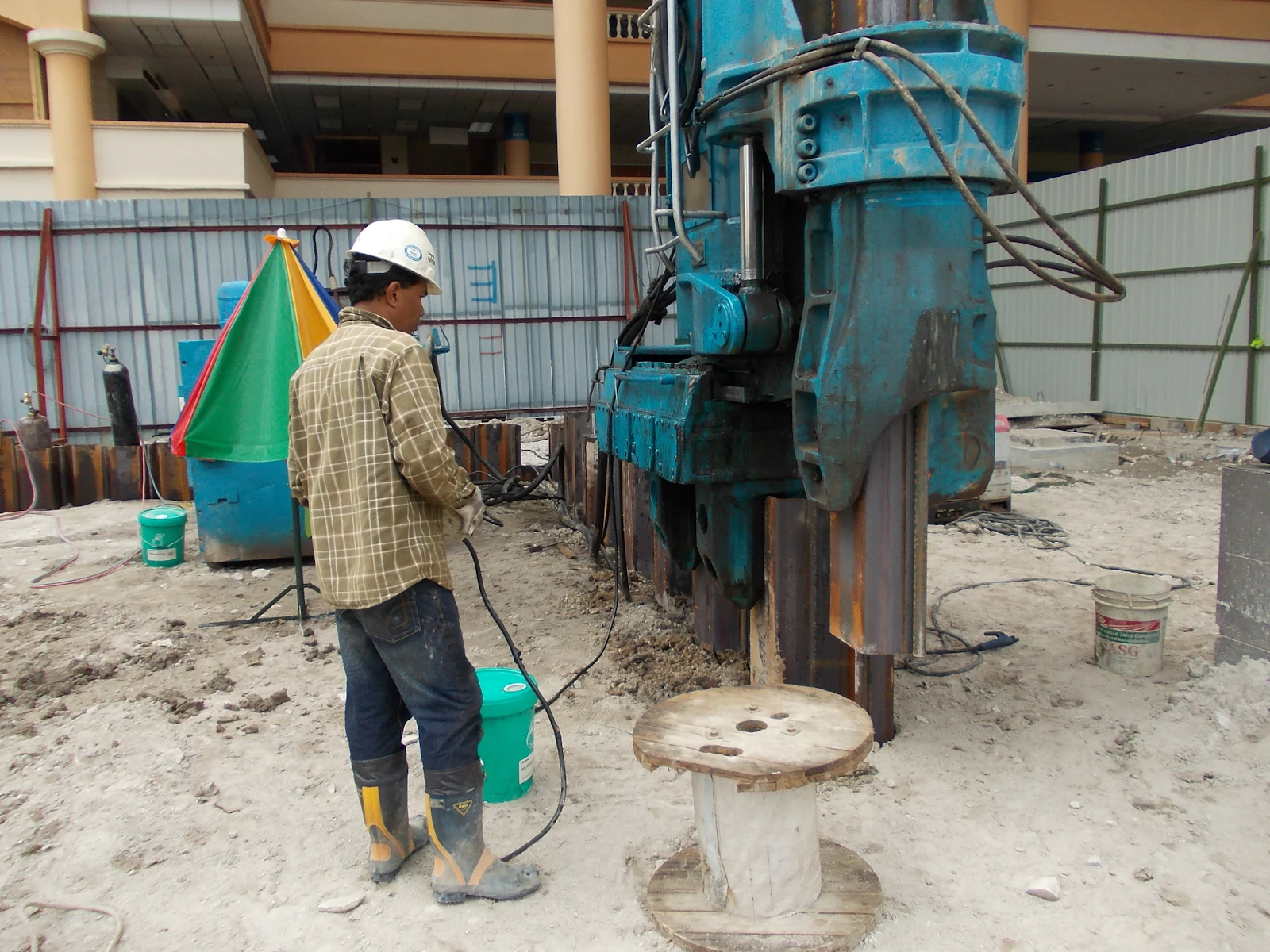
concrete and pump in construction work

What to Require in Your Austin Concrete Pump Hire Quote (So You Don’t Buy Risk)

For an Austin concrete slab pour, your concrete pump equipment hire quote should read like an operations document, not just a number. At minimum, require these fields and clarifications in writing:

  • Pump type and configuration: line pump vs. boom pump; hose diameter (2" / 2.5" / 3"); reducers and end hose plan.
  • Minimum hours and clock start/stop: portal-to-portal vs. on-jobsite-only (many published terms indicate portal-to-portal billing).
  • Hourly rate and yardage rate: confirm whether yardage is charged on top of hourly (common in published schedules like $225/hr + $4/cy).
  • Travel charges: flat travel, hourly travel, mileage thresholds, and whether travel counts toward minimum.
  • Overtime and weekend billing: define the overtime trigger (e.g., after 8 hours) and weekend premiums (some published terms add $40/hr Saturday and $80/hr Sunday).
  • Washout responsibility: required washout location and containment; confirm the “no washout” fee risk (examples include $250 line / $350 boom).

Budget Worksheet (Concrete Pump Equipment Hire Allowances for an Austin Slab Pour)

Use the following as a field-ready budgeting artifact (no tables) for concrete pump hire cost Austin estimates. Replace allowances with your awarded supplier’s terms.

  • Base line pump hire minimum: allowance $600–$1,000 (3–4 hour minimum, includes standard hose).
  • Additional pump time: allowance $175–$250/hr beyond minimum (jobsite delays, slow finishing around embeds).
  • Yardage pumping charge: allowance $3.00–$6.00/cy × estimated yards pumped (common published adders include $4.00/cy and $4.50/yard).
  • Primer / slick pack: allowance $40–$80 (1–2 bags).
  • Extra hose/pipe: allowance $1.50–$3.00/ft beyond included length; carry 25–75 ft contingency on tight sites.
  • Washout containment: allowance $0 if owner-provided lined pit/tub; otherwise carry $250–$350 no-washout fee risk.
  • Fuel surcharge: allowance 8%–12% on applicable line items.
  • Weekend/after-hours premium: allowance $40–$80/hr premium if Saturday/Sunday work is possible, plus overtime after 8 hours where applicable.
  • Cancellation exposure: allowance $300–$700 if weather/no-show risk is high (many suppliers have show-up/travel charges for late cancellation).
  • Damage waiver / insurance (if bare equipment hire is used): allowance 10%–15% of rental charges if offered/required; confirm whether the pump is only available with operator (common for pumping service).
  • Downtown access plan (if applicable): allowance $450–$900/day for basic traffic control (cones/signage/spotter) plus any permit costs required by the controlling authority (job-specific).
  • Cleanup / concrete residue: allowance $50–$150 for minor cleanup charges where a supplier itemizes it (some pricing pages show cleanup minimums, plus fuel/show-up fees).

Rental Order Checklist (Pump Dispatch, PO, Delivery, Return/Off-Rent)

For slab pours, cost control depends on “paper control” and release timing as much as field production. Use this checklist for your concrete pump equipment hire order:

  • PO and cost code: include hourly + yardage structure; state NTE triggers (e.g., “NTE assumes 4-hour minimum + 1 hour contingency; authorize overtime only by superintendent”).
  • COI / insurance requirements: confirm additional insured needs, especially if pumping over adjacent properties.
  • Dispatch details: pour address, gate codes, contact name/number, planned start time, and truck staging plan (Austin infill often needs explicit staging so portal time doesn’t inflate).
  • Access constraints: overhead lines, tree canopies, culverts, soft shoulders; confirm if boom outriggers need mats and who supplies them.
  • Concrete mix submittal: confirm pump mix and aggregate; call out any fiber, lightweight, or specialty admixtures that can change pumpability and cleaning time.
  • Washout plan: define exact location and containment (lined pit/tub); confirm what happens (and what it costs) if the washout area becomes unavailable mid-pour.
  • Jobsite readiness: forms/rebar/embeds complete before pump arrives; confirm you have enough placement labor so the pump isn’t waiting on rakes/vibes.
  • Release/off-rent rule: define “end time” as last truck discharged + line cleared; require operator time sheet sign-off daily to avoid disputes.
  • Return-condition documentation: photo-document access path and any existing pavement/curb conditions before the pump arrives (protects you if a heavy unit damages edges).

Scheduling Rules That Change Total Concrete Pump Hire Cost in Austin

These operational constraints show up as dollars on your concrete pump hire invoice, especially during busy spring/summer pours:

  • Delivery window cutoffs: many dispatchers prioritize early bookings; if you lock in late, you may accept less favorable start times that increase heat-related tempo risk.
  • Off-rent timing: if your finishing plan requires pauses, you may be paying pump time while you’re floating/edging—plan pour sequences to keep the pump productive.
  • Weekend billing rules: if your slab pour can slip, pre-negotiate Saturday/Sunday terms; published examples show specific weekend hourly premiums.
  • Ready-mix truck detention: if trucks are late, the pump still bills; if the pump is late, trucks may incur standby—coordinate both sides so you don’t pay two standby clocks.

When a Boom Pump Is the Lower-Cost Choice (Even at a Higher Hourly Rate)

For Austin slab pours behind existing structures, multifamily courtyards, or sites with limited line routing, a boom pump can reduce labor and time enough to lower total cost. If a boom pump maintains steady placement and avoids line moves, it may cut 1–3 billed hours. Even at $225/hr with $4/cy yardage and a 4-hour minimum, shaving just 2 hours can be a $450 swing before considering avoided extra-man fees or hose adders.

Quick Estimating Sanity Check (Cost Per Yard for Pumping Service)

As a field check for concrete pumping service rates Austin TX, convert your expected invoice to a cost per cubic yard:

  • Step 1: (Minimum hours × hourly) + (expected total hours beyond min × hourly) + (yards × per-yard) + travel + adders.
  • Step 2: Divide by yards placed.

Industry guidance illustrates how hourly + per-yard quickly turns into an effective per-yard pumping cost driven by production rate (yards/hour). Use this method to compare two quotes that look different on paper but may be close in real delivered cost.

Bottom line for 2026 Austin planning: treat concrete pump equipment hire as a managed operation—access, readiness, washout, and release timing. The best-performing slab pours typically “win” by removing downtime and avoiding predictable adders (extra hose, washout fees, overtime, and travel hours), not by assuming the lowest posted hourly rate will produce the lowest total invoice.
