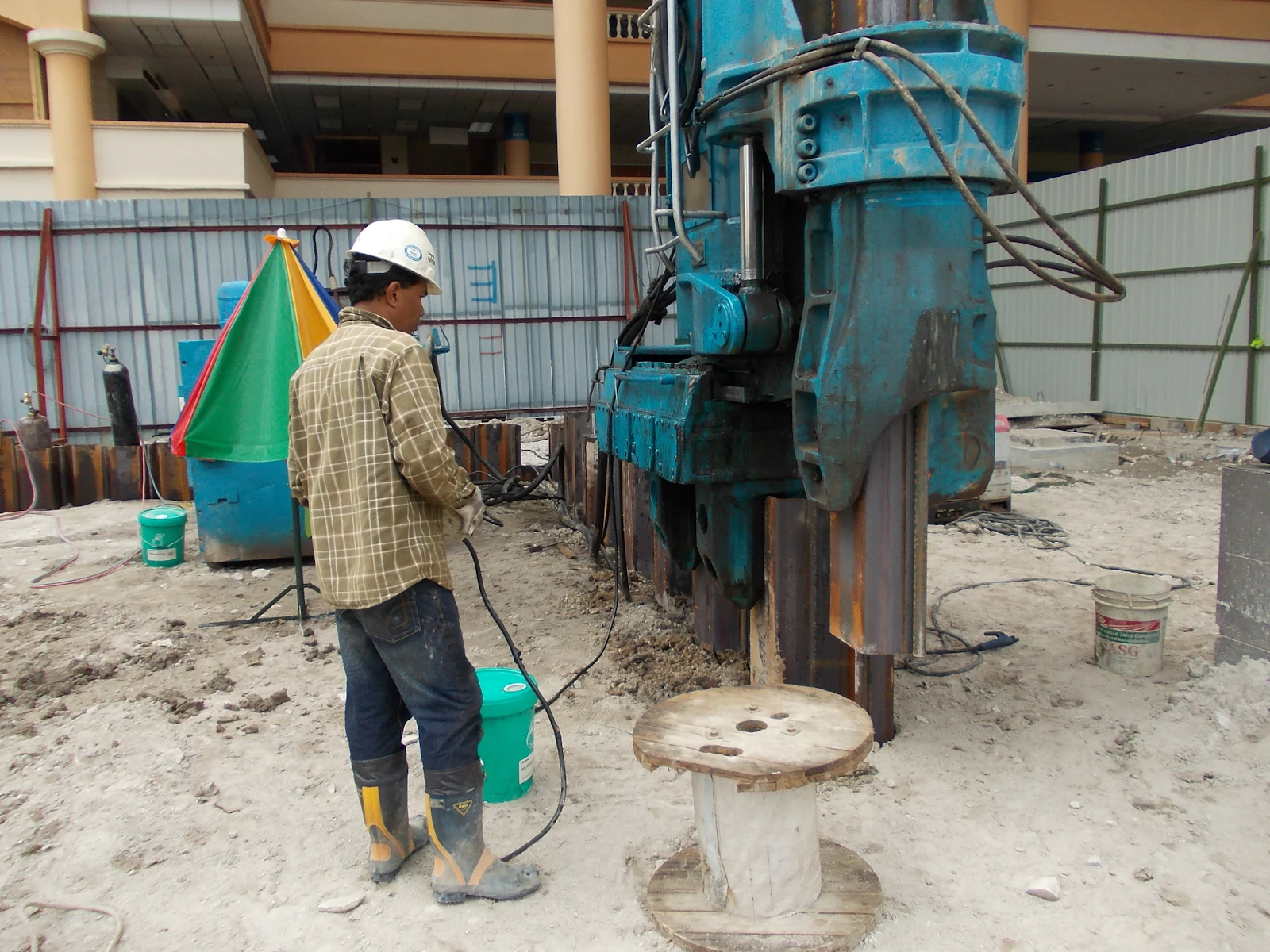
Concrete Pump Hire Costs Charlotte 2026
For Charlotte-area concrete pump equipment hire planning in 2026, most rental coordinators should budget (1) line pump hire at roughly $600–$1,400/day, $2,400–$5,600/week, and $9,500–$22,000/month, and (2) boom pump hire (typical residential 38m-class through larger commercial class pumps) at roughly $1,100–$2,600/day, $4,400–$10,500/week, and $17,000–$40,000/month. Assumptions: “day” equals up to 8 billable hours (often portal-to-portal), “week” equals 5 working days, and “month” equals 20 working days, excluding ready-mix concrete, testing, and placing/finishing labor. In Charlotte, pumping is commonly hired as a staffed service (pump + operator) with a minimum hour block and add-ons for prime/primer, travel, line length, washout, standby, and after-hours—so two pours with the same yardage can price very differently depending on access in Uptown/South End, delivery windows, and truck cadence.
| Vendor |
Daily Rate |
Weekly Rate |
Review Score |
Website |
| Brundage-Bone Concrete Pumping |
$2 200 |
$8 800 |
8 |
Visit |
| CMP Pumping (Concrete & Materials Placement) |
$2 100 |
$8 400 |
7 |
Visit |
| Coastal Carolina Pumping |
$2 000 |
$8 000 |
8 |
Visit |
How Concrete Pump Equipment Hire Is Actually Billed in Charlotte
If you manage concrete pump hire regularly in the Charlotte metro, treat pricing as a set of stacked billable components rather than a simple “daily rental.” Even when a contractor quotes a flat minimum, the invoice typically maps back to time on task, volume pumped, and job conditions.
Common billable building blocks you’ll see on Charlotte-area pump hire:
- Minimum time block (often 2-hour or 4-hour minimum). Example: a Charlotte-area residential boom pump program advertises $750 up to 4 hours, with a stated minimum charge of a 4-hour rental plus priming.
- Hourly after the minimum. Example: $210 per additional hour after the first 4 hours on that same published Charlotte-area residential rate.
- Prime / primer / “prime pack”. In the Charlotte-area residential example, a required $50 prime pack is listed.
- Per-cubic-yard pumping/material charge (common on commercial boom pumps and some line pumps). Published pump rate sheets show structures like $4.00 per cubic yard in addition to hourly pump time.
- Travel / mobilization time billed separately or portal-to-portal. Many rate sheets explicitly note that pricing is based on portal-to-portal time and/or that travel is billed at an hourly rate.
- Washout requirements and environmental handling. If there is no on-site washout, published examples show a $100 “no washout” fee or chargeable washout/prime-out bags (examples include $195 per unit on one published line-pump list and $100 on a Charlotte-area residential pumping page).
Estimator-friendly structure (no tables): for most concrete pump hire quotes, you can sanity-check totals using a three-part model: (1) minimum/portal-to-portal hours, (2) volume adder per cubic yard, and (3) job-specific adders (line length, washout, permits, overtime, fuel, cancellation exposure).
2026 Planning Ranges for Concrete Pump Hire in Charlotte (By Pump Type)
These ranges are intended for 2026 budgeting for Charlotte, NC and surrounding submarkets (Mecklenburg County, Lake Norman corridor, and southern York County spillover). They are not “exact vendor pricing”; they reflect how common published rate structures translate into day/week/month budgeting when minimums, overtime rules, and typical adders are applied.
Line Pump Equipment Hire (Trailer/Truck-Mounted Line Pump + Operator)
- Day (4–8 billable hours): $600–$1,400 (time component), plus common volume/adders such as $3.00–$3.75 per cubic yard on published line-pump lists and priming fees.
- Week (5 days): $2,400–$5,600 (time component) before volume charges.
- Month (20 days): $9,500–$22,000 (time component) before volume charges.
Why the spread is wide: line length and access conditions move cost fast. One published list shows adders once you exceed 150 ft of line, such as $1/ft for 151–249 ft and $2/ft beyond 250 ft (up to long runs).
Boom Pump Equipment Hire (Typical 38m–47m Class + Operator)
- Day (4–8 billable hours): $1,100–$2,600 (time component), plus volume (often $3–$4+ per cubic yard) and job adders.
- Week (5 days): $4,400–$10,500 (time component), plus volume and job adders.
- Month (20 days): $17,000–$40,000 (time component), plus volume and job adders.
Published examples for larger boom pumps commonly land in the $165–$225+/hour range for pump time with separate travel billing on some lists, plus a per-yard charge (example: $225/hour and $4.00/cubic yard with a 4-hour minimum; another published list shows $165/hour for a 38m-class pump time and $140/hour travel time).
What Drives Concrete Pump Equipment Hire Pricing in Charlotte?
Concrete pump hire costs in Charlotte are primarily driven by utilization risk (minimums, standby, and travel exposure) and by how “clean” the pour logistics are. The same pump can be inexpensive on paper and expensive in the field if staging, traffic, and ready-mix sequencing are not controlled.
- Access and setup footprint: Tight sites in Uptown or South End often require tighter arrival windows, more spotter labor, and sometimes street/ROW coordination—driving standby and overtime risk (especially if the pump is on the clock portal-to-portal).
- Ready-mix truck cadence: The pump is the metering device. If trucks stack up late due to I-77/I-277 congestion, your pump standby grows while your “yards placed” does not.
- Line length / vertical rise: Longer hose runs increase prime requirements, friction loss, and the likelihood of a slow pour. On published rate sheets, long line runs can trigger explicit per-foot adders starting beyond 150 ft.
- Washout plan and environmental compliance: If washout is not pre-staged, you can pay either an explicit fee (example: $100) or paid washout containment (examples include $100 and $195 per bag on published lists).
- Schedule (after-hours/weekend): Some published pump terms add overtime after 8 hours/day and escalate weekend premiums (example: +$40/hour Saturday and +$80/hour Sunday on one rate sheet).
- Fuel volatility and surcharges: Fuel triggers may be structured as a percentage (example: 8% fuel surcharge if diesel exceeds $3.00/gal on one published rate sheet) or as an hourly surcharge on portal-to-portal hours (example: $10/hour above $3.50 and $15/hour above $4.50 on another published list).
Hidden-Fee Breakdown for Concrete Pump Hire
When equipment managers ask why the final concrete pump hire invoice exceeded the “rental rate,” it’s usually due to a handful of predictable adders. If you pre-carry these as allowances, you can stabilize budgets and reduce change orders.
- Priming and consumables: published examples include $50 “prime pack” (required on a Charlotte-area residential pumping page), $25 primer fees (one line-pump list), and $40 per bag of primer (one boom pump rate sheet).
- Washout containment: if washout is not available, published examples show a $100 fee or optional washout bag charges such as $100 or $195 depending on program.
- Travel time billed separately: one published list separates “pump time” from “travel time” (example: 38m pump $165/hour pump time and $140/hour travel time), and another explicitly bills travel time port-to-port at the hourly rate.
- Standby / delays: even when “standby” is included in a flat minimum, delays beyond the minimum convert into billable hours (example: a Charlotte-area published residential rate shifts to $210 per additional hour after 4 hours).
- Cancellation exposure: published cancellation policies include (a) being subject to a 3-hour charge when canceling after 4:00 PM the previous workday, (b) $200 to $300 late cancellation fees on other published lists, and (c) cancellation converting to the full hourly minimum with very short notice.
- Permits and ROW constraints: some published lists note a “permit fee will apply” job-specific. In Charlotte, this becomes relevant when you need to stage on public streets or restrict lanes near active corridors.
- Overtime rules: published examples include +$25/hour overtime after 8 hours portal-to-portal (one list), or weekend premiums such as +$40/hour Saturday and +$80/hour Sunday (another list).
Budget Worksheet (Concrete Pump Equipment Hire in Charlotte)
Use this as a practical budgeting artifact for a concrete pump hire PO in Charlotte. Adjust the allowances based on site constraints and whether you expect a “clean” weekday pour or a constrained pour with standby and after-hours exposure.
- Pump type allowance: Line pump day allowance $900 (typical 4–6 billable hours) or boom pump day allowance $1,800 (typical 6–8 billable hours).
- Minimum block carry: 4-hour minimum as the default assumption (even if you expect a 2.5-hour pour).
- Prime/primer: $50 prime pack (or $25–$40 primer/consumables per published examples).
- Washout plan: $0 if on-site washout is confirmed; otherwise carry $100–$195 for washout bag/fees based on published examples.
- Travel/mobilization: carry 1–2 portal-to-portal hours (or a separate travel-hour line if your pump provider bills travel time separately).
- Long-line adder: if hose run is expected >150 ft, carry $150–$500 (based on per-foot adders such as $1/ft beyond 150 ft).
- Weekend/after-hours premium: carry $40–$80/hour for weekend exposure (or $25/hour after 8 hours) depending on your provider’s terms.
- Fuel surcharge allowance: carry 8% (or $10–$15/hour in surcharge structures) if diesel triggers are likely.
- Documentation/closeout: carry 0.5 hour for return-condition photos and washout confirmation to protect against cleaning/damage back-charges.
Rental Order Checklist for Concrete Pump Hire
- PO scope clarity: confirm whether quote is portal-to-portal or on-site only; confirm minimum hours (2 vs 4); confirm whether a per-yard charge applies.
- Site logistics: verified pump setup location; outrigger footprint; ground bearing/cribbing needs (Charlotte clay subgrades can rut quickly after rain); dedicated spotter if working near traffic or tight multifamily drives.
- Delivery window/cutoffs: confirm start time, last-truck cutoff, and whether late trucks convert to billable standby.
- Washout compliance: washout location staked and accessible; confirm whether washout bags are required/allowed; document washout plan in pre-pour email.
- Concrete mix confirmation: pumpable mix submittal confirmed with ready-mix supplier (aggregate size, slump target, admixtures). Keep this aligned to the pump provider’s expectations to avoid line plugging and slow placement.
- Line length plan: measure hose run; pre-approve any >150 ft adder exposure; confirm who supplies extra hose and who drags line (your labor vs pump crew).
- Billing closeout: capture signed tickets, pump start/stop time, total yardage, and photos of equipment condition and washout area at demob.
Example: Charlotte Townhome Slab Pour With Real Constraints
Scenario: South Charlotte townhouse slab pour, target 22 cubic yards, limited staging (single-lane community road), trucks must be cycled to avoid blocking fire lane. The builder hires a 38m boom pump service aligned to a Charlotte-area published residential pumping rate.
- Base minimum: $750 for up to 4 hours.
- Required priming: $50 prime pack.
- Washout contingency: if the HOA will not allow a washout pit, carry a $100 washout bag.
- Operational constraint: the second ready-mix truck is delayed 45 minutes; pump time runs to 5.0 hours total.
- Over-minimum hour: 1.0 hour at $210/hour = $210.
Planning total for pump hire line items: $750 + $50 + $100 + $210 = $1,110 (excluding any separate travel charges and excluding ready-mix concrete). The cost driver here is not yardage; it is delay exposure. If you can lock the truck cadence and staging, the same job can often finish within the 4-hour block and reduce the bill by about $210 in this published structure.
Contract Terms That Change the Final Concrete Pump Hire Invoice
For Charlotte concrete pump equipment hire, most overages tie back to contract language. Before you issue a PO, align your project team on how the pump company defines billable time and what triggers premiums.
- Portal-to-portal vs. on-site time: Many pump providers define pricing around portal-to-portal time, which means your “meter” starts when the unit leaves the yard and stops on return (or similar). Published terms explicitly state portal-to-portal bases on some rate sheets.
- Travel time not included in the minimum: One published pricing list states that travel time is port-to-port and is not included in the 4-hour minimum, with a separate minimum for travel time (for example, 1-hour minimum on travel). That distinction can add meaningful cost on outer-ring Charlotte pours (Lake Norman north, Waxhaw/Union County corridors, or southern York County).
- Overtime triggers: Some published terms add extra hourly cost after 8 hours/day and/or apply weekend premiums (examples include +$40/hour Saturday and +$80/hour Sunday on one rate sheet; others show +$25/hour overtime after 8 hours).
- Fuel surcharge triggers: Published structures include an 8% fuel surcharge when fuel exceeds $3.00/gal, or hourly surcharges such as $10/hour above $3.50 and $15/hour above $4.50. Carry an allowance so you don’t have to explain it as a “surprise” later.
- Cancellation windows: Published policies range from a 3-hour charge when canceling late (after 4:00 PM the prior workday) to flat cancellation fees like $200 or $300 on other lists. In Charlotte’s weather pattern (fast thunderstorms and wet clay subgrades), this matters—build a go/no-go time into your weekly lookahead.
Charlotte Logistics That Typically Increase Pump Hire Costs
Charlotte is not “high cost” because pump companies charge more by default; it’s high cost when the job is operationally difficult. These are recurring local drivers that affect the real hire number:
- Traffic and delivery windows: If your site is sensitive to peak traffic (I-77, Independence Blvd, I-277 loops), schedule earlier start times and insist on a documented truck interval. Pump standby is typically more expensive than paying your ready-mix supplier for an earlier dispatch.
- Limited staging in dense submarkets: In Uptown/South End multifamily, a 15-minute slip can snowball into an hour of portal-to-portal overtime if the pump cannot demob on time. If you need a street setup, carry a permit/traffic-control allowance (some pump lists note permit fees as job-specific).
- Wet clay and outrigger stability: Charlotte-area clay soils saturate quickly. If you don’t pre-stage cribbing/mats or stone, you can trigger delays, towing risk, or forced relocation—any of which extends billable hours (and some published terms place towing responsibility on the contractor if equipment leaves the roadway).
Reducing Standby and Overtime on Concrete Pump Hire
These tactics reduce the most common Charlotte pump-hire cost overruns without changing your design:
- Lock the first three trucks: The first 60–90 minutes sets the rhythm. If the first trucks are late, you tend to “buy” at least 1 extra billable hour.
- Pre-stage washout and water: Published pump terms frequently make washout the contractor’s responsibility; missing washout can generate explicit fees (example: $100) or bag charges (examples include $100 and $195).
- Measure your line run: If your hose will exceed 150 ft, pre-approve the per-foot adders and consider repositioning the pump to reduce length (even if it requires a spotter).
- Document start/stop time onsite: Keep pump arrival, first concrete, last concrete, washout start, and demob times. This helps reconcile portal-to-portal billing and avoid disputes.
When Switching Equipment Lowers the Hire Cost
Concrete pump hire is about throughput and access. If you’re consistently buying standby, you may be using the wrong placing method.
- Line pump vs. boom pump: A line pump can be cost-effective when access is simple and hose runs are manageable. A boom pump tends to win when the pour is large, elevated, or you need higher placement speed to reduce labor and truck waiting.
- Telebelt-style conveyors: Some pump providers publish telebelt pricing structured similarly to boom pumps (hourly plus per-yard/ton adders). This can be a cost saver for aggregates/backfill or when concrete placement geometry favors a conveyor over long line runs.
2026 Planning Notes for Equipment Managers
For 2026 budgets, the most defensible approach is to carry (1) a realistic minimum block, (2) a standby contingency, and (3) a compliance/washout allowance. Using published pricing examples as anchors—such as a Charlotte-area residential program listing $750 up to 4 hours plus $210/hour after 4 hours and required $50 priming—helps you set expectations internally even when you will ultimately bid the work competitively.
If you want tighter numbers, the quickest path is to standardize your pour “intake form” (yardage, pump location, line length, access limits, washout plan, schedule constraints) so pump providers can quote without padding. That’s often the difference between paying only the minimum block and paying minimum + overtime + washout fees on every pour.