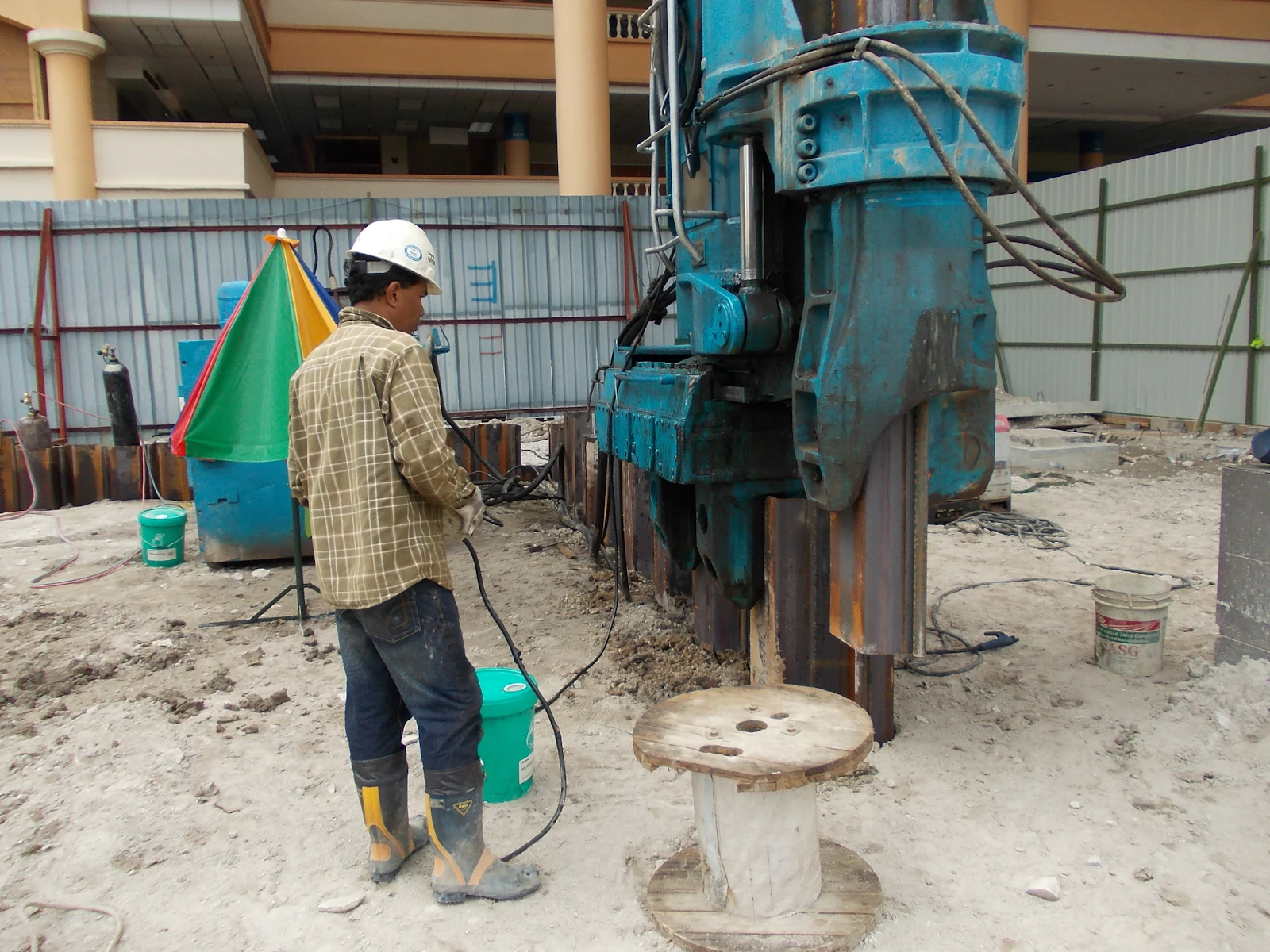
For 2026 budgeting in Los Angeles, concrete pump equipment hire is typically scoped as operated “wet hire” (pump + operator + standard hose) and priced either by the hour with a minimum, or as a shift-equivalent day rate for estimating. As planning ranges, expect line pump equipment hire to land around $950–$1,650/day, $3,600–$6,200/week, and $12,500–$21,000/month (shift-equivalents), while boom pump truck equipment hire commonly budgets at $1,600–$3,800/day, $6,500–$15,500/week, and $22,000–$52,000/month depending on boom class, reach, and access. These numbers exclude typical LA ticket adders like yardage, portal-to-portal travel time, standby, extra hose, and washout/disposal, which is where many overruns occur.
| Vendor |
Daily Rate |
Weekly Rate |
Review Score |
Website |
| Brundage-Bone Concrete Pumping |
$1,600 |
$8 000 |
8 |
Visit |
| Western Concrete Pumping |
$1,550 |
$7 750 |
8 |
Visit |
| BigRentz |
$1,300 |
$6 500 |
8 |
Visit |
| United Rentals |
$1,450 |
$7 250 |
9 |
Visit |
Concrete Pump Hire Costs Los Angeles 2026
Use these 2026 planning ranges when you need a day/week/month number for a schedule or GMP, even though many Los Angeles concrete pump hire quotes will still be hourly + minimum + yardage. The ranges below assume: (1) operated hire (operator included), (2) standard hose package (typically 150–200 ft included), (3) normal access and setup (no extraordinary traffic control), (4) 8-hour shift equivalents for “day,” 5 shifts for “week,” and 20 shifts for “month,” and (5) normal pumpable mixes (no extreme lightweight/specialty). You should still ask for an itemized ticket structure (minimum hours, travel rules, standby rules, washout, and surcharges) before awarding.
- Line pump equipment hire (operated) planning ranges: $950–$1,650/day; $3,600–$6,200/week; $12,500–$21,000/month.
- Trailer-mounted line pump (smaller scopes) planning ranges: $850–$1,450/day; $3,200–$5,400/week; $11,000–$18,500/month (availability varies; many LA scopes are truck-mounted line pumps).
- 28–32m boom pump equipment hire planning ranges: $1,600–$2,600/day; $6,500–$10,500/week; $22,000–$36,000/month.
- 36–47m boom pump equipment hire planning ranges: $2,200–$3,800/day; $8,800–$15,500/week; $30,000–$52,000/month.
- 52–58m boom pump equipment hire planning ranges: $3,800–$6,000/day; $15,000–$24,000/week; $52,000–$82,000/month.
Sanity-check against published market structures: concrete pumping is frequently quoted at $150–$250/hour and $3–$10 per cubic yard with minimum charges that can land in the $400–$1,500 band depending on pump type and scope, plus travel/setup/access adders.
How Concrete Pump Hire Is Actually Billed in Los Angeles
Most Los Angeles concrete pump equipment hire is not “bare rent.” It is dispatched as a service with an operator, and your cost is the sum of (a) a minimum + pump time, (b) portal-to-portal travel rules (or separate travel charges), (c) yardage/material-related charges, and (d) access/site-condition adders. The practical implication for estimators: you can hit the planned hourly rate and still blow the budget if you miss standby exposure, extra hose, or offsite washout/disposal requirements.
Common LA ticket components (what to request on every quote)
- Minimum time: commonly 3–4 hours minimum for line/boom pumping, even if the pour is short (confirm whether minimum includes travel time).
- Set-up / first-hour structure: some Southern California providers publish a set-up charge that includes the first hour and a standard hose package (for example, a published set-up including 1st hour and 200 ft hose is $325, with $125/hour thereafter).
- Hourly pump time: line pumps often publish in the low-to-mid $100s/hour; boom pumps for mid-range meter classes commonly publish in the low-to-mid $200s/hour (size-dependent).
- Yardage charge: commonly a per-cubic-yard charge applies above a threshold (examples include $10–$11/yard above 5 yards in a published sheet; other published sheets show $4.50/yard as a separate yardage line).
- Hose included vs. extra hose: published terms may include up to 150–200 ft and then charge per foot (examples: $2.50/ft for 200–400 ft, or $1.50/ft over 150 ft on other sheets).
- Washout / slurry containment: if a designated washout area is not provided, published fees can be substantial (examples: $250 for line pump no-washout area and $350 for boom pump no-washout area on a published price sheet).
Los Angeles-specific cost drivers that routinely change the ticket
- Traffic and dispatch windows: LA basin congestion makes “on-time arrival” a scope item. If your pour window is tight (e.g., 6:00–8:00 AM start), build an allowance for portal-to-portal billing exposure and standby if ready-mix is late or staged incorrectly.
- High-density sites (DTLA, Hollywood, Koreatown): constrained curb space and lane impacts often require a planned pump position, coordinated deliveries, and sometimes a paid flagger/traffic plan—otherwise expect paid moves and standby.
- Hillside and canyon access: tight turning radii and limited outriggers footprint can force a smaller boom, more hose, or a line pump + slickline strategy—each with different labor and minimum-charge outcomes.
Line Pump Vs. Boom Pump: What You Pay For
Choosing between a line pump and a boom pump is not just a reach decision—it is a cost-control decision. For equipment managers evaluating concrete pump equipment hire rates in Los Angeles, the “cheapest hourly rate” can lose to the option that reduces time-on-site, truck waiting, and access complications.
- Line pump equipment hire generally pencils for slabs, sidewalks, grade beams, and backyards where a hose run is practical. Cost risk is driven by extra hose footage (e.g., an added 100 ft at $1.50–$2.50/ft is $150–$250), hose handling labor (sometimes an “extra man” charge), and washout compliance.
- Boom pump equipment hire generally pencils for podium decks, mats, elevated placements, or when hose runs would be too long or disruptive. Cost risk is driven by higher hourly class rates, larger minimums (published minimums can be around $1,300 for boom pumps on some sheets), and access/ground bearing requirements for outriggers.
Common Add-Ons That Move the Ticket Total
When you evaluate Los Angeles concrete pump truck hire pricing, treat these items as standard “budget lines,” not surprises. Confirm whether each is included, optional, or conditional.
- Weekend/holiday premiums: published examples include +$10/hour and +$25/set-up on Saturdays, and +$20/hour and +$50/set-up on Sundays/holidays.
- Fuel surcharges: can be a flat amount per show-up (example $35) or a percentage (example 12%).
- Environmental fees: flat per show-up fees exist in published sheets (example $15).
- Travel: some providers publish travel charges past a radius (example tiers like $75 for 50–75 miles and $150 for 75–100 miles). For LA projects with remote staging yards or long deadhead, confirm portal-to-portal vs. mileage tiers.
- Moves on site: if you split pours or need repositioning, a published move charge can be $20–$50 per move (or more if it triggers traffic control and re-setup).
- Extra labor / hose handler: some published sheets include an extra man fee of $85/hour when required for hose management or safety spotters.
- Off-hours dispatch: early starts, late finishes, or restricted-hour pours can carry adders. Treat this as a separate quote item if your schedule includes 5:00 AM access or night work.
Hidden-Fee Breakdown
Hidden fees in concrete pump equipment hire are usually not “junk fees”—they are real cost transfers tied to time, compliance, and cleanup. The mistake is failing to carry allowances and then arguing on the invoice. Build these into your estimate and then manage them down with planning.
Delivery / pick-up charges (flat vs. mileage)
- Portal-to-portal billing: common in concrete pumping; confirm whether the minimum hours start at arrival on site or dispatch from yard.
- Travel tiers beyond radius: if your LA project is outside a typical service radius, published travel tiers can apply (e.g., $75 or $150 depending on distance bands).
Fuel or recharge surcharges
- Flat fuel surcharge: examples include $35 per show-up on published sheets.
- Percentage fuel surcharge: examples include 12% on published sheets.
Damage waiver vs. full insurance
- Damage waiver allowance: even for operated hire, some agreements include a waiver/administrative add-on; carry 8%–15% of the pump ticket as a planning allowance unless your contract clearly excludes it.
- Certificates and limits: LA GC requirements often drive higher insurance limits; if your vendor passes through insurance costs for special endorsements, treat as reimbursable with cap.
Cleaning fees, late-return penalties, overtime hours
- Cleanup minimums: published examples include cleanup for 1–5 yards at $50–$55 minimum, separate from yardage.
- Offsite washout fees: published examples include $250 (line pump) and $350 (boom pump) if no washout area is provided.
- Standby exposure: when trucks queue or mixes arrive out of sequence, standby can effectively bill like labor. Published rate cards in the market show standby figures such as $240/hour (and higher after-hours), which is a useful magnitude check when you’re building contingency.
Example: DTLA Podium Slab Pour With Real Constraints (And Real Numbers)
Scenario: 55 CY placement on a podium deck in Downtown Los Angeles with a 7:00 AM–1:00 PM access window, limited staging (only 1 truck can queue), and a requirement for slurry containment (no street washout). You select a 36–38m boom pump to minimize hose handling and reduce deck congestion.
- Pump time budget: 5.5 hours on site at $235/hour class pricing (published example for 36/38/40m is $235/hour) = $1,292.50.
- Minimum charge check: if the boom minimum is $1,300, your pump-time subtotal effectively rounds to $1,300.
- Yardage line: 55 yards at $4.50/yard = $247.50.
- No washout area fee: because the site cannot provide washout, carry $350.
- Fuel surcharge: apply 12% to applicable lines (confirm what it applies to) = roughly $227 on a $1,897.50 subtotal.
- Extra labor (hose handling/spotter): 2 hours at $85/hour for an extra man during tight placement zones = $170.
- Standby contingency: carry 1.0 hour standby at $250/hour = $250 (protects you if trucks are delayed by DTLA congestion or security check-in).
Example ticket magnitude (planning only): about $2,647 before tax/permit/traffic-control. The operational takeaway for rental coordinators: your biggest controllables here are (1) ready-mix dispatch discipline (avoid standby), (2) confirmed washout plan (avoid disposal fees), and (3) ensuring pump setup is pre-approved (avoid moves and re-setup).
Budget Worksheet for Los Angeles Concrete Pump Equipment Hire
Use this as a line-item worksheet (copy into your estimate notes). Adjust for whether you’re bidding line pump vs. boom pump, and whether the provider bills travel portal-to-portal.
- Base concrete pump equipment hire (operated): ________ (carry minimum charge if applicable: line pump $400–$600 planning, boom pump $800–$1,500 planning).
- Hourly pump time beyond minimum: ________ hours × $150–$250/hour planning (or vendor-published class rate).
- Yardage charge: ________ CY × $3–$10/CY planning (or vendor-published per-yard rate).
- Set-up / first-hour fee (if separate): allowance $250–$650 (confirm included hose length).
- Extra hose allowance: ________ ft × $1.50–$2.50/ft (carry 50–200 ft on constrained LA sites).
- Travel / mobilization: allowance $0–$250+ depending on radius/portal-to-portal rule.
- Fuel surcharge: allowance 10%–12% or $35/show-up (confirm structure).
- Environmental fee: allowance $15–$35/show-up.
- Washout/disposal: allowance $0 if onsite washout provided; otherwise $250–$350 typical magnitude.
- Standby contingency: 0.5–2.0 hours × $200–$360/hour (LA dispatch variability).
- Weekend/holiday premium (if applicable): allowance $100–$500 depending on duration and day.
- Onsite moves/repositioning: allowance $50–$250 (more if it triggers re-setup/flagger).
Rental Order Checklist for Concrete Pump Hire
- PO details: pump type (line vs. boom), boom class (e.g., 32m/36m/47m), minimum hours, quoted hourly rate, and yardage rate (if any).
- Billing rules to confirm in writing: portal-to-portal vs. on-site only; when minimum starts; standby clock start/stop; overtime/after-hours definition; weekend/holiday premiums; cancellation window and show-up charge.
- Delivery/access: exact address + gate code; truck route constraints; curb/laydown approval; overhead obstructions (power/telecom); outrigger footprint; ground bearing / mats requirement; designated staging for ready-mix queue.
- Washout plan: designated washout location and containment method; who supplies washout bin/liner; documentation/photos required at demob.
- Safety/compliance: COI requirements and endorsements; operator certification requirements (if specified by GC); required spotters/flaggers; exclusion zones and pedestrian control plan.
- Return/off-rent documentation: signed tickets; start/stop times; yardage pumped; standby minutes; photos of washout area and any surface protection (to manage damage claims).
Note for planners: If your scope calls for “monthly concrete pump hire” in Los Angeles, treat it as a service contract with defined shift counts, capped standby, and clear travel rules—not a standard equipment monthly rental like a lift or skid steer.
What Drives Concrete Pump Equipment Hire Pricing in 2026 (Beyond the Rate)
In 2026, Los Angeles concrete pump equipment hire costs are increasingly determined by time-on-site variability and compliance constraints rather than the posted hourly number. Two projects with the same cubic yards can produce very different tickets depending on dispatch discipline, washout planning, and site access. For equipment managers, the job is to convert unknowns into either (a) fixed inclusions, or (b) explicit allowances with a not-to-exceed framework.
Scheduling Rules That Change the True Hire Cost
Concrete pumping is one of the easiest scopes to under-carry because it is a live operation: a small schedule miss immediately turns into paid standby or overtime. Build these rules into your pour plan and pre-pour meeting agenda.
- Dispatch cutoffs: if the vendor schedules multiple pours in a day, a late start can push you into a paid “move” or a shortened pumping window. Carry a $150–$400 operational contingency for re-sequencing risk on dense LA routes.
- Off-rent is not “when the last yard hits the deck”: many providers include cleanup, breakdown, and travel in billable time (confirm portal-to-portal). That means a 3-hour pour can invoice as a 4–6 hour exposure, especially when washout is constrained.
- Weekend and holiday billing: if you are trying to avoid weekday congestion with Saturday work, price the premium up front. Published examples show Saturday premiums like +$10/hour and +$25/set-up, and Sunday/holiday premiums like +$20/hour and +$50/set-up.
- Cancellation exposure: cancellation windows are typically short in pumping. Published terms show “show-up” charges equal to set-up unless canceled with sufficient notice—treat as $250–$650 risk magnitude depending on your provider’s structure.
Access, Hose Length, And Placement Method: The Three Biggest Cost Levers
On LA projects, access constraints are so common that you should treat them as first-order cost inputs (not site “details”). The same line pump can become expensive when hose runs get long, when you need additional labor to manage the line, or when the pump has to reposition mid-pour.
- Extra hose: published adders can run $1.50/ft (over 150 ft) or $2.50/ft (for extended ranges). Carry $200 per additional 100 ft as a fast rule-of-thumb.
- Extra labor: if hose management requires a dedicated handler, published “extra man” fees can be $85/hour. Carry 2–6 hours of exposure for placements with tight corners, stairs, or elevated landings.
- Moves/repositioning: even a small reposition can trigger re-setup and, in LA, additional pedestrian/traffic coordination. Published move charges can be $20–$50 per move, but the true cost is often the added time and standby exposure.
Washout, Slurry, And Dust-Control Requirements (Where LA Jobs Get Expensive)
Urban Los Angeles and many multi-tenant properties (retail pads, podium decks, hospitals, campuses) restrict where you can wash out and how slurry can be contained. If washout is not resolved, you pay twice: once in direct fees and again in time.
- No washout area fees: published examples show $250 (line pumps) and $350 (boom pumps) when no washout area is provided. This is a controllable cost if you pre-plan washout containment.
- Cleanup minimums: published cleanup for small yardage can be $50–$55 minimum; multiply the risk if your finish crew is slow and you have more line residual.
- Offsite cleanup adders: if the vendor must leave site to wash out, you can also incur additional billable time (travel + washout) even if the fee is “flat.” Carry an extra 1.0–2.0 hours in tight sites.
Insurance, Risk Allocation, And Documentation That Protects the Hire Budget
Concrete pumping is high-consequence equipment: property damage, broken curbs, slurry stains, and overhead contact can turn into chargebacks. Your contract and documentation is part of cost control.
- Surface protection allowance: carry $150–$600 for plywood, mats, or protection at the setup location and hose path (often required by property managers and can reduce damage claims).
- Photo documentation time: carry 0.25–0.5 hour of field time to document pre-existing curb/sidewalk conditions and the washout area at demob; this can prevent back-charges that dwarf the pumping ticket.
- Damage waiver planning: carry 8%–15% unless your agreement clearly excludes waivers/add-ons; confirm whether it applies to the whole ticket or specific lines.
Practical Cost-Control Tactics For Los Angeles Concrete Pump Hire
- Lock the dispatch sequence: schedule ready-mix so the pump is never waiting for the next truck. Even 45 minutes of standby can be a $150–$300+ swing depending on billing and time of day.
- Pre-stage hose path and protection: reducing hose snags and repositioning can save 0.5–1.5 hours of billable time on multi-tenant properties.
- Confirm access windows and security check-in: in DTLA and studio zones, build a check-in buffer of 30–60 minutes so you don’t start the standby clock with trucks idling at a gate.
- Specify washout responsibility: include in the PO: “GC provides onsite washout area” (or “Vendor provides washout bin”). This single line can remove a $250–$350 fee and reduce added time.
Ownership Vs. Equipment Hire (Quick Break-Even Thinking)
Most GCs and concrete subs in Los Angeles still prefer equipment hire for pumping because utilization needs to be high and maintenance exposure is real. If you are evaluating ownership, compare (a) annual utilization hours you can realistically dispatch, (b) operator staffing/coverage, (c) compliance overhead, and (d) maintenance downtime risk. As a rule-of-thumb, if you cannot keep a pump utilized for at least 800–1,200 billable hours/year, equipment hire remains the lower-risk path—even if your blended hire rate feels high.
Closeout: What To Put On The PO So The Invoice Matches Your Estimate
- Define billing start/stop: “on-site only” vs. “portal-to-portal,” and when standby starts.
- Cap standby where possible: e.g., “standby billable after 30 minutes cumulative; notify superintendent at 15 minutes.”
- State washout plan explicitly: onsite location, containment, and who supplies bin/liner.
- List expected hose length and any extra hose pricing: prevents on-the-day adders.
- Confirm weekend/after-hours premiums in writing: avoids “surprise” differentials.
If you want, share the pump type (line vs. boom), approximate yards, and neighborhood (DTLA vs. Valley vs. Westside), and I can help you convert an hourly/minimum quote into a clean day/week/month internal budget with adders and contingency sized appropriately for LA logistics.