

For New York City (NYC) projects planning in 2026, concrete pump equipment hire typically pencils out in three practical buckets: (1) line pump hire (trailer or truck-mounted line pump), (2) boom pump hire (truck-mounted with placing boom), and (3) specialty placement (telebelt, placing boom, high-output/long-reach). As a 2026 planning range for NYC (Manhattan/Brooklyn/Queens/Bronx/Staten Island), budget $1,100–$2,100 per day for a line pump (operator included, 4–6 billable hours plus travel assumptions), $1,800–$3,600 per day for a 32–41m class boom pump (operator included, typical 4–5 hour minimum plus travel), $7,000–$14,000 per week for recurring placements, and $22,000–$48,000 per month for steady utilization (often structured as “rate card” hourly with a weekly cap rather than true calendar-month hire). These ranges assume normal-weight pumpable mix, reasonable curbside access, and that you are paying a pumping contractor (service + operator), not just renting the iron; leading specialty concrete pumping contractors and some ready-mix providers can supply these packages, but NYC access, DOT/DOB logistics, and travel time billing are often the real swing factors. Benchmark U.S. published rate sheets commonly show hourly pumping charges and per-yard adders that, when adjusted for NYC friction, support the above planning ranges.
| Vendor | Daily Rate | Weekly Rate | Review Score | Website |
|---|---|---|---|---|
| Brundage-Bone Concrete Pumping | $2 300 | $11 500 | 8 | Visit |
| Our Rental Pumps, LLC | $2 200 | $11 000 | 8 | Visit |
| Performance Equipment Rental & Concrete Pumping Services | $2 000 | $10 000 | 8 | Visit |
| All Time Pumping Concrete | $1 900 | $9 500 | 10 | Visit |
In NYC, concrete pump hire is usually sold as concrete pumping service (equipment + operator), priced by a combination of: (a) hourly pump time, (b) travel time (“port-to-port”), (c) minimums, and (d) job-specific adders (hose/line length, washout, standby, permits, off-hours). For example, published rate sheets in other U.S. markets show line pumps around $160/hour plus a per-yard charge and a fuel surcharge, and boom pumps priced by meter class (e.g., 32m, 36–40m, 41m) with separate yardage fees and washout fees.
Because many pumpers bill a minimum pump time (often 2–4 hours) and may bill travel time separately, your “day” can be 4 hours of pumping plus 1–3 hours of travel and setup—especially when crossing boroughs, dealing with bridge/tunnel tolls, and staging constraints. One published pricing list explicitly notes a 4-hour minimum (pump time) and that travel time is port-to-port and not included in the 4-hour minimum, which is a useful estimator’s mental model for NYC even if your vendor’s exact policy differs.
Concrete pump hire in New York becomes cost-effective when (1) placing labor is the constraint, (2) access prevents chute placement, (3) schedule risk is high (deck pours, structural walls, night pours), or (4) material handling is restricted (high-rise, tight lots, interior placements). The estimator’s job is to convert “hourly + minimums + adders” into a dependable 2026 budget number and then keep it dependable by controlling the constraints that trigger extra billable time.
Line pump equipment hire cost (NYC, 2026 planning): $175–$325/hour pump time is a realistic budget band in NYC once you account for metro labor, insurance, and mobilization; many vendors then add a per-yard/material charge (commonly $3.00–$4.50/yard in published rate cards elsewhere), fuel surcharge (often 7%–12% in published examples), and hose adders over an included length.
Boom pump equipment hire cost (NYC, 2026 planning): $210–$400/hour is a workable NYC planning range for 32–41m class pumps (higher for long-reach or high-output demands). Published boom pump examples show meter-class hourly rates (e.g., $210/hour for a 32m, $235/hour for 36/38/40m, $255/hour for 41m) plus a per-yard charge, as well as published 20m boom pricing with a 4-hour minimum plus 1 hour travel time and explicit overtime tiers. These provide defensible anchors for a 2026 NYC budget even though your NYC supplier’s exact card will differ.
Weekly/monthly structures (NYC, 2026 planning): For recurring placements, many pumping contractors will effectively sell you a weekly “commitment” (guaranteed dispatch priority + a set number of shifts) rather than a pure weekly rental. As a planning simplification: (a) a 5-shift week for a line pump commonly lands in the $7,000–$10,500/week range in NYC (assuming 4–5 billable pump hours/shift plus travel), (b) a 5-shift boom week often lands in the $9,000–$14,000/week range, and (c) “monthly” is usually a negotiated cap based on 20–22 shifts (not a calendar month with unlimited hours). Confirm whether your vendor bills 8-hour port-to-port, time on site, or pump time only.
1) Minimums and what counts toward minimums. NYC cost blowups frequently come from minimum-charge mechanics, not the posted hourly rate. Examples from published rate cards include: a 2-hour minimum for certain shotcrete/line pump services; a 4-hour minimum on pumping; and minimum travel time (e.g., 1-hour minimum on travel time). In NYC, even if your vendor’s policy differs, you should treat minimums as “non-negotiable” unless you are providing consistent volume.
2) Travel time and borough-to-borough friction. “Port-to-port” billing is common. One published list prices travel time separately (e.g., $130/hour to $185/hour travel time depending on pump class), and another explicitly states travel time is charged at the hourly rate. In NYC, port-to-port can include bridge/tunnel crossings, traffic windows, and limited curb access; plan for it as a distinct line item rather than hiding it in “daily rate.”
3) Hose/line length, vertical reach, and interior routing. Line and hose adders are one of the most consistent hard-cost drivers. Published examples include: extra hose over 150 ft at $1.50/ft; 200–400 ft at $2.50/ft; and tiered line charges such as $1/ft beyond 150 ft up to a threshold, and $2/ft for longer runs. For NYC interiors (basements, podium decks, behind-the-line placements), pre-walk the route and measure the real path length (including turns and protection) because “as the crow flies” underestimates hose needs.
4) Washout and environmental constraints. NYC sites often do not have an acceptable washout area. Published pumping rate cards show explicit penalties such as $250 “no wash out area” fees for line pumps and $350 for boom pumps, and other cards show washout-related fees like $45 washout pools, $100 “no washout provided” fees, or $195 washout/prime-out bags (with customer disposal responsibility). If you do not control washout logistics, you should assume you will pay for them.
5) Fuel and jobsite time creep. Published examples show 7%, 10%, and 12% fuel-related surcharges, as well as per-hour surcharges tied to fuel price thresholds (e.g., $10/hour above one trigger, $15/hour above another). NYC idling, slow plant turnarounds, and traffic hold-ups can magnify fuel and port-to-port hours simultaneously.
6) Overtime, weekends, and night work. Pumping often happens outside normal shifts to protect schedule. Published examples include overtime adders such as $40/hour after 8 hours and $80/hour after 12 hours (boom example), and other cards include $25/hour overtime after 8 hours port-to-port, plus weekend premiums such as $10/hour Saturday and $20/hour Sunday/holiday (plus setup premiums). NYC night pour windows can reduce traffic but can introduce premium labor and coordination requirements—budget it.
Use this breakdown to keep concrete pump equipment hire costs from hiding inside lump sums:
Scenario: 55 CY interior slab on a constrained Lower Manhattan site. Curb lane is tight; washout cannot occur on grade; concrete arrives in 7–8 truckloads; hose must be routed through a protected corridor to the pour point. You choose a line pump to avoid boom setup footprint.
Budget takeaway: Even with a “reasonable” hourly rate, NYC line pump hire can land around $2,300–$3,200 for a single interior placement once you include yardage, line length, washout controls, and fuel/travel mechanics. The cheapest lever is not negotiating $10/hour—it’s preventing truck gaps, ensuring washout is pre-approved, and measuring hose correctly before dispatch.
New York State publishes an equipment rental rate schedule that includes “Concrete Pumping Equipment” by type/output (trailer-mounted and truck-mounted with boom, less chassis) with hourly rates in defined columns. This can be useful for internal ownership-cost comparisons or force-account style estimating, but it is not a proxy for NYC pumping contractor invoices because it does not represent the full service package (operator, mobilization logistics, specialty insurance, and jobsite constraints).
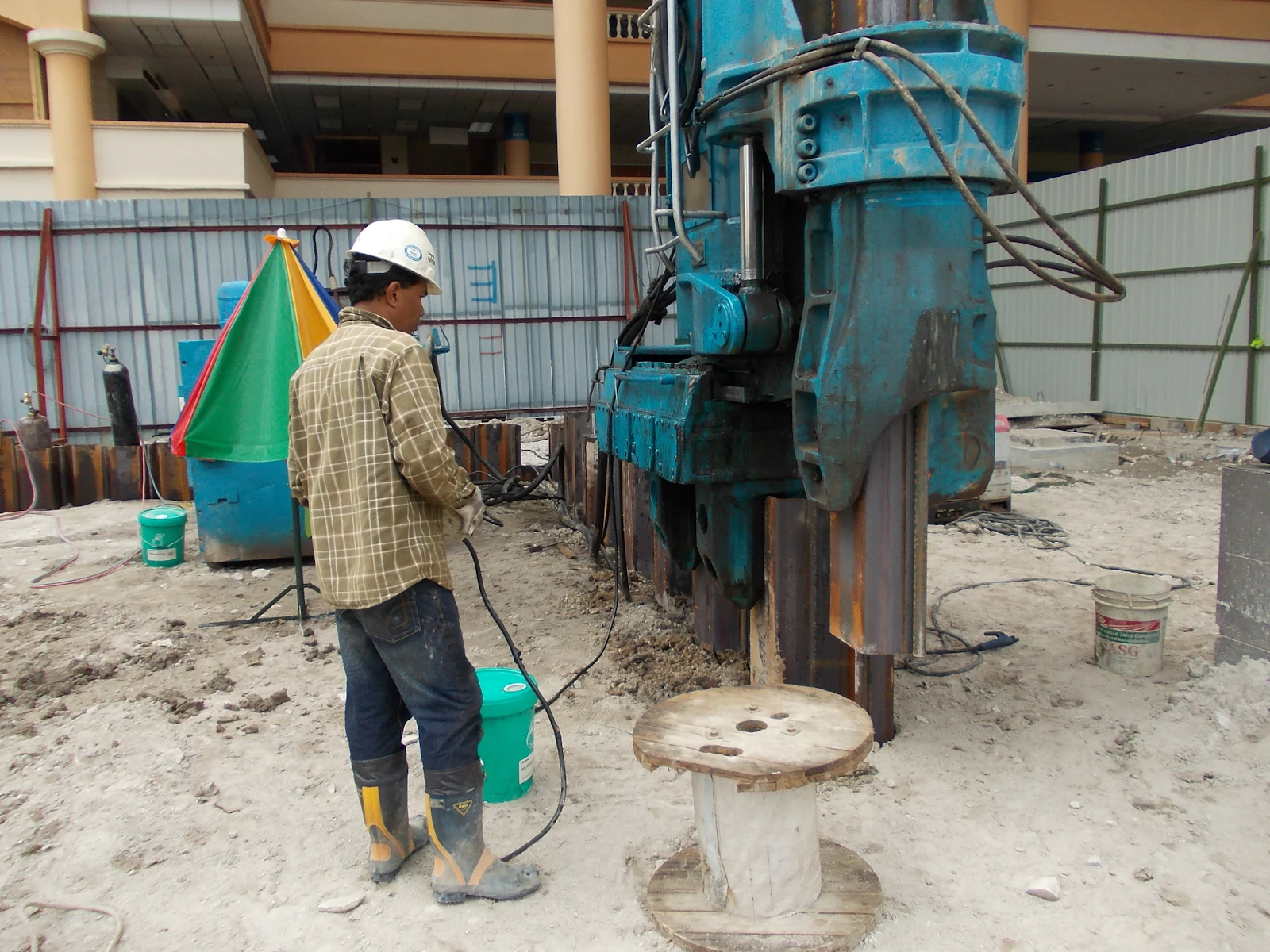
In New York City, the fastest way to blow a concrete pump equipment hire budget is to ignore the operational rules that control billable time. Pumping is a time-and-logistics product: the pump is your “meter,” and NYC makes that meter run unless you actively manage it.
Manhattan: Curb control is the driver. Build in more port-to-port hours and a higher probability of standby due to lane restrictions and security holds. If a permit or lane-occupancy process is required, your pumping vendor may pass through a “permit fee will apply” style charge (job-specific) and the schedule risk is yours—so treat permits as a separate allowance even when the vendor cannot quote it until the address and footprint are final.
Brooklyn/Queens: Distance can look short but turn times can be long. For recurring placements, negotiate travel-hour assumptions up front (e.g., fixed travel minimum) because crossing to/from yards and plants at peak times can be the hidden driver. Also, interior placements are common—measure hose runs carefully and budget per-foot adders above included hose lengths.
Bronx/Staten Island: The challenge is often a combination of travel + site access (tight streets, staging) rather than pure vertical reach. Treat washout as non-negotiable: if the site cannot provide an approved washout area, published rate cards show explicit “no wash out area” fees or paid washout controls, and NYC enforcement/cleanup risk can be worse than the fee.
These are practical allowances to carry as line items in your estimate (confirm against your vendor’s card):
In NYC, the best pricing improvements usually come from reducing the vendor’s uncertainty: provide consistent volume, predictable windows, and clean closeout documentation. If you can offer recurring work, ask for: (1) a capped travel-hour assumption (or a fixed travel minimum), (2) a defined included hose length, and (3) a standby policy that doesn’t punish you for plant-controlled delays. If you are a new account, clarify credit terms early—published cards show meaningful late-fee language, so treat payment discipline as part of your “total hire cost,” not a back-office detail.
Even when you are tempted to “buy the pump,” remember that the invoice you’re paying in NYC is not just iron cost—it’s operator, mobilization, compliance, washout controls, and schedule risk. State equipment rate schedules can help you benchmark the equipment component, but they do not replace a pumping contractor’s service pricing. For most NYC contractors and CM teams, concrete pump equipment hire remains the lower-risk option unless you can keep utilization high and control dispatch across multiple projects.
