

For construction professionals, accurately estimating the cost to trench per foot is crucial for budgeting and project planning. Whether installing electrical lines, gas services, or drainage systems, understanding the variables that influence trenching costs can save time and money. As of February 2026, the cost to trench per foot ranges from $5–$12, depending on factors like location, soil type, and accessibility.
Based on industry data, contractors can expect an average cost of $5–$12 per linear foot for standard utility trenches 24" deep and 8" wide. Urban areas with higher labor costs may reach the upper end, while rural sites are generally less expensive. For budgeting, a safe estimate is $8 per foot until a detailed analysis is conducted.
1. Scope Capture
Use mobile devices to record trench locations, converting them into scoped line items.
2. Blueprint Takeoffs
Upload plans to automatically generate linear footage and depth by layer.
3. Live Material and Labor Pricing
Access regional wage data and equipment rental rates to keep estimates accurate.
4. Instant Cost per Foot Output
Summarize each trench line item as a clear cost per foot for easy comparison.
1. Standard electrical code depth (18") keeps cost lowest.
2. Gas or water lines at 24"–30" add ~15% to excavation pricing.
3. Deep stormwater trenching over 36" often requires trench shields, doubling labor time.
Municipal requirements vary, with some areas requiring excavation permits and utility inspections, adding $0.50–$1.20 per foot. Being aware of these requirements can prevent delays and additional costs.
Hand trenching is used for tight spaces, costing $35–$65 per foot. Machine trenching with a mini-excavator averages $8–$18 per foot. Evaluate the best method based on site conditions.
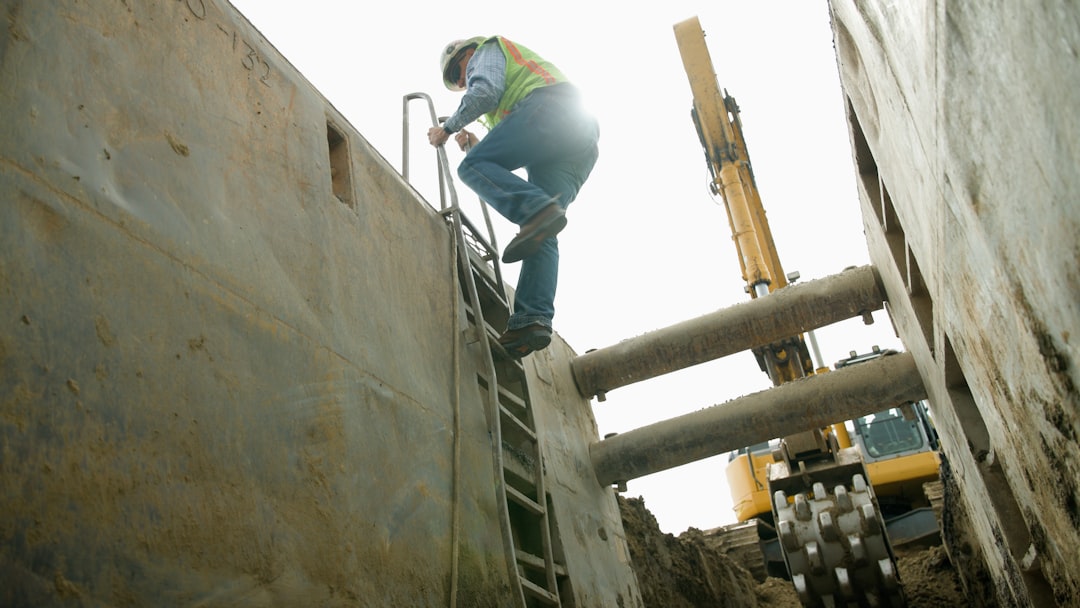
In a Los Angeles project, switching from overhead to underground power service, a contractor used advanced estimating tools to reduce costs. The initial hand-dug quote was $5,800 for 120 feet, nearly $48 per foot. By optimizing the process, costs were reduced to $2,280, or $19 per foot.
Professionals can achieve significant cost reductions by using advanced estimating tools tailored to specific project needs.
