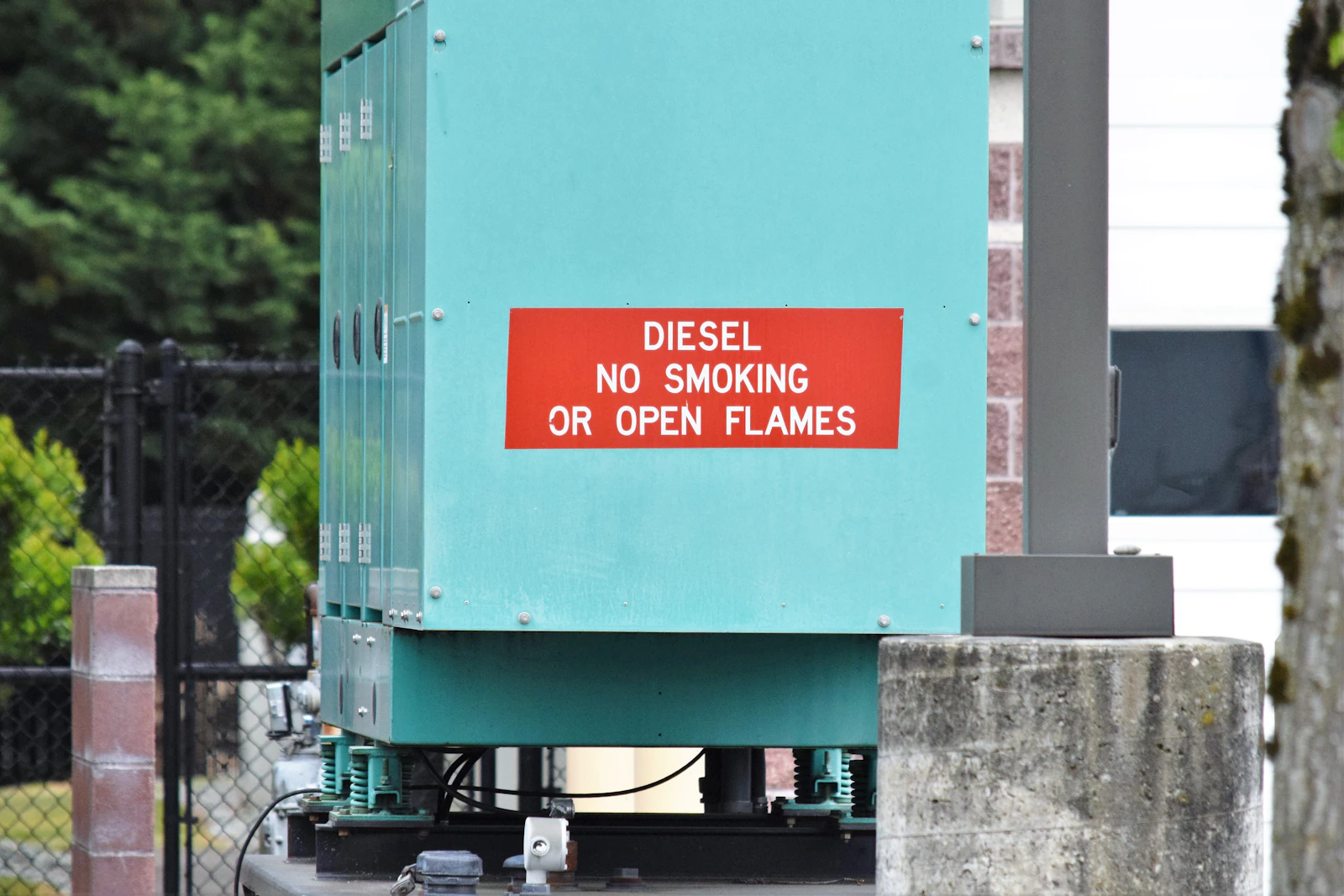
For diesel generator equipment hire in Atlanta in 2026, plan budgeting around these market ranges (exclusive of fuel, distribution, delivery, and protection fees): $200–$375/day, $650–$1,150/week, and $1,900–$3,300/month (4-week) for common 20–45 kW towable units; $300–$575/day, $900–$1,800/week, and $2,200–$4,300/month for 56–100 kW; $450–$950/day, $1,400–$3,000/week, and $3,500–$7,400/month for 125–200 kW; and $900–$1,350/day, $2,200–$3,800/week, and $5,300–$9,800/month for 250–300 kW. Costs move materially with Tier-4 emissions packages, sound attenuation, voltage/connector requirements, run-hours, and whether you need a turnkey “temporary power” package (generator + tank + distro + cables). In Atlanta, most rental coordinators price-check across the large national rental houses (e.g., Sunbelt Rentals, United Rentals, Herc Rentals) and local power specialists, then normalize the quotes to the same assumptions on run-hours, delivery radius, and off-rent rules.
| Vendor |
Daily Rate |
Weekly Rate |
Review Score |
Website |
| United Rentals |
$273 |
$720 |
8 |
Visit |
| Sunbelt Rentals |
$340 |
$980 |
9 |
Visit |
| Herc Rentals |
$785 |
$2 090 |
9 |
Visit |
| Yancey Rents (The Cat Rental Store) |
$241 |
$699 |
9 |
Visit |
Portable Generator Hire
This guide is written for project managers, rental coordinators, and equipment managers who need portable generator hire pricing that holds up in procurement review. The key is to separate the base rent (daily/weekly/monthly) from the items that usually drive the final invoice: delivery/pickup, damage waiver, environmental fees, overtime/run-hours, refueling/DEF, cables/distro, and jobsite access constraints (downtown delivery windows, weekend billing, and off-rent cutoff times).
Diesel Generator Equipment Hire Cost Ranges in Atlanta for 2026 Planning
Use these ranges for 2026 estimating in Atlanta when you do not yet have a firm vendor quote. Assumptions: towable diesel generator, maintained/inspected, one-shift allowance (commonly 8 hours/day; 40 hours/week; 160 hours/4-week) unless otherwise stated, and a “month” billed as a 4-week period in many rental contracts. One publicly available rate sheet example shows a 36 kW diesel generator day/week/month pricing and a 56 kW diesel generator day/week/month pricing that aligns with the mid-band of the ranges below.
- 20–25 kW towable diesel generator hire (small temp power, small site trailers): $200–$325/day, $600–$950/week, $1,800–$2,800/month.
- 30–45 kW towable diesel generator rental cost (larger job trailers, small cranes/telehandlers support, pumps): $240–$375/day, $650–$1,150/week, $1,900–$3,300/month.
- 56–70 kW towable diesel generator hire pricing (medium temp power, multiple trailers, light distribution): $300–$450/day, $900–$1,350/week, $2,100–$3,400/month. (A publicly posted product page also flags that during declared emergencies, billing may convert to a one-week minimum with 24-hour usage/day assumptions for certain generator classes.)
- 80–100 kW diesel generator rental rates (events, larger temp power, small panel tie-ins with distro): $375–$575/day, $1,100–$1,800/week, $2,700–$4,300/month. (A published example for a ~100 kW / 125 kVA unit shows a 4-week price point used by some rental businesses.)
- 125–200 kW diesel generator equipment hire costs (larger temporary power, redundancy planning): $450–$950/day, $1,400–$3,000/week, $3,500–$7,400/month.
- 250 kW diesel generator hire cost (bigger distro, HVAC loads, pumps, storm support): $900–$1,350/day, $2,200–$3,800/week, $5,300–$9,800/month. (Published contract pricing examples show a 250 kW generator with explicit daily/weekly/monthly rates that can be used as a reasonableness check.)
Estimator note: when you receive quotes, confirm whether the vendor is quoting calendar day/week/month or run-hour allowances (one-shift vs continuous). Also confirm whether the quote includes any accessories (distro/cables/grounding), because diesel generator hire costs can look “cheap” until the distribution package is added.
What Changes Diesel Generator Hire Costs on Atlanta Jobsites?
The same kW class can price very differently depending on configuration and constraints. In Atlanta, three recurring cost drivers are: (1) downtown logistics (tight delivery windows, security check-ins, staged unloading), (2) summer heat and humidity (higher cooling demand and potential generator derate / higher fuel burn under sustained load), and (3) noise expectations near mixed-use residential or hospitality (Midtown/Buckhead) that push you toward sound-attenuated sets and longer cable runs.
- Tier and emissions package: Tier 4 Final machines often rent at a premium versus older fleet (where allowed) because of higher capex and aftertreatment maintenance; also budget for DEF consumption and refill handling (see hidden fees).
- Sound attenuation: “Quiet” enclosures commonly add cost, but may reduce complaints and after-hours work stoppages. If your project has a hard boundary like 70 dBA at 7 m (spec varies), treat this as a scope item, not an assumption.
- Voltage and connectors: 120/208V 3-phase, 277/480V 3-phase, or multi-voltage selector requirements can change what’s available and what distribution gear is required (camlocks, spider boxes, panels).
- Duty cycle and run-hours: rentals are typically priced for one shift, then billed for overtime usage. One published services page states the base rates entitle the customer to 8 hours/day, 40 hours/week, and 160 hours/4 weeks, with excess use charged via formulas tied to the base rate.
Hidden-Fee Breakdown (The Items That Commonly Blow Up the PO)
When you’re building a defensible estimate for diesel generator equipment hire cost in Atlanta, carry explicit allowances for the following line items. Even if your vendor later bundles some items, listing them early prevents scope gaps.
- Delivery and pickup: typical Atlanta metro charges are often $125–$250 each way inside a local radius (commonly 10–20 miles), then $5–$8 per loaded mile beyond that. For downtown, add a $75–$175 allowance for “wait time / constrained access” if you need a specific dock time.
- Minimum rental period: many fleets enforce a 1-day minimum; specialty power packages may carry a 3-day minimum. In emergency declarations, some generator classes may bill at a one-week minimum regardless of actual duration.
- Damage waiver (rental protection): commonly 10%–18% of base rent (varies by vendor and class). Confirm whether it covers theft/vandalism and whether you must provide a secured enclosure or fencing.
- Environmental/energy fees: budget 2%–5% of base rent for “environmental recovery” style line items where applicable (naming varies by vendor).
- Overtime / extra shift usage: a common structure is an hourly rate equal to 1/8 of the daily rate for daily rentals, 1/40 of the weekly rate for weekly rentals, and 1/160 of the 4-week rate for 4-week rentals.
- Late return / off-rent timing: if off-rent notice misses the daily cutoff (often early-to-mid afternoon), you can get billed an extra day; carry a $75–$250/day risk allowance for schedule volatility on short rentals.
- Cleaning: for muddy yards, concrete splatter, or red clay buildup, carry $150–$450 for pressure-wash/cleanup if your site conditions are rough and the return standard is strict.
Accessories That Commonly Need Separate Budget (And Typical Adders)
Most “diesel generator only” quotes do not include what the site actually needs to safely distribute power. For professional portable diesel generator hire, budget these adders as separate line items so your PM can approve substitutions without re-scoping the whole package.
- Distribution panel / spider box: $35–$85/day or $120–$260/week depending on amperage and receptacle mix.
- Camlock cable sets (per 50–100 ft section): $25–$60/day or $80–$180/week (longer runs add up fast in urban sites where the generator must sit at a curbside laydown).
- Grounding kit / rod: $10–$25/day (often overlooked, sometimes included—confirm).
- External fuel tank / “fuel cube”: small tank: $45–$90/day; larger belly or double-wall tank packages: $150–$275/week.
- Spill containment / berm: $20–$45/week (often required by site EHS even for double-wall tanks).
- Automatic transfer switch (ATS): $90–$220/day or $250–$650/week depending on amperage and whether it’s standalone or integrated.
- Load bank (for commissioning/testing): budget $300–$800/day plus delivery; if you need a tech present, add labor (see below).
Fuel, Refueling, and DEF: Costing the Part You’ll Spend the Most On
Fuel is usually the largest variable cost after base rent—especially for multi-shift operation. As a reference point, one industry guide notes a ~100 kW generator at ~75% load can burn roughly 5.5–7.0 gallons/hour, which can exceed 130 gallons/day if you run long hours.
- Budget diesel cost (Atlanta planning): carry $3.50–$4.75/gal as a planning range for delivered diesel over a project year (confirm with your fuel vendor at award).
- Vendor refuel service trip charge: commonly $125–$250 per visit, plus fuel.
- Fuel markup (if supplied by rental/fuel service): carry $0.75–$1.50/gal above market depending on after-hours and minimums.
- Minimum fuel drop: commonly 75–150 gallons for small drops; larger sets may require 250+ gallons per delivery to be efficient.
- Refuel surcharge for emergency/after-hours: add 15%–35% or a flat $150–$350 “after-hours dispatch” allowance if you cannot refuel during business hours.
- DEF (if required): carry $20–$35/gal for packaged DEF and a $25–$75 handling allowance if your site has strict spill rules.
Operational Rules That Change the Invoice (Delivery Windows, Off-Rent, Weekend Billing)
Atlanta rental invoices often swing based on operational rules rather than base rate. Align these rules in writing on the PO before dispatch:
- Delivery cutoffs: if you need delivery inside a 2-hour window (common on downtown sites), carry a $75–$200 premium for tight scheduling and confirm if the vendor will charge stand-by time if your dock is blocked.
- Off-rent rules: confirm the daily cutoff time to stop billing. If your PM calls off-rent after the cutoff, budget an extra 1 day of rent exposure.
- Weekend/holiday billing: some branches effectively bill on calendar time even if the site is dark; other branches offer “free weekend” conventions on certain classes—treat it as vendor- and branch-specific and get it in writing.
- One-shift included: if your crew runs second shift, include overtime explicitly. A published example shows overtime structured as fractions of daily/weekly/4-week rates (e.g., 1/8 of daily per hour).
- Emergency clauses: if you are renting in storm season, recognize that some equipment classes can convert to a one-week minimum and 24-hour usage/day billing during declared emergencies.
Example: 100 kW Diesel Generator Hire for a Midtown Atlanta Event (Real Constraints and Numbers)
Scenario: 3-day event (Fri–Sun) near Midtown with noise sensitivity and limited laydown. Power requirement is ~65 kW average with ~90 kW peaks. Generator must be placed curbside (no fenced yard), so you need longer distribution runs and tighter delivery/pickup windows.
- Base generator rent (100 kW class): budget $1,100–$1,800/week (a weekly minimum is common because delivery Thursday + pickup Monday spans the weekend).
- Sound attenuation premium allowance: add $150–$300/week if “quiet” set is required.
- Delivery + pickup: $200 each way (metro) + $125 wait-time allowance for dock access = $525 total allowance.
- Distribution package: distro panel $180/week + (4) camlock sets $120/week each = $660/week.
- Grounding and accessories: $45/week.
- Damage waiver: assume 14% of base rent + accessories (apply to your vendor’s waiver base).
- Fuel: run 10 hours/day for 3 days. If average burn is 4.5 gal/hr, that’s ~135 gallons. Carry 135 gal × $4.25/gal = $574 plus a $150 refuel trip allowance if the unit must be topped off before pickup.
- After-hours support (optional but common for events): on-call tech $125/hr with a 3-hour minimum = $375 standby allowance.
What this shows: even with a reasonable weekly rent, the “portable generator hire” total cost is often driven by distribution gear, logistics, and fuel—not the generator line alone.
Budget Worksheet (Diesel Generator Equipment Hire Cost Allowances)
Use this as a copy/paste worksheet for your estimate and internal approval memo (adjust quantities to suit):
- Diesel generator (kW class) base rent: $_____ / day, $_____ / week, $_____ / 4-week
- Sound-attenuated enclosure premium: $150–$300/week
- Delivery (standard): $125–$250
- Pickup (standard): $125–$250
- Downtown access / wait-time allowance: $75–$175
- Damage waiver: 10%–18% of rent
- Environmental fee: 2%–5% of rent
- Distribution panel / spider box: $120–$260/week
- Camlock cables (allow 200–400 ft): $160–$720/week
- Grounding kit: $10–$25/day
- External tank / fuel cube: $150–$275/week
- Spill kit / berm: $20–$45/week
- Fuel allowance: __ gal/day × $3.50–$4.75/gal
- Refuel service trip: $125–$250
- Cleaning/return condition allowance: $150–$450
- Overtime usage allowance: $___ (if > 8 hours/day or multi-shift)
Rental Order Checklist (PO, Delivery, Return, and Off-Rent Requirements)
- PO scope clarity: list generator kW/kVA, voltage, phase, connector type, sound requirement, Tier requirement, and whether an external tank is included.
- Run-hour assumptions: state expected hours/day (e.g., 10 hours/day) and whether continuous operation is possible; confirm overtime rules and rates.
- Delivery instructions: exact address, contact, gate code, dock reservation, required COI, and any site safety orientation needed for driver access.
- Delivery window: specify a window (e.g., 9:00–11:00) and note whether wait-time is billable after a defined threshold.
- Startup/commissioning: confirm whether vendor provides set-up, grounding, and test run; if not, schedule electrician and include labor budget (often $95–$175/hr depending on scope).
- Fuel/DEF expectations at return: confirm “full-on-return” policy; document starting fuel level on delivery ticket.
- Off-rent process: require PM to call off-rent before the cutoff time; document who is authorized to request pickup.
- Return condition documentation: take photos of hour meter, DEF level, fuel level, and overall condition at pickup to dispute cleaning/damage charges.
How to Reduce Diesel Generator Equipment Hire Cost Without Increasing Risk
Cutting diesel generator hire costs is mostly a right-sizing and logistics exercise. The two biggest levers are (1) accurately forecasting load and (2) eliminating “billable idle time” caused by weekend span, missed off-rent cutoffs, and re-deliveries.
- Right-size with a load plan: if your true steady load is 25–30 kW, renting a 100 kW unit “for safety” can materially increase fuel burn and may move you into a more expensive accessory set (bigger camlocks, bigger distro). Use an allowance for a quick load study and pick a generator that runs efficiently in your operating band.
- Prefer weekly over stacked dailies: if the work touches a weekend (common in Atlanta for shutdowns and events), a weekly rate can be cheaper than multiple dailies plus late pickup. Confirm your branch’s weekend billing convention in writing.
- Consolidate deliveries: bundle generator + tank + distro + cables in one dispatch. A second trip is often another $125–$250 mobilization (and downtown may add wait time).
- Schedule off-rent early: when your schedule is fluid, call off-rent as soon as you know the generator won’t be needed. Otherwise you risk another billable day plus a $75–$175 access/wait-time event if pickup misses your dock reservation.
Atlanta-Specific Considerations That Affect Portable Diesel Generator Hire Costs
Atlanta isn’t “more expensive” by default, but certain conditions regularly add cost compared to a low-congestion yard job:
- Traffic and delivery windows (I-285 / Downtown): if your site enforces a narrow receiving period, carry a $75–$200 premium for tight scheduling and the risk of wait-time.
- Heat-driven load: summer HVAC and dehumidification loads can push average demand up by 10%–25% versus mild-weather assumptions, which can move you up a generator size class (and fuel). Budget a conservative load factor when the schedule hits June–September.
- Noise and public interface: near hospitality or residential edges (Midtown/Buckhead), you may need sound attenuation, barricades, and longer cable runs; those runs can add $160–$720/week in cable rentals depending on distance and quantity.
Protection, Insurance, and Contract Language to Confirm Before You Sign
For equipment managers, the pricing debate is often secondary to risk allocation. Confirm these terms early so the diesel generator hire cost you approve is the cost you actually pay:
- Damage waiver vs insurance: if you decline a 10%–18% waiver, confirm your policy covers rented equipment and whether theft from an unfenced curbside location is excluded.
- Emergency pricing and minimums: if your rental is during storm season or for contingency response, confirm whether any emergency declaration can trigger a one-week minimum and/or 24-hour billing rules for certain generator types.
- Overtime definition: confirm the included one-shift hours and the overtime calculation method (fractions of base rates are common).
When a “Turnkey Temporary Power Package” Is Cheaper Than À La Carte Hire
If your scope includes any of the following, a package quote can be cheaper than piecing items together and paying multiple mobilizations:
- Generator + external tank + distro + camlocks + grounding + spill control
- Commissioning (startup, voltage verification, load test)
- Fuel management (scheduled refuel with documented gallons)
- On-call tech support (especially for events and night work)
Even in a package, keep separate allowances for fuel (variable), overtime usage (if multi-shift), and access/wait-time (site-driven).
Closeout: Avoiding Disputes on Cleaning, Fuel, and Damage
Most avoidable invoice friction comes from missing documentation. For portable generator hire in Atlanta where equipment is often staged in public-facing areas, closeout discipline saves real money:
- Pickup photos: hour meter, fuel level, DEF level (if applicable), and 360° condition photos.
- Return condition: if your site is muddy/red clay, pressure wash before pickup to reduce $150–$450 cleaning exposure.
- Fuel policy compliance: if the vendor expects “full on return,” top off and keep receipts; otherwise you may be billed a premium refuel rate (often equivalent to $6–$9/gal effective after fees/handling).
- Off-rent confirmation: get a pickup confirmation number/time so billing stops when you requested off-rent, not when the truck arrives.
2026 Market Notes for Diesel Generator Equipment Hire in Atlanta
For 2026 planning, assume generator availability and rates tighten during peak outage and storm-response periods, and during major event weeks when portable power demand spikes. If your project is schedule-sensitive, carry a contingency of 5%–12% on the rental portion (not fuel) for short-notice mobilization, especially if you require Tier 4 Final + sound attenuation + a full distribution package.
Bottom line for procurement: the most accurate diesel generator equipment hire cost is built from (1) kW class base rent, plus (2) explicit logistics and protection line items, plus (3) a fuel and run-hour model tied to your operating plan. The teams that win on total cost in Atlanta are the ones who lock delivery windows, document off-rent, and treat distribution/fuel as first-class scope—not afterthoughts.