

For an electrical panel upgrade in Austin where downtime is not acceptable, 2026 planning budgets for diesel generator equipment hire typically land in three bands (single-shift/standard run): roughly $225–$375 per day, $650–$1,050 per week, and $1,600–$2,600 per 4-week period for 20–25 kW towable units; $450–$650 per day, $1,150–$1,750 per week, and $2,600–$4,000 per 4-week period for 56–70 kW towables; and $420–$950 per day, $975–$2,650 per week, and $2,800–$6,800 per 4-week period for 100–125 kW towables (accessories, delivery, fuel, and overtime policies can move total cost materially). Published rate examples used to calibrate these ranges include a 25 kVA towable at $342/day, $949/week, $1,955/4-week and a 65–70 kVA towable at $569/day, $1,429/week, $3,226/4-week.
| Vendor | Daily Rate | Weekly Rate | Review Score | Website |
|---|---|---|---|---|
| United Rentals | $405 | $805 | 9 | Visit |
| Sunbelt Rentals | $345 | $925 | 9 | Visit |
| Herc Rentals | $330 | $860 | 8 | Visit |
| Sunstate Equipment | $295 | $900 | 7 | Visit |
Diesel generator hire costs in Austin for an electrical panel upgrade are driven as much by “support equipment” and operating hours as by the base rental rate. In practice, rental coordinators commonly quote a sound-attenuated, towable Tier 4 diesel generator plus (at minimum) distribution, feeders, and jobsite protection. In the Austin market you will typically be sourcing through a national branch network (for availability and 24/7 service coverage) or a regional Gulf Coast provider—either way, expect quote structures to follow a one-shift baseline with adders for extended runtime and electrical accessories.
To keep estimates consistent across projects, many teams carry three internal planning budgets (before tax):
Small temp power (20–25 kW): $225–$375/day; $650–$1,050/week; $1,600–$2,600/4-weeks. A published example 25 kVA towable is $342/day, $949/week, $1,955/4-week (single shift).
Mid-range building cutover (56–70 kW): $450–$650/day; $1,150–$1,750/week; $2,600–$4,000/4-weeks. A published example 65–70 kVA towable is $569/day, $1,429/week, $3,226/4-week (single shift).
Large panel/MCC support (100–125 kW): $420–$950/day; $975–$2,650/week; $2,800–$6,800/4-weeks. A public “rates not to exceed” schedule shows 100 kW at $420/day, $975/week, $2,800/4-weeks (single shift).
For electrical panel upgrade work, the fastest way to under-budget diesel generator rental pricing is to treat the generator as a standalone line item. In Austin, the cost swings typically come from (1) runtime policy (single shift vs 24/7), (2) distribution and protection requirements, and (3) delivery constraints (downtown access, liftgate vs forklift offload, after-hours drop, and return timing).
Key Austin-specific considerations that routinely affect the quote:
Downtown and dense corridors: tighter laydown space often forces longer feeder runs and additional cable protection (extra ramps/mats), and may require a specific delivery window (for example, 7:00–10:00 AM) to avoid congestion; missed windows can trigger re-delivery charges.
Heat load and derating risk: summer ambient heat can reduce available output and push rental teams to step up from a 56–70 kW class to a 100–125 kW class “for margin,” which is a step-change in hire cost; carry a 5%–10% capacity buffer if you expect high HVAC or motor starting during the cutover.
Noise-sensitive sites: healthcare, hospitality, and mixed-use projects commonly require sound-attenuated units and careful placement; published specs for a 65–70 kVA towable call out a quiet package (65 dB(A) noted on one listing).
Most panel upgrade generator hire decisions are really voltage and distribution decisions. If the building service is 480V 3-phase, you may need a generator configured for 480V output, plus the correct camlock set and a distribution panel that matches your tie-in plan. If you only need 120/208V loads, a smaller generator might work, but only if starting currents and any temporary HVAC are controlled.
Common sizing pitfalls that increase Austin diesel generator equipment hire costs:
Motor starting not accounted for: elevator controllers, packaged RTUs, kitchen equipment, and fire pumps (where applicable) can push you into a larger class even if steady-state kW is moderate.
Neutral and grounding accessories overlooked: missing/incorrect grounding kits can stop the cutover and create extra day charges.
Distribution underestimated: one “spider box” often becomes three once you enforce cord lengths, separation of critical circuits, and safe routing across occupied areas.
Generator rental pricing frequently assumes a baseline usage band. A common structure across large rental programs is a one-shift allowance (often described as 8 hours/day, 40 hours/week, 160 hours per 4-week period), with overtime charges once the hour-meter exceeds the allowance.
Separately, some published schedules explicitly price by “shift” with multipliers: single shift (0–8 hours), double shift (9–16 hours) at 1.5×, and triple shift (17–24 hours) at 2×.
For electrical panel upgrades, the operational reality is often 24/7 runtime (or at least overnight standby) to maintain critical circuits. That can turn a $569/day mid-size generator into a $850–$1,150/day equivalent once you price as double/triple shift. For some generator categories, Sunbelt also flags that a one-week minimum at 24-hour usage rates may apply (varies by account and existing rentals).
Panel upgrade generator hire almost always requires distribution. If you are budgeting from a scope narrative, include explicit allowances for at least the following equipment-hire adders (prices vary by supplier and account; examples below are from a public “rates not to exceed” schedule and should be treated as planning references, not Austin-specific quotes):
100-gallon fuel tank: plan $50/day, $180/week, $535/4-weeks if you need runtime extension and controlled refueling logistics.
500-gallon double-wall tank with pump: plan $100/day, $315/week, $875/4-weeks when continuous loads or weekend coverage make small tanks impractical.
Spider box (temporary distribution): plan $69/day, $154/week, $458/4-weeks per unit.
800A I-line panel with breakers: plan $275/day, $880/week, $1,575/4-weeks where you need protected branch distribution near the workfront.
800A dual transfer switch: plan $265/day, $705/week, $1,890/4-weeks when the cutover plan requires transfer capability (application dependent).
Large 3-phase I-line gear (high-amp): plan $355/day, $990/week, $2,835/4-weeks for more complex temporary power architecture.
Additional Austin estimator notes (carry as allowances unless you have a quote):
Feeder cable / camlocks: $25–$60 per set per day depending on ampacity and length; budget extra if generator placement is forced farther from the service (common on constrained downtown sites).
Cable protection (ramps/mats): $12–$35 per piece per day; expect more pieces when routing through occupied corridors.
Grounding kit: $15–$35 per day (or bundled); confirm whether ground rod and clamps are included.
Weather kit / rain canopy: $25–$75 per day when placement cannot be fully protected.
Delivery is commonly the second-largest driver of diesel generator equipment hire costs after runtime. For towable units, you may be able to pick up with an approved vehicle/hitch, but most commercial panel upgrade cutovers prefer delivered placement for schedule control and liability management.
Planning ranges for Austin delivery and logistics (carry as allowances):
Standard delivery + pickup (local): $150–$350 each way depending on kW class and yard distance; add $3.50–$6.00 per loaded mile beyond a local radius.
After-hours / weekend delivery window: add 15%–25% premium, or budget a $175–$450 after-hours dispatch fee.
“Failed delivery” / no access: budget a $125–$300 trip charge if the driver cannot access the drop point (locked gate, no escort, no lift access, blocked loading zone).
If you are pricing labor support from a large provider under a public contract schedule (again, planning reference), published “not to exceed” service labor examples include $163.26/hour (7a–4p), $244.89/hour (4p–9p), and $326.52/hour (overnight/holidays/weekends).
Even when the rental is “dry” (fuel not included), the coordinator should convert expected kWh load and runtime into a fuel budget. For budgeting diesel in March 2026, EIA’s published on-highway diesel series provides Gulf Coast (PADD 3) context that can be used as a reference point for Texas planning.
2026 field budgeting method (simple, conservative):
Diesel price assumption: carry $3.75–$5.75 per gallon for Austin planning if you need a robust range (tighten when procurement sets the week-of cutover).
Refueling service: if you request vendor refueling, budget a $45–$125 service charge per visit plus the cost of fuel, and a weekend uplift if applicable.
Wet-stacking mitigation: for lightly loaded generators, you may need to budget load management or periodic loading (project-dependent) to avoid performance issues during longer hires.
When you are estimating diesel generator hire costs for an Austin electrical panel upgrade, these are the adders most likely to show up after the base rate:
Damage waiver / rental protection: 10%–15% of the rental rate (often applied to base rent + accessories).
Environmental / energy surcharge: commonly 5%–10% (some programs cap it per invoice).
Cleaning fee: $75–$250 if returned with concrete dust, mud, adhesive residue from cable taping, or interior debris in control compartments.
Late return / unannounced extension: $50–$150 per hour equivalent on some accounts, or a full additional day if past cutoff.
Off-rent notice rule: 24-hour notice is a common expectation; missing it can create an extra day charge even if you are “done.”
Weekend/holiday billing: if the unit is on rent over a weekend due to pickup constraints, you can be billed 2–3 additional days depending on the provider’s weekend policy.
Example (budgeting scenario): A multi-tenant retail site near central Austin needs continuous power during a 72-hour panel replacement (Friday 6:00 PM to Monday 6:00 PM). The project team selects a 65–70 kVA towable diesel generator and expects triple-shift (24-hour) billing.
Base generator rent (planning reference): A published single-shift rate is $569/day; with triple-shift (2×) pricing logic, carry $1,138/day for 24/7 runtime equivalency.
Duration risk: if the provider enforces a one-week minimum for 24-hour usage rate categories, your “72-hour” plan may price like 7 days.
Distribution allowance: carry two spider boxes at $69/day each ($138/day) plus one 100-gallon fuel tank at $50/day for controlled refueling.
Delivery/pickup allowance: $250 each way ($500 total) plus a $250 after-hours placement contingency due to Friday evening access.
Commercial terms allowance: 12% damage waiver on rent + accessories, and a 7% environmental surcharge.
On this scenario, it is realistic for “support items + runtime policy” to add 35%–70% over the apparent base daily rate before you even include diesel fuel consumption.
For panel upgrade work, most organizations continue to hire rather than own because: (1) cutovers are intermittent, (2) distribution requirements vary by site, and (3) compliance, service, and standby coverage are often worth the rental premium. If you do frequent cutovers, the most cost-effective ownership candidates are usually the accessories (cable sets, mats, ramps) rather than the generator itself—then you hire the kW as needed.
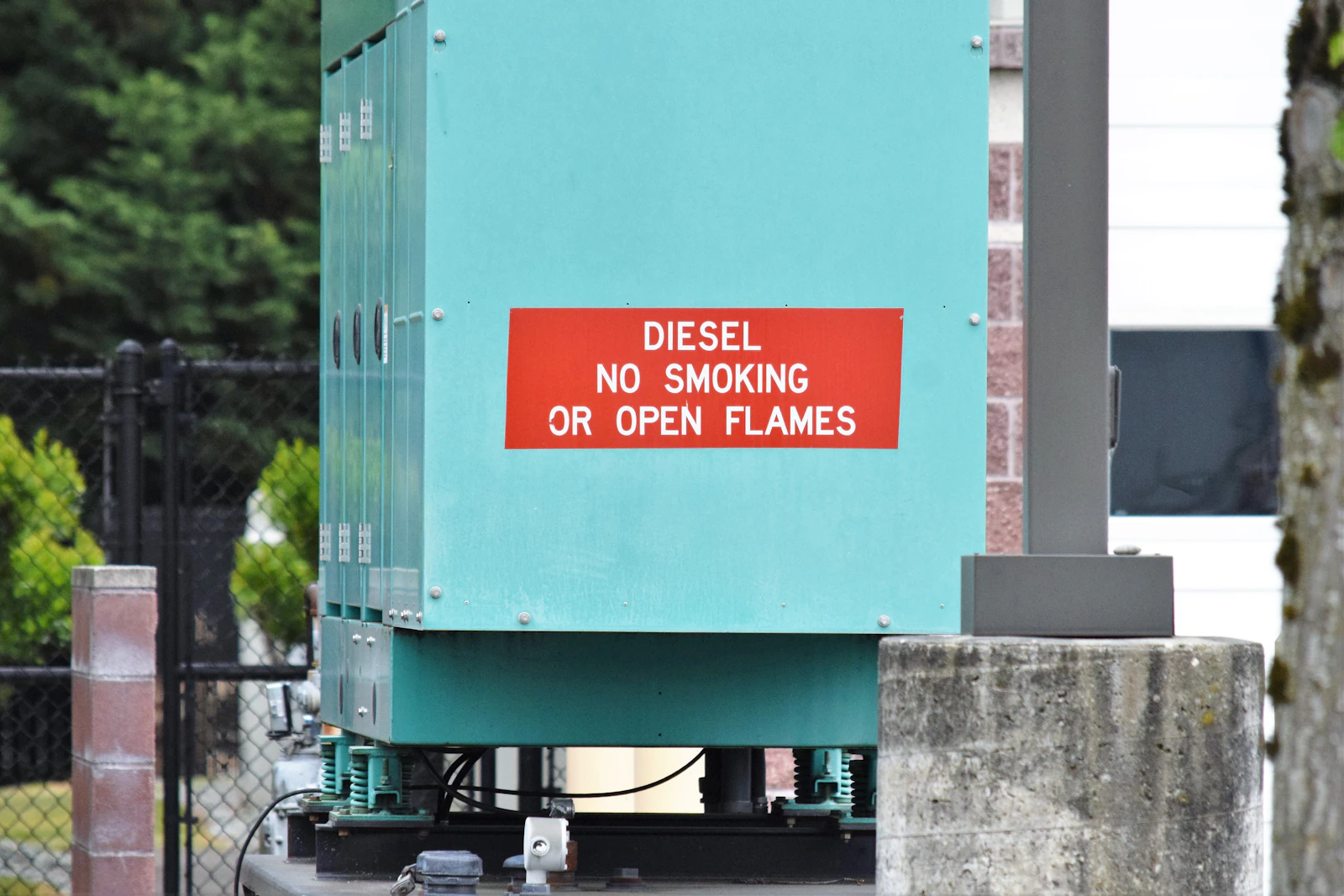
To control diesel generator equipment hire costs in Austin, structure the RFQ so the rental branch prices the same operating reality your electricians will execute. When quotes come back “cheap,” it is often because the request silently assumed single-shift use, short cable runs, and daylight delivery/pickup—none of which are typical on a high-risk panel cutover.
Include these scope clarifiers in every request for pricing:
Runtime definition: specify whether the generator is expected to run 24/7 (triple shift/prime) or only during the work window. If you expect 17–24 hours/day, ask for triple-shift pricing (2× is a common published multiplier).
Voltage and connectors: 120/208V vs 277/480V, camlock sets required, and whether an 800A class distribution panel is needed (public schedules show these can be $275/day+).
Fuel plan: customer-fueled vs supplier-fueled; if supplier-fueled, ask for service window pricing and weekend coverage.
Placement constraints: downtown alley access, loading zone time limits, and whether a spotter/escort is required for placement.
Off-rent rules: confirm required notice (commonly 24 hours) and the daily cutoff time for same-day pickup scheduling.
Diesel generator equipment hire (base rent): $225–$375/day (20–25 kW) or $450–$650/day (56–70 kW) or $420–$950/day (100–125 kW), single shift (confirm hour-meter allowance).
24/7 runtime adder: carry 1.5× (double shift) to 2.0× (triple shift) multiplier if the cutover runs nights/weekends.
Distribution (spider boxes): $69/day each; typical panel cutover allowance: 2–4 units.
Temporary distribution gear: 800A I-line panel allowance $275/day; transfer switch allowance $265/day when required by the switching plan.
Fuel tanks: 100-gal tank $50/day; 500-gal tank $100/day (select based on runtime and refueling access).
Feeder cable/camlock sets: allowance $85–$250 per week (length/ampacity dependent) plus cable protection $12–$35 per piece per day.
Delivery and pickup: $300–$700 total for standard weekday service; add $175–$450 for after-hours dispatch or re-delivery risk.
On-site service labor contingency: 2 hours at $163–$327/hr depending on time window (carry higher if your cutover is nights/weekends).
Damage waiver: 10%–15% of rent + accessories.
Environmental/energy surcharge: 5%–10% of rent + accessories (if applicable).
Cleaning/return condition allowance: $150 lump sum (dust, adhesive, mud).
Fuel budget: price diesel per gallon using a range aligned to current Gulf Coast/Texas conditions; update week-of using EIA references.
PO details: job name, site address, delivery contact, 24/7 contact, cost code, and off-rent notice requirements (include “pickup number” process).
Delivery requirements: delivery window (for example, “before 2:00 PM” or “after 6:00 PM”), access notes (gate codes, loading dock height, escort needed), and confirmed placement location (clearances, exhaust direction, and refueling access).
Electrical requirements: voltage/phase, connector type, grounding kit requirement, and distribution list (number of spider boxes, panels, cable lengths, cable ramps).
Runtime billing: single shift vs 24/7; confirm the hour-meter allowance and the overtime/shift multiplier policy.
Fuel plan: who fuels, what tank size is included, and refuel call-out timing (especially weekend/holiday expectations).
Documentation on receipt: photos of hour meter, fuel level, exterior condition, serial/model, accessory count; note existing dents/scrapes.
Return condition: broom-clean, free of adhesive tape residue, all cables coiled, fuel level per contract, and “ready for pickup” area not blocked by trades.
Schedule pickup before the weekend: if you finish Thursday night, push for Friday pickup; avoiding a Saturday/Sunday on-rent can save 2–3 billable days depending on contract language.
Reduce cable distance with better placement: a 50–150 ft reduction in feeder run can remove entire sets of rented cable ramps and reduce trip hazards in occupied buildings.
Specify what you need, not what’s “available today”: stepping from 70 kVA to 120 kW because of availability can materially change total hire cost; ask for alternate sizes and pricing before approving a substitution.
Lock the operating mode: if the generator will be lightly loaded overnight, see if the operations plan allows a reduced runtime (and therefore avoids triple-shift pricing) while still meeting tenant/critical power requirements.
For 2026 budgeting of diesel generator equipment hire costs in Austin, treat the generator as a “package” (kW + distribution + logistics + runtime policy). The published rate examples for towable units and accessories demonstrate how quickly support gear adds up (for example, spider boxes at $69/day and 800A distribution gear at $275/day on some schedules).
