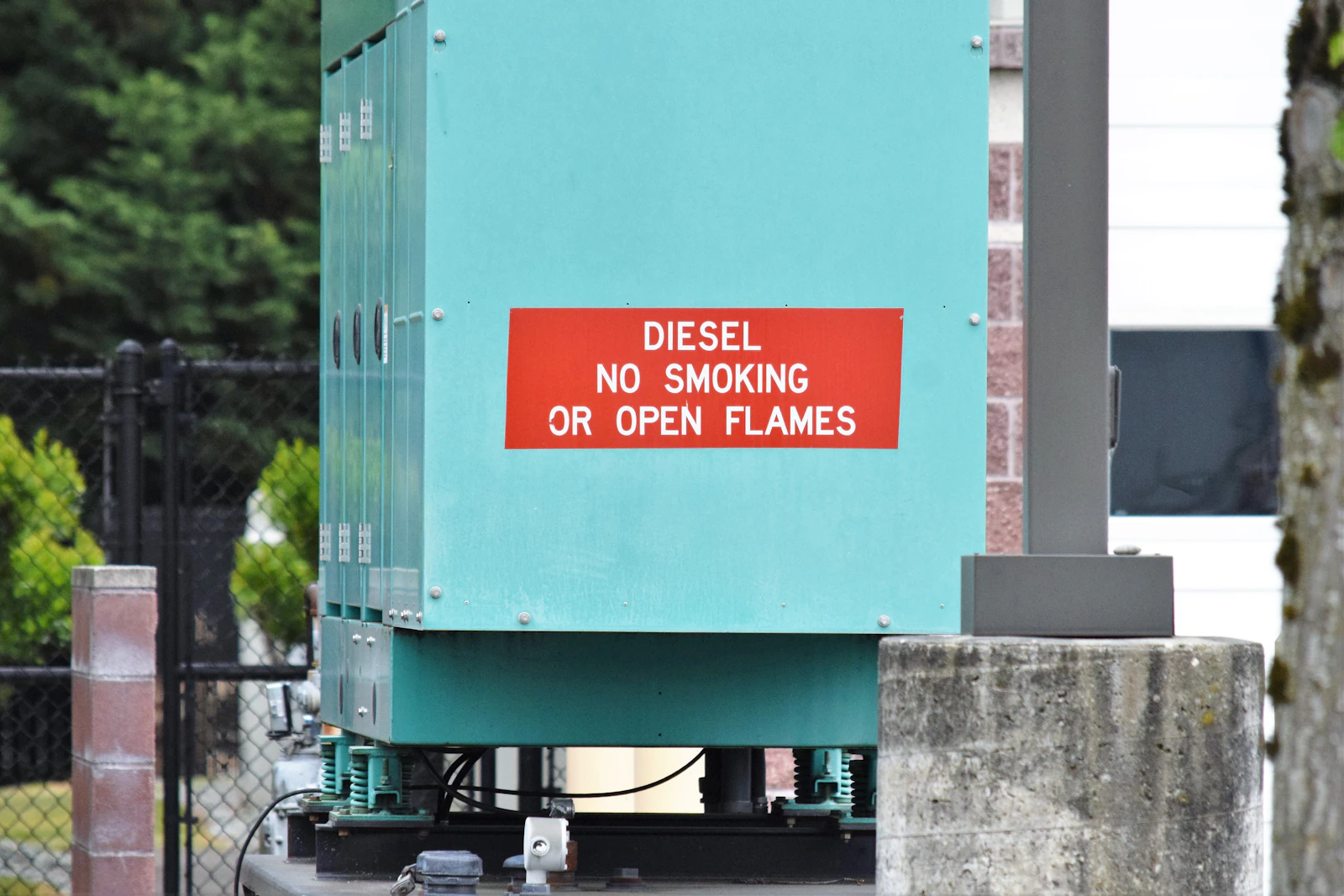
For Charlotte, North Carolina projects planning portable diesel generator equipment hire in 2026, budgetary rental ranges typically land around $150–$450/day for smaller towable units (roughly 20–50 kW), $350–$700/day for mid-size units (roughly 60–100 kW), and $475–$1,200/day for larger towable sets (roughly 150–300+ kW). Weekly pricing commonly pencils at about 2.5–3.5× the day rate and monthly at about 8–12×, but Charlotte delivery logistics, run-hours, distribution gear, and emergency terms can move the total materially. In the metro, national rental houses and power specialists (for example, large branches of United Rentals, Sunbelt Rentals, Herc Rentals, and dedicated power providers) can supply everything from a bare towable generator to a full temporary-power package with cable, distribution, grounding, and spill containment—so your “generator hire cost” is often a bundled scope decision, not just the base machine rate.
| Vendor |
Daily Rate |
Weekly Rate |
Review Score |
Website |
| United Rentals |
$342 |
$683 |
9 |
Visit |
| Sunbelt Rentals |
$350 |
$935 |
8 |
Visit |
| Herc Rentals |
$785 |
$2 090 |
9 |
Visit |
| Carolina Cat (The Cat Rental Store) |
$390 |
$780 |
10 |
Visit |
Diesel Generator Rental Rates Charlotte 2026
Assumptions used for the ranges below: (1) towable diesel generator set suitable for construction or commercial temporary power, (2) pricing shown is budgetary for 2026 planning in Charlotte and may not include distribution, fuel, taxes, damage waiver, environmental fees, or delivery, and (3) “week” is often priced for a standard usage allowance (commonly around 40 hours/week), with overtime billed by the hour or by a higher “24/7” rate when applicable. Some suppliers also enforce different minimums during declared emergencies (including one-week minimums for 24-hour usage) which can override your expected day-rate economics.
Charlotte 2026 planning ranges by size class (no accessories):
- 20–30 kW towable diesel generator hire: $150–$350/day, $450–$1,050/week, $1,400–$3,200/month (often used for small site power, small cranes/welders, lighting, or temporary HVAC start-up loads).
- 45–70 kW towable diesel generator hire: $275–$550/day, $650–$1,400/week, $1,950–$3,900/month. Published rate examples in the U.S. market (outside Charlotte) support the reality that mid-size towable units frequently price in this band (e.g., a ~70 kVA class unit advertised at $425/day and $1,195/week; other rate sheets show similar weekly/monthly structures).
- 100 kW towable diesel generator hire: $400–$700/day, $1,000–$1,800/week, $3,000–$5,200/month. Public contract pricing and published weekly/monthly examples commonly place 100 kW-class towables near this order of magnitude (market varies by region, term, and service expectations).
- 150–200 kW towable diesel generator hire: $475–$950/day, $1,400–$2,600/week, $3,800–$7,800/month. (This class is where cable/distro and on-call service terms usually matter as much as the base unit.)
- 300–350+ kW towable diesel generator hire: $850–$1,700/day, $1,700–$4,800/week, $5,100–$14,000/month depending on redundancy, paralleling gear, and whether you are buying “equipment-only” hire or a managed power solution.
What Drives Portable Diesel Generator Hire Cost In Charlotte?
Charlotte portable generator hire pricing is usually driven by a combination of capacity (kW/kVA), distribution scope, delivery constraints, and operating profile (hours/day and duty cycle). For rental coordinators, the key is separating (a) base equipment hire and (b) “temporary power system” costs that are sometimes quoted as optional add-ons and sometimes as required components based on your connection method and safety requirements.
- Size and voltage flexibility: A generator that can switch voltage configurations and support simultaneous single- and three-phase output often costs more but reduces field risk when the load list evolves.
- Sound attenuation requirements: In tighter Charlotte sites (Uptown near occupied buildings, hospitals, campuses, or event perimeters), quiet operation and placement constraints can push you toward better enclosures and longer feeder runs. Some 100 kW-class towables are marketed at 60 dBA or lower at full load, which can be relevant to site acceptance.
- Run-hours and “24/7” expectation: If your schedule is nights/weekends or continuous, many suppliers price differently than a standard day-shift allowance. Treat this as a commercial term to negotiate up front, not a surprise line item later.
- Tier/emissions and jobsite restrictions: Certain owner sites and public projects may require newer emissions tiers or specific containment/labeling. That tends to narrow fleet availability and raise rate pressure (especially during storm seasons).
- Charlotte logistics and delivery windows: I-77/I-85 congestion and limited laydown at dense jobsites often means tighter delivery appointments and possible after-hours offload. Plan for delivery cutoffs (commonly “same-day needs to be ordered by early afternoon”) and consider whether your site can accept a tractor-trailer or needs a smaller rollback delivery.
Hidden-Fee Breakdown For Diesel Generator Equipment Hire
When you’re collecting quotes for diesel generator equipment hire in Charlotte, confirm these common “total cost of hire” items explicitly. The numbers below are realistic planning allowances used by many coordinators; actual terms vary by vendor, term length, and credit status.
- Delivery / pickup: Charlotte metro deliveries are commonly quoted as $175–$450 each way within a typical local radius; outside radius may add mileage such as $3.00–$6.00 per loaded mile.
- Minimum rental charge: Even if you only need the unit for a short outage window, many suppliers enforce a 1-day minimum (and sometimes a 3-day minimum for specialized power packages).
- Emergency / storm terms: Some suppliers publish emergency language indicating that, during a declared emergency, certain generators may be billed at a one-week minimum for 24-hour usage per day. This can materially change your exposure if you are renting for contingency.
- Damage waiver / rental protection: Often quoted as 10%–15% of the rental charges (equipment-only) as an optional waiver; confirm what it excludes (cables, theft, misuse, refueling mistakes).
- Fuel & refuel fees: “Return full” is common. If refueled by the rental house, budgeting $6.00–$9.00/gal (delivered, with handling) is a safer planning range than pump price. Add mobilization if fueling is a separate trip.
- Cleaning fees: Plan $95–$350 if the unit returns with concrete dust, red clay mud (common after rain in the Carolinas), or adhesive residue from site labels/tape.
- Late return / unplanned extensions: If you miss the off-rent cutoff, you may eat another day. Confirm the branch’s off-rent time (commonly 8:00–10:00 a.m.) and whether weekends/holidays count as billable days.
- After-hours service call: For mission-critical temporary power, budget $150–$300 per callout plus labor (often $95–$165/hr) if troubleshooting is needed outside normal hours.
Accessories And Add-Ons That Commonly Change Charlotte Generator Hire Quotes
Most cost overruns on portable generator hire come from the “power distribution bill of materials,” not from the generator itself. When comparing hire quotes, normalize the scope: connectors, cable lengths, distro boards, grounding, and environmental compliance.
- Camlock / feeder cable sets: budget $45–$140/day depending on ampacity and length; long runs around occupied structures (common on urban Charlotte sites) can require multiple sections and cable ramps.
- Distribution panels / spider boxes: budget $35–$95/day per spider box and $85–$280/day for larger distro panels (or disconnects) depending on configuration.
- Automatic transfer switch (ATS) / manual transfer gear: budget $75–$250/day depending on amperage and whether the job requires listed equipment and specific lugs/camlocks.
- External belly tank / auxiliary fuel tank: budget $35–$110/day plus delivery; useful when your refuel window is constrained (night pours, weekend work, limited site access).
- Spill containment / environmental package: budget $25–$60/day for berm/containment components, or more for integrated containment packages; confirm if your site requires full fluid containment.
- Load bank (commissioning or periodic testing): budget $300–$900/day for a load bank plus cable; if you’re validating a standby plan or exercising the unit under load, this can be non-optional for owner acceptance.
- Light tower substitute vs generator + string lights: if the driver is lighting rather than power, compare the cost of a dedicated light tower to a generator plus lighting distribution (avoid over-sizing the genset “just for lights”).
Fuel Planning And Run-Time Assumptions (Why Your “Cheap” Hire Can Become Expensive)
Fuel is a significant share of total temporary power cost on continuous or high-load jobs. As one published example, a 100 kW towable diesel generator is listed with 169 gallons onboard fuel and a full-load consumption around 7.3 gallons per hour, implying roughly a one-day run window at full load before refueling (depending on operating conditions). For Charlotte summer heat, you should also plan for derating and cooling margin—high ambient temperatures and poor airflow around fenced placements can increase fuel burn and nuisance alarms.
Planning math (budgetary): if diesel lands at $3.75–$5.00/gal (commodity only), a 100 kW set running at high load can consume $27–$37/hr in fuel at 7.3 gph; if supplied as “delivered fuel” via vendor trip, your effective cost can be closer to $44–$66/hr at $6–$9/gal. Those numbers frequently exceed the base equipment hire on long, continuous runs—so align generator sizing to the real load list and duty cycle.
Example: Charlotte Overnight Concrete Pour Using 100 kW Portable Generator Hire
Scenario: You need temporary power for an overnight pour near Uptown with limited laydown, a 10:00 p.m.–10:00 a.m. work window (two consecutive nights), and strict noise expectations from adjacent occupants. Loads include concrete vibrator circuits, lighting, and small pumps with peaks; you choose a 100 kW towable diesel generator to keep inrush margin.
- Base generator hire: budget $500/day × 3 days billed (because delivery day + two nights, and off-rent cutoff missed) = $1,500.
- After-hours delivery appointment: budget $300 (night gate / time-specific drop).
- Delivery + pickup: budget $325 each way = $650.
- Damage waiver: budget 12% of rental = $180.
- Cables + distro: (2 feeder sets + 2 spider boxes) budget $110/day + $70/day = $180/day × 3 = $540.
- Fuel: assume average 35% load for 24 total hours; budget fuel at $450–$900 depending on whether you self-fuel or vendor-fuels (range reflects the “delivered” premium).
- Potential cleaning: allowance $150 if the unit returns with slurry/dust (common on pour work).
Takeaway: even with a “$500/day” headline rate, a realistic Charlotte portable generator hire total for this constrained overnight scope can land around $3,660–$4,460 once logistics, protection, distribution, and fuel are included—before tax and any environmental fees. The estimator win is controlling billing days (off-rent cutoff), controlling distribution scope, and deciding who fuels and when.
Budget Worksheet
- Diesel generator equipment hire (select size class): allowance $150–$1,200/day depending on kW and tier
- Week/month conversion check: allowance 2.5–3.5× day for week; 8–12× day for month
- Delivery + pickup: allowance $350–$900 total (local) + $3–$6/loaded mile (if applied)
- Time-specific / after-hours delivery: allowance $250–$500
- Fuel (self-fuel): allowance $3.75–$5.00/gal commodity + onsite handling
- Fuel (vendor-fuel): allowance $6–$9/gal delivered + potential trip charge
- Distribution package (cables/distro/spider boxes): allowance $120–$450/day depending on amperage and quantity
- ATS/transfer gear: allowance $75–$250/day
- Spill containment/environmental: allowance $25–$60/day (more if integrated package required)
- Damage waiver: allowance 10%–15% of rent
- Cleaning/return condition allowance: $95–$350
- After-hours service contingency: $150–$300 callout + $95–$165/hr
Rental Order Checklist
- PO includes: generator size (kW/kVA), voltage, phase, emissions tier, sound requirement, trailer/hitch type, and any required environmental containment
- Confirm billing rules: day/week/month conversion, hour-meter allowance (e.g., 40 hrs/week), overtime rate, off-rent cutoff (often 8–10 a.m.), weekend/holiday billing
- Delivery requirements: site contact, delivery window, laydown/rigging plan, gate codes, and whether a forklift/telehandler is required at drop
- Electrical requirements: camlock type, feeder length plan, grounding method, GFCI expectations, and distro count
- Fuel plan: who fuels, refuel intervals, spill kit requirement, and return-full expectation
- Return documentation: pre/post photos, run-hour reading, fuel level, and any damage notes before signing off-rent
If you want the most accurate diesel generator equipment hire cost for Charlotte, your fastest path is to issue an RFQ with (1) the load list, (2) expected run schedule, (3) site constraints (noise, access, fueling), and (4) whether you need equipment-only hire or a managed temporary-power package.
How Charlotte Equipment Hire Contracts Typically Price Day vs Week vs Month
For diesel generator rental in Charlotte, most branches still quote a day rate, week rate, and month rate—but the effective cost depends on how they convert time and hours. A common heuristic in the market is that the week is priced around ~3× the day rate and the month around ~9–12× the day rate, but real sheets vary by fleet class and competitive pressure. Publicly visible rate examples in the U.S. market show that weekly/monthly structures are often aggressive versus stacked day rates (e.g., weekly and monthly price points posted for 60 kW and larger classes), and government/contract rate sheets publish day/week/month for multiple towable diesel sizes that fall into the same general magnitude used in this article. Use those references as “sanity checks” when a Charlotte quote seems out of family.
Off-Rent, Weekend, And Emergency Billing Rules That Change Your Total Hire Cost
These operational rules are where experienced rental coordinators save real dollars on portable generator hire:
- Off-rent cutoff time: If you call off after the cutoff (commonly 8:00–10:00 a.m.), you may be billed another day—even if pickup occurs later the same afternoon. Align demob to cutoff, not to when your crew “finishes.”
- Weekend / holiday billing: Some suppliers bill Saturdays/Sundays as full days if the equipment remains on rent, even if idle. Others have negotiated weekend structures. Put it in writing on the PO.
- Weather and declared emergencies: If you’re renting for hurricane/thunderstorm contingency, confirm whether emergency language applies (including published notes about one-week minimum billing for 24-hour usage during a declared emergency).
- Usage-based overtime: If the week includes a meter allowance (often around 40 hours/week) and you run 80–168 hours, overtime can be billed as a per-hour adder. Budget $8–$25/hr as a planning range for overtime on mid-to-large towables (confirm per quote).
- Idle time and wet-stacking: If you are under-loading the unit for extended periods, you may be asked to manage load or run a load bank periodically. If the job is sensitive (data, healthcare), owner reps may require documented load testing before acceptance.
Charlotte-Specific Cost Drivers (Practical Field Notes)
- Dense jobsites and traffic: For Uptown/South End sites with constrained staging, plan time-specific delivery and possibly a smaller truck. Allow $250–$500 for scheduled/after-hours drop windows when day deliveries conflict with lane closures or crane picks.
- Heat and summer storm patterns: High ambient temperatures can reduce available output and increase cooling/fueling needs. If your schedule includes storm season, you may see tighter availability and stricter minimums; build float into both schedule and budget.
- Red clay mud and dust-control: After rain, Charlotte sites can turn muddy quickly; if the genset comes back caked, cleaning is more likely (allow $95–$350). For indoor use (rare for diesel, but sometimes staged in loading docks with ducting), dust control and exhaust routing can add labor and accessories.
Dialing In The Scope: “Equipment-Only Hire” vs “Temporary Power Package”
When you request portable generator hire, clarify whether you are buying:
- Equipment-only: towable generator delivered; your electrician provides all distribution and compliance. This can look cheaper on paper but can increase risk if the site lacks the correct camlocks, feeder sizes, grounding, or disconnect means.
- Package with distribution: generator + feeder + distro/spider boxes + grounding + ramps. Budget adders of $120–$450/day are common depending on ampacity, quantities, and cable length.
- Managed power: includes install/commissioning, 24/7 monitoring, fueling program, and guaranteed response time. This can carry higher fixed cost but often reduces outage risk and internal labor exposure. Budget $95–$165/hr for power-tech labor plus mobilization, unless bundled.
Quick Cost Controls (What To Ask For On Quotes)
- Ask for all-in day/week/month plus a separate line for “typical fees” (delivery, waiver %, environmental %, fuel).
- Ask whether the week/month includes a meter allowance (e.g., 40 hrs/week) and the overtime rate thereafter ($8–$25/hr planning).
- Confirm if the quote assumes self-fuel or vendor-fuel. If vendor-fuel, request the per-gallon price ($6–$9/gal planning) and the minimum drop size/fee.
- Confirm return conditions and “bill-back” triggers: cleaning ($95–$350), missing caps/locks, damaged camlocks, or cut cable ramps.
- Confirm what happens if your schedule slips: daily extension vs conversion to weekly/monthly, and whether the conversion is automatic or must be requested before cutoff.
When Buying Beats Hiring (For Charlotte Fleets)
Ownership can outperform hire when you have repeated, predictable needs with consistent distribution and trained staff—particularly for smaller towables that see frequent use. However, if your demand is seasonal, your projects are scattered across the Carolinas, or you need different kW classes on short notice, portable generator hire usually remains the lower-risk option. Use a simple threshold: if you’re paying a month rate more than 6–9 months per year for the same size class, it’s time to price ownership, maintenance, load testing, storage, and compliance program costs against your hire spend.
RFQ Template Snippet (Copy Into Your Email)
Scope: Provide diesel generator equipment hire for Charlotte, NC. Include day/week/month rates, delivery/pickup, damage waiver %, environmental/containment options, and any hour-meter allowances/overtime.
- Required capacity: ___ kW (prime), ___ V, single/three-phase, frequency 60 Hz
- Run schedule: ___ hrs/day, ___ days/week; start date ___; expected off-rent ___ (confirm cutoff time)
- Site constraints: delivery window ___; forklift on site Y/N; noise constraint Y/N; fueling access Y/N
- Accessories: feeder cable lengths ___; distro/spider boxes quantity ___; ATS required Y/N; cable ramps Y/N
- Compliance: spill containment required Y/N; grounding method ___; exhaust management (if applicable) ___
Used this way, your Charlotte portable generator hire quote becomes comparable across suppliers—because you have normalized the scope that typically hides cost.