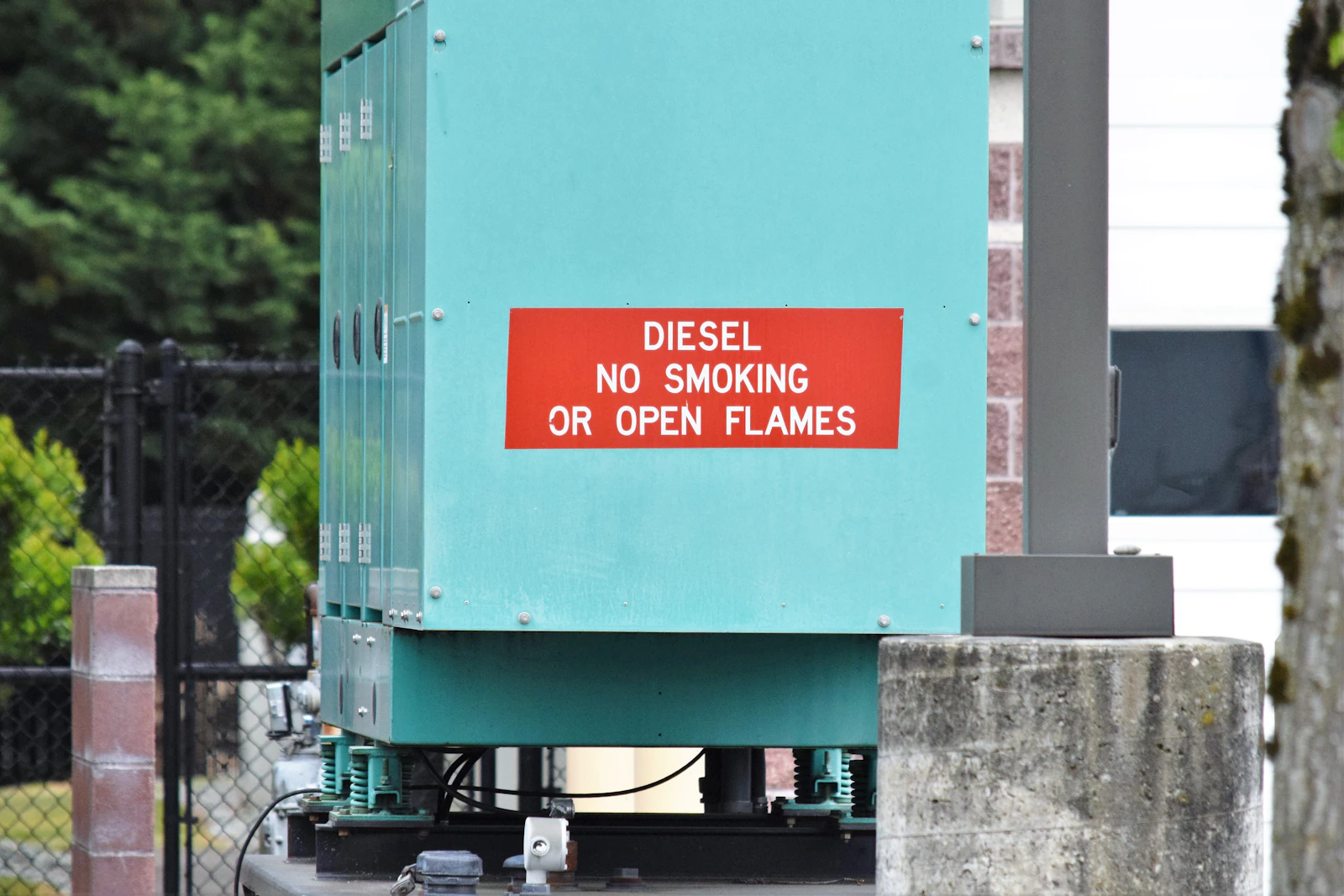
Diesel Generator Rental Rates Chicago 2026
For Chicago projects in 2026, budget diesel generator equipment hire (portable generator hire for construction temp power, planned shutdowns, and standby coverage) using power-class bands and a shift-hour assumption. Typical planning ranges (one shift / metered basis) are: 20–25 kW towable diesel at $180–$275/day, $520–$850/week, $1,500–$2,400/month; 60–70 kVA (≈48–56 kW) towable at $275–$425/day, $650–$1,250/week, $2,000–$3,900/month; 100–125 kVA (≈80–100 kW) at $350–$650/day, $900–$1,800/week, $2,400–$5,000/month; 160–200 kW at $500–$1,050/day, $1,500–$3,200/week, $3,800–$9,500/month; and 500 kW at $900–$1,600/day, $2,600–$5,500/week, $6,700–$16,000/month. These ranges reflect how larger rental houses and regional power providers often price around “single shift” run-hours, with adders for 24/7 runtime, distribution gear, delivery constraints in the Loop, and fuel management. For anchoring: a Chicagoland listing shows a 20 kW diesel generator at $199/day, $549/week, $1,599/month, while public rate sheets show mid/large towables (e.g., ~56 kW, ~76 kW, ~100 kW, ~160 kW) commonly priced in the several-hundred-per-day range and up.
| Vendor |
Daily Rate |
Weekly Rate |
Review Score |
Website |
| United Rentals |
$490 |
$1 090 |
9 |
Visit |
| Sunbelt Rentals |
$500 |
$1 440 |
9 |
Visit |
| Herc Rentals |
$470 |
$1 190 |
7 |
Visit |
| Altorfer Cat (The Cat Rental Store) — Chicago Metro |
$520 |
$1 450 |
8 |
Visit |
| Aggreko |
$550 |
$1 650 |
8 |
Visit |
How Chicago Portable Generator Hire Is Actually Billed
Most diesel generator rental Chicago quotes you receive will be structured around metered “run hours”, not simply possession. A common contract basis is one shift = up to 8 hours/day, 40 hours/week (and often 160–176 hours/month depending on the rental house). Anything above that typically triggers overtime run-hour charges or a shift multiplier (e.g., “shift & a half” or “double shift”)—which is where portable generator hire costs can jump fast on 24/7 dewatering, overnight concrete curing, or continuous occupied-building standby.
Planning assumption for 2026 estimating (Chicago market): if you expect continuous operation, carry either (a) a 1.5×–2.0× multiplier on base rental for true 24/7 runtime, or (b) an overtime allowance of $8–$25 per engine-hour beyond included hours (varies by size and contract). Confirm whether the branch bills by calendar day (common) vs 24-hour periods, and whether weekends are billed as “free” if the branch is closed (policy varies by location and account). (Estimator note: always align the rental start/stop with the vendor’s billing clock, not your field crew’s shift clock.)
What Drives Diesel Generator Equipment Hire Cost In Chicago?
Power output (kW/kVA) is only the first lever. In Chicago, the following spec choices materially affect diesel generator equipment hire cost and the probability of extra fees:
- Emissions tier (Tier 4 Final vs older fleets): carry +10% to +25% rental premium for Tier 4 Final packages when availability tightens (common on larger towables and for downtown-sensitive sites).
- Sound attenuation (“silent” package): for film, festivals, and overnight urban work, budget +$50–$180/day vs a standard enclosure, plus additional exhaust routing if placed near air intakes.
- Voltage flexibility and output gear: switchable-voltage, 3-phase capable sets and units with better load-step performance often carry +$25–$120/day premium.
- Trailer vs skid: skid-mounted sets may require a forklift, lull, or crane for placement; in tight Chicago alleys, the rigging plan can be the real cost driver.
- Fuel tank size / runtime expectation: larger belly tanks reduce refuel visits but may introduce containment requirements; in Chicago winter, cold-start reliability can be improved with block heaters and winterization options.
Operationally, avoid chronic low-load operation (oversizing “just in case”). Several rental guides warn that extended low-load diesel operation can cause wet-stacking and trigger maintenance cleaning charges that can exceed $500+ depending on the unit and return condition.
Chicago-Specific Cost Pressures (Loop Logistics, Winter, And Permits)
Chicago portable generator hire pricing is strongly influenced by access and scheduling:
- Loop/downtown delivery constraints: budget extra labor and tighter delivery windows for dock reservations, alley access, and “no-staging” streets. A realistic allowance is $150–$300 for scheduled/after-hours coordination if the site requires timed entry or security escorts.
- Winter operations: cold starts and gelling risk increase service calls. Carry a contingency of $75–$250 for winterization consumables/handling on multi-week rentals, plus additional fuel polishing risk if the set sits idle with untreated diesel.
- Noise/community restrictions: event and overnight work may require quieter sets and better placement; treat “silent diesel generator hire Chicago” as a different class of rental with higher base rates and higher delivery coordination.
Also confirm Chicago Fire Department / site EHS requirements for fuel storage, spill response, and indoor/near-building exhaust controls. These requirements don’t always show up in the base generator rental rate but can add meaningful line items (spill kit, drip pan, barriers, signage, CO monitoring, and fire extinguishers).
Accessories And Distribution Gear That Commonly Add 25%–80% To The PO
On many jobs, the generator is not the expensive part—temporary distribution is. For diesel generator rental Chicago scopes, budget these separate hire lines (2026 planning allowances):
- 400A–600A temporary distribution panel: $175–$450/week (depending on metering, breakers, and camlock layout).
- 200A distribution box / “distro”: $85–$250/week.
- Spider boxes (50A/100A class): $25–$70/week each (carry quantity based on workface planning).
- Camlock feeder set (typ. 50–100 ft): $90–$220/week per set.
- 4/0 feeder cable (when priced per foot): $0.60–$1.50/ft/week depending on gauge and insulation rating.
- Grounding kit (rod + clamp + bond cable): $15–$45/week.
- External sub-tank / fuel cube (double-wall): $125–$400/week (plus handling/containment expectations).
Some published estimating guidance pegs distribution equipment as a distinct line item and also calls out that delivery for towable units frequently sits in the low-hundreds of dollars range, varying by distance and site constraints.
Hidden-Fee Breakdown
To keep portable generator hire cost controls tight, align your PO with how rental houses actually charge. Common adders to carry (and to negotiate):
- Delivery / pickup: A published example on a rental price sheet shows $120 each way plus $3.25 per loaded mile for smaller equipment deliveries; large towable generators in Chicago commonly price higher due to truck class, permits, and labor.
- Damage waiver / rental protection plan: commonly 10%–15% of the base rental (verify what it excludes: theft, cables, misuse, contamination).
- Fuel policy (return level): plan to return “full-to-full” or be billed for diesel at a premium. Carry $5–$8/gal as a conservative internal backcharge allowance if your team returns a set under-fueled.
- Refuel service (optional): if you need the rental house to handle fuel, budget $250–$450 mobilization per visit plus fuel cost and after-hours premiums.
- Cleaning fees: $75–$250 for heavy mud/concrete dust, plus $150–$400 if filters require replacement due to poor dust control.
- Low-load/wet-stacking remediation: carry a contingency for a $500+ maintenance clean if the set runs underloaded for extended periods and comes back with residue issues.
- Late return: many branches bill in 1/4-day or 1/2-day increments; treat missed pickup cutoffs (common in dense Chicago logistics) as a real cost risk.
- Consumables and small accessories: missing camlocks, lugs, locks, chocks, or ground rods can be billed at replacement value; carry a $150 “missing accessories” allowance on any multi-box distribution package.
Example: Two-Week Downtown Chicago Construction Temp Power (Realistic Numbers)
Example: You need a 100 kW towable diesel generator for a Loop interior build-out where the utility cutover is delayed. The GC wants 24/7 standby availability, but actual run time is expected to average 12 hours/day. Access is via a booked loading dock with a 30-minute unload window, and the set must be placed on a protected surface with spill containment.
- Base generator hire (100 kW class): carry $1,100–$1,800 for two weeks on a one-shift basis, then add a 24/7/extended-run multiplier as applicable. (For reference, a published weekly-only rate example for a 100 kW class unit is $815/week with a $2,445/month listing, and it states rates are based on 8 hours/day, 40 hours/week, 160 hours/month.)
- Extended-run allowance (12 hours/day vs 8): add 4 overtime hours/day × 14 days × $12/hr = $672 (planning allowance; confirm actual overtime schedule in the quote).
- Distribution package: (1) 400A panel $300 (two-week allowance), (2) two 200A distros $240, (3) four spider boxes $240, (4) two 100 ft camlock sets $360. Total distribution allowance: $1,140.
- Delivery/pickup (downtown constraints): carry $650 total (includes restricted access coordination and liftgate/positioning labor).
- Damage waiver: assume 12% of base rental lines (generator + distro) → if base is $2,500, waiver ≈ $300.
- Fuel: if average burn is 4 gal/hr for 12 hr/day, then 48 gal/day × 14 = 672 gal. At $4.25/gal (budgetary), fuel allowance ≈ $2,856 (plus any onsite handling, tanks, or refuel mobilizations).
- Return-condition documentation: carry $0 cost but require photos of hour meter, fuel level, and accessory counts to prevent disputes.
Order-of-magnitude total for this example: $6,900–$9,800 for two weeks depending on base rate negotiated, overtime structure, and downtown delivery complexity. The key driver is not the “headline weekly rate” but the combination of run-hour basis, distribution gear, and fuel logistics.
Budget Worksheet
- Diesel generator equipment hire (size/class): $________ (carry 10%–25% Tier 4 / sound attenuation premium if required)
- Run-hour basis / overtime allowance: $________ (e.g., $8–$25 per hour above included)
- Delivery + pickup: $________ (include downtown/after-hours adders)
- Damage waiver (10%–15% of base): $________
- Distribution package (panels, spider boxes, camlocks, feeder cable): $________
- Grounding / bonding / GFCI requirements: $________
- Fuel (gal estimate × budget $/gal): $________
- Refuel service mobilizations (if vendor-managed fuel): $________ (e.g., $250–$450/visit)
- Secondary containment / spill kit: $________
- Cleaning / filter contingency: $________ (carry $150–$650 depending on dust/mud exposure)
- Standby technician / troubleshooting callout contingency: $________ (carry 2–4 hours labor)
Rental Order Checklist
- PO includes: generator size (kW/kVA), voltage options, Tier rating, sound class, trailer vs skid, run-hour basis, and overtime schedule.
- Delivery details: exact address, dock/alley access notes, certificate of insurance (if required), site contact + phone, and delivery cutoff times.
- Placement requirements: surface protection, clearance for exhaust, intake air, and refueling access; winterization needs (block heater power availability).
- Electrical scope: distribution one-line, camlock compatibility, breaker sizes, grounding/bonding method, and any GFCI requirements.
- Fuel plan: who fuels, target fuel level at return, and refuel window coordination (especially downtown).
- Off-rent process: who can authorize off-rent, how to timestamp off-rent notice, and required pickup photos.
- Return condition: hour meter photo, fuel level photo, accessory count, and damage walkaround documentation.
Ownership Vs Equipment Hire For Diesel Generators In Chicago
For many contractors and facilities teams, ownership only pencils when utilization is high and you can control storage, maintenance, and dispatch. As a 2026 planning rule: if you’re renting a 20–25 kW set at roughly $1,500–$2,400/month, sustained rentals of 12–18 months can approach the cost of purchasing a comparable unit (often $18,000–$35,000 depending on tier and enclosure), before maintenance, insurance, and transport. For 100 kW and above, purchase prices can easily run $70,000–$140,000+ (and far higher at 500 kW+), making hire the default for intermittent Chicago projects—especially when you need Tier 4 Final compliance, quick swap-outs, or emergency replacements without fleet burden.
How To Quote Diesel Generator Hire In Chicago Without Getting Burned By Runtime
The fastest way to underestimate “diesel generator rental Chicago” scopes is to ignore runtime and duty cycle. When you request quotes, explicitly state:
- Expected run hours/day (e.g., 6, 8, 12, or 24) and whether the set must be available 24/7 even if not continuously running.
- Load profile (steady vs large motor starts). If you have large inrush loads, you may need a bigger set or soft-start strategy—both affect equipment hire costs.
- Fuel responsibility and access windows for refueling.
- Distribution and cable scope (don’t let this get “TBD”).
Many rental programs define “single shift” around 8 hours/day and 40 hours/week, and also note that base rental rates often exclude fuel, freight, and surcharges. That means a job that quietly becomes 12-hour nights or weekend work can convert a good weekly number into a costly month.
2026 Chicago Planning Ranges By Common Diesel Generator Classes
Use these as estimating bands for portable generator hire (diesel), assuming metered “one shift” pricing, normal availability, and standard enclosure unless specified otherwise:
- 20 kW towable diesel: plan $180–$275/day, $520–$850/week, $1,500–$2,400/month. A Chicagoland published rate example lists $199/day, $549/week, $1,599/month.
- 56–76 kW towable diesel (≈70–95 kVA): plan $300–$525/day, $675–$1,250/week, $2,000–$3,200/month. Public contract pricing examples show $315/day, $675/week, $2,050/month for ~56 kW, and $389/day, $975/week, $2,825/month for ~76 kW.
- 100 kW class: plan $350–$650/day, $900–$1,800/week, $2,400–$5,000/month. A published example shows $815/week and $2,445/month, with an 8/40/160 hour basis.
- 160–200 kW class: plan $500–$1,050/day, $1,500–$3,200/week, $3,800–$9,500/month. Public contract pricing examples show ~160 kW at $485/day, $1,630/week, $3,815/month, and ~200 kW at $580/day, $1,690/week, $4,092/month.
- 500 kW towable diesel: plan $900–$1,600/day, $2,600–$5,500/week, $6,700–$16,000/month. A published single-shift rate sheet example lists $930/day, $2,584/week, $6,707/month. (g
Estimator’s note: treat these as planning ranges. Chicago storm season demand, major event weekends, and emergency response mobilizations can compress availability and push you toward the high end.
Delivery Windows, Off-Rent Rules, And Weekend Billing (Where Costs Usually Drift)
In Chicago, rental cost drift often shows up in logistics and timing rather than the base day rate:
- Delivery cutoff risk: if a unit can’t be received before a branch cutoff (often mid-afternoon), you can get hit with an extra billed day even if the generator wasn’t productive. Carry a $250–$650 contingency for “missed window” on downtown sites.
- Off-rent time stamp: define when billing stops—at your call/email time, at pickup time, or when the unit hits the yard. Put the rule in writing for long rentals.
- Weekend/holiday billing: some agreements effectively bill weekends as part of weekly cycles; others have policies that can reduce charges if the branch is closed. Don’t assume—ask.
Fuel, Recharge Expectations, And Environmental Adders
Unlike battery equipment, diesel generator rental pricing usually excludes fuel, and the renter is expected to manage:
- Return fuel level: plan internal compliance checks so your crews return at the required level; otherwise, you may see premium fuel billing (carry $5–$8/gal allowance as noted in estimating).
- Spill prevention: carry $60–$180 for a spill kit and $40–$120 for secondary containment materials when required by site EHS.
- Indoor dust control: for interior rehab/tenant work, dust exposure can create $150–$400 filter/cleaning exposure if the unit is operated in poor conditions or the distribution gear is returned contaminated.
When You Should Request A Different Commercial Structure
If the generator is for emergency standby (rare run hours, but high readiness expectation), ask for an explicit standby rental structure (sometimes priced differently than prime power). Conversely, if the generator will run continuously, request a 24/7 rate rather than letting overtime accumulate invisibly.
As a coordination allowance for Chicago, carry $125–$185/hr for a qualified field tech (vendor or third-party) if you need onsite commissioning, load checks, breaker coordination, or troubleshooting during first energization—especially when tying into complex temporary distribution.
Closeout Controls That Prevent Backcharges
- Document return condition: photos of hour meter, fuel level, and all accessories (camlocks, spider boxes, ground kit).
- Confirm meter hours vs contract hours: reconcile any overtime line items.
- Track refuel tickets: if vendor-managed fueling is used, reconcile mobilization charges (e.g., $250–$450/visit) and confirm whether after-hours premiums were authorized.
- Ask for a final statement within 48 hours of return so disputes can be handled while the paperwork is fresh.