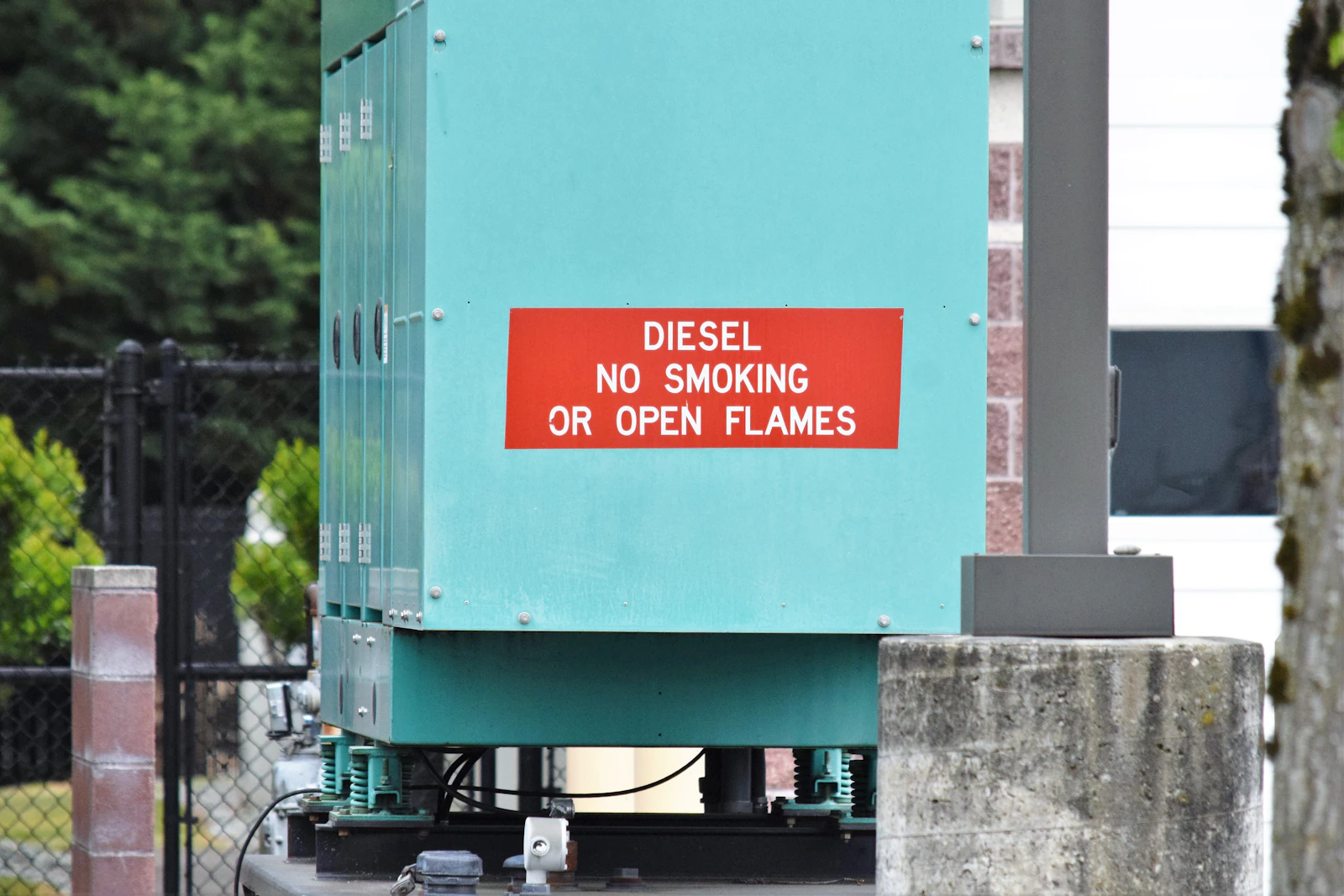
Diesel Generator Rental Rates Columbus 2026
For a Columbus, Ohio electrical panel upgrade, 2026 planning budgets for diesel generator equipment hire typically land in the following base rental bands (before delivery, fuel, distribution, and protection fees): $175–$275/day for ~20 kW towable units, $250–$475/day for ~36–56 kW, and $445–$700/day for ~100 kW. Weekly pricing usually compresses to roughly 2.5–4.0x the day rate, and “monthly” is commonly a 28-day billing period with hour caps (often aligned to 160 hours for a month and 40 hours for a week under single-shift terms). In Columbus, rental coordinators most often source from national rental houses (Sunbelt Rentals, United Rentals) and regional heavy-equipment providers that can supply the generator plus the right temporary power distribution package, because the distribution, delivery window, and off-rent rules tend to swing total cost more than the generator headline rate.
| Vendor |
Daily Rate |
Weekly Rate |
Review Score |
Website |
| United Rentals |
$395 |
$1 125 |
4 |
Visit |
| Sunbelt Rentals |
$365 |
$980 |
6 |
Visit |
| Herc Rentals |
$350 |
$860 |
8 |
Visit |
| Aggreko |
$500 |
$1 500 |
8 |
Visit |
Assumptions used for these 2026 ranges: single shift (8 hours/day, 40 hours/week), standard wear/tear, returned clean and fueled per contract, no storm/emergency minimums, and delivery within typical metro radiuses (often 15–35 miles from a branch yard). Always confirm whether your quote is “rental only” vs “power package” (generator + cables + distro + grounding), because many Columbus electrical panel upgrade scopes fail cost control when those line items are split across different POs.
Baseline 2026 Columbus Diesel Generator Hire Price Bands by Size
Use these as estimator-friendly ranges for diesel generator equipment hire costs in Columbus when planning temporary power for a panel change-out, service upgrade, or main switchboard cutover:
- 20 kW towable diesel generator: plan $175–$275/day, $480–$750/week, $1,050–$1,650/28-days. A published contract sheet shows a 20 kW class around $175/day, ~$483/week, and ~$1,069/month (contract pricing and region can differ, but it’s a useful reality check for budgeting).
- 36 kW towable diesel generator: plan $250–$350/day, $660–$950/week, $1,550–$2,250/28-days. A published sheet shows ~36 kW class at $250.90/day, $664.85/week, $1,564.69/month.
- 56 kW towable diesel generator: plan $345–$475/day, $925–$1,250/week, $2,100–$3,100/28-days. One published sheet shows ~56 kW at $345/day, $925/week, $2,115/month.
- 100 kW towable diesel generator: plan $445–$700/day, $995–$2,450/week, $2,800–$4,200/28-days. A published sheet shows $445/day, $995/week, $2,800/month for a 100 kW class, while an Ohio procurement price list shows 100 kW at $650/day and $2,450/week (illustrating how rate bands can move by account structure, market, and included terms).
If you’re budgeting a diesel generator hire with distribution for an electrical panel upgrade, expect the “right-sized” unit for many commercial panel swaps to land in the 36–100 kW bracket, depending on whether HVAC, elevators, IT closets, sump pumps, or life-safety loads must remain live. Over-sizing can backfire (fuel burn and wet-stacking risk), while under-sizing often forces a last-minute upgrade mid-job (higher delivery cost and potentially a full-week minimum charge).
What Changes Diesel Generator Hire Cost for an Electrical Panel Upgrade?
Electrical panel upgrades drive generator hire cost differently than general construction power because the job often has a hard outage window, a tight delivery/commissioning window, and higher-than-normal requirements for distribution, grounding, and documentation. The most common cost drivers in Columbus projects include:
- Shift basis vs 24/7 basis: many rate structures assume single shift. A Columbus heavy equipment rate sheet explicitly notes monthly billing based on a 28-day month and a 160-hour cap, with overages calculated from the monthly rate divided by 160.
- Emergency/storm rules: some generator categories can trigger a one-week minimum billed at 24-hours/day during declared emergencies (important if you schedule near severe weather season or utility instability).
- Distribution package scope: spider boxes, feeder cable, cam-lock tails, ramps/mats, and load centers are frequently separate line items. A published contract sheet lists a spider box around $75/day, $205/week, $725/month (pricing varies, but it shows the magnitude).
- Cable distance and protection: long runs from an exterior generator placement to the electrical room typically require ramps or door-threshold protection. One public price list shows 4/0 Camlok cable priced at roughly $0.50/ft (week basis) and $1.50/ft (month basis), plus cable ramps around $20/week and $60/month.
- Transfer and voltage management: if your scope requires an ATS or a transformer (common when interfacing to existing gear or temporary switchboards), those are meaningful adders. A public list shows a 1200A ATS around $1,200/week and $3,600/month, and transformers (e.g., 75 kVA) around $125/week and $375/month.
Hidden-Fee Breakdown (What Rental Coordinators Miss First)
To keep diesel generator equipment hire costs predictable on a panel upgrade, budget for the non-obvious charges that often appear on invoices:
- Delivery and pickup: plan $175–$325 each way inside metro Columbus under normal scheduling. For longer distances, add $5–$7 per loaded mile beyond the “included radius” (commonly 15–25 miles, branch dependent).
- After-hours / weekend logistics: plan $150–$300 for after-hours dispatch or a tight time-window delivery (e.g., “must arrive 6:00–7:00 AM”). Some yards apply a 15%–25% premium for Saturday delivery/pickup.
- Minimum rental / conversion to weekly: if you keep the unit 4 days, many vendors will bill a weekly rate rather than four dailies (which can be good or bad depending on the rate structure). Always ask for the “3-day / 4-day break.”
- Damage waiver (DW) / rental protection: common planning allowance is 10%–15% of the time-and-material rental (generator + accessories). This is not the same as liability insurance and usually excludes theft and gross misuse.
- Environmental / energy / compliance fees: plan either 3%–7% of rental or a flat $15–$45 admin-style fee, depending on vendor policy.
- Fuel and refueling: if you return short, plan $6.00–$8.50/gal billed fuel plus a $75–$150 service fee. For planning fuel burn, a 100 kW class generator at ~75% load is often cited at roughly 5.5–7.0 gal/hour (so a true 24/7 outage window can become a fuel-logistics job as much as a rental).
- Cleaning fees: plan $95 minimum cleaning, and $175–$350 if the trailer is returned with heavy mud, concrete dust buildup, or fuel/oil contamination. (For panel upgrades, mud is less common, but concrete dust from coring cable paths is a real driver.)
- Battery/starting issues: if a unit is left in the cold without proper shutdown or block-heater power, plan for a call-out or replacement battery charge in the $150–$250 range. Columbus winters make this a practical risk item.
Columbus-specific note: downtown and OSU-area logistics can add cost through restricted delivery lanes, campus event traffic, and tighter placement constraints. When access is constrained, you may need longer feeder cable runs (more $/ft exposure) or a smaller footprint “super-quiet” unit staged farther away, often at a 10%–25% rate premium.
Distribution Adders That Commonly Apply on Panel Upgrade Temporary Power
A diesel generator alone is rarely the whole hire package for an electrical panel upgrade. The following adders are common, especially where you must keep critical circuits live and segregated:
- Spider boxes / temporary distribution boxes: plan $60–$95/day each in 2026 budgeting; one published sheet shows $75/day and $205/week for a spider box class.
- Feeder cable and cam-lock sets: plan $0.50–$2.00/ft depending on gauge and rate basis; one public list shows 4/0 Camlok cable around $0.50/ft (week) and $1.50/ft (month).
- Cable ramps / floor protection: plan $20–$40/week per ramp section and add an allowance for doorway protection where cables cross thresholds; a public list shows $20/week and $60/month for cable ramps.
- Grounding kit and rods: plan $15–$40/week (or purchase and treat as consumable if your contractor standardizes).
- Step-down transformer (when needed): plan $125–$250/week depending on kVA; one public list shows 75 kVA at $125/week and $375/month.
- Automatic transfer switch (when required by scope): plan $1,200–$2,000/week for larger ATS classes; one public list shows 1200A ATS at $1,200/week.
- Accessory separation is normal: some guides explicitly note distribution equipment may be separate at $15–$45/day depending on the item.
Example: Columbus Electrical Panel Upgrade (72-Hour Window) With Real Numbers
Scenario: A retail tenant improvement in Columbus schedules a main panel upgrade with a fixed Friday 6:00 PM shutdown and a required “substantial completion / temp power stable” milestone by Monday 6:00 AM (a 60-hour outage window, but the rental will likely bill as a week depending on terms). The site needs ~45–60 kW of temporary power to keep refrigeration, IT, and minimal lighting online. Generator must be placed in the rear service alley with a 200 ft cable run to the electrical room door, and cables must cross one pedestrian path (ramps required).
Planning budget build (2026 ranges, not a quote):
- 56 kW diesel generator hire: assume it bills at weekly for a weekend window; budget $925–$1,250/week (published example shows $925/week for ~56 kW class).
- (2) spider boxes: budget $205–$410/week total (published example: $205/week each class).
- Feeder cable allowance: 200 ft at $0.50–$2.00/ft = $100–$400 (rate basis varies; public list shows $0.50/ft week and $1.50/ft month for 4/0 Camlok as one benchmark).
- Cable ramps: (4) sections at $20–$40/week each = $80–$160 (public list shows $20/week).
- Delivery + pickup: $350–$650 total (typical metro allowance; schedule-sensitive windows can push it higher).
- Damage waiver: assume 12% of rental items = typically $200–$350 on this package.
- Fuel/refuel allowance: set a placeholder of $250–$900 depending on load and whether the unit runs continuously overnight; add a $75–$150 refuel service fee if returned short.
Result: Even on a “simple” weekend panel upgrade, a realistic all-in equipment hire budget often lands around $2,100–$3,900 once delivery, distribution, ramps, waiver, and fuel are included. The cost-control lever is usually not negotiating $25/day off the generator—it’s confirming (1) billing basis for weekend windows, (2) cable footage and protection needs, and (3) off-rent and pickup timing so you don’t get billed an extra day while waiting for a truck.
Columbus Logistics That Commonly Affect Total Hire Cost
- Off-rent timing: some policies state rent starts when the machine leaves the yard and ends when it is returned/checked in, not when you stop using it. Columbus Equipment Company’s notes reflect this “yard-to-yard clock” concept and 28-day billing conventions.
- Delivery cutoffs: if you need “must be onsite by 7:00 AM,” plan for either next-day dispatch constraints or a premium time window fee ($150–$300 is a common allowance).
- Cold-weather operation: for winter panel upgrades, confirm block heater requirements and whether a 120V shore power receptacle is available overnight (otherwise budget the risk of a no-start service call $150–$250).
Budget Worksheet (Estimator-Friendly Line Items, No Surprises)
Use this bullet worksheet to build a consistent diesel generator equipment hire budget for Columbus electrical panel upgrades:
- Generator hire (select kW class): $175–$700/day or $480–$2,450/week depending on size and terms.
- Distribution boxes (each): allowance $60–$95/day or $205/week benchmark.
- Feeder cable: allowance $0.50–$2.00/ft (footage measured route-to-route, not “as the crow flies”).
- Cable ramps / mats: allowance $80–$200/week depending on crossings.
- Transformer (if needed): allowance $125–$250/week.
- ATS (if needed): allowance $1,200–$2,000/week.
- Delivery and pickup: allowance $350–$650 total; add mileage beyond radius at $5–$7/loaded mile.
- Time-window/after-hours premium: allowance $150–$300.
- Damage waiver: allowance 10%–15% of rental items.
- Fuel: allowance $250–$1,500 depending on load and run-hours; refuel fee allowance $75–$150 plus $6.00–$8.50/gal billed fuel if returned short.
- Cleaning/return condition: allowance $95 minimum; heavy cleaning $175–$350.
- Contingency (panel upgrade schedule risk): add 10% if your cutover date is exposed to utility delays or inspection timing.
How To Prevent “Extra Day” Charges on Columbus Generator Equipment Hire
On electrical panel upgrades, the most common cost overrun is an unplanned extra day (or extra week) caused by pickup timing and off-rent rules rather than true scope changes. Many rental policies are written around “rent starts when it leaves the yard” and “rent ends when returned,” and monthly billing is often a 28-day construct with hour caps and overage math. To keep diesel generator hire costs predictable in Columbus:
- Call off-rent early: set an internal trigger such as “off-rent requested by 12:00 PM next business day” to avoid a slip into another billing day.
- Schedule pickup with a defined window: if your GC can’t guarantee access, plan an extra day in the budget proactively instead of fighting a back-charge later.
- Document return condition: take photos of hour meter, fuel level, trailer condition, and cable inventory at pickup and at return; this reduces “missing tails” and cleaning disputes.
Rental Order Checklist (PO, Delivery, Operation, Return)
Use this checklist when issuing a PO for diesel generator equipment hire in Columbus tied to an electrical panel upgrade outage window:
- PO scope: specify generator kW, voltage, phase (single/three), receptacle needs, and whether the quote includes distribution (spider boxes, feeder cable, cam-lock tails, grounding kit, ramps).
- Billing basis: confirm whether the rental is single shift (8 hrs/day) vs 24/7; confirm weekend billing rules and whether a one-week minimum can apply in certain emergency conditions.
- Delivery requirements: delivery address, gate codes, contact names, lift-gate/forklift needs, placement constraints, and required delivery window (note: time windows may add $150–$300).
- Site conditions: confirm outdoor placement area, exhaust clearance, noise sensitivity (request sound-attenuated unit if needed; budget 10%–25% premium), and cable path protection (ramps/mats).
- Fuel plan: onsite fueling responsibility, return fuel level expectation, and whether your team will run a small “polish/run” schedule to prevent wet stacking when loads are light.
- Protection plan: confirm damage waiver % (budget 10%–15%) and provide COI if required by vendor policy.
- Commissioning: who lands the cable, who verifies voltage/phase rotation, and who signs the delivery ticket with accessory counts.
- Return/off-rent: required notice period, where to stage for pickup, and photo documentation requirements (meter, fuel, accessories).
Cost-Control Notes on Fuel, Run-Hours, and Load Management
Fuel cost can be either negligible or dominant depending on how your panel upgrade is executed. If the generator is truly supporting loads overnight and through a weekend, fuel planning becomes a logistics line item. For context, one generator rental guide cites a 100 kW generator at ~75% load burning about 5.5–7.0 gallons per hour. Even if your panel upgrade only needs intermittent power, generators idling at light load can incur maintenance risk; some sites will schedule load steps (or a temporary resistive load) to keep the engine healthy. When budgeting, include:
- Refuel service fee: $75–$150 if the vendor must refuel on return.
- Fuel markup allowance: $6.00–$8.50/gal billed fuel if returned short.
- Spill control expectation: many sites require a spill kit or containment; allowance $25–$75.
When A Smaller (Or Larger) Unit Is Actually Cheaper
For an electrical panel upgrade, you’re often tempted to “just rent a 100 kW to be safe.” That can increase total equipment hire cost in three ways: (1) higher base rate, (2) higher distribution requirements (larger feeders, more expensive tails, larger ATS/transformer), and (3) higher fuel exposure. Conversely, undersizing can force a last-minute swap that costs you another delivery and potentially restarts the billing clock. Use these budgeting heuristics:
- 20–36 kW class is often enough when you only need lighting, small tools, limited receptacles, and selective circuits.
- 56–100 kW class becomes common when refrigeration, multiple circuits, or a larger tenant space must remain powered.
- 150 kW+ is usually driven by larger facilities, multi-tenant cutovers, or when you’re carrying significant mechanical loads. A public procurement list shows 150 kW at about $850/day and $2,750/week, and 200 kW at about $1,150/day and $3,900/week, which is useful for bounding larger-panel or switchgear projects.
Market Reality Check: Publicly Posted Rates You Can Use for Sanity Checks
Because many major rental houses quote rates by account and availability, it helps to keep a few publicly visible numbers in your estimator toolkit:
- A rental listing for a 25 kVA towable generator shows $342/day, $949/week, $1,955/4-week (single-shift terms).
- A Columbus-area towable generator page shows a simple published rate of $250/day and $620/week (specs and terms vary, but it anchors the “floor” for a basic towable diesel unit in the market).
- A published contract sheet shows multiple generator classes (20 kW, 36 kW, 56 kW, 100 kW) and a spider box line item; while it’s not a Columbus retail quote and the contract is dated, it provides realistic order-of-magnitude pricing for planning.
Use these as cross-checks against quotes you receive in Columbus. If your quoted 56 kW package is materially higher, the driver is usually (a) delivery window constraints, (b) 24/7 billing, (c) bundled distribution, or (d) shortage-driven availability.
Ownership Vs Hire (Only From A Cost-Control Perspective)
For most contractors and facility teams, owning a towable diesel generator rarely pencils out unless utilization is high and you can carry maintenance, storage, insurance, and compliance overhead. Equipment hire remains cost-effective for panel upgrades because you can right-size unit capacity per project, avoid long idle storage, and shift risk for Tier emissions compliance and trailer running gear to the rental provider. The exception is repeat work with predictable kW and cable layouts (e.g., standardized retail rollouts), where a consistent “power package” can reduce accessory loss and delivery friction.
Closeout: How To Reconcile the Final Invoice
To protect your Columbus electrical panel upgrade margin, reconcile generator hire charges the same day you off-rent:
- Confirm the stop time: ensure off-rent is recorded when you notified the yard, not when a truck happened to arrive (unless your agreement states otherwise).
- Verify hour caps and overages: if your agreement uses a 28-day/160-hour model, confirm whether hours above cap were billed as an hourly fraction of the monthly rate.
- Accessory counts: match delivery ticket counts for spider boxes, tails, ramps, and cable footage; small losses (e.g., $35 tail ends, $8–$12/ft damaged cable allowances) compound quickly on power packages.
- Fuel and cleaning: compare your return photos against any refuel charges (often $6.00–$8.50/gal plus $75–$150 service) and cleaning charges ($95 minimum; $175–$350 heavy).