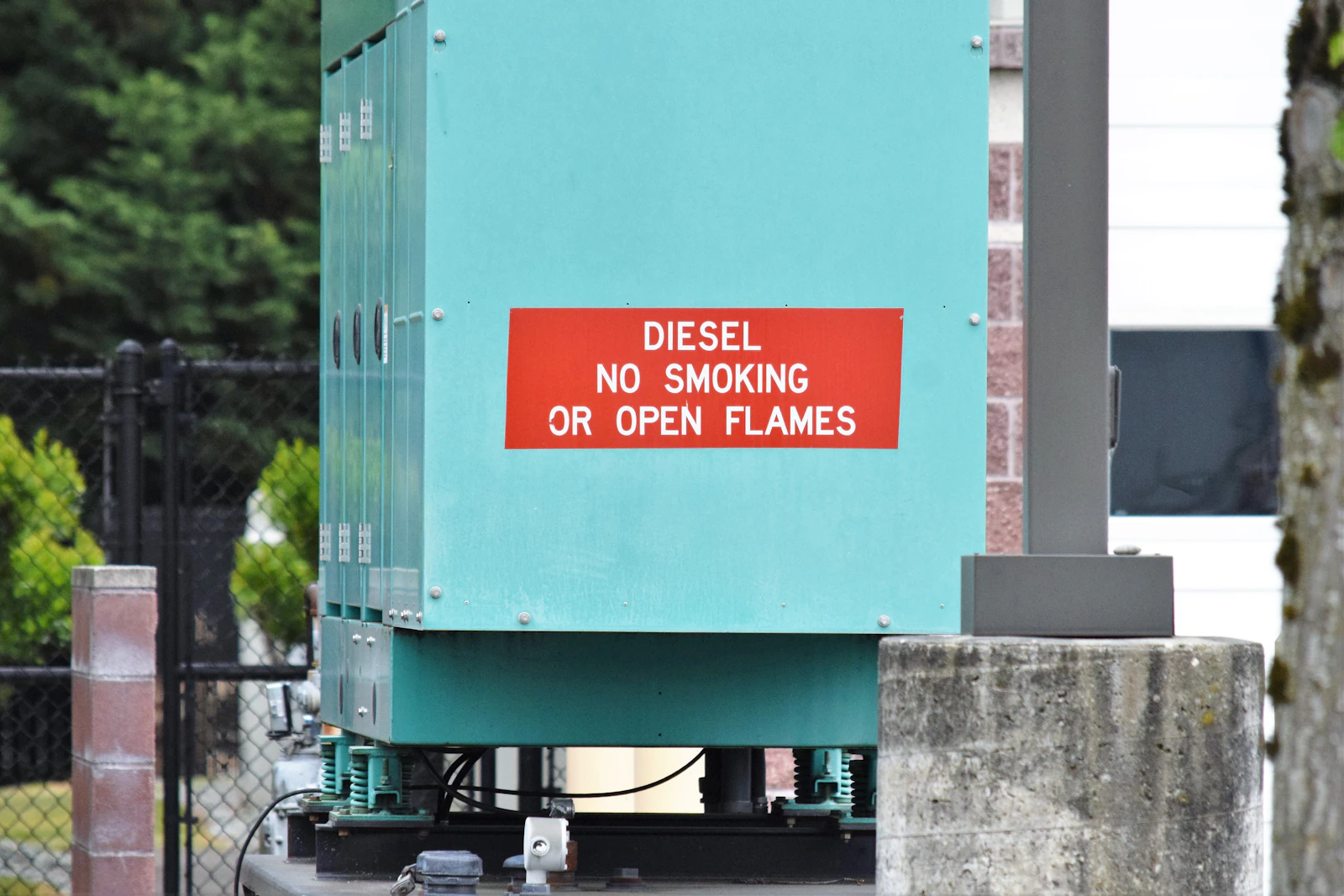
Diesel Generator Rental Rates Columbus 2026
For portable generator hire in Columbus (typically Columbus, OH), 2026 planning budgets for a towable, sound-attenuated diesel generator (single-shift billing) commonly land in these rental bands: $175–$250/day, $480–$650/week, and $1,070–$1,600 per 28-day month for ~20 kW units; $250–$375/day, $665–$950/week, $1,565–$2,300 per 28-day month for ~36–45 kW; $345–$475/day, $925–$1,250/week, $2,115–$3,000 per 28-day month for ~56–60 kW; $445–$650/day, $995–$1,400/week, $2,800–$3,600 per 28-day month for ~100 kW; $600–$900/day, $1,170–$1,700/week, $3,510–$4,800 per 28-day month for ~150 kW; and $750–$1,200/day, $1,495–$2,200/week, $4,485–$6,200 per 28-day month for ~200 kW. These are budgeting ranges (not a quote) and assume Tier-4 diesel towables with standard outlets; they typically exclude freight, fuel, distribution, environmental containment, overtime hours, and damage waiver. In Columbus, most rental coordinators source from national branches (e.g., Sunbelt, United Rentals, Herc) and regional power-rental providers depending on kW class, run-hours, and whether you need full temporary power distribution.
| Vendor |
Daily Rate |
Weekly Rate |
Review Score |
Website |
| United Rentals |
$355 |
$930 |
9 |
Visit |
| Sunbelt Rentals |
$265 |
$705 |
9 |
Visit |
| Herc Rentals |
$310 |
$785 |
9 |
Visit |
| Ohio CAT (The Cat Rental Store) |
$425 |
$865 |
9 |
Visit |
Reality-check against published rate sheets: a posted contract price sheet shows examples like a 20 kW diesel generator at $175/day, $483.12/week, $1,068.63/month; a 56 kW unit at $345/day, $925/week, $2,115/month; and a 100 kW unit at $445/day, $995/week, $2,800/month (contract pricing varies by account, term, and region). For larger kW classes, one published rental schedule shows 150 kW at $1,170/week and $3,510/month and 200 kW at $1,495/week and $4,485/month as an example reference point for 2026 planning.
How Columbus job conditions change portable generator hire cost
Columbus pricing for towable diesel generator rental tends to swing more on logistics and operating rules than on the base day/week/28-day month rate. Three local factors that often show up in the final invoice:
- Downtown access + delivery windows: tight alleys, dock scheduling, and street-use constraints can force smaller delivery windows and redelivery/standby charges if the unit can’t be set when the driver arrives. Build in a delivery appointment buffer and confirm cut-off times for same-day off-rent (many yards stop same-day dispatch or same-day returns in the mid-afternoon).
- Cold-weather readiness: Columbus winter starts and overnight runs increase risk of cold-start delays and fuel waxing. If your site can’t tolerate an early-morning no-start, budget for a cold-weather kit (block heater, battery tender) and confirm whether it’s included or line-itemed.
- Noise expectations near occupied facilities: if you’re powering an occupied TI or working near healthcare/education, you may need a sound-attenuated model and specific placement; one 100 kW class listing notes ~60 dBA (or lower) at full load for quiet operation on certain models, which can justify a higher rate class than “construction open-frame.”
What’s included vs. billed separately on diesel generator hire
Most generator rentals in contractor channels are priced around shift-hour allowances and a defined “rent clock.” A local Ohio rate sheet (equipment category) illustrates common rules you’ll also see applied to power rentals: monthly is a 28-day month with a 160-hour cap, with excess hours billed using a formula like (monthly rate ÷ 160) × overtime hours; daily/weekly caps often track 8 hours/day and 40 hours/week.
For a diesel generator, “included” often means the machine itself and basic maintenance intervals; “not included” usually means everything that makes it usable on a commercial site: cables, camlocks, spider boxes, breakers, ground rods, load bank, permits, freight, refueling, and cleaning. Your rental coordinator should treat distribution as its own scope, not an afterthought—especially for 480V 3Ø with multiple drops.
Hidden-Fee Breakdown
Use this as a practical checklist of common diesel generator equipment hire adders that materially move total cost in Columbus. The point is not that you’ll be charged all of these—only that you should decide (and document) which party owns each cost.
- Delivery / pickup: plan $175–$350 each way for towable diesel generators within a typical metro radius, with mileage adders when outside the standard zone. One published delivery schedule example shows $120 each way + $3.25 per loaded mile (example class/equipment schedule), which is directionally useful for budgeting even when your actual generator freight is higher.
- Minimum rental periods: smaller gens may be 1-day minimum, but emergency demand can change the billing rule. One major rental listing notes that during declared emergencies, this generator type can be billed at a one-week minimum with 24-hour usage per day.
- Overtime run-hours: if you plan true continuous duty, treat “single shift” as the wrong product. If you’re forced onto single-shift pricing, model overtime explicitly (e.g., if you run 240 hours in a 28-day month, that’s 80 overtime hours above the 160-hour allowance concept).
- Fuel burn + refuel service: confirm whether you supply fuel or the rental house does. A 100 kW towable example lists 7.3 gallons/hour at full load with an onboard tank of 169 gallons (useful for planning run-time and refuel cadence).
- Refueling charges: if you return the unit not-full, some yards post a per-gallon charge; one published local rate sheet notes a $8.00/gallon fuel charge as an example policy.
- Damage waiver / rental protection: commonly budget 10%–15% of rental charges (varies by account and insurance). Decide if you’re accepting the waiver, providing your own inland marine, or naming the rental company as loss payee.
- Cleaning / mud / concrete dust: budget $150–$500 if the unit comes back with clogged radiators, concrete slurry, or heavy mud. For indoor TI, add dust-control cost if you’re running cords through occupied corridors (plastic, mats, cable ramps).
- Environmental containment (spill control): some sites require a containment base or “environmental package.” Budget $25–$75/day or $150–$400/week when required (varies by model/class and availability).
- Battery tender / cold-weather kit: budget $10–$25/day when line-itemed, or treat it as a must-have requirement for critical overnight starts.
- Cables, camlocks, and distribution: published accessory pricing examples include a spider box at $75/day, $205/week, $725/month; 4/0 camlock cable (50') at $26.41/day, $53.10/week, $125/month; and cable ramps at $10/day, $35/week, $75/month.
- Weekend / holiday billing: clarify whether “weekend” is priced as 1 day, 2 days, or a special weekend rate. If your drop is Friday afternoon and you can’t off-rent until Monday, you can accidentally buy 3–4 billable days.
Sizing the diesel generator to avoid overpaying
Over-sizing is one of the most common—and most expensive—errors in temporary power generator rental rates. If you rent 100 kW but operate at low load for weeks, you pay higher base rent, higher freight, and often higher accessory cost (larger camlocks, bigger distro), while also risking wet stacking on some engines. Conversely, under-sizing creates nuisance trips, overheated cables, and production stoppage.
Operationally, get these numbers before you lock in the generator class:
- Voltage + phase: 120/240V single-phase vs 208Y/120 or 480Y/277 3Ø.
- Continuous kW demand and starting kVA (motors, compressors, HVAC, elevators).
- Duty cycle: 8-hour day shift vs true 24/7.
- Refueling plan: if a 100 kW unit can burn up to 7.3 GPH at full load, fuel logistics can become a bigger cost driver than rental rate.
Example: 100 kW towable diesel generator hire for a downtown Columbus TI
Scenario: You need a 100 kW towable diesel generator to power temporary lighting, a small hoist, and trades power in a downtown TI. The building allows deliveries only 7:00–10:00 AM, and the job will run 10 calendar days with partial weekend work. You also need safe distribution in public corridors.
Budget build (planning-level):
- Base rent: plan $995–$1,400 for a week + $200–$650 for additional days depending on your negotiated day rate and whether it bills as “extra days” or forces a second week. (A published contract example shows $995/week and $445/day for a 100 kW unit.)
- Freight: plan $250–$450 each way due to restricted delivery windows + potential standby time (if the driver misses the dock window, you may pay a redelivery fee).
- Distribution package: at minimum, plan a spider box and feeder. Published examples: $205/week for a spider box, plus multiple 50' feeder segments at $53.10/week each, plus ramps at $35/week to protect cords in occupied paths.
- Fuel + refuel exposure: if your return isn’t full, a posted policy example shows $8.00/gal. Even being short 50 gallons becomes a material line item.
- Damage waiver: carry 10%–15% of rental as a placeholder unless you’ve confirmed insurance compliance and waiver removal.
- Contingency: add 5%–10% for schedule slippage, because missing a same-day off-rent cutoff can easily add 1–2 extra billable days.
Budget Worksheet
- Diesel generator hire (size/class confirmed): $175–$1,200/day allowance depending on kW class and duty (single shift vs 24/7).
- Weekly/28-day conversion assumption: carry 1 week ≈ 2.5–3.5× day rate; 28-day month ≈ 2.5–3.5× weekly (confirm your contract multipliers and hour caps).
- Delivery + pickup: $350–$900 total (2-way) inside metro; add mileage or restricted-access premium.
- Loaded-mile adder (if applicable): $3.25–$7.00 per loaded mile outside the standard zone (confirm policy).
- Distribution (spider box): $75/day, $205/week, or $725/month (example accessory pricing).
- Feeder cable (4/0 camlock 50'): $26.41/day, $53.10/week, or $125/month per segment (example).
- Cable ramps / floor protection: $10/day, $35/week, or $75/month (example).
- Fuel return allowance: assume $8.00/gal exposure if returned short (example posted policy).
- Cleaning allowance: $150–$500 (dusty sites, mud, concrete fines).
- Damage waiver: 10%–15% of rental subtotal unless waived via insurance/contract.
- After-hours / weekend service contingency: $250–$600 (varies by response requirements).
Rental Order Checklist
- Confirm kW, voltage, phase, frequency, and connector type (cams vs lugs vs pin/sleeve) for the diesel generator.
- Confirm duty rating and billing structure: single shift vs 24/7, and hour caps (e.g., 8/40/160 concept).
- PO must state: delivery address, on-site contact, dock/laydown requirements, delivery window, and any gate code or security check-in.
- Insurance: provide COI and confirm limits required by the yard; one local posted requirement example calls out $1,000,000 general liability.
- Distribution list: spider box count, feeder lengths, ramps/mats, ground rod, and any step-down transformer needs.
- Fuel plan: who fuels, where the tank can be staged, spill kit requirement, and whether the unit must be returned full (avoid per-gallon charges).
- Off-rent procedure: how to request off-rent, cut-off time, and how to document return condition (photos, hour meter, fuel gauge).
Portable generator hire terms that most affect total cost
If you’re managing diesel generator equipment hire on a live schedule, the “rate” is rarely the problem—billing rules are. Lock these down in writing:
- When rent starts and stops: a posted local policy example notes rent starts when equipment leaves the yard and ends when it returns to the yard (not when you stop using it).
- Off-rent cutoffs: if you call off-rent after the cutoff, you often pay another day even if the generator sits idle overnight.
- Weekend trapping: if the yard doesn’t pick up Saturday/Sunday in Columbus (or your site won’t allow it), Friday deliveries can create unavoidable extra days.
- Overtime hours: if the billing structure ties to hour caps (8/40/160), confirm the overtime calculation method and the meter you’ll use (engine hours vs load hours).
- Declared emergencies: some listings disclose that a one-week minimum may apply with 24-hour usage per day during declared events, which can change your cost model overnight.
Distribution and accessories: where Columbus diesel generator hire budgets get blown
For many jobs, the temporary power distribution bundle can rival the generator rent—especially when you need long feeder runs, multiple drops, and public-safe cable management. Use published accessory examples to sanity-check your internal estimate:
- Spider box / portable distribution panel: $75/day, $205/week, $725/month (example).
- 4/0 feeder (camlock) 50' segments: $26.41/day, $53.10/week, $125/month per segment (example). Four segments for a 200' run can be $212.40/week before tax/fees.
- Cable ramps: $10/day, $35/week, $75/month (example). For occupied corridors, you may need multiple ramps plus corner protection.
Estimator note: if your Columbus job is inside an occupied building, treat cable management as a compliance/safety scope, not a convenience item. If you under-carry it, you’ll buy it in the field at non-negotiated rates or lose time reworking cord routes.
Compliance and documentation requirements that add cost
Even when the diesel generator hire itself is straightforward, your site compliance may require admin and accessories that add real dollars:
- Insurance paperwork: confirm COI requirements early; one posted local requirement example calls for $1,000,000 general liability on the COI.
- Environmental controls: spill containment, drip pans, and refueling controls can be mandatory on certain sites (healthcare, data centers, sensitive stormwater plans).
- Noise placement: confirm whether you must meet a sound constraint; one 100 kW example describes ~60 dBA or lower at full load for quiet models, which may push you into a different class than a standard towable.
- Fuel handling: if the rental house charges per gallon on return, document your start/finish fuel gauge with photos; one posted example fuel charge is $8.00/gal.
How to estimate diesel generator hire costs for 2026 schedules
For 2026 bids in Columbus, the most defensible approach is to estimate “base rent + logistics + distribution + operating exposure,” then add schedule risk rather than hoping the day rate is low enough to cover everything.
- Base rent: choose the kW class and pick a day/week/28-day month band consistent with your duty rating and market.
- Logistics: carry delivery/pickup plus a redelivery allowance if the site has narrow delivery windows. For budgeting, start at $175–$350 each way inside metro and adjust for crane/offload requirements.
- Distribution package: carry spider box + feeder + ramps as the default, not optional.
- Fuel exposure: model consumption using a published spec reference (e.g., 7.3 GPH at full load for a 100 kW class example) and multiply by your expected load factor and run-hours.
- Billing rules: if your job is 24/7, don’t estimate on single-shift. If forced into single-shift, explicitly carry overtime above the 160-hour/28-day concept and the stated overtime formula approach.
- Contingencies: add 5%–10% for schedule slip, plus a separate allowance for declared emergency minimums if your scope is storm response.
Closeout: avoid end-of-rental charges on Columbus portable generator hire
End-of-rental charges are one of the fastest ways to turn a “good rate” into an expensive generator rental. Close out the rental like a closeout submittal:
- Off-rent in writing with date/time, and confirm the pickup appointment.
- Document condition with photos: all sides, control panel, hour meter, and any dents/scrapes.
- Fuel level documentation: photo the gauge at pickup and at return (avoid per-gallon charges; one posted example is $8.00/gal).
- Remove and inventory accessories (spider boxes, feeder cables, ramps) so you’re not billed for missing pieces; published examples show these items can be significant weekly/monthly adders.
- Confirm stop-bill time: if the policy is “rent ends when returned to the yard,” ensure the generator is actually checked in and receipted, not just sitting on a truck.
If you want, share your required kW, voltage/phase, duty cycle (hours/day), and delivery ZIP in Columbus, and I can turn the above into a tighter equipment hire cost budget range with the right distribution adders (still budgetary, not vendor-specific).