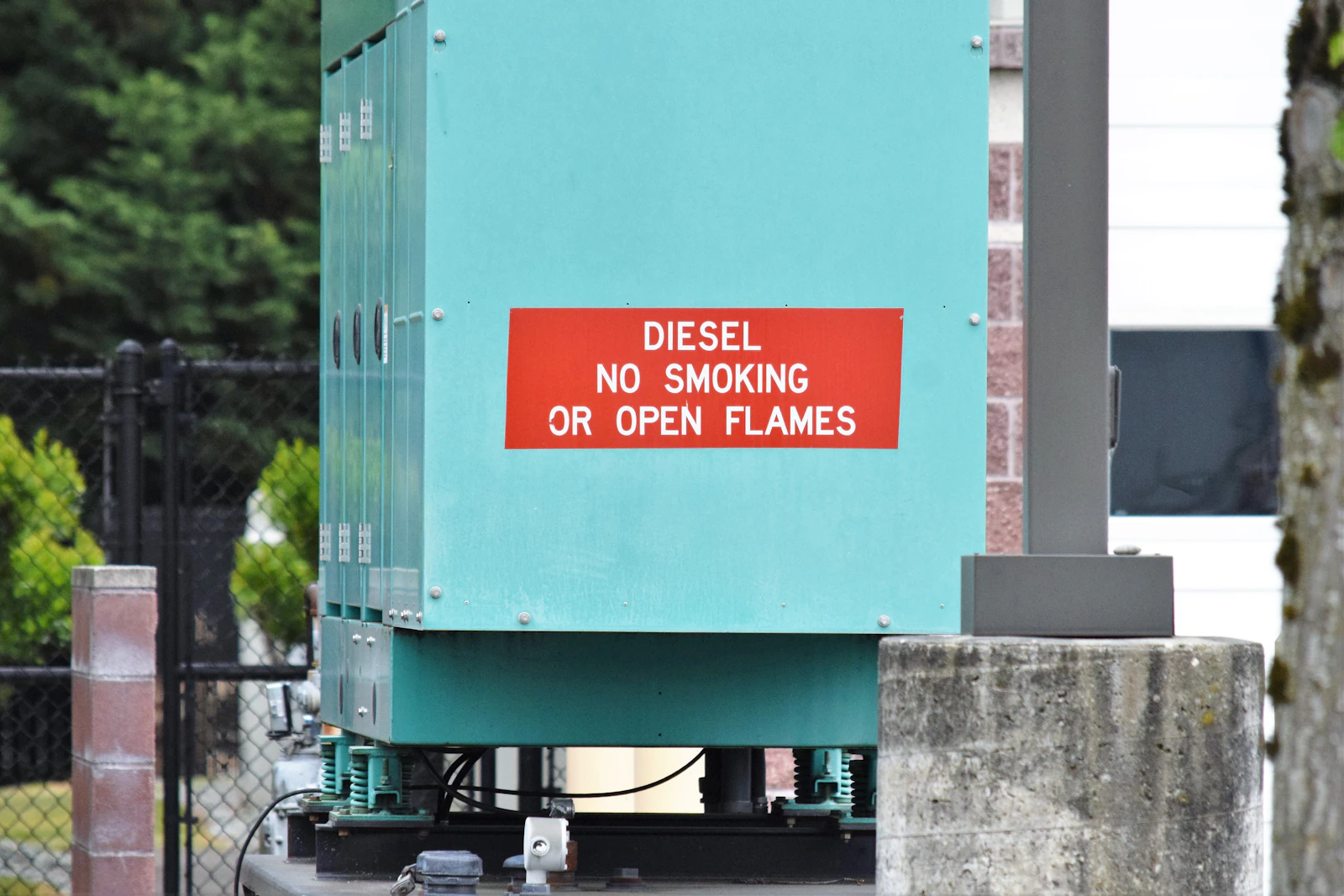
Diesel Generator Rental Rates Denver 2026
For an electrical panel upgrade in Denver where you need temporary power to hold critical circuits during a cutover, 2026 planning ranges for towable diesel generator equipment hire typically land in the following bands (assuming one-shift use and a standard 4-week “month”): $175–$450/day, $480–$1,100/week, and $1,050–$2,900 per 4-week month for common 20–60 kW class sets; and $445–$850/day, $995–$1,800/week, and $2,800–$3,900 per 4-week month for 100–150 kW class sets once you move into heavier distribution and higher fuel burn. These are budget ranges—your all-in invoice in the Denver metro almost always moves materially due to delivery/pick-up, temporary power distribution (camlocks, spider boxes, cables), metered-hours overtime, refueling service charges, and rental protection/damage waiver. Denver buyers commonly source sets through national rental houses (United Rentals, Sunbelt, Herc) plus local rental yards and specialty power providers; however, published “rate sheet” numbers are best treated as baselines for 2026 estimating rather than guaranteed quotes.
| Vendor |
Daily Rate |
Weekly Rate |
Review Score |
Website |
| United Rentals |
$300 |
$750 |
8 |
Visit |
| Sunbelt Rentals |
$345 |
$925 |
9 |
Visit |
| Herc Rentals |
$330 |
$812 |
8 |
Visit |
| Wagner Rents (Cat Rental Store / Wagner Equipment Co.) |
$360 |
$950 |
9 |
Visit |
Quick 2026 Planning Ranges By Generator Size (Towable Diesel)
Assumptions used below: one-shift usage (8 meter hours/day, 40/week, 160 per 4-week month) and rates shown are equipment-only unless noted. If your panel upgrade requires continuous overnight operation, size and billing will change.
- 20 kW towable diesel generator hire (panel cutovers, small temp services): plan $175–$300/day, $480–$900/week, $1,050–$2,600/4-week. A published example rate sheet shows a 20 kW diesel generator at $175/day, $483.12/week, and $1,068.63/month.
- 36 kW towable diesel generator hire (medium cutover with heaters/lighting/limited HVAC): plan $250–$375/day, $660–$1,050/week, $1,550–$3,000/4-week. A published example rate sheet shows a 36 kW diesel generator at $250.90/day, $664.85/week, and $1,564.69/month.
- 56 kW towable diesel generator hire (larger commercial panel upgrade / multiple panels): plan $345–$450/day, $925–$1,250/week, $2,115–$3,300/4-week. A published example rate sheet shows a 56 kW diesel generator at $345/day, $925/week, and $2,115/month.
- 100 kW towable diesel generator hire (bigger services, higher inrush loads): plan $445–$750/day, $995–$1,600/week, $2,800–$4,500/4-week. A published example rate sheet shows a 100 kW diesel generator at $445/day, $995/week, and $2,800/month.
- 125 kVA (≈100 kW) class and up, when you need more headroom: plan $650–$950/day, $1,600–$2,300/week, $3,550–$5,500/4-week depending on Tier 4 Final package and distribution. A published example listing shows a 125 kVA generator at $3,550 per four-week.
Estimator note for Denver: many equipment contracts define “monthly” as 28 days / 160 meter hours and apply overtime multipliers above that. Always reconcile whether your quote is calendar time, meter hours, or both.
Sizing For An Electrical Panel Upgrade In Denver
The most expensive generator hire mistakes on panel upgrades are almost never “rate” issues—they are mis-sizing and mis-spec’ing the distribution. Before you call for quotes, confirm: (1) service voltage you need to land (120/208V 3Ø, 277/480V 3Ø, or 120/240V 1Ø), (2) whether you are picking up on camlocks, a temporary disconnect, or a manual transfer switch, (3) largest motor/inrush (e.g., elevator, RTU, booster pump), and (4) whether your cutover window forces you into weekends or after-hours delivery.
Denver-specific sizing constraint (altitude derate): Denver’s elevation means you should not size a diesel generator at nameplate the same way you would at sea level. A common planning guideline is 2–3% power derating per 1,000 feet above sea level; at roughly 5,280 feet, it is prudent to carry approximately 10–16% capacity buffer (and more if you also have high ambient temps or high harmonic loads).
Practical rule for panel upgrades: if your calculated continuous demand is 48 kW with occasional inrush events, you may still budget a 56–70 kW class towable in Denver after you apply derate, inrush margin, and “unknown unknowns” (temporary lighting, battery chargers, sump pumps). That larger class typically increases the base hire, but can reduce change orders and emergency swaps that blow the schedule.
What Drives Diesel Generator Equipment Hire Cost In Denver?
- kW/kVA class: the jump from 20 kW to 56 kW is usually less painful than the jump from 56 kW to 100 kW once distribution and cable sizes escalate.
- Voltage and receptacles: a 120/208V-only machine can be cheaper, but if you need 277/480V for a commercial panel upgrade, you may be pushed into a higher class or a different distro package.
- Tier rating / sound attenuation: Tier 4 Final and “quiet” enclosures can price higher; downtown Denver and mixed-use sites may require stricter noise control.
- Run profile: one-shift standby power for a cutover is different from 24/7 operation for multi-day outages. Many contracts price on “one-shift” and then apply shift multipliers for extended operation.
- Distribution scope: spider boxes, camlock tails, long feeder runs, cable ramps, ground/bond kits, and panel connection hardware can equal or exceed the generator base rate on short rentals.
- Logistics: delivery radius from the branch yard, access restrictions in Denver core, after-hours delivery windows, and wait time for offload/spotting.
Hidden-Fee Breakdown (What Commonly Hits The Invoice)
For Denver generator equipment hire on a panel upgrade, treat the “day/week/month” rate as only one line item. Build an allowance for the following cost buckets (these are typical 2026 planning allowances—confirm per contract and branch policy):
- Delivery and pick-up charges: commonly billed as flat mobilization + mileage. One published rental sheet example uses $120 each way + $3.25 per loaded mile for pick-up/delivery pricing structure.
- After-hours / scheduled delivery window premium: plan $150–$350 for evenings, weekends, or tight time windows (especially if you require a 30–60 minute arrival slot).
- Minimum rental period: for some emergency/event conditions, contracts can impose minimums (e.g., one-week minimums under declared emergency policies).
- Environmental/service charges: for some rental houses, an environmental service charge may apply; one major rental provider states an environmental service charge of 2.00% (capped at $99).
- Rental protection / damage waiver: plan 10%–18% of the rental rate as an allowance unless your contract account opts out and you provide COIs that meet requirements.
- Deposits and preauthorization holds: one major rental provider states the customer’s credit card may be charged a deposit for the estimated rental (up to 28 days) 24 hours in advance.
- Overtime / extra meter hours: many agreements define normal use as 8 hours/day, 40 hours/week, 160 hours/4-week with higher charges for double/triple shift.
- Refueling service charge: if the generator is not returned full, a refueling service charge may apply (often at the branch’s posted rate rather than pump price).
- Cleaning fees: plan $75–$250 if the set comes back with mud-packed trailer, excessive dust intrusion, or spilled fuel/DEF requiring remediation.
- Consumables and wear items: plan $25–$90 for filters/fluids if you cross a maintenance interval mid-rental (more relevant on longer or high-hour rentals).
- Credit card processing surcharge (where permitted): some providers may impose up to a 2.0% surcharge for credit card payments on charge accounts (policy and legality are jurisdiction-dependent—confirm).
Delivery, Set, And Removal Logistics (Denver Metro)
Denver generator hire costs swing hardest on logistics when the panel upgrade is in a constrained site (downtown core, tight alleys, or secured facilities). Build these operational constraints into your hire estimate:
- Delivery cutoffs: many branches load out early; if your electrician can’t receive equipment until after 3:00–5:00 PM, expect either next-day delivery or a premium window.
- Downtown access and staging: for jobs near LoDo/Union Station or dense corridors, plan for 30–90 minutes of driver waiting time if your site is not ready to offload/spot; common waiting-time allowances are $95–$150/hour.
- Placement requirements: if you need the generator placed inside a fenced area or behind bollards, you may need a smaller trailer set, a yard mule move, or a site forklift—add $175–$450/day if you must hire a lift just to spot the generator.
- Weekend billing: some major rental terms explicitly state rental charges accrue during Saturdays, Sundays, and holidays, which matters if your panel upgrade spans a weekend.
Accessories And Temporary Power Distribution Adders
For an electrical panel upgrade, your diesel generator rental in Denver is rarely “just the generator.” Common accessories that move total hire cost (allowances shown are typical 2026 planning numbers):
- Spider box / 50A distro (GFCI-protected): $35–$65/day each; $120–$220/week.
- Camlock feeder set (5-wire, 50–100 ft, sized to load): $45–$110/day per set depending on length and ampacity.
- Cable ramps / cord protection: $12–$25/day per ramp section; add $150–$400 if you need a full crossing plus end caps and signage.
- Ground rod & bonding kit: $15–$35/day.
- Load bank rental (if required for commissioning or test documentation): $250–$600/day plus cables and technician time.
- Temporary ATS/manual transfer switch package: $75–$180/day (equipment-only) plus electrician labor and permitting.
- External fuel tank / fuel cube (when runtime is critical): $30–$85/day plus fuel delivery.
Example: 3-Day Electrical Panel Upgrade Cutover In RiNo (Denver)
Scenario constraints: 120/208V 3Ø building, panel upgrade requires a Friday night cut, Saturday work, and Monday morning return-to-normal. Site has limited curb staging, so delivery must be in a 60-minute window. Temporary power must support critical lighting, IT room, elevator controls (no car movement), and small HVAC.
Equipment hire approach: budget a 56 kW towable diesel generator (to cover Denver altitude derate and inrush margin) plus distribution. Using published rate-sheet examples as a baseline, a 56 kW class unit can be around $345/day or $925/week (equipment only).
- Base generator hire: assume 3 billable days at $345/day = $1,035 (or, depending on branch policy, you may be pushed to a weekly rate if weekend billing rules apply).
- Delivery + pick-up: allowance $120 each way + 20 loaded miles at $3.25/mile = $370 estimated (structure example).
- Delivery window premium: $250 allowance for timed downtown delivery.
- Distribution adders: 2 spider boxes ($55/day each) for 3 days = $330; 2 camlock feeder sets ($85/day each) for 3 days = $510; ramps allowance $200.
- Fees/waivers: environmental/service charge allowance 2% (cap may apply) and damage waiver allowance 15% of rental lines.
- Fuel and refuel risk: if returned not full, include a contingency of $150–$400 depending on burn and branch refuel rate policy.
Why this matters: in this short-duration panel upgrade, the generator day rate is only part of the cost; distro + delivery + policies can add 40%–120% to the base hire on a 3-day cutover.
Budget Worksheet (Diesel Generator Equipment Hire Allowances)
- Generator hire (size class): 20 kW / 36 kW / 56 kW / 100 kW (select) for ___ days at $___/day or $___/week.
- Delivery and pick-up: $___ each way + $___/mile; include timed-delivery premium $___.
- Temporary power distribution hire: spider boxes qty ___ @ $___/day; camlock feeder sets qty ___ @ $___/day; ramps qty ___ @ $___/day.
- Grounding/bonding kit hire: qty ___ @ $___/day.
- External fuel tank hire (if needed): qty ___ @ $___/day.
- Fuel allowance: ___ gallons/day @ $___/gal (plus delivery minimum $___).
- Damage waiver / rental protection: ___% of rental lines (allow 10%–18%).
- Environmental/service fees: allow 2% (cap may apply per provider) + local taxes.
- Cleaning contingency: $150 (light) to $250 (heavy dust/mud).
- Overtime meter hours contingency: $___ (if you may exceed 8/40/160 hour basis).
Rental Order Checklist (Panel Upgrade Temporary Power)
- PO and billing: job number, cost code, tax-exempt form (if applicable), authorized signer list.
- Dates/times: on-rent time, required delivery window, and required off-rent time; confirm whether weekend/holiday days bill.
- Site logistics: delivery address pin, gate codes, security contact, truck restrictions, staging plan, and whether lift assistance is required for spotting.
- Electrical scope: voltage/phase, camlock size, neutral/ground requirements, connection point photos, and one-line if available.
- Accessories: spider boxes, feeder lengths, ramps, ground rod, rain skirts/canopy, temporary lighting, fuel tank/cube.
- Fuel plan: who refuels, refuel intervals, return-full requirement, spill kit responsibility, and documentation of starting/ending fuel levels.
- Return condition documentation: photos at delivery and at pickup, hour meter reading, damage walk-around signoff, and cable count verification.
- Off-rent procedure: who is authorized to call off-rent and obtain an off-rent confirmation number (avoid extra billed days).
Off-Rent Rules, Weekend Billing, And Meter-Hour Overtime
On electrical panel upgrades, the schedule is usually the cost driver: you may “only need” a generator for a short cutover, but if the job straddles a weekend or slips a day, the hire can step up quickly. One major rental provider states (a) rental charges accrue during Saturdays, Sundays and holidays, (b) rental charges end when the unit is returned during business hours or after you notify the provider the equipment is off rent and obtain an off-rent confirmation number, and (c) rates are based on 8 hours/day, 40 hours/week, 160 hours per four-week period with 1.5× for double shift and 2× for triple shift operation.
Denver execution tip: set an internal “off-rent call” deadline for the superintendent or PM (for example, no later than 1:00 PM on the day you finish the cutover) so you do not accidentally carry an extra billed day waiting for pickup scheduling.
How To Compare Diesel Generator Equipment Hire Quotes For A Panel Upgrade
To keep diesel generator hire costs comparable across branches and providers in Denver, force every quote into the same scope definition:
- Time basis: confirm “day” means 24 hours out vs. 8 meter hours, and whether the quote is day-rate or “calendar day” (they are not the same in practice). Many agreements define a 4-week month as 28 days / 160 meter hours.
- Shift assumption: state explicitly whether the generator will run only during the cutover window or continuously. If you might exceed one shift, ask the provider to quote one-shift and double-shift scenarios so you can budget the delta (commonly 1.5×).
- Voltage/phase and connection method: many “cheap” quotes are for 120/240V 1Ø when your building needs 120/208V 3Ø or 277/480V 3Ø.
- Distribution inclusions: list spider boxes, camlocks, feeder lengths, and ramps as named line items (even if you only carry allowances) so you don’t get surprised on the invoice.
- Delivery scope: confirm whether the delivery number includes a lift gate, whether timed delivery is extra, and what happens if the driver waits on site.
Contract Terms That Commonly Move Total Cost
- Deposit timing and cash flow: one major provider states a deposit for the estimated rental (up to 28 days) may be charged 24 hours in advance of the scheduled start time.
- Environmental/service charge: one major provider states an environmental service charge of 2.00% (capped at $99) may apply to certain rentals.
- Refueling policy: one major provider states a refueling service charge applies if equipment is not returned with a full tank, and the rate may vary by store location on the return date.
- Declared emergency pricing: some public-sector contract terms specify that during a declared emergency, diesel generators may carry a one-week minimum at triple-shift rate. Even if you are not a public entity, understanding these structures helps explain surge pricing during regional outages.
- Early return credits: many rental policies do not refund if you return a weekly/monthly rental early—treat early finish as schedule insurance, not a guaranteed credit.
When A Smaller Generator Plus Load Management Is Cheaper
For an electrical panel upgrade, you can sometimes reduce generator size (and total equipment hire) if you can actively manage loads during the cutover:
- Lock out nonessential loads: schedule HVAC disable, domestic hot water, and EV chargers during the temporary-power window.
- Stagger motor starts: define a start sequence for RTUs, pumps, and compressors to reduce inrush stacking.
- Use temporary circuits: a small dedicated generator for IT/controls plus a separate smaller unit for lighting can be cheaper than a single large set if distribution distances are short (but confirm staffing and refuel complexity).
That said, in Denver you must still carry altitude derate margin; do not “value engineer” away your buffer and then pay for a same-day upsize swap.
Compliance Notes For Denver Temporary Power During Panel Work
Keep the compliance scope tight—because compliance scope is cost scope. Items that routinely add unplanned hire dollars on Denver panel upgrades include: required GFCI distribution, bonding/grounding hardware, cord protection in public ways, and noise mitigation for night work. A generator industry guide notes municipalities may specify property-line noise limits (example limits cited include 55 dBA day and 50 dBA night for residential areas in some jurisdictions), which is a reminder to confirm Denver/AHJ requirements early if you anticipate overnight operation.
Cold weather operational note (Denver winters): if your panel upgrade is scheduled in winter, confirm the set is configured for reliable cold starts (block heater/battery charger) and confirm who provides shore power to keep the heater active. If you cannot provide shore power, carry an allowance for a higher-rate “winterized” set or additional service calls.
2026 Market Notes For Denver Diesel Generator Equipment Hire
For Denver electrical contractors, the months that tend to stress generator availability (and pricing leverage) are: (1) summer event season when towable power is pulled into festivals and building maintenance work, and (2) winter storm risk windows when demand spikes for emergency response. For planned electrical panel upgrades, book the generator and distro package 7–14 days ahead when possible, and get a written confirmation on accessories (especially feeder lengths and spider box quantities) so the branch doesn’t substitute on delivery day.
Final estimator takeaway: for a panel upgrade, your “best” diesel generator hire quote is the one with the fewest assumptions. If you clearly define the delivery window, off-rent procedure, distribution package, and expected runtime (one shift vs continuous), you can usually compress the contingency and reduce total carry in your Denver temporary power budget.