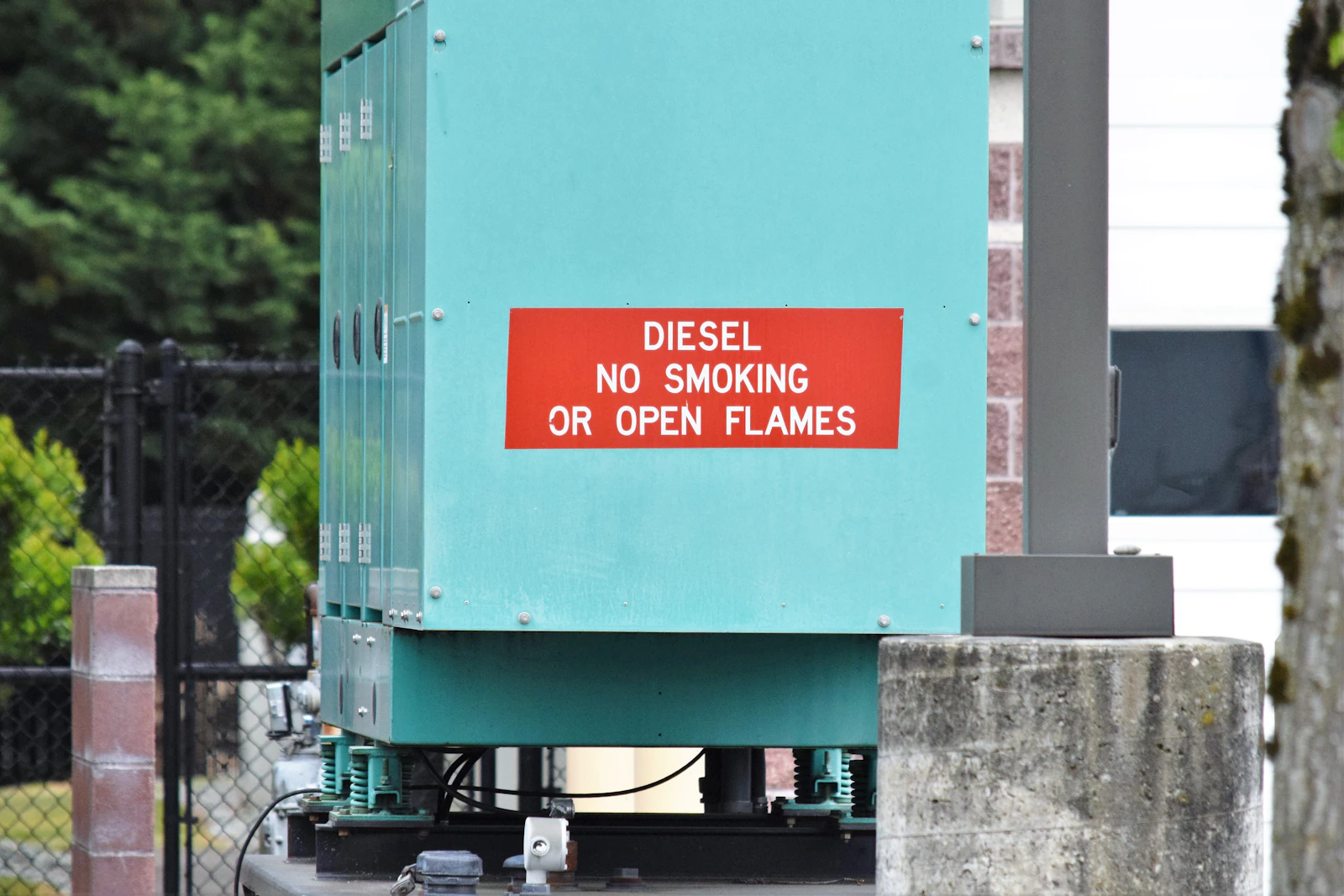
Diesel Generator Rental Rates Jacksonville 2026
2026 planning ranges for diesel generator equipment hire in Jacksonville (portable/towable units, ex-fuel, ex-tax): (1) 20–25 kW jobsite diesel generator hire typically budgets at $180–$350/day, $550–$1,050/week, and $1,600–$3,000/4-week. (2) 45–60 kW diesel generator rental commonly plans at $250–$450/day, $800–$1,350/week, and $2,300–$4,200/4-week. (3) 90–125 kVA (≈70–100 kW) portable generator hire often falls in $350–$700/day, $1,100–$2,150/week, and $3,200–$6,300/4-week. (4) 150–200 kW diesel generator equipment hire is frequently $550–$1,250/day, $1,400–$3,700/week, and $4,800–$10,800/4-week. (5) 250–320 kW towable diesels generally budget $950–$1,250/day, $2,200–$3,000/week, and $5,300–$7,000/4-week when aligned to published contract benchmarks for comparable fleet classes.
| Vendor |
Daily Rate |
Weekly Rate |
Review Score |
Website |
| United Rentals |
$346 |
$826 |
9 |
Visit |
| Sunbelt Rentals |
$345 |
$925 |
9 |
Visit |
| Herc Rentals |
$330 |
$812 |
8 |
Visit |
| Ring Power |
$110 |
$330 |
8 |
Visit |
For Jacksonville rental coordinators, the true cost of diesel generator equipment hire is almost always driven by the full package (generator + distribution + delivery + fuel logistics + run-hours/shift rules), not the base “day rate” alone. Most competitive quotes for portable generator hire in Northeast Florida are usually sourced from national rental houses (for example, United Rentals, Sunbelt Rentals, Herc Rentals) plus one or more regional power-rental specialists that can support after-hours fueling, switchgear, and emergency response. Plan for seasonal volatility: during storm threats and declared emergencies, some suppliers apply minimum billing periods and 24-hour usage assumptions, which can materially change your weekly exposure even if the unit sits lightly loaded.
Portable Generator Hire
If you’re scoping portable generator hire in Jacksonville for construction, plant maintenance, port/terminal work, or hurricane preparedness, start by locking three decisions because they drive hire cost: (1) kW required (true demand, not nameplate), (2) voltage/distribution needs (208V vs 480V, camlocks, panelboards, transfer switch/ATS), and (3) operating profile (single shift vs 24/7). A 100 kW-class unit rented for one week with basic distribution can price closer to a “standard” weekly rental. The same unit requested for emergency standby with 24-hour assumptions can bill differently depending on supplier policy. For example, Sunbelt states that during a declared state of emergency and/or a pending or existing natural disaster, rentals of its 100 kW diesel generator type will be billed at a one-week minimum for 24-hours of usage per day.
Rate Benchmarks You Can Use to Sanity-Check Jacksonville Quotes
Jacksonville-specific public price sheets are not always published, so estimators commonly triangulate from (a) published rental price pages, (b) public cooperative price lists, and (c) municipal bid tabs in comparable Southeast markets, then apply local delivery and demand assumptions. The goal isn’t to treat any single document as “your price,” but to prevent under-scoping.
- 100 kW / 125 kVA benchmark (published rental page): one published rental page lists a 125 kVA (≈100 kW) generator at $550/day, $1,595/week, and $3,550/4-week. Use this as a reality check when a quote feels too low for a Tier-rated, towable diesel with selectable voltages.
- 200 kW benchmark (public bid tab, weekly): a municipal bid tab for temporary emergency generator rental shows a 200 kW trailer-mounted weekly rate spanning $1,185/week to $3,655/week (vendor-dependent), plus published delivery $175/week and pickup $175/week in some lines and $250/week in others. That spread is a good reminder that “same kW” can price very differently based on sound attenuation, emissions tier, controls, and availability.
- 250–320 kW benchmark (contract rate sheet): a cooperative/contract price sheet lists 250 kW around $996/day, $2,241/week, $5,348/4-week; 275 kW “mega silent” around $1,031/day, $2,426/week, $6,615/4-week; and 320 kW around $1,072/day, $2,712/week, $6,327/4-week. It also lists transportation as $250 each way per item within 30 miles for these power-generation items—useful when you’re building a delivery allowance.
What Actually Drives Diesel Generator Hire Costs in Jacksonville
When you convert a quote into a forecast, the big cost drivers tend to be consistent across vendors, but Jacksonville has a few jobsite realities that can push you to the upper end of the range:
- Hurricane and coastal-demand exposure: if your timeline overlaps June–November, add contingency for constrained availability and emergency billing rules (including minimum weeks and 24-hour assumptions).
- Salt air + humidity near the river/coast: expect more emphasis on weatherproof enclosures, cable management, and corrosion mitigation; plan a slightly higher allowance for service calls, filters, and weather-related protective measures.
- Port/terminal logistics (JAXPORT and industrial corridors): gate delays, TWIC/escort needs, and restricted delivery windows can increase transport and standby time, especially when you need a technician to land camlocks, panelboards, and grounding.
Hidden-Fee Breakdown for Portable Diesel Generator Equipment Hire
To keep your diesel generator hire cost defensible, separate the quote into “base rent” and “jobsite variables.” The items below are where budget overruns typically occur:
- Delivery / pickup: plan $175–$350 each way for straightforward metro deliveries, or use a conservative allowance of $250 each way per item when your package includes multiple distribution components (panels, transformers, load bank) and you expect separate line items.
- After-hours or scheduled-window deliveries: if you require a firm 2-hour delivery window or after 3:00–5:00 PM cutoff service, carry an allowance of $125–$250 for dispatch priority or technician overtime (vendor-specific).
- Minimum rental charges: many fleets enforce 1-day minimum on standard hires; during emergency operations, plan for 1-week minimum on certain classes and 24-hour usage assumptions.
- Shift / run-hour multipliers: if the generator is hour-metered or shift-rated, budget multipliers such as 1.5× for double shift (9–16 hours) and 2× for triple shift (17–24 hours) where applicable.
- Damage waiver / rental protection: commonly 10%–18% of time charges depending on account terms and equipment class (confirm whether it applies to accessories too).
- Fuel management and refuel service: if you outsource fuel, expect a mobilization/trip charge (often $75–$175) plus per-gallon fuel at market rates; if the rental house provides “wet-hose” fueling, confirm whether there’s an admin markup (often budgeted as $1–$3/gal on top of posted diesel).
- Spill containment / environmental fees: plan $25–$85/week if a containment pan, absorbents, or site environmental charge is required by owner policy.
- Cleaning fees: budget $75–$250 if the unit returns with concrete dust, mud packed in the trailer, or oil residue on the enclosure.
- Late return / holdover: many agreements convert a late return into an extra day charge; carry a placeholder of $150–$600/day depending on kW class if your demob date is uncertain.
Distribution And Accessories: The “Second Quote” That Can Rival Base Rent
On power rentals, accessories can be a major percentage of total equipment hire cost—especially when you need safe temporary distribution (panels, GFCI protection, cable ramps, grounding, and transfer switching). A useful benchmark is that a “generator-only” quote can be 30%–60% of the total package once you add distro, cables, and logistics for a multi-drop jobsite.
Example accessory rate references (published contract benchmarks; verify local availability and account class):
- Quad box feeder panel 200A: around $55/day, $152/week, $308/4-week.
- Spider box feeder panel 200A: around $130/day, $363/week, $812/4-week.
- I-Line panel 400A: around $217/day, $558/week, $1,521/4-week.
- Transfer switch 200A (manual): around $65/day, $185/week, $563/4-week.
- Transfer switch 200A ATS: around $77/day, $225/week, $614/4-week.
- Transformer 30 kVA step-down (480 to 120/208): around $92/day, $250/week, $606/4-week.
- Load bank 100 kW: around $130/day, $265/week, $596/4-week (often needed for commissioning, testing, or exercising).
- Extension cords (14/3, 50'–100'): some schedules show $5/day with weekly/4-week steps—small lines that add up fast when you deploy dozens.
Jacksonville-specific note: if your generator is supplying interior build-outs (tenant improvements, hospital/education renovations), confirm whether you must add cable ramps, overhead cable protection, and dust-control measures around intakes/radiator airflow. These constraints can force longer cable runs, additional panels, or a quieter enclosure selection, moving you toward premium hire classes.
Example: 200 kW Diesel Generator Hire For A Five-Day Shutdown In Jacksonville
Scenario: A contractor needs ~160 kW continuous during a 5-day planned shutdown (night and weekend work included) to keep temporary HVAC, dewatering pumps, and critical lighting online. Delivery is to an industrial site west of Downtown with a 7:00 AM gate window and a hard requirement that cables not cross an active forklift lane without ramps.
- Base generator: budget $1,400–$3,700/week for a 150–200 kW class portable diesel generator hire package (site conditions and sound tier decide where you land).
- Delivery + pickup: carry $350–$700 total for both ways on a straightforward move, or $500+ if the package ships as multiple line items and requires a tech on site.
- Distribution: add (typical) $152/week for a 200A quad box, $363/week for a 200A spider box, plus a step-down transformer allowance of $250/week if you need 120/208V from a 480V source.
- Cable management: carry $120–$300 for ramps/protection and an extra $50–$150 for cable incidentals depending on run length and quantity.
- Fuel logistics: if the site burns 60–120 gallons/day (load-dependent), plan for a 2–3 fuel drops over the week with trip charges (often $75–$175 each) plus fuel at market.
- Risk allowances: add a 10%–18% rental protection line and a $150–$300 contingency for cleaning/return condition (especially if the unit sits on shell base or in wet yards).
Operational constraint that changes cost: if the generator must run 24/7 and the supplier applies a shift or emergency rule set, your “week” may price closer to a full-time utilization model rather than single-shift assumptions. Align on billing basis before mobilization.
Budget Worksheet (Jacksonville Diesel Generator Equipment Hire)
- Generator rental (kW class): $________ (use daily/weekly/4-week range that matches your run profile)
- Delivery: $250 allowance (increase to $350–$500 for restricted windows or multiple items)
- Pickup: $250 allowance
- On-site tech for landing cables/panels (if required): $150–$350 allowance (or hourly per quote)
- Distribution panels (quad/spider/I-line): $152–$839/week allowance depending on amperage and quantity
- Transfer switch / ATS: $185–$297/week allowance depending on amp rating
- Transformer (step-down/step-up): $250–$558/week allowance depending on kVA
- Cables, connectors, ramps, and protection: $200–$750 allowance
- Fueling plan (vendor fuel drops or 3rd-party): $75–$175 per trip + fuel at market
- Rental protection / damage waiver: 10%–18% of time charges
- Spill containment / environmental: $25–$85/week allowance
- Cleaning/return condition: $150 allowance
- Storm/emergency availability premium (seasonal): 10%–25% contingency line (only if your schedule is exposed)
Rental Order Checklist (What To Put On The PO So Hire Costs Don’t Drift)
- kW requirement and load profile: peak kW, expected average kW, starting currents (motors/pumps), and whether load steps are expected.
- Voltage and connectors: 120/208V vs 277/480V, single vs 3-phase, camlock set, pin & sleeve, or lugs.
- Billing basis: confirm single shift vs 24/7, any hour-meter rules, and emergency minimums.
- Delivery window: site cutoff times, gate procedures, and any escort/TWIC requirements for terminal work.
- Off-rent process: who can call off-rent, required notice, and how weekends/holidays are billed.
- Fuel expectations: “return full” requirement, refuel service option, and where fuel trucks can stage.
- Site safety requirements: grounding method, barricades/cable ramps, spill kit, fire extinguisher, and lockout/tagout coordination.
- Return-condition documentation: photos of enclosure, hour meter, accessory counts, and any pre-existing dents/damage noted at delivery.
How To Choose The Right kW Class Without Overpaying On Equipment Hire
The fastest way to overpay on diesel generator equipment hire is to “buy kW with fear.” The fastest way to under-scope is to ignore starting current and voltage realities. For Jacksonville projects, a practical estimating approach is:
- Size for starting + diversity: if you have large motors (pumps, temporary HVAC), you may need a higher kW class than the steady-state kW suggests.
- Plan for heat and airflow: in hot, humid months, derating and poor airflow around the enclosure can reduce usable output and cause nuisance shutdowns—leading to expensive service calls and standby charges.
- Don’t ignore sound class: if the site is near occupied buildings, you may need a quieter “mega silent” class. Contract benchmarks show distinct product naming and pricing for “mega silent” units at the same kW tier.
Billing Rules That Change Your Jacksonville Portable Generator Hire Cost
Before you approve a quote, confirm these cost levers in writing:
- Weekend/holiday billing: if you take delivery Friday and off-rent Monday, many suppliers will bill Saturday/Sunday as full days unless you have negotiated “weekend free” terms (not universal).
- Off-rent cutoffs: off-rent typically starts when the vendor is notified and the unit is ready for pickup. If your demob slips past a noon–2:00 PM dispatch cutoff, you may capture an extra day.
- Standby time for trucks/techs: if the driver waits more than 30–60 minutes for access, some accounts see standby billed (carry a planning allowance of $90–$150/hour if your site access is unreliable).
- Shift multipliers (where applied): published schedules in the market show double shift at 1.5× and triple shift at 2× for hour-metered machines; verify whether your generator class is shift-rated or flat-rated.
Costing Adders For Typical Jacksonville Diesel Generator Rental Packages
Use the adders below to build a package number that reflects how power rentals are actually deployed:
- Auto transfer switch (ATS): carry $225/week for a 200A ATS class, or scale up if you need higher amperage.
- Disconnect panel: budget $255/week for a 200A disconnect-fuse panel benchmark (or higher for breaker panels and larger sizes).
- Load bank for exercising/testing: carry $265/week for a 100 kW class load bank benchmark; larger banks can be higher and may require additional cables and supervision.
- Step-down transformer: budget $250/week for 30 kVA class and $455/week for larger 45–75 kVA class benchmarks depending on your distro needs.
- Additional distribution panels: if you need multiple drops, budget an extra $152/week per 200A quad box and $363/week per spider box benchmark.
- Noise mitigation: if you must move from a standard enclosure to a quieter class, carry a premium of $100–$250/day in your planning range (jobsite dependent).
- Security/anti-theft measures: if theft risk is elevated, budget $25–$60/week for chains/locks/cage solutions or a higher deductible buy-down if offered.
Commercial Terms: Deposits, Insurance, And Damage Waiver
For trade accounts, many suppliers rely on credit terms rather than cash deposits, but portable generator hire still carries risk-driven charges:
- Damage waiver / rental protection: commonly 10%–18% of time charges; confirm whether it covers theft, flood, and saltwater exposure (coastal Jacksonville considerations).
- Deductible exposure: even with protection, you may retain a deductible (often $500–$2,500 depending on class and account).
- Return condition disputes: reduce back-charges by documenting hour meter, panel counts, and cable quantities at both delivery and pickup (photos + signature).
Compliance Notes That Can Add Real Cost (Plan These Early)
Compliance itself is not a “fee,” but it changes the equipment package and labor you must hire:
- Electrical distribution requirements: if the owner requires listed distribution with GFCI protection, you may need additional spider boxes, disconnects, and cable sets (which are billed separately).
- Indoor/adjacent-to-occupied work: if the generator must be staged to keep exhaust away from air intakes, you may need longer cable runs and more ramps/protection—raising both accessory rent and labor.
- Fuel storage constraints: if you cannot store diesel on site, you’ll likely pay more for refuel trips, and you may need redundant capacity (two smaller generators or a backup unit) to manage delivery risk.
Practical Negotiation Points For Jacksonville Equipment Hire Managers
- Ask for bundled distro pricing: negotiate a “package” that includes at least one panel + base cable set rather than renting each item at list.
- Lock the delivery rules: confirm whether delivery is flat-rate, mileage-based, or per-item, and whether gate delays trigger standby charges.
- Confirm emergency rules in writing: if your project is hurricane-adjacent, confirm minimum terms and 24-hour billing assumptions up front (don’t learn this after mobilization).
Quick Pricing Summary (Use For 2026 Forecasting)
For diesel generator equipment hire in Jacksonville, a defensible 2026 budget typically includes: (1) base rent by kW class (day/week/4-week), (2) delivery + pickup, (3) distribution (panels/transformers/transfer switch), (4) fuel plan, (5) rental protection, and (6) contingency for schedule slip and emergency-driven minimums. If you only carry the base “generator rental rate,” you will almost always under-budget the true portable generator hire cost on multi-drop, interior, or restricted-access sites.