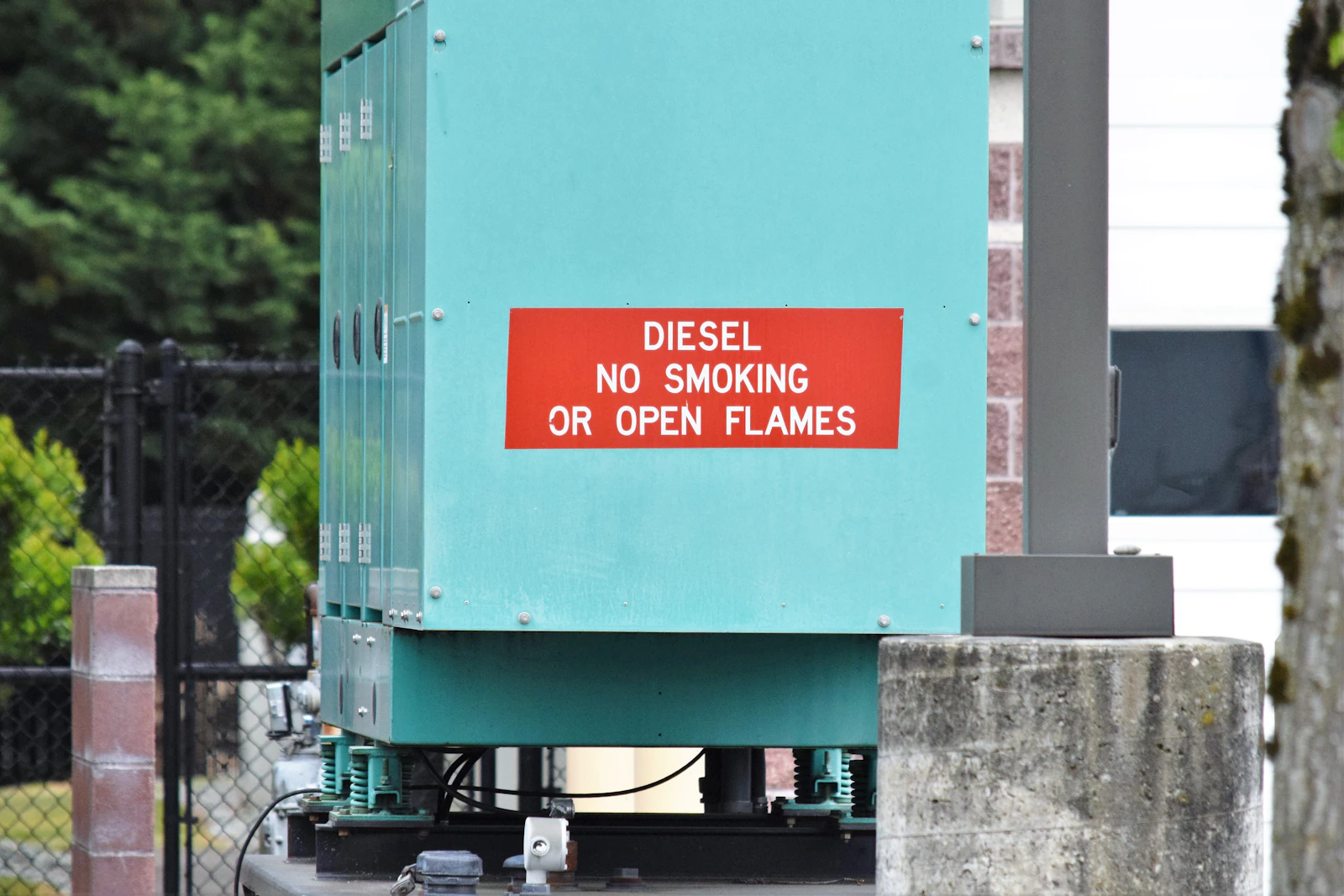
For an electrical panel upgrade in Los Angeles, 2026 budgeting for diesel generator equipment hire typically lands in these planning ranges (before delivery, fuel, and distribution): $175–$260/day, $480–$750/week, and $1,050–$1,600/4-week for ~20 kW towable units; $345–$520/day, $925–$1,350/week, and $2,115–$3,200/4-week for ~56–70 kW units; and $445–$700/day, $995–$1,700/week, and $2,800–$4,200/4-week for ~100 kW units. In practice, most panel-change scopes are won or lost on “everything around the generator” (camlock feeders, spider boxes, cable protection, delivery windows, emissions compliance, and off-rent rules). Los Angeles contractors commonly source packages through national rental houses (e.g., United Rentals, Sunbelt, Herc) or local power specialists depending on availability, Tier level, and whether the site needs a quiet canopy.
| Vendor |
Daily Rate |
Weekly Rate |
Review Score |
Website |
| United Rentals |
$597 |
$1 197 |
9 |
Visit |
| Sunbelt Rentals |
$445 |
$995 |
6 |
Visit |
| Herc Rentals |
$455 |
$1 210 |
6 |
Visit |
Diesel Generator Hire Costs Los Angeles 2026
Assumptions for these 2026 planning ranges: (1) Towable diesel generator with basic convenience receptacles, not a permanently installed standby set; (2) 1-phase or 3-phase output typical for temporary power; (3) “Month” priced as a 4-week/28-day rental period (common in rental rate cards); (4) rates shown are budget ranges intended for estimating—your negotiated account rates, utilization caps, and availability will move the number.
Benchmark rate-card datapoints used to anchor the 2026 ranges (examples from published/contracted rate sheets, which may not reflect Los Angeles walk-in pricing): 20 kW diesel generator around $175/day, $483/week, $1,068/month; 36 kW around $250.90/day, $664.85/week, $1,564.69/month; 56 kW around $345/day, $925/week, $2,115/month; and 100 kW around $445/day, $995/week, $2,800/month.
Estimator note: For 2026 in Los Angeles, it is prudent to carry an uplift allowance of ~8%–25% above older “contract sheet” pricing where (a) Tier 4 Final inventory is constrained, (b) you require a sound-attenuated canopy, (c) delivery/pickup must occur in tight time windows (Downtown/Westside), or (d) the rental includes metered run-hours with overtime charges.
What you’re really buying on a panel upgrade: kW, distribution, and risk
During an electrical panel replacement, the generator is seldom “just a generator.” A realistic temporary power plan often includes: (1) a diesel generator sized for starting current and not just nameplate kW; (2) a safe connection method (camlock tails, panel lugs, or a temporary ATS where applicable); (3) distribution to keep trades productive while the service is down; and (4) jobsite controls (cable ramps, barricades, spill containment, and refuel logistics). Each of these lines carries its own hire rate and its own “gotchas” (minimum charges, weekend billing, and return-condition fees).
Typical diesel generator sizes and hire-rate bands used for panel upgrade estimating
Use these as 2026 Los Angeles budgeting bands for diesel generator rental cost planning. Always confirm voltage/phase and connection type before locking the PO.
- 20–25 kW diesel generator hire (small commercial panels, limited circuits, or partial-building temp power): $175–$260/day, $480–$750/week, $1,050–$1,600/4-week.
- 35–45 kW diesel generator hire (mid-size retail, small office floors, or multi-circuit temporary power): $250–$420/day, $650–$1,050/week, $1,550–$2,750/4-week.
- 56–70 kW diesel generator hire (common “workhorse” band for many shutdowns): $345–$520/day, $925–$1,350/week, $2,115–$3,200/4-week.
- 80–120 kW diesel generator hire (larger services, multiple tenants, or higher inrush loads): $445–$850/day, $995–$2,100/week, $2,800–$5,200/4-week.
Los Angeles-specific cost drivers that change diesel generator equipment hire totals
1) Emissions compliance and Tier requirements. In California, compliance programs can affect what inventory is available and how it’s priced. CARB’s off-road diesel regulation and related compliance requirements have staged changes that began as early as January 1, 2024, and contractors may be asked for compliance documentation depending on project type and contracting chain.
Port / intermodal rail yard work: If your panel upgrade is inside a port/intermodal rail yard boundary (less common, but it happens on marine/warehouse infrastructure), CARB notes that newly rented equipment in those environments must meet Tier requirements (often Tier 4 Final or equivalent) and recordkeeping/testing obligations can apply to rented equipment. That environment can push you into fewer supplier options and higher hire rates.
2) Downtown LA, Westside, and constrained access deliveries. A towable diesel generator is easy until it isn’t: tight alleys, limited loading zones, and traffic can force (a) smaller towable units delivered earlier, (b) after-hours delivery, or (c) staged drop/pick windows. Carry delivery as a separate cost line item and confirm the vendor’s cutoff for next-day pickup to avoid paying an extra day.
3) Heat and derate considerations. In the San Fernando Valley and inland LA basins, hotter days can reduce available output and increase fuel burn. If your temp power plan has little headroom, you may need to bump from a 56–70 kW class to a 100 kW class just to keep voltage stable under motor starts—this is a rental cost issue, not just an engineering preference.
Hidden-Fee Breakdown (What rental coordinators should line-item)
To keep your diesel generator hire cost estimate defensible, treat the base hire rate as only one component. The items below commonly appear on invoices for electrical shutdowns and panel upgrades.
- Delivery / pickup: typical planning allowance $175–$450 each way within a standard service radius; add $4–$7 per loaded mile outside the radius (budget as a contingency for Westside/Downtown traffic delays and re-delivery attempts).
- Minimum rental term: commonly 1-day minimum even if used for a few hours; weekend schedules can unintentionally bill 3–4 days if off-rent is not processed before cutoff.
- Off-rent cutoff: confirm whether off-rent must be called in by 2:00–3:00 PM local time to stop billing same-day; missed cutoff often means +1 day charge.
- Run-hour overtime: many generator programs include a run-hour allowance (often around 40 run-hours/week and 176 run-hours/4-week); overtime can price at $8–$20 per run-hour depending on kW class and contract structure. One published example shows weekly/monthly hour caps with an overtime charge line item.
- Shift multipliers (if billed as “single shift”): some rate schedules define single shift as 0–8 hours, double shift 9–16 hours at 1.5×, and triple shift 17–24 hours at 2×. If your panel upgrade runs overnight, this can materially change cost.
- Damage waiver / rental protection: budget 10%–17% of time charges unless you provide a certificate that satisfies the vendor’s requirements.
- Environmental recovery / admin fees: budget 5%–12% (varies by supplier and contract).
- Fuel policy: “full-to-full” is common. If the vendor refuels, budget $2.50–$4.50 per gallon plus a $75–$150 service/handling fee.
- Wet return / fuel removal handling: if site rules prevent transport with significant residual fuel, carry a handling allowance of $2–$5 per gallon for pump-down/removal (scope-dependent).
- Spill containment / drip pan: budget $25–$60/day where required by the site or EHS plan.
- Cleaning fees: if returned with concrete dust, mud, or adhesive residue, budget $95–$250 per incident; ensure the generator’s louvers and radiator face are protected from cutting dust during the panel swap.
- After-hours service call: budget $150–$300 if you need a technician dispatch outside normal branch hours.
- Security deposit / credit authorization: commonly $500–$5,000 depending on kW class, accessories, and account status.
Distribution and accessories: common adders on panel-upgrade generator rentals
On a panel upgrade, you are often distributing power to temporary loads, tool circuits, or critical building circuits. Plan for accessories and the labor interface (your electrician) to install/verify them.
- Spider box / temporary distribution box hire: one published contracted example shows a spider box at $75/day, $205/week, $725/month.
- 50 ft 1/0 camlock cable hire: published example $26.41/day, $53.10/week, $125/month (per cable). For a safe setup you may need multiple lengths/sets.
- Cable ramps: published example $10/day, $35/week, $75/month. Use these when feeders cross pedestrian routes, loading zones, or tenant paths.
- 50 ft spiderbox cable (6/4) hire: published example $35.10/day, $108.61/week, $320/month.
- Quiet / sound-attenuated package premium: budget +15% to +35% on the base generator hire rate when noise limits are tight (multi-tenant buildings, healthcare, nighttime work windows).
- Automatic transfer switch (ATS) rental (when required by operating constraints): budget $175–$450/day depending on ampacity and whether it’s a simple manual transfer panel vs. a more integrated temporary ATS solution.
- Load bank rental (testing / commissioning window): budget $275–$650/day when required to validate generator performance or when a vendor requires a functional test under load.
- Temporary fuel tank / fuel cube (if runtime exceeds onboard tank): budget $120–$300/day for common mid-size auxiliary tanks, plus pump/hoses and any wet-return handling allowances.
Example: Los Angeles panel upgrade weekend shutdown (realistic numbers and constraints)
Scenario: A GC is coordinating an electrical panel upgrade for a small mixed-use building near Downtown Los Angeles. Utility power is cut Friday 6:00 PM, new gear set Saturday, inspections Sunday morning, re-energize Sunday 6:00 PM. The building wants limited tenant power for elevators/life-safety support loads and essential circuits only.
- Generator selection: budget a 100 kW diesel generator rather than 60–70 kW to cover motor starting and headroom.
- Base hire (planning): $995–$1,700/week for a 100 kW class unit in LA (even though you “use” it ~2 days, weekend rules and minimums often drive you toward a weekly structure).
- Delivery + pickup: carry $350 in and $350 out (Downtown access windows), plus a contingency of $100 for re-delivery if the loading zone is blocked.
- Distribution: (1) spider box $205/week; (2) four 50 ft 1/0 camlock cables at $53.10/week each (budget $212.40/week); (3) two cable ramps at $35/week each (budget $70/week).
- Protection and compliance: spill containment $40/day (budget $120 for the weekend) and barricade/flagging allowance $75.
- Fees and coverage: damage waiver at 12% of time charges; environmental recovery at 7%.
- Fuel plan: assume 6–10 gallons/hour average across intermittent loads and starts; for a 24-hour run window, budget 144–240 gallons of diesel plus a refuel service fee of $95 if vendor-managed. (Fuel burn is highly load-dependent; confirm with your electrician’s load plan.)
- Off-rent rule risk: if pickup can’t occur until Monday due to building access, you may be billed an extra 1 day unless the vendor supports a true weekend off-rent. Confirm off-rent cutoff (often around 2:00–3:00 PM) before the shutdown weekend begins.
How this affects cost: Even with an “aggressive” base hire rate, the all-in cost for a compliant, safe, downtown-accessible temporary power generator hire package often lands in the mid four figures once distribution, delivery constraints, and standard fees are carried. The coordinator’s job is to prevent cost creep from missed cutoffs, after-hours changes, or unplanned accessory adds on Saturday night.
Estimating guidance: when to size up (and how that changes hire cost)
Panel upgrade temporary power often fails for two reasons: (1) insufficient starting capacity for motors (elevators, HVAC components, booster pumps), and (2) distribution mismatch (wrong camlocks, inadequate feeder lengths, or missing ramps/protection). From a pure hire-cost standpoint, the cheapest safe play is often to size up one step and lock the accessory list early. In LA, stepping from ~60 kW to ~100 kW can add roughly $150–$250/day in base hire, but it can prevent a Saturday after-hours swap that triggers (a) a second delivery charge, (b) an after-hours service call, and (c) additional downtime for trades.
Where rental invoices drift on panel upgrades (and how to prevent it)
- Missed accessory assumptions: Adding just four feeder cables at $26.41/day each is $105.64/day before fees, and that’s for one size/length example. Confirm feeder count, length, and gauge.
- Weekend/holiday billing: If your schedule crosses a weekend and the branch does not process off-rent, budget +2 days exposure unless you have written confirmation.
- Return condition documentation: Take date-stamped photos on pickup (fuel level, hour meter, visible damage, cable counts). Missing cables can bill at replacement value, not rental value.
- Indoor dust-control interfaces: Even though the generator sits outside, cutting/grinding dust during an electrical room scope can contaminate ventilation and increase cleaning charges. Isolate work, keep doors closed, and avoid staging the generator where exhaust recirculates into the building.
Quick procurement notes for Los Angeles diesel generator equipment hire
When you’re renting for an electrical shutdown, the procurement sequence matters. Many suppliers will reserve the generator but not the full accessory kit unless it’s on the same order. In Los Angeles, where branch inventory can be spread across multiple yards, that can mean your generator arrives Friday but your camlock set arrives Saturday—at premium delivery cost.
- Book the entire temporary power package (generator + distribution + ramps + spill control) on one PO whenever possible.
- Confirm emissions/Tier needs in writing if the site is sensitive (public works, ports, rail yards, or strict owner EHS).
- Confirm delivery and pickup windows with a real person, and document the off-rent cutoff time.
Budget Worksheet (Diesel Generator Hire Package for a Panel Upgrade)
Use this as an estimator-ready set of line items (no vendor assumptions). Adjust kW class and accessory quantities to your shutdown plan.
- Diesel generator equipment hire (select one):
- 20–25 kW: $175–$260/day or $480–$750/week
- 35–45 kW: $250–$420/day or $650–$1,050/week
- 56–70 kW: $345–$520/day or $925–$1,350/week
- 100 kW class: $445–$700/day or $995–$1,700/week
- Delivery: $175–$450
- Pickup: $175–$450
- After-hours delivery/pickup contingency (if shutdown is nights/weekend): $150–$300
- Temporary distribution (spider box / distro): $75–$175/day or $205–$450/week (quantity as required).
- Camlock feeder cables (per 50 ft cable planning): $20–$40/day (example published at $26.41/day). Multiply by number of conductors and lengths.
- Spiderbox cable sets / extension feeders: $25–$55/day (example published at $35.10/day for a specific cable type).
- Cable protection (ramps/mats): $10–$35/day (example published at $10/day for cable ramps).
- Spill containment / drip pan: $25–$60/day
- Fuel (diesel): allowance 120–250 gallons for a weekend shutdown window (job-dependent), plus $2.50–$4.50/gal if vendor-refueled and a $75–$150 handling fee.
- Run-hour overtime (if applicable): allowance $8–$20 per run-hour beyond included hours; confirm included caps (commonly around 40 hours/week and 176 hours/4-week).
- Quiet package premium (where required): +15% to +35% on time charges
- Damage waiver: 10%–17% of time charges
- Environmental recovery/admin: 5%–12%
- Cleaning allowance: $95–$250
- Missing/cut cable allowance (risk): $150–$600 (scope-dependent; reduce risk via photo documentation and cable counts)
Rental Order Checklist (PO, Delivery, Operations, Return)
- PO scope language: specify kW/kVA class, voltage, phase, receptacles, and whether camlock outputs are required.
- Emissions requirement callout: state “Tier 4 Final (or site-required equivalent)” when applicable to avoid a last-minute swap and re-delivery.
- Accessories on the same order: spider box/distro quantity, feeder lengths, connector types (camlock series), cable ramps, and spill containment.
- Delivery logistics: site contact, gate codes, loading zone plan, and a delivery time window. In Los Angeles, confirm if the driver needs a 30–60 minute unload window or if a strict 15-minute dock slot applies (common at managed properties).
- Start-up and acceptance: document fuel level, hour meter, and output configuration at delivery; confirm E-stop location and any remote monitoring setup.
- Operating rules: confirm refuel responsibilities, noise constraints (especially if overnight), and whether the unit can remain on-site behind fencing (theft risk planning).
- Off-rent process: get the branch off-rent cutoff time in writing (often around 2:00–3:00 PM) and confirm weekend/holiday billing rules.
- Return condition documentation: take date-stamped photos of all sides, hour meter, and accessory counts; note any pre-existing dents or cable jacket wear.
Cost control tactics specific to electrical panel upgrades
Bundle the package early. The most avoidable cost on a shutdown is emergency accessory procurement. A Friday afternoon “we need two more 50 ft feeders” can trigger (a) a separate delivery charge, and (b) a second minimum rental term on accessories.
- Lock the accessory count: identify how many circuits/areas must be energized during the panel swap and size distribution accordingly.
- Plan for cable routing: if feeders cross public sidewalks or shared corridors, include cable ramps (or you risk having to re-route and add lengths).
- Use a fuel plan matched to run-hours: If your plan is intermittent operation, ensure the crew doesn’t run the generator 24/7 “just in case,” then get hit with run-hour overtime and refuel fees.
Why Los Angeles invoices differ from the base diesel generator rental cost
LA projects commonly add friction costs that don’t show up in a generic diesel generator rental cost guide: (1) time-window deliveries (traffic and managed properties), (2) noise constraints that push quiet packages, and (3) compliance documentation requests on certain sites. On paper, a 56–70 kW unit can look like a simple $345–$520/day hire; in the field, distribution, delivery constraints, and standard percentage fees can add 30%–80% to the all-in total for a weekend shutdown.
Planning note on CARB/California compliance language
If your panel upgrade occurs in specialized regulated environments (e.g., port/intermodal rail yard properties), CARB guidance indicates rented equipment can carry specific Tier requirements and recordkeeping/testing obligations, and both the rental agency and renter may have compliance responsibilities. This can narrow acceptable generator models and affect hire rates and availability.
Final estimator takeaway for 2026 diesel generator equipment hire in Los Angeles
For an electrical panel upgrade, treat diesel generator hire as a temporary power package cost, not a single line item. Build your estimate around: (1) the correct kW band with headroom, (2) distribution and cable protection, (3) delivery/off-rent rules, (4) fuel and run-hour assumptions, and (5) documented return condition. Doing this upfront usually costs less than trying to “save” $100/day on base hire and then paying it back in after-hours changes and missed cutoff charges.