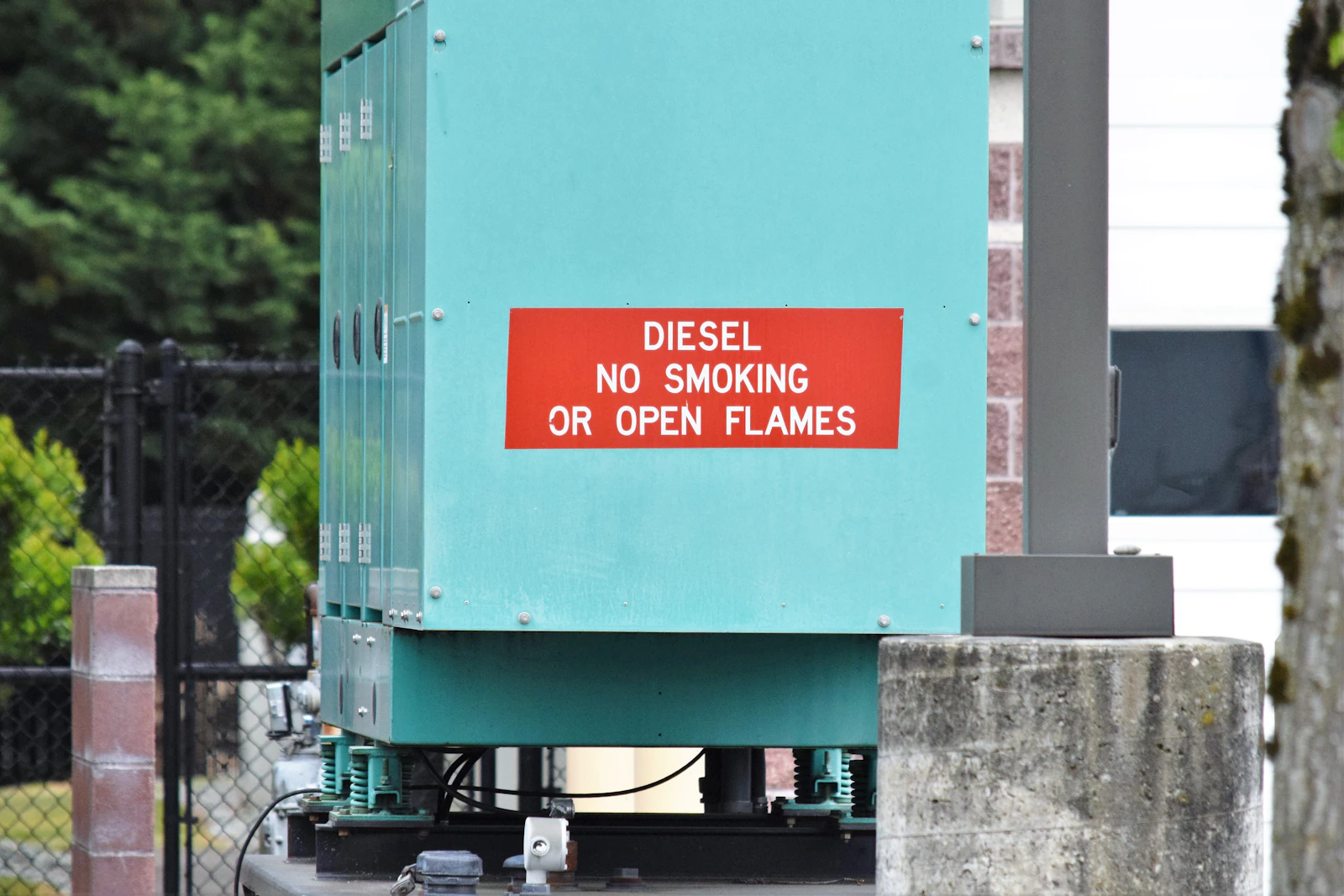
Diesel Generator Equipment Hire Costs Omaha 2026
For an Omaha electrical panel upgrade that needs temporary power, 2026 planning ranges for diesel generator equipment hire typically land around $250–$450/day, $750–$1,200/week, and $2,000–$3,600/4-weeks for common 45–60 kW towable sets; $325–$650/day, $950–$1,900/week, and $2,100–$5,700/4-weeks for ~100 kW class; and $700–$1,400/day, $2,100–$4,200/week, and $6,000–$12,000/4-weeks once you’re into 200 kW+ packages with heavier cabling and distribution. Those ranges assume a standard sound-attenuated towable diesel unit with basic on-board breaker panel; your all-in spend is usually driven more by delivery logistics, cable/distro requirements, off-rent rules, and fuel management than by the base day rate alone. In the Omaha metro, most commercial renters will end up sourcing through national branches (United Rentals, Sunbelt Rentals, Herc Rentals) or a dedicated power provider for higher-risk tie-ins and 24/7 support; the best pricing is usually contract-based, but estimating needs to carry realistic “not-to-exceed” allowances for accessories and site constraints. Example published rate sheets show a 56 kW diesel generator at $345/day, $925/week, $2,115/month (contract pricing example) and a 100–109 kVA class generator at about $338/day, $754/week, $2,118/month (price-list example), which align with the planning ranges above.
| Vendor |
Daily Rate |
Weekly Rate |
Review Score |
Website |
| United Rentals (Omaha, NE) |
$275 |
$690 |
9 |
Visit |
| Sunbelt Rentals (Omaha, NE) |
$265 |
$675 |
8 |
Visit |
| Herc Rentals (Omaha, NE) |
$255 |
$635 |
8 |
Visit |
| NMC Cat Rental — The Cat Rental Store (Omaha, NE) |
$285 |
$725 |
8 |
Visit |
How Generator Size And Voltage Affect Your Hire Rate
For an electrical panel upgrade, the generator is rarely chosen by “kW only.” The hire cost is tied to the full temporary power package: voltage, amperage, phase, connection method, and whether the load profile is steady (overnight) or intermittent (day shift only).
- 25–30 kW class (small commercial swing loads, limited panels): plan $175–$325/day, $525–$975/week, $1,600–$3,000/4-weeks when towable diesel is required. (Smaller “RV-style” units price differently and are typically not appropriate for panel upgrades.)
- 45–60 kW class (common for small retail/office continuity): plan $250–$450/day base hire before accessories; a published contract example for 56 kW is $345/day.
- 100 kW class (common for multi-tenant, light industrial, larger panels): plan $325–$650/day; published examples include ~100 kVA/100 kW class at $338/day and a separate published example showing $550/day for 125 kVA/100 kW. (g
- 150–200 kW+ (bigger facilities or multiple panels/ATS work): plan $700–$1,400/day plus heavier-gauge camlock feeders, distro, and typically a more formal commissioning/checklist process.
Voltage drives accessory scope. A 208Y/120V output with on-board breakers can sometimes serve a small temporary panel without external distribution. A 480/277V requirement (common in commercial service gear) often pushes you into camlock tails + external distribution and stricter grounding/bonding documentation. That’s where hire costs climb quickly: the generator day rate may be stable, but the package grows.
Typical Omaha Hire Package Components For A Panel Upgrade
When you’re budgeting diesel generator equipment hire cost in Omaha, treat the generator as one line item in a temporary power “kit.” Most change orders and invoice surprises come from the items below.
- Generator (towable, sound-attenuated): priced day/week/4-weeks; confirm whether the rental is billed as true 24-hour time or “shift”/metered (less common for generators but appears in some price-list formats). (g
- Cables / camlock feeders: commonly priced as separate hire. Planning allowance: $25–$75/day per set (length/gauge dependent) plus $6–$12/day per camlock adapter set when non-standard terminations are needed.
- Distribution (spider box / distro panel / temp panel): allowance $40–$140/day depending on amperage and GFCI requirements; add $18–$35/day for cable ramps/cord covers when crossing public paths or interior corridors.
- Fuel management: either customer-furnished fuel (common on construction accounts) or vendor-provided fueling with a service charge. Carry a budgeting placeholder of $75–$175 per fueling trip plus fuel at market.
- Block heater / cold-weather kit (Omaha winter constraint): allowance $15–$40/day in cold months if not included; also budget anti-gel/additive or winter blend management (see fuel section).
Hidden-Fee Breakdown
Below are the most common “hidden” or easy-to-miss line items that materially change your diesel generator hire cost for an Omaha panel upgrade. Use these as estimating allowances unless your MSA/contract rate sheet specifies otherwise.
- Delivery and pickup: typical metro charges are $150–$350 each way for a smaller towable set, and $350–$750 each way for larger units or constrained access. If mileage is applied, carry $4–$8/mile beyond an included radius (often 15–25 miles). Add $125–$300 for after-hours delivery windows (common when the facility can only accept drops after 3:00–5:00 p.m.).
- Minimum rental term: many providers enforce a 1-day minimum (some enforce a 1-week minimum on certain generator categories or usage models). Sunbelt notes a one-week minimum can apply at 24-hour usage rates for generators (policy varies by account and situation).
- Off-rent cutoff time: plan a 2:00–4:00 p.m. off-rent notification cutoff; missing it can bill an extra day. Carry a contingency of 1 additional day in the estimate if shutdown timing is uncertain.
- Weekend/holiday billing: if the unit is on-site over a weekend, many rental agreements continue billing daily; some contract structures apply a weekend factor. Budget a 10%–20% weekend/holiday premium if your project schedule forces extended possession or after-hours swaps.
- Damage waiver / rental protection: commonly 10%–15% of rental charges (rental-only, not fuel). Confirm whether it applies to accessories and whether theft is excluded without a police report.
- Environmental / shop fees: frequently 3%–8% of rental, or a flat $15–$45 per invoice.
- Cleaning fees: budget $125–$400 if the unit returns with concrete splatter, mud-packed undercarriage, or oil residue requiring degreasing.
- Late return / standby delivery charge: if the truck is dispatched and you’re not ready to receive/return, budget $95–$195 for a dry run or reschedule.
Fuel Burn And Refuel Rules (Often The Largest Variable Cost)
Fuel is where panel-upgrade projects get surprised—especially when a “temporary” set ends up carrying overnight loads for multiple days due to utility coordination or switchgear issues. Manufacturer and power-provider charts commonly show that a ~125 kVA / 100 kW class diesel generator can consume about 4.0 gph at 1/2 load, 5.7 gph at 3/4 load, and 7.3 gph at full load (model dependent).
- Budgeting rule of thumb (100 kW class): at 75% load, carry 5–7 gph for planning, then confirm with the specific model submittal.
- Fuel cost impact example: at 6.0 gph and 24 hours/day, that’s 144 gallons/day. At $3.50–$5.25/gal (planning range), that’s $504–$756/day in diesel—often more than the generator day rate.
- Refuel expectations: many rental terms require “return full” or charge a premium. Carry $6–$10/gal as a conservative backcharge rate if you return low or contaminated.
- Cold-weather (Omaha) constraint: if temps drop below 20°F, plan additional fuel use for heaters and longer warm-up, and ensure winter blend/anti-gel. Budget $25–$75 for additives and $50–$150 for a return visit if a gel event forces service.
Accessories That Change Diesel Generator Equipment Hire Cost The Most
For electrical panel upgrades, accessory scope is frequently the deciding factor between a “simple rental” and a managed temporary power package.
- Camlock cable sets (length + gauge): allowance $120–$300/week per feeder set; add $75–$180/week when you need extra length to reach a safe outdoor placement (noise + exhaust + access constraints).
- Load bank (commissioning / proving capacity): allowance $250–$650/day plus delivery, if the owner/engineer requires verification or if you’re performing transfer testing.
- External fuel tank (when runtime is critical): allowance $200–$500/week for tank hire (size and containment dependent) plus permitting/secondary containment requirements at the facility.
- Automatic transfer switch (rental ATS) / docking station: allowance $150–$450/week for basic configurations; engineered docking and custom switchgear is typically quoted, not menu-priced.
- Grounding kit and GFCI protection: allowance $25–$85/week, but note: compliance requirements can force a higher-cost distro approach (especially in healthcare or public-assembly facilities).
Example: Omaha Electrical Panel Upgrade With Temporary Power (Real-World Constraints)
Scenario: 3-day panel replacement at a mid-size medical office in central Omaha. The facility requests no outage during business hours, and the service gear is 480/277V. Generator must be placed behind the building due to public access and exhaust routing; cable run is 150 ft with two pedestrian crossings requiring ramps. Delivery allowed only after 5:30 p.m. and pickup must occur before 7:00 a.m. to avoid blocking the loading area.
- Base hire: 100 kW class diesel generator at $325–$650/day (carry $1,300–$2,600 for 4 billed days to protect against off-rent cutoff risk).
- Delivery/pickup allowance: $350 each way + $200 after-hours window = $900.
- Cables and adapters: $180/week (feeder set) + $60/week adapters = $240.
- Distro + cord covers: distro $110/week + ramps $25/day × 4 days = $210.
- Fuel (planning): average 3.5 gph (mixed load) × 72 hours = 252 gal. At $4.25/gal planning = $1,071 fuel cost (customer-supplied) or higher if vendor-fueled.
- Damage waiver + fees: 12% of rental charges + 5% env/shop fee (apply per your contract).
Why this matters: even if you “win” a low day rate, the operational constraints (after-hours windows, off-rent cutoff, pedestrian protection, long cable run, and fuel) are what typically drive total cost for generator equipment hire on panel upgrades in Omaha.
Budget Worksheet (Estimator-Friendly, No Tables)
- Diesel generator equipment hire (size class: ___ kW): allowance $___/day × ___ billed days (include +1 day contingency for off-rent cutoff).
- Delivery + pickup: $___ each way (add $___ for after-hours or site escort requirements).
- Cable/camlock feeders: $___/week (length/gauge) + extra tails/adapters $___/week.
- Distribution/spider box/temp panel: $___/week + cord covers/ramps $___/day.
- Fuel (customer-furnished): ___ gph × ___ hours × $___/gal + contingency 10%–15%.
- Fueling service (if vendor-fueled): $___ per trip × ___ trips + emergency callout allowance $___.
- Load bank / testing (if specified): $___/day + delivery.
- Cold-weather kit / block heater (seasonal Omaha): $___/day (if not included) + additive allowance $___.
- Protection: damage waiver 10%–15% + env/shop fees 3%–8%.
- Return condition: cleaning contingency $125–$400 (mud/concrete exposure dependent).
Rental Order Checklist (PO, Delivery, Return)
- Pre-award: confirm kW, voltage (208/240/480), phase, frequency, and connection method (lugs vs camlock) with the electrician of record.
- PO line items: generator hire, cable sets, distro/spider box, ramps/cord covers, grounding kit, fuel tank (if any), damage waiver, and delivery/pickup as separate lines to prevent “bundled” invoice ambiguity.
- Delivery window: document site receiving hours, escort/badge requirements, dock access constraints, and any “no-idle/no-blocking” rules (downtown Omaha and medical campuses commonly enforce strict access timing).
- Placement requirements: exhaust direction, clearance, noise sensitivity, and fence/barricade needs; include a plan for snow/ice access in winter.
- Off-rent rules: record the vendor cutoff time (often 2:00–4:00 p.m.) and the required notice method (email/portal/call) to avoid an extra billed day.
- Fuel/refuel: document “return full” expectations, contamination rules, and who supplies DEF (if the unit is Tier 4 Final and applicable).
- Return condition documentation: take photos of hour meter, fuel level, cable inventory, and any pre-existing damage at delivery and pickup.
Omaha-Specific Cost Drivers That Change Your Diesel Generator Hire Total
Omaha pricing is usually competitive versus higher-cost coastal metros, but the real cost swing comes from site logistics and seasonal constraints. When your work term is an electrical panel upgrade, the generator is often on-site longer than planned because utility coordination, inspections, or switchgear anomalies extend the temporary power window.
- Seasonality (freeze/thaw): during winter conditions, budget for 1 extra service visit ($150–$350) if a no-start or gel event occurs, and confirm whether the hired unit includes a block heater. (Even with a heater, access to shore power can be a constraint.)
- Metro geography: Omaha projects that spill into Council Bluffs or beyond typical “included miles” can trigger mileage adders. Carry $4–$8/mile beyond the included delivery radius, and add a $50–$150 coordination allowance if delivery crosses multiple controlled-access gates.
- Downtown and healthcare campuses: tighter delivery windows often force after-hours drops. Budget $125–$300 for after-hours receiving and $95–$195 if a delivery attempt fails due to access/escort issues.
How To Think About Rental Duration (Daily vs Weekly vs 4-Week Billing)
Most commercial generator rentals price in day/week/4-week blocks, but invoices follow possession time, not your work plan. For panel upgrades, the best practice is to align your temporary power hire window to the utility disconnect/reconnect and inspection sign-off sequence—then carry schedule contingency explicitly.
- Schedule contingency: if the upgrade is planned for 2 days, carry +1 billed day minimum to cover inspection delays or failed startup tests.
- Off-rent coordination: put the off-rent cutoff time and contact method in the superintendent’s closeout checklist; one missed cutoff frequently costs 1 extra day of hire.
- 24-hour vs business-hour usage: if the generator must support overnight loads, assume continuous billing and continuous fuel burn; do not estimate “day shift” fuel unless the facility can fully shut down after hours.
Insurance, Damage Waiver, And Risk Allocation Costs
From an equipment manager perspective, protection costs are not optional admin noise—they’re real dollars and real dispute avoidance.
- Damage waiver: carry 10%–15% of rental charges unless your contract waives it.
- Deposit/credit hold (non-account rentals): allowance $500–$2,500 depending on generator size and accessories; many established contractor accounts avoid this, but it can hit emergency rentals.
- Loss/theft controls: budget $35–$90/week for temporary fencing/panel lockouts if the generator sits in an exposed lot overnight.
Commissioning, Testing, And Support: When “Rental” Becomes A Managed Service
For straightforward panel swaps, you may only need equipment hire. For higher-risk facilities (medical, data/telecom, public assembly), owners increasingly require documentation and testing that adds cost but reduces failure risk.
- Startup/tech assist: allowance $175–$350 (scheduled) or $350–$650 (after-hours) when a vendor technician is required on-site for commissioning.
- Transfer/acceptance testing: allowance $250–$650/day for a load bank (if specified) plus an electrician standby allowance in your labor budget. Use manufacturer or power-provider fuel consumption data to budget fuel during testing; a 125 kVA/100 kW class unit can be ~5.7 gph at 3/4 load (model dependent).
- 24/7 support premium: some providers bundle emergency response into a higher weekly rate; if it’s separate, carry $250–$500 as a contingency for one after-hours callout.
Contracting Notes That Prevent Invoice Surprises
These are the practical “fine print” items that materially change diesel generator equipment hire costs and should be captured in your PO notes or subcontract scope letter.
- What is included with the generator: some providers quote generator-only, while others bundle basic cables and a baseline service package under a minimum charge. (Policies vary widely; confirm in writing.)
- Fuel responsibility: specify whether fuel is customer-provided (and who performs fueling) versus vendor-provided (and what service/trip fees apply).
- Return condition: write “broom clean, no concrete/mud” and require delivery/pickup photos (meter, fuel level, cables present). This reduces cleaning/damage disputes that can run $125–$400 or more.
- Weekend possession: if the panel upgrade spans Friday–Monday, assume continuous hire unless your contract explicitly pauses billing.
Quick Estimating Heuristic (For Omaha Panel Upgrades)
If you need a fast budgetary number before engineering finalizes, this heuristic keeps estimates from being under-carried:
- Base generator hire (100 kW class): $1,000–$2,000/week (rate only).
- Accessories (cables + distro + ramps): add 20%–45% of base hire depending on voltage and run length.
- Logistics (delivery + after-hours): add $700–$1,500 for a typical metro drop/pick with at least one constrained window.
- Fuel: for continuous operation, fuel can match or exceed hire; carry $500–$800/day fuel for a heavily loaded 100 kW class unit as a planning placeholder, then reconcile to the actual load profile.
Closeout: How To Off-Rent Cleanly And Avoid Extra Days
- Schedule shutdown and disconnect early enough to meet the vendor’s off-rent cutoff (commonly 2:00–4:00 p.m.).
- Stage cables and accessories for count-back; missing camlock components can trigger replacement charges that exceed a week of hire for that accessory.
- Photograph hour meter, fuel level, and all accessory serial numbers at pickup.
- Confirm whether the vendor requires a signed pickup ticket to stop billing; if so, ensure the site has an authorized signer present.
If you want, share the panel rating (amps), service voltage (208/480), and the owner’s outage window; I can tighten the recommended kW class and produce a more precise 2026 equipment hire budget range for Omaha without turning it into a vendor-specific quote.