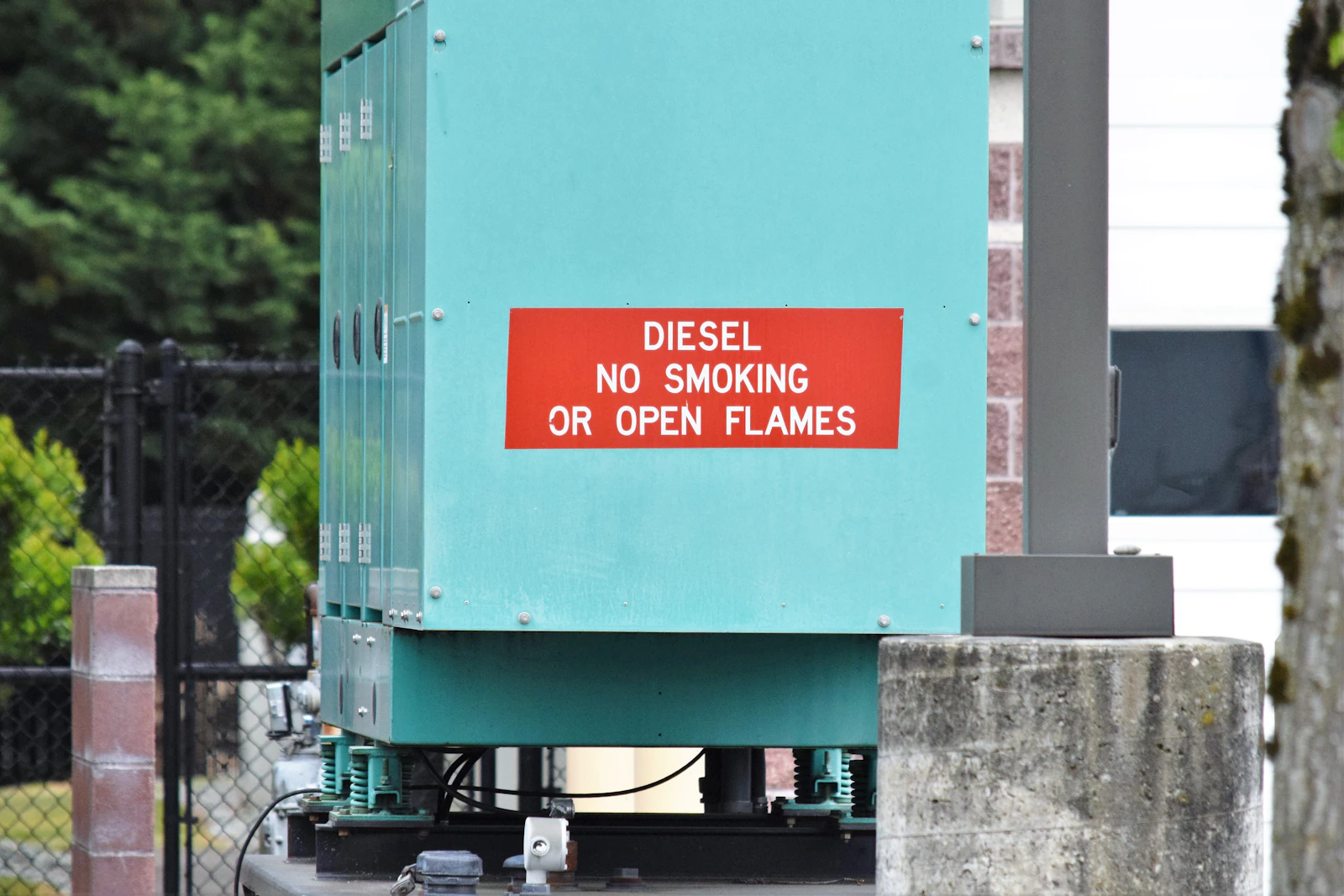
Portable Generator Hire Philadelphia
2026 planning rental ranges (Philadelphia market) for diesel generator equipment hire typically land in these bands, assuming Tier 4 Final towable units on a standard rental shift (commonly 8 hours/day, 40 hours/week), dry-hire pricing (fuel excluded), and no distribution package included:
| Vendor |
Daily Rate |
Weekly Rate |
Review Score |
Website |
| United Rentals |
$395 |
$1 125 |
9 |
Visit |
| Sunbelt Rentals |
$365 |
$985 |
9 |
Visit |
| Herc Rentals |
$350 |
$860 |
8 |
Visit |
| EquipmentShare |
$420 |
$1 150 |
9 |
Visit |
| Aggreko |
$500 |
$1 500 |
8 |
Visit |
- 20–25 kW towable diesel generator hire: $200–$375/day, $500–$975/week, $1,100–$2,100/4 weeks.
- 35–36 kW towable diesel generator hire: $275–$450/day, $700–$1,250/week, $1,500–$2,700/4 weeks.
- 56–70 kW towable diesel generator hire: $350–$525/day, $900–$1,450/week, $2,100–$3,250/4 weeks.
- 100–125 kW towable diesel generator hire: $475–$725/day, $1,150–$1,950/week, $3,000–$4,900/4 weeks.
- 175–220 kVA towable diesel generator hire: $850–$1,150/day, $2,100–$3,000/week, $5,000–$7,200/4 weeks.
- 500–600 kVA containerized diesel generator hire: $3,000–$5,000/day, $5,500–$9,500/week, $15,000–$28,000/4 weeks.
For Philadelphia portable generator hire, the biggest swing in total cost is almost never the base day/week/month rate—it’s the logistics and “temporary power package” scope: delivery constraints in Center City, after-hours drops for night work, distribution panels and cam-lock feeder sets, refuel expectations, and off-rent cutoffs that can trigger another billable day. In practice, procurement teams often quote through national rental houses (with Philadelphia branches) for rapid availability and credit terms, while using regional equipment houses for competitive weekly pricing on common towable sizes. For 2026 planning, expect the market to remain quote-driven on larger kW classes, with published rate sheets serving as a baseline and project constraints (run-hours, noise, and access) setting the final equipment hire cost.
Diesel Generator Equipment Hire Cost Ranges By Size (kW) For 2026
Use the following as estimating bands for Philadelphia diesel generator rental pricing, then tighten with a quote once you lock load, voltage, and run profile. The figures below intentionally include room for variance between contract-account pricing and walk-up/spot pricing.
20–25 kW towable (common for small jobsite power, temp lighting circuits, small hoists, or emergency backfeed support where permitted). Published examples in the market show day rates spanning roughly the high-$100s to mid-$300s depending on account and supplier, with 4-week rates often clustering near the low-to-mid $1,000s for a bare generator. In Philadelphia budgeting, carry $200–$375/day and assume you may also be charged a weekend package (commonly around 1.5× a day rate) if you pick up Friday and return Monday.
35–36 kW towable (often chosen when starting current and simultaneous loads are less forgiving). A realistic Philadelphia hire budget is $275–$450/day and $700–$1,250/week before distribution. If you anticipate summer heat derate (common on street work where the unit sits in sun next to hot asphalt), include a contingency to step up one size class; that can add $75–$175/day in base rate, but can save far more than that in nuisance trips and downtime.
56–70 kW towable (one of the most quoted sizes for night paving, traffic signal work, elevators/hoists on limited duty, or multi-trade interiors without utility power). Expect $350–$525/day and $900–$1,450/week. A published contract example shows day/week/month pricing for a 56 kW class generator that falls within this band, and it’s a useful anchor when reviewing a quote that looks “too high” for a simple towable.
100–125 kW towable (larger hoists, multi-panel distribution, temporary switchgear feeds, or “one generator instead of two” strategy). Carry $475–$725/day and $1,150–$1,950/week. If your scope requires a 200A–400A distribution plus feeder, the accessories can easily add $150–$450/day to the equipment hire total, even when the generator itself is competitively priced.
175–220 kVA towable (critical temporary power, shutdown support, or larger multi-trade packages). These units are commonly quote-only in day-to-day rental operations even when a supplier publishes a baseline. Use $850–$1,150/day and plan for heavier logistics: a larger trailer footprint, a higher probability of requiring yard spot time, and stricter return-condition scrutiny.
500–600 kVA containerized (large shutdowns, paralleling, high-amp distribution, prime power, or where noise control and enclosure are non-negotiable). Even older published price lists show that this class can reach the low-thousands per day and five figures per 4-week term before any distribution, fuel management, or technicians. For Philadelphia 2026 budgeting, carry $15,000–$28,000 per 4 weeks and treat it as a “system” cost, not just an equipment line item.
What Drives Diesel Generator Hire Pricing In Philadelphia?
Philadelphia diesel generator equipment hire costs respond to a few predictable drivers. Lock these early and your quotes will tighten.
- Run profile and billing shift: many rate books and rental contracts assume 8 hrs/day, 40 hrs/week. If your generator is truly prime power or running overnight for curing/heaters, you can see run-hour overage or a different rate structure (and more frequent refuel service).
- Sound attenuation and neighborhood constraints: in dense areas (Center City, University City, near hospitals), a sound-attenuated unit or barriers may be required. Budget a 10%–30% base-rate premium or a class step-up if the quiet unit isn’t available.
- Voltage/connection: if you need cam-lock outputs, lug kits, or multiple voltage selectors, the generator class (and cost) may increase. A “cheap” towable can become expensive if it cannot support your distribution package without adders.
- Access and delivery method: alley drops, dock time limits, and “call-ahead” windows often create after-hours delivery premiums and truck wait time. In Philadelphia, a typical planning allowance is $150–$300 for after-hours delivery or missed delivery windows (on top of base transport).
- Compliance and spill control: if the job requires secondary containment, drip pans, or dedicated fuel tanks, you’re no longer hiring “just a generator.” Carry an extra $25–$85/day for spill-control accessories and documentation overhead on regulated sites.
Hidden-Fee Breakdown
Below are the most common adders that change Philadelphia portable generator hire from a simple day rate into a complete equipment hire cost. Use them as allowances unless your supplier confirms “included.”
- Delivery / pickup: plan $175–$350 each way inside the metro area for a towable generator, then add mileage if outside the normal radius. A published historical example shows a flat charge each way plus a per-mile rate; Philadelphia 2026 budgets should generally assume higher than older published schedules.
- After-hours / weekend delivery: $150–$300 premium is common for night drops, Saturday special runs, or tight city delivery windows.
- Minimum rental charges: many suppliers enforce a 1-day minimum and will bill a full day if off-rent misses the cutoff (often 10:00 AM or noon).
- Damage waiver (LDW): frequently 10%–15% of rental charges (equipment only), excluding fuel. If you waive LDW, ensure your insurance and contract language (subrogation, deductibles) actually align.
- Environmental / recovery fees: often 5%–12% of rental charges in addition to taxes (varies by supplier and contract).
- Cleaning fees: budget $95–$350 if the unit returns with concrete splatter, asphalt tack, excessive mud, or trash inside the enclosure (especially common after street work and storm response).
- Refuel / top-off: many rate books send units out full and require return full. If not, carry a refuel labor charge of $75–$150 plus diesel billed at $4.00–$6.50/gal (contract-dependent).
- Run-hour overage: when contracts are based on an hourly schedule, overage can be billed per hour; one published rate book shows an overage charge of $12.50/hr above the included schedule.
Distribution And Accessories That Change The Total Hire Cost
In Philadelphia, the accessories are where estimates often miss. If your scope needs more than “one cord,” treat distribution as its own mini-package:
- Cam-lock feeder cable (example 4/0, 50 ft): published contract pricing can be roughly $26/day, $53/week, and $125/month per 50 ft section. Multiply fast: four 50 ft runs is 200 ft and can add $100+/day before you touch a distro panel.
- Spider box / temporary power distribution box: budget $25–$85/day depending on amperage, GFCI configuration, and whether it’s a true jobsite panel or a basic outlet box.
- Spider box cable (example 50 ft 6/4): published contract pricing can be about $35/day, $109/week, and $320/month.
- Cable ramps / cord protection: published contract pricing can be about $10/day, $35/week, $75/month. In pedestrian-heavy Philadelphia zones, ramps are often non-optional and sometimes mandated by site safety.
- Grounding kit: plan $15–$35/day (rod, clamp, wire) when required by your safety program or AHJ.
- Load bank (commissioning/maintenance or acceptance testing): carry $300–$900/day depending on kW size, plus mobilization and a tech if required.
Fuel, Refueling Service, And Environmental Compliance Costs
Generator hire is usually dry (fuel excluded). But for Philadelphia estimating, it is safer to model fuel and fuel handling as part of the equipment hire cost because it drives crew time, compliance, and schedule risk.
- Diesel budget rate (planning): $3.50–$5.25/gal (job-cost planning range, not a market quote).
- On-site refuel service trip: $95–$175/visit for a scheduled top-off; $175–$350 for emergency after-hours fueling.
- DEF (if applicable): $4–$7/gal plus handling; not every fleet bills separately, but some do on long-run jobs.
- Spill response kit / drip pan allowance: $25–$85/day when required by owner specs or EHS plans.
Philadelphia-specific note: fuel deliveries and staging can be constrained on tight streets. If your generator is on a sidewalk closure or a fenced lane closure, it’s common to need a fueling plan that works inside permitted hours—otherwise you end up paying for an off-hour special run.
Off-Rent, Weekend, And Shift Rules That Affect Billing
Two projects can hire the same diesel generator at the same day rate and still land thousands apart due to billing rules:
- Weekend structures: some suppliers publish a weekend rate; one published example shows a $415 weekend rate for a 25 kVA class generator versus a $275 day rate—use this as a reminder to clarify whether your “Friday drop” becomes a weekend package.
- Standard shift limits: if your agreement is based on an hourly schedule (8/40/224), track hour-meter readings at delivery and pickup. A published rate book shows $12.50/hr overage above the included schedule.
- Off-rent cutoffs: confirm the cutoff time (commonly morning). If you call off-rent after the cutoff, many suppliers will bill another day even if the unit is idle.
- Standby but not running: even if the generator is shut down waiting on electrical tie-in, it is still on rent. If you anticipate utility delays, consider negotiating a “not-to-exceed” on unproductive days or scheduling delivery closer to energization.
Example: 60 kW Night Paving Package In Center City (10 Shifts)
Scenario: 10 night shifts (10 hours/night) supporting a paving and signal subcontractor package near Center City. No utility power. Work window 8:00 PM–6:00 AM. Generator must be sound-attenuated. Delivery must occur before 2:00 PM due to lane closure setup.
- Generator hire (56–70 kW class): budget $900–$1,450/week. For a 2-week window, carry $1,800–$2,900 equipment hire for the generator base.
- Sound attenuation premium: add 15% (allowance) = roughly $270–$435 over the two weeks.
- Delivery/pickup (city): allow $250 each way = $500, plus a $200 contingency for a missed window / re-delivery attempt.
- Distribution package allowance: (1) distro/spider box $45–$85/day, (2) four 50-ft cam-lock feeders at roughly $26/day each where cam-lock is used, (3) cable ramps at roughly $10/day. Even with contract pricing, it is easy for distribution to add $150–$350/day if you need multiple circuits and protected crossings.
- Fuel plan (planning numbers): assume 2.5–4.0 gal/hr average burn under load; over 100 run-hours that’s 250–400 gal. At $4.50/gal, fuel is $1,125–$1,800 (plus service trips).
- Damage waiver: add 12% of equipment rental (generator + distro) as a planning allowance.
Estimator takeaway: even when the generator base hire is under $3,000 for two weeks, a realistic “all-in temporary power hire cost” for this Center City style night package can land in the $6,000–$12,000 range once distribution, delivery complexity, and fuel service are properly carried.
Budget Worksheet
- Diesel generator hire (select kW class): allowance $__________ (use $350–$525/day for 56–70 kW planning)
- Distribution/panelboards/spider boxes: allowance $__________ (typ. $45–$85/day each)
- Cam-lock feeder sets: allowance $__________ (example 4/0 50-ft sections can price around $26/day each on contract)
- Cable ramps/cord protection: allowance $__________ (example $10/day)
- Delivery + pickup: allowance $__________ (typ. $175–$350 each way + after-hours contingency)
- Damage waiver (LDW): allowance $__________ (10%–15% of rental charges)
- Environmental/recovery fees: allowance $__________ (5%–12% of rental charges)
- Fuel (diesel): allowance $__________ (planning $3.50–$5.25/gal)
- Refuel service trips: allowance $__________ ($95–$175/visit scheduled; $175–$350 emergency)
- Cleaning/return condition contingency: allowance $__________ ($95–$350)
Rental Order Checklist
- PO includes: kW/kVA class, voltage (120/208/240/480), phase, cam-lock/lug requirement, sound attenuation requirement, Tier 4 Final requirement
- Delivery details: exact address, contact, delivery window, street restrictions, liftgate/forklift needs, acceptable staging area footprint
- Accessories confirmed on the order: distro boxes/panels, feeder lengths and gauge, grounding kit, cable ramps, spare cords/adapters
- Commercial terms: day/week/4-week rate basis, shift/run-hour inclusion, overage policy, off-rent cutoff time, weekend/holiday billing rules
- Risk items: LDW accepted/declined, COI requirements, site security responsibility, lock/chain expectations
- Fuel plan: delivered full-tank requirement, return-full requirement, refuel billing method, spill containment requirements
- Return documentation: photos of unit condition, hour-meter at pickup, fuel level, accessory count (feeder sections, ramps), signed off-rent ticket
How To Tighten Philadelphia Diesel Generator Hire Quotes (Without Overbuying kW)
Rental coordinators usually get the best price-and-performance outcome when they treat diesel generator rental as a temporary power system hire, not a single equipment line. The fastest way to tighten a Philadelphia quote is to answer three questions up front:
- What is the peak kW and starting current exposure? If you don’t know, you’ll either over-size (higher base hire) or under-size (change-order, swap-out, and extra deliveries).
- What is the actual run time? “On site for 2 weeks” is different than “running 10 hours/night for 10 nights” which is different than “prime power 24/7.” Shift assumptions matter because overage policies and fueling cycles change the effective hire cost.
- What distribution is required? If you need cam-lock feeder, cable protection, and multiple circuits, the accessories can rival the generator base rate—especially on multi-crossing pedestrian routes common in Philadelphia.
When Towable Diesel Generator Hire Becomes Containerized Power
In Philadelphia, you typically step from towable to containerized when any of the following becomes true (and each has a cost implication):
- Amperage and distribution density: multiple 400A panels, long feeder runs, or parallel loads that make a single towable impractical.
- Noise constraints: if your site is adjacent to residential/hospital uses and you need low dBA plus secure enclosure, containerized packages are more common and add cost.
- Prime power and uptime requirements: true prime power scopes often require redundancy, synchronized paralleling, and on-call tech coverage—these are not “included” in a simple equipment hire rate.
Published historical pricing for 500–599 kVA Tier 4 class generators shows that even baseline day/week/month rates can be substantial before adding distribution and fuel service. For 2026 Philadelphia planning, it is prudent to carry containerized power as a system budget with separate lines for switchgear, cabling, and technicians.
Prime Power, Standby, And 24/7 Run-Time Clauses
Many disagreements on diesel generator hire cost come from a mismatch between the field’s expectation (“it’s just sitting there”) and the rental agreement (“it’s on rent and available”). Clarify these items in writing:
- Included run-hours: if your supplier uses an hourly schedule, document the included hours and the overage rate (for example, some published rate books show per-hour overage).
- Fuel responsibility: confirm whether the unit must be returned full; published policies often require full-return or refueling charges apply.
- Maintenance responsibility while on rent: long-run or prime power work may require oil service intervals and filter changes; ensure the contract states who supplies labor, filters, and downtime planning.
- Downtime and swap-outs: confirm response times and whether replacement delivery is billed (mobilization can be a real cost driver in the Philadelphia metro area).
Philadelphia Site Constraints That Commonly Increase Generator Hire Cost
- Center City delivery windows: many sites effectively require delivery before morning congestion or before lane-closure setup. Missing the window can trigger $150–$300 after-hours handling or a re-delivery attempt fee.
- Street/sidewalk routing for cables: pedestrian management often requires cable ramps and additional labor for safe routing. Even modest ramp rentals (example published contract pricing around $10/day) add up over multi-week periods.
- Heat and derating on summer asphalt work: treat upsizing as a cost risk item; stepping up one class can add $75–$175/day but may avoid night-shift failure costs that dwarf equipment hire.
Documentation And Return-Condition Practices That Prevent Back-Charges
Back-charges (or disputed “missing accessories”) can erase any savings you negotiated on the base rate. For Philadelphia portable generator hire, implement a simple closeout routine:
- Photo at delivery: hour-meter, fuel gauge, serial number, and all sides of enclosure.
- Accessory count sheet: list each feeder section length/gauge, each ramp section, each spider box and cord set. (If you used contract-priced feeder like 4/0 50-ft sections, treat them as serialized assets.)
- Return-full confirmation: if return-full is required, photograph the fuel level at pickup to avoid refuel billing disputes.
- Off-rent ticket discipline: document the off-rent call date/time and cutoff rules to avoid “one more day” charges.
2026 Procurement Notes For Diesel Generator Equipment Hire
- Get the rate basis in writing: day vs week vs 4-week, plus any hourly schedule assumptions (8/40/224 style) and overage pricing.
- Separate transport from rental: transport is often billed as a distinct line; older published schedules show a flat each-way fee plus per-mile components, and your 2026 Philadelphia budgets should assume higher due to labor and trucking costs.
- Don’t let distribution get “implied”: explicitly request distro, feeder, cord protection, and grounding, with rates and quantities.
- Model fuel as part of the temporary power hire cost: carry a diesel price range and service-trip allowances; on night work, fuel logistics can become the schedule risk item, not the generator base rental.
If you want, share your target kW size (or the load list), run hours/day, and whether you need cam-lock + distribution. I can convert this into a tighter Philadelphia equipment hire cost ROM with line-item allowances that match your contract style (weekly vs 4-week vs project term).