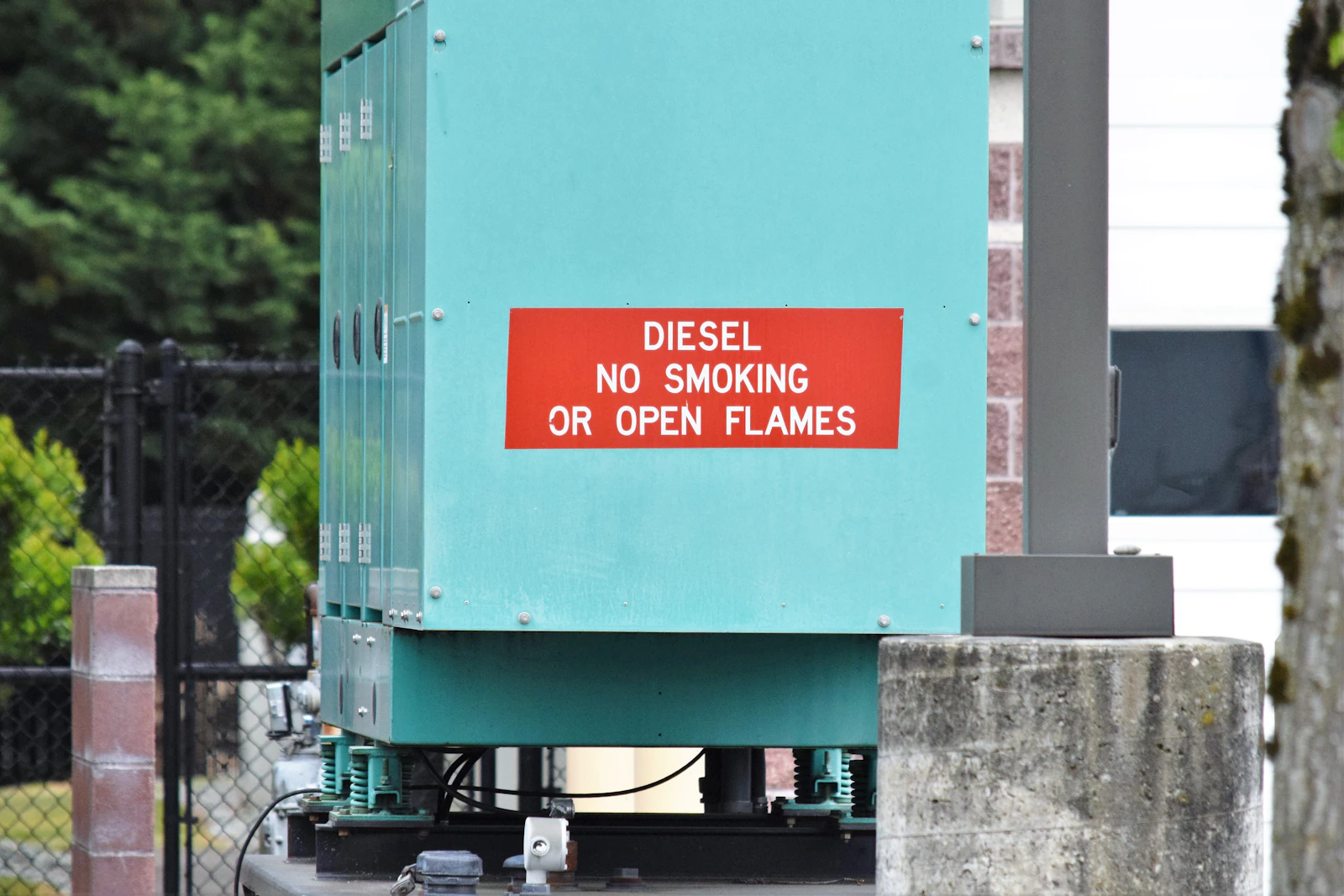
Diesel Generator Rental Rates Raleigh 2026
For Raleigh (Triangle market) diesel generator equipment hire supporting an electrical panel upgrade, 2026 planning budgets typically land in these bands (rental only, before fuel/tax; assuming single-shift terms unless you negotiate prime/24-hour use): 20–25 kW towable diesel at about $175–$275/day, $480–$825/week, and $1,050–$1,950/4-week; 36–56 kW at about $250–$350/day, $665–$925/week, and $1,565–$2,115/month; and 70–125 kW at about $275–$600/day, $800–$1,650/week, and $2,300–$4,800/4-week. These ranges align with published rate guides and public price sheets used as benchmarks, but your Raleigh branch quote will move with availability, noise class, emissions tier, and whether you need 120/208V or 277/480V distribution. In practice, most rental coordinators source from major providers with Triangle coverage (for example, Sunbelt Rentals, United Rentals, Herc Rentals) plus regional power specialists and CAT dealers when job schedules demand guaranteed uptime and on-call fuel/service.
| Vendor |
Daily Rate |
Weekly Rate |
Review Score |
Website |
| Sunbelt Rentals |
$375 |
$1 000 |
8 |
Visit |
| Herc Rentals |
$360 |
$880 |
8 |
Visit |
| United Rentals (Raleigh Power & HVAC) |
$600 |
$1 800 |
7 |
Visit |
| GP Rental (Gregory Poole / Cat Rental Store) |
$365 |
$1 050 |
8 |
Visit |
| Best Rentals (serving Raleigh metro) |
$245 |
$725 |
8 |
Visit |
Benchmark check (published rate cards): one 2025 equipment rental rate guide shows 25 kW at $199/day, $577/week, $1,674/4-week; 45 kW at $241/day, $699/week, $2,027/4-week; 70 kW at $277/day, $804/week, $2,331/4-week; and 125 kW at $569/day, $1,649/week, $4,782/4-week (use these as a sanity check, then apply Raleigh availability and 2026 uplift assumptions).
Another benchmark (public contract price sheet): a Sunbelt Rentals price sheet (contract document) lists 20 kW at $175/day, $483.12/week, $1,068.63/month; 36 kW at $250.90/day, $664.85/week, $1,564.69/month; and 56 kW at $345/day, $925/week, $2,115/month (useful for budgeting, even though contract pricing/terms can differ from local retail quotes and the document shown is time-bound).
How Generator Size And Runtime Drive Hire Cost During A Panel Upgrade
For an electrical panel upgrade, generator sizing is less about nameplate kW and more about how you intend to backfeed/temporary-feed the building during the cutover window. In Raleigh, many commercial panel upgrades are short-duration but high-consequence (tenant expectations, IT closets, alarms, elevators, or process loads). If you only need to keep “life safety + IT + minimal HVAC,” a 20–25 kW diesel towable often prices better and is easier to stage on tight sites. If you need 3-phase 120/208V with multiple branch circuits (or you’re carrying significant motor starting), you may step up into the 36–56 kW class quickly, and the weekly/monthly curve can be more cost-effective than stacking daily charges if the cutover slips.
Runtime assumptions also matter. Many rental houses quote around a “standard” usage allowance (commonly aligned with an 8-hour/day or “single shift” expectation) and will price prime/continuous (24/7) higher because it accelerates service intervals and wear. On top of that, declared storm events can change billing terms: Sunbelt notes that, during a declared state of emergency/pending disaster, certain generators can be billed at a one-week minimum for 24-hour usage. For Raleigh planning (hurricane remnants, ice events), confirm the branch’s emergency billing rules before you mobilize.
Cost control tip for diesel generator hire: avoid oversizing so much that the engine runs underloaded for long periods. Industry guidance commonly flags “wet-stacking” risk and possible cleaning/service backcharges (often budgeted as a $500+ event if the unit returns fouled). If your panel upgrade is a low-load overnight standby, consider a smaller unit or add a load bank plan to keep the engine operating in a healthy range.
What You Actually Pay For: Common Add-Ons For Diesel Generator Equipment Hire
On a panel upgrade, the generator line item is rarely the whole story. The hire cost typically expands with distribution, cables, protection, and containment—especially if you’re feeding multiple panels/temporary power drops or you need to meet site environmental rules.
- Distribution (“spider boxes” / feeder panels): budget $15–$45/day per box depending on amperage and GFCI configuration; on short cutovers, coordinators often carry $75–$160/week as a practical allowance.
- Feeder cable & connectors: heavy-gauge cable sets are commonly separate. For planning, carry $20–$60/day per major cable set (or $120–$300/week) depending on length, camlock ends, and whether the run needs cable ramps.
- Cable ramps / cord covers: budget $12–$35/day each for pedestrian protection; downtown entrances and occupied facilities often require more ramps than expected.
- Grounding kit (rod, clamp, bonding jumpers): budget $10–$30/day (or $40–$120/week) if not bundled; Raleigh clay soils can make rod driving slower, so confirm whether the vendor includes the hardware or only the generator lug.
- Weather & spill control: a containment “environmental package” or drip pan/berm can add $25–$85/day depending on size and spec (important near storm drains and landscaped plazas). Sunbelt notes environmental/containment packages are available for many models.
- Paralleling (rare for panel upgrades but common for bigger cutovers): published guides show a generator paralleling box around $273/day, $791/week, $2,294/4-week—a major adder that should be justified by redundancy or load growth.
Hidden-Fee Breakdown For Diesel Generator Hire In Raleigh
To keep your diesel generator rental for an electrical panel upgrade “apples to apples,” build your quote comparison around the full cash-out, not just the day/week/month rent.
- Delivery & pickup: for towable units, many markets commonly fall in a $125–$400 window each way, with after-hours deliveries priced higher and/or mileage applied. For Raleigh, also confirm whether the branch charges a fuel surcharge for the truck roll.
- Minimum charges: expect 1-day minimum in normal conditions; during high-demand weather events you may see 1-week minimum billing rules (verify before dispatch).
- Damage waiver (rental protection plan): commonly carried as 10%–18% of the rental rate (it can be mandatory unless you provide proof of coverage and accept the risk).
- Environmental/energy fees: plan 2%–5% of rent (varies by provider and line items; treat as a percentage allowance in your estimate).
- Refueling expectation: most suppliers require “return full.” If the unit comes back short, budget a backcharge of pump diesel + $1.50–$3.00/gal markup plus a service/handling fee (commonly $35–$95).
- Cleaning: budget $85–$250 for normal cleaning when units come back muddy; if the generator is returned with concrete splatter or heavy contamination, carry a higher contingency such as $250–$450.
- Late return / extra day exposure: if your cutover slips and you miss the pickup cutoff, a “free” extra day can turn into an extra day charge. Budget an extra 1 day as schedule contingency on critical panel upgrades.
- Service calls & consumables: a technician dispatch for nuisance trips (tripped breaker, reset, DEF/alarm, operator error) can land at $175–$350 plus parts, depending on hour and contract terms.
Raleigh-Specific Cost Drivers You Should Not Ignore
Downtown access and delivery windows: central Raleigh sites (tight loading zones, street frontage, shared docks) often impose delivery windows such as 7:00–10:00 AM only. If your vendor misses that window, you can get pushed to next-day and eat another day of rent. Build a delivery plan with a 30–60 minute onsite escort allowance and confirm whether “wait time” is billable (commonly $75–$150/hour for truck standby).
Noise and occupancy constraints: hospitals, labs, and occupied office buildings can require quieter sets. Even if a 20 kW class can be “quiet,” confirm the spec and placement. Sunbelt lists 60 dBA or lower at full load as a feature for certain 20 kW class units; quieter spec or additional muffling can move price and availability.
Heat/humidity planning: Raleigh summer conditions can push you into a larger kW class when you factor HVAC starting and modest derating. The cost impact is real: jumping from a 25 kW benchmark rate to a 45–56 kW class can add roughly $40–$150/day in rent, before you count bigger cables and higher fuel burn. Use a short load study (or trending data) to defend your selected size and avoid paying for unused capacity.
Example: 72-Hour Electrical Panel Upgrade With Temporary Power
Scenario: You are upgrading a commercial service panel in Raleigh over a weekend, with an occupied tenant returning Monday morning. You need temporary 3-phase power for critical circuits and you want schedule protection if inspections run long.
- Selected set: 45–56 kW towable diesel generator (to cover motor starting and provide headroom).
- Rental term strategy: quote both “3 daily” and “1 weekly” because weekend cutovers commonly slip into Monday; the weekly often wins once you cross ~3–4 days.
- Planning numbers (typical allowances):
- Generator rent: $250–$350/day or $665–$925/week (budget range for this class from public benchmarks).
- Delivery + pickup: $150–$350 each way (confirm jobsite access and trailer spot).
- Distribution: 2 spider boxes at $25–$55/day each.
- Cable: 200 ft of feeder/camlock sets at $40–$120/day total (varies heavily by supplier and spec).
- Damage waiver: 12%–18% of rent (treat as a percentage line item).
- Fuel: carry 30–80 gallons for the weekend depending on average load; if you need a refuel truck, budget $75–$150 trip fee plus fuel markup.
Operational constraints that change the invoice: (1) If you request pickup on Monday but don’t call it in until after the branch cutoff (commonly mid-afternoon), you can get billed another day; (2) if the generator is staged in a garage or near an air intake, you may need additional exhaust routing/dust control and a containment mat; (3) if you’re in a secured downtown building, add check-in time—missed windows create extra day charges even when the work itself is only a few hours.
Budget Worksheet
- Diesel generator equipment hire (select size): $175–$275/day (20–25 kW) OR $250–$350/day (36–56 kW) OR $275–$600/day (70–125 kW).
- Delivery + pickup allowance: $300–$700 total (standard hours); add $175–$300 if after-hours or tight-window delivery is required.
- Distribution equipment allowance: $50–$200/day (spider boxes, small panelboards, GFCI protection).
- Feeder cable / connectors / ramps: $75–$250/day depending on length, camlocks, and protection needs.
- Containment / environmental package: $25–$85/day (jobsite-dependent).
- Damage waiver: 10%–18% of rental subtotal (confirm whether mandatory).
- Fuel contingency: $150–$450 for short cutovers (diesel + handling); increase if you anticipate high kW loading or extended runtime.
- Cleaning contingency: $100–$250 (normal) or $250–$450 (heavy contamination).
- Schedule risk (extra day exposure): add 1 extra day of generator rent plus 1 extra day of distribution/cable if inspection or utility coordination is uncertain.
Rental Order Checklist
- PO scope: generator size (kW), voltage (120/208V vs 277/480V), phase, camlock configuration, and whether you require “quiet” spec or containment.
- Term and billing: daily vs weekly vs 4-week conversion rules; confirm hour-meter allowances; confirm emergency minimums and weekend/holiday billing rules.
- Delivery details: exact address, delivery window, dock/escort requirements, trailer staging spot, and site contact phone.
- Accessories: spider boxes, feeder cable lengths, cable ramps, ground kit, and any temporary lighting needs.
- Fuel plan: who fuels (your team vs vendor fuel service), refuel cadence, and “return full” expectations.
- Off-rent procedure: who is authorized to call off-rent, cutoff time, and required pickup documentation (photos of hour meter, fuel level, and condition at release).
- Return condition documentation: pre- and post-use photos, note any alarms/events, and capture run hours to avoid disputes.
How To Compare Diesel Generator Hire Quotes Without Missing Money
For Raleigh diesel generator rental pricing, the fastest way to “lose” cost control is to compare only the base rent line and ignore the commercial terms that drive the final invoice. When your work scope is an electrical panel upgrade, the generator is a risk-mitigation tool—so most overruns are schedule- and process-driven rather than purely mechanical.
Practical quote normalization: Ask each provider to quote (1) rent for the generator, (2) delivery/pickup, (3) distribution/cable, (4) damage waiver and environmental fees as explicit lines or percentages, and (5) a clear statement of runtime assumptions (single shift vs 24/7 prime). If one quote includes spider boxes and feeder cable and another does not, the “cheaper” number is not actually cheaper.
Contract Terms That Commonly Change Equipment Hire Cost
- Off-rent timing: many providers stop billing when you call off-rent (not when they pick up), but only if you call before a daily cutoff. Carry a planning assumption that missing cutoff can add 1 extra day of rent.
- Weekend handling: for panel upgrades, you often mobilize Friday and demobilize Monday. Confirm whether the vendor offers a weekend program or whether you are billed per calendar day. If your jobsite requires Monday morning pickup, confirm whether Monday counts as a full day charge if the unit is still on rent at 7:00 AM.
- Cancellation and reschedule exposure: if you cancel after dispatch, it is common to see a dry-run/truck charge such as $125–$250. If you reschedule multiple times due to utility or inspection delays, document authorizations to avoid disputes.
- After-hours support: if you require a guaranteed response window (critical tenant or life-safety systems), ask for an on-call service option. Budget $250–$450 for an after-hours callout, or $95–$165/hour if billed time-and-material.
- Metered overtime for continuous use: if you run 24/7, you can trigger additional service requirements (oil changes, filters). Budget an extra $150–$400 per service event if not included, plus downtime planning.
Distribution And Temporary Power Accessories: Where Panel Upgrade Jobs Usually Overspend
On electrical panel upgrade work, distribution is where invoices balloon because the requirements are discovered late (after the generator is already on site). Prevent that by walking the temporary power path during precon and listing every connection and protection point.
- Additional spider box beyond initial plan: $25–$55/day each (often added mid-job when the electrician needs another circuit group).
- Extra cable length: if you guessed 50 ft but need 200 ft, the incremental daily can be meaningful—carry a cable contingency of $40–$120/day when access is uncertain.
- Cable protection for public/occupied routes: add 4–10 ramps at $12–$35/day each when crossing sidewalks, lobbies, or loading dock paths.
- Temporary lighting (if working overnight shutdowns): a small LED light tower or string-light package can add $85–$165/day depending on spec (only include if it is truly required; otherwise it is scope creep).
Fueling, Refueling Service, And Auxiliary Tank Planning
Fuel is not “miscellaneous” on a panel upgrade when runtime or inspection delays are uncertain. Build a simple fueling plan: how many hours you expect to run, what average load you expect, and who is accountable for refueling. If you outsource fueling, you are buying reliability—at a premium.
- Fuel truck trip fee: $75–$150 per visit (common planning allowance).
- Fuel markup when vendor-supplied: often $1.50–$3.00/gal above pump plus handling.
- Spill response supplies/fees: carry $25–$75 for absorbents/handling if your site has strict stormwater requirements.
When Weekly Or 4-Week Hire Beats Daily Pricing (And When It Doesn’t)
For Raleigh equipment hire costs, diesel generator rentals usually convert to weekly value once you pass about 3–4 days onsite (depending on the house rate factor). If your panel upgrade might slip due to Duke Energy scheduling, city inspections, or switchgear lead time, it’s often smarter to lock a week and avoid the “panic extension” conversation on day three. Conversely, if you have a hard cutover window and confirmed inspections, a daily structure can be cheaper—especially if you can release the unit before the off-rent cutoff.
Use the published benchmarks to sanity-check: a 45 kW benchmark shows $241/day versus $699/week; the weekly beats daily at roughly the 3rd day (241 × 3 = 723). A 25 kW benchmark shows $199/day versus $577/week; weekly beats daily just before the 3rd day (199 × 3 = 597).
Closeout Controls To Protect Your Diesel Generator Rental Budget
- Document condition at delivery and release: take time-stamped photos of hour meter, fuel level, and any existing dents/scrapes. This is the easiest way to avoid disputes.
- Confirm pickup scheduling in writing: email/text the off-rent call with the date/time and site contact. If the vendor cannot pick up for 2–3 days, confirm whether billing stops at off-rent or at pickup.
- Return-ready standard: wipe down, remove tape/labels, coil cables, and keep accessories together. Avoid the $85–$250 cleaning/handling backcharge by returning gear in “rental ready” condition.
- Wet-stacking prevention: if the generator is lightly loaded, plan operational steps to avoid fouling; cleaning events are commonly cited as $500+ risk on underloaded diesel sets.