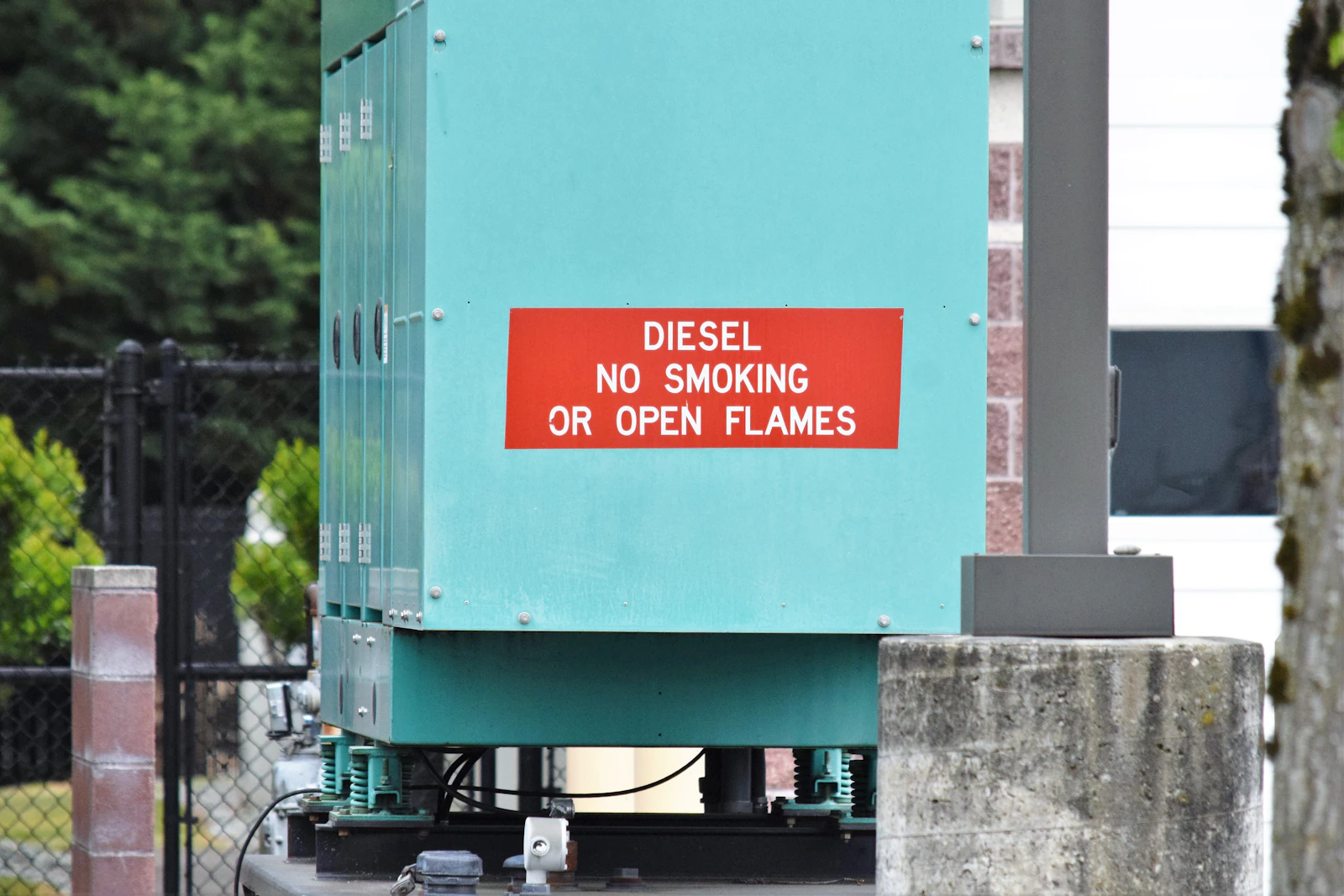
Raleigh 2026 planning ranges (portable/towable diesel generator equipment hire): budget $225–$375/day, $500–$850/week, and $1,150–$2,250/4-week for 20–36 kW sets; $325–$525/day, $850–$1,300/week, and $2,100–$3,300/4-week for 45–70 kW sets; and $475–$850/day, $1,200–$2,100/week, and $2,900–$5,600/4-week for 100–125 kW towable units (rates typically assume single shift and exclude fuel, delivery, cables, distro, and refuel service). Published public rate sheets in other U.S. markets show how wide the starting point can be (for example: 20 kW at $175/day and 56 kW at $345/day on one contract price sheet; 70 kW at $277/day on another published rate guide; and 70 kVA sets advertised at $407–$425/day in some local-rental listings), so treat these Raleigh ranges as negotiable baselines and validate with your rental house for your exact kW, voltage, emissions tier, runtime, and accessories.
| Vendor |
Daily Rate |
Weekly Rate |
Review Score |
Website |
| United Rentals |
$605 |
$1 210 |
8 |
Visit |
| Sunbelt Rentals |
$461 |
$1 045 |
9 |
Visit |
| Herc Rentals |
$430 |
$1 150 |
9 |
Visit |
| Gregory Poole (GP Rental / Cat Rental Store) |
$440 |
$1 150 |
8 |
Visit |
| EquipmentShare (Raleigh–Youngsville) |
$465 |
$1 250 |
8 |
Visit |
portable generator hire
For Raleigh-area temporary power scopes (commercial TI, shell work, crane support, concrete placements, commissioning, events, and storm response), diesel generator hire cost is driven as much by runtime and distribution as by the base generator day rate. National rental houses (commonly including Sunbelt Rentals, United Rentals, and Herc Rentals) and regional power specialists can supply towable diesel units across 20–200 kW classes, but the real delivered cost often comes from adders: delivery/pickup, after-hours access, cables, camlocks, spider boxes, fuel/DEF, PM/service coverage, and off-rent rules. If you are planning 2026 budgets, assume you will negotiate harder on longer terms (4-week+), while emergency availability and 24/7 runtimes will push you toward weekly minimums and shift multipliers. (One example policy: some generator rentals may be billed at a one-week minimum during declared emergencies.)
Diesel Generator Equipment Hire Rate Benchmarks (What the Market Publishes)
When you need an auditable starting point for a Raleigh diesel generator hire estimate, it helps to anchor to published benchmarks and then adjust for local conditions and project risk.
- Contract/price-sheet example (diesel generators): 20 kW listed at $175/day, $483.12/week, $1,068.63/month; 36 kW at $250.90/day, $664.85/week, $1,564.69/month; 56 kW at $345/day, $925/week, $2,115/month; and 100 kW at $445/day, $995/week, $2,800/month (illustrative of negotiated/contract pricing, not Raleigh-specific).
- Published rate guide example: 25 kW towable at $199/day, 45 kW at $241/day, 70 kW diesel at $277/day, and 125 kW diesel at $569/day (again, not Raleigh-specific, but a useful reference band).
- Advertised single-item listings (examples): a 70 kVA generator posted at $425/day, $1,195/week, $2,650/4-week; and a 70 kVA diesel posted with a $407/day day rate.
How to use these benchmarks for Raleigh 2026: treat published numbers as the “yard rate” floor/ceiling indicators, then add: (1) diesel consumption plan, (2) distro package, and (3) logistics/access constraints. The spread between “contract” and “advertised” rates is normal—availability, credit terms, fleet mix, and included accessories vary heavily by supplier and region.
What Actually Drives Portable Diesel Generator Hire Cost in Raleigh
For portable generator hire on active job sites around Raleigh-Durham, the following cost drivers typically change the invoice more than small differences in day rate:
- Running hours vs. calendar days: many rental structures assume a single shift (e.g., ~40 running hours/week or ~176 hours/month), and then apply an overtime/hourly charge beyond that. One published schedule shows weekly/monthly hour caps and shift multipliers (double shift at 1.5×, triple shift at 2×).
- Emergency/storm clauses: expect tighter availability and weekly minimum billing when the region is in storm response mode; some suppliers explicitly state a one-week minimum during declared emergencies for certain generator classes.
- kW sizing margin and load profile: steady loads, motor starts, and non-linear loads (VFDs/rectifiers) can require a larger set or paralleling strategy, which cascades into larger cables, larger fuel burn, and heavier delivery logistics.
- Sound attenuation and placement: “quiet” towable units can matter for downtown Raleigh night work or mixed-use adjacency. A published spec for a 56 kW class notes 60 dBA or lower at full load for those models.
- Emissions tier (Tier 4 Final) and DEF handling: newer fleet requirements can push daily rates up (common adder assumption: +10% to +20%), and you may carry a DEF top-off allowance (common planning: $25–$75/week depending on runtime).
Hidden-Fee Breakdown (Budget These Line Items Upfront)
To keep portable diesel generator hire costs predictable in Raleigh, carry explicit allowances for the items that most frequently appear as “surprise” charges:
- Delivery and pickup: plan $125–$350 each way within a typical metro radius, plus mileage outside the local radius (common estimate: $4–$8/mile beyond the included zone). If the set requires a rollback/lowboy or special handling, carry $450–$950 round trip.
- After-hours / scheduled delivery windows: for constrained site access (e.g., downtown lanes, gated campuses), carry $150–$300 per trip for after-hours coordination or strict time windows.
- Minimum rental term: many suppliers enforce a 1-day minimum; for short outages, you can still pay a full day plus delivery.
- Weekend and holiday billing: common practice is that Saturday/Sunday may count as billable days unless you pre-arrange an off-rent and the yard is open for returns; carry a 1 extra day risk for holiday weekends on short-term hires.
- Off-rent cutoff rule: many rental houses use a morning cutoff (often around 10:00 a.m.)—missing it can trigger another day. Put the cutoff in writing on the PO.
- Damage waiver / rental protection: common planning assumption: 10%–18% of the base rental (generator + accessories), depending on class and contract terms.
- Fueling and refuel service: if you return without topping tanks, refuel is commonly billed at a premium (planning: $5–$7/gal plus a service fee). For on-site refueling, carry $125–$250 per visit (plus fuel).
- Cleaning fees: red-clay mud, concrete dust, or spill residue can trigger $75–$300 cleaning/containment charges, especially if the unit has an environmental containment package or drip pan requirements.
- Late return / holdover: carry $50–$250/day for “held past off-rent” admin, especially when you miss a pickup appointment or fail to stage the unit accessible for the driver.
- Permits and escorts (when applicable): some published rate guides explicitly note that additional charges for permits (and similar logistics adders) may apply—carry an allowance if you’re moving larger/heavier towables or long-distance.
Fuel Burn, Runtime, And The Cost Of 24/7 Operation
Fuel is often the largest variable cost for diesel generator equipment hire when runtime increases beyond “single shift.” A published 56 kW class spec shows full-load consumption around 4.4 to 6.62 gallons per hour, with onboard fuel capacity around 103 to 132 gallons and roughly 20–23 hours runtime at full load (model-dependent).
Practical Raleigh budgeting approach (2026):
- Carry diesel at $4.00–$5.25/gal for job-costing (adjust to your corporate fuel contract).
- If you expect a 56 kW unit to average 3.0 GPH at partial load for 24 hours/day, that’s 72 gallons/day (~$288–$378/day fuel at the above allowance) before service delivery charges.
- If your contract caps hours (e.g., 40 hours/week) and you run 24/7, confirm the shift multiplier (common structures include 1.5× or 2× for higher utilization).
Raleigh-Specific Considerations That Change Generator Hire Cost
- Storm response demand (spring/summer): availability tightens and delivery lead times extend; you can also see weekly minimum billing on certain generator classes during declared emergencies.
- Downtown access and campus logistics: jobs near dense corridors often need scheduled delivery windows, badge-in, or laydown coordination—carry $150–$300 for logistics friction if you cannot guarantee clear access for the driver and a safe drop zone.
- Heat/humidity derate and dust control: summer conditions and indoor placements (fit-outs, basements, or covered docks) can require additional ventilation ducting, CO monitoring, and dust-control measures; budget $75–$200/day for ancillary ventilation/containment adders if the generator is near occupied areas or sensitive finishes.
Accessories And Distribution: The “Real” Portable Generator Hire Package
A diesel generator rarely ships alone on commercial work. If you need a hire quote you can approve internally, build a “generator + distro” package and treat each element as a cost line item.
- Automatic transfer switch (ATS), portable: $40–$120/day or $160–$420/week depending on amperage and camlock configuration.
- Feeder cable (per 50 ft set): $25–$75/day; budget 200–300 ft if placement is constrained by noise/exhaust or security.
- Spider box / temporary power distribution box: $18–$55/day per box depending on spec, plus GFCI test documentation if your GC requires it.
- Grounding kit (rod + clamp + conductor): $10–$25/day.
- Camlock panel/adapters: $8–$20/day each (small item, but quickly accumulates across multiple circuits).
- Load bank (commissioning / exercise): $250–$600/day (plus mobilization) if your turnover requires documented load testing.
- Environmental/spill containment package: $15–$45/day (often mandatory on paved lots or near storm drains).
Example: Raleigh Portable Diesel Generator Hire For A 3-Week TI Project
Scenario: interior build-out needs temporary 3-phase power for lifts, lighting, and commissioning loads. You size a 56 kW towable diesel generator and run 10 hours/day, 6 days/week for 3 weeks (about 180 running hours).
- Base rental (planning): 56 kW class at $2,100–$2,850 for a 4-week rate equivalent (many suppliers will price 3 weeks close to a 4-week/monthly band, but confirm). A published contract example lists $2,115/month for a 56 kW diesel generator, illustrating how monthly pricing can compress.
- Shift/overtime risk: if your contract assumes 176 hours/month and you hit 180 hours, you may pay overtime on the overage—ensure the hourly charge is defined and confirm whether the supplier uses shift multipliers (e.g., 1.5× for double shift).
- Distro package allowance: ATS $300, cables (6 sets) $600, two spider boxes $450, grounding $90 (order-of-magnitude planning).
- Logistics: delivery + pickup $500 (two trips), plus a constrained delivery-window adder $200.
- Protection plan: damage waiver at 12% of rental items (generator + accessories), planning $450–$600.
- Fuel: if the unit averages 2.5 GPH while loaded, that’s 450 gallons over the term; at $4.50/gal, fuel allowance is $2,025 (plus refuel service if you don’t self-perform).
Operational constraint to note: if the site cannot stage the unit for pickup by the agreed date/time, you can incur $50–$250 holdover plus another day rate—set a written “staged and accessible” requirement with the superintendent.
Budget Worksheet (Raleigh Diesel Generator Equipment Hire)
Use this as a no-table estimator worksheet for portable generator hire budgets (edit quantities and durations to match your plan).
- Diesel generator hire (choose kW class): allowance $2,100–$3,300 per 4-week period for 45–70 kW, or $2,900–$5,600 per 4-week period for 100–125 kW.
- Delivery + pickup: $250–$700 round trip (metro), plus $4–$8/mile outside radius.
- After-hours / scheduled delivery window: $150–$300 per trip.
- Damage waiver / rental protection: 10%–18% of rental.
- ATS: $160–$420/week (if required).
- Feeder cable: $150–$450/week (typical small bundle).
- Spider boxes / distro boxes: $150–$450/week (1–3 boxes).
- Grounding/bonding kit: $40–$125/week.
- Spill kit / containment: $60–$180/week.
- Load bank (if commissioning): $250–$600/day + mobilization.
- Fuel: $4.00–$5.25/gal plus refuel service $125–$250/visit if applicable.
- Cleaning / return condition: $75–$300 contingency.
Rental Order Checklist (What Your PO Should Specify)
- kW/kVA rating, voltage, phase, camlock configuration, and required receptacles.
- Emissions tier requirement (Tier 4 Final if mandated) and whether DEF is required.
- Sound attenuation requirement (dBA target) and placement constraints.
- Billing structure: day/week/4-week; included running hours; defined overtime rate; shift multipliers if 24/7.
- Delivery address, on-site contact, site access restrictions, and delivery/pickup time window.
- Off-rent procedure and cutoff time in writing; pickup must be scheduled and unit must be staged accessible.
- Fuel expectations at return (full tank? refuel billing rate?).
- Return condition documentation: photos at delivery and at off-rent, hour meter reading, and any noted damage.
- Included accessories: cables (lengths/quantities), distro boxes, grounding, spill containment, ATS.
- Insurance vs damage waiver election and certificate requirements.
How To Negotiate Diesel Generator Hire Rates For 2026 Raleigh Budgets
For equipment managers and rental coordinators, the goal is to reduce variance in portable diesel generator hire costs, not just to chase the lowest day rate. Use these tactics to stabilize cost on Raleigh projects:
- Standardize your “generator package”: define a default bundle for each class (e.g., 56 kW includes 200 ft feeder, 2 spider boxes, grounding, spill kit). Bundling reduces last-minute adders and missing components that trigger extra trips.
- Ask for the hour structure in writing: confirm whether the rate assumes 40 hours/week or a similar cap, and what the overtime/shift multipliers are. Published examples show explicit hour caps (e.g., 40 hours/week, 176 hours/month) and multipliers (1.5×, 2×).
- Convert “3-week” needs into “4-week” pricing early: many suppliers will nudge you into a monthly band; plan for it and negotiate the 4-week rate rather than paying three separate weekly charges.
- Lock delivery pricing and access rules: a $300 day rate becomes irrelevant if you incur two failed deliveries at $150–$300 each plus holdover days.
Service Coverage, PM Events, And Repair Billing (Avoid Uncontrolled Exposure)
Portable diesel generators are generally reliable, but rental agreements can allocate labor differently depending on fault, fuel quality, and operating environment. For Raleigh planning, carry these realistic allowances:
- On-site technician (if required by client or for critical loads): $95–$165/hour, often with a 2-hour minimum per dispatch.
- Preventive maintenance event (high runtime): if you are running 24/7, budget $250–$650 per PM visit (filters, oil, disposal may be included or billed separately).
- Battery/starting support and cold-start contingencies (winter mornings): allowance $75–$150 (small, but common on short rentals).
- Fuel quality / water contamination risk: if you self-fuel from jobsite tanks, carry a $300–$1,200 contingency for filter changes, polishing, or downtime coordination on critical sites.
Delivery Windows, Off-Rent Rules, And Weekend Billing (Where Costs Commonly Creep)
These operational constraints frequently move the final invoice for generator equipment hire:
- Delivery cutoff and missed appointments: carry $150–$300 for re-delivery or rescheduled pickup if the driver cannot access the drop zone.
- Weekend/holiday billing exposure: on Friday deliveries, assume a potential +1 billable day if you cannot off-rent and return before yard close.
- Standby at gate / waiting time: if the driver queues on site due to escorts or crane coordination, carry $75–$150/hour waiting time (varies; confirm in your agreement).
- Return condition documentation: require hour-meter photos and fuel level photos at off-rent to reduce disputes and avoid a $75–$300 cleaning/refuel surprise.
Fueling Strategy Options (Self-Perform Vs Refuel Service)
Choose one of two fueling strategies, then budget accordingly:
- Self-perform fueling: best for construction sites with controlled fuel storage. Budget diesel at $4.00–$5.25/gal and set a strict “return full” requirement to avoid premium refuel charges (often $5–$7/gal plus service). Include spill response supplies ($25–$75 allowance) if you’re fueling on paved lots.
- Supplier refuel service: best for secure campuses and critical operations. Carry $125–$250/visit plus fuel, and require a refuel cadence (e.g., 2 visits/week) so the unit never drops below a safe reserve.
When You Need More Than One Generator: Paralleling And Load Management
For larger temporary power scopes, you may be deciding between one large set and two smaller sets with redundancy.
- Paralleling equipment: published rate guides list a “generator paralleling box” with a day rate (example benchmark $273/day and $791/week in one published guide). Use this only as a reference and quote it locally for Raleigh.
- Redundancy premium: budgeting two sets for N+1 resilience can increase base rent by 60%–110%, but may reduce risk costs for outages, liquidated damages, and overtime labor.
Compliance Notes That Can Add Cost (But Reduce Risk)
- Grounding/bonding documentation: if your safety program requires sign-off, carry $75–$200 for documentation labor and an electrician’s time.
- Spill containment and environmental protection: if you must use containment on asphalt or near drains, include $15–$45/day for containment equipment and $75–$300 for potential cleanup/absorbent replacement.
- Noise and exhaust management: for sensitive sites, include a sound-attenuated unit adder ($75–$200/day) and plan placement farther from occupied areas (which can increase cable quantities by 100–200 ft).
Quick Reference: Raleigh 2026 Planning Adders (No-Table List)
Use these as fast allowances when building portable generator hire estimates:
- Delivery/pickup (metro): $250–$700 round trip; outside radius: $4–$8/mile.
- After-hours/time-window logistics: $150–$300 per trip.
- Damage waiver: 10%–18% of rental items.
- ATS: $40–$120/day.
- Feeder cable (50 ft set): $25–$75/day.
- Spider box/distro: $18–$55/day each.
- Grounding kit: $10–$25/day.
- Spill/containment: $15–$45/day.
- Load bank: $250–$600/day + mobilization.
- Refuel service: $125–$250/visit + fuel.
- Cleaning/return condition: $75–$300.
- Holdover/late return exposure: $50–$250/day.
- On-site tech (if required): $95–$165/hour, often 2-hour minimum.
If you want, share the kW size, phase/voltage, expected runtime (hours/day), and whether you need distro/ATS, and I can convert these allowances into a tighter Raleigh equipment hire budget range for your specific scope.