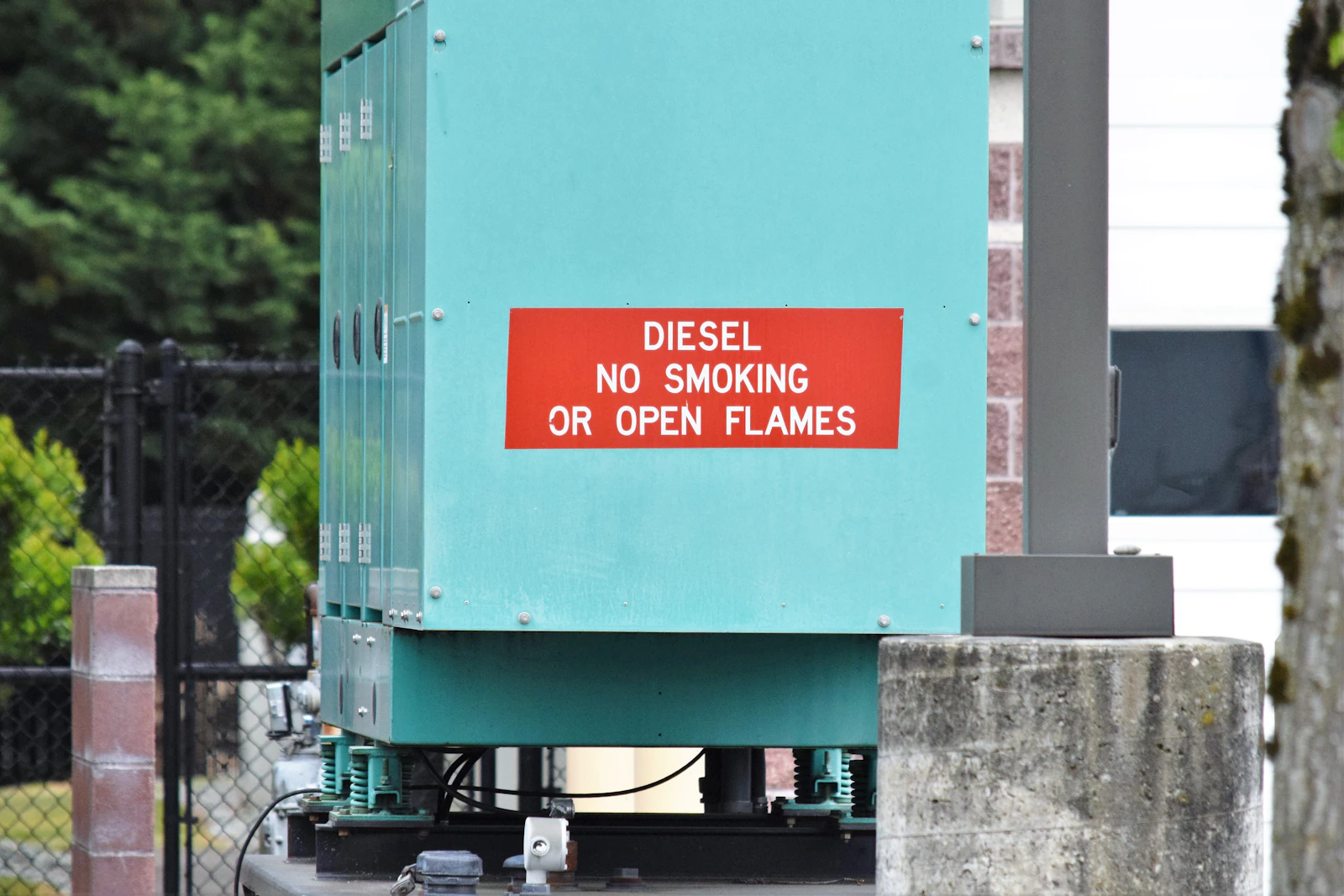
For a Sacramento electrical panel upgrade that needs temporary power, 2026 budgetary diesel generator equipment hire typically pencils out in these planning bands (single-shift unless noted): 20–25 kW $225–$375/day, $650–$1,100/week, $1,900–$3,200/4-week; 45–70 kW $300–$525/day, $850–$1,650/week, $2,200–$4,200/4-week; 100–125 kW $500–$750/day, $1,350–$2,100/week, $3,300–$5,400/4-week. Those ranges align with published, item-level examples such as a 125 kVA (100 kW) towable unit listed at $550/day and $1,595/week (4-week $3,550), Sacramento-area power specialists advertising “starting at” $200/day, $600/week, $1,800/month for diesel units in the 30–120 kW band, and rate sheets showing weekly/monthly generator pricing with runtime-based overtime and shift multipliers. In Sacramento, national rental houses (e.g., United Rentals, Sunbelt Rentals, Herc) and regional power providers compete heavily—so the winning hire price is usually driven less by “who” and more by kW class, runtime (8-hour vs 24/7), distribution package, and delivery constraints.
| Vendor |
Daily Rate |
Weekly Rate |
Review Score |
Website |
| United Rentals |
$275 |
$549 |
8 |
Visit |
| Sunbelt Rentals |
$190 |
$520 |
9 |
Visit |
| Herc Rentals |
$222 |
$481 |
10 |
Visit |
| Cresco Equipment Rentals (NorCal Rental Group) |
$340 |
$836 |
9 |
Visit |
Diesel Generator Hire Costs Sacramento 2026
The fastest way to get an accurate diesel generator hire cost for an electrical panel upgrade is to treat it as a temporary-power package (generator + distribution + delivery + operating assumptions). Below are practical, estimator-friendly 2026 planning ranges for Sacramento, built around the way most equipment yards bill (shift-based time and/or hour-meter/running-hour caps). Use these as budget control numbers, then firm up with a quote once you know voltage, amperage, and outage window.
1) Towable diesel generator hire (Tier 4 Final), by common size band (Sacramento planning ranges):
- 20 kW class (good for small tenant suites / small panels / limited circuits): $225–$375/day; $650–$1,050/week; $1,900–$3,000/4-week. (Published examples include 20 kW at $250/day and $620/week.)
- 50 kW class (small commercial / mixed loads, moderate HVAC risk): $300–$475/day; $850–$1,350/week; $2,200–$4,000/4-week. (Published examples include 50 kW at $335/day and $1,000/week.)
- 80 kW class (common “safe” size for many panel swaps): $350–$550/day; $1,050–$1,650/week; $2,800–$4,600/4-week. (Published examples include 80 kW at $375/day and $1,100/week.)
- 100 kW class (larger single service / more simultaneous loads): $500–$750/day; $1,350–$2,100/week; $3,300–$5,400/4-week. (Published examples include 125 kVA/100 kW at $550/day and $1,595/week; and 100 kW weekly/monthly rates shown with overtime charges.)
- 120–125 kW class (if inrush/starting current is driving the spec): $550–$850/day; $1,550–$2,400/week; $3,700–$6,000/4-week. (Published examples include 120 kW at $550/day and $1,550/week; and 125 kVA/100 kW at $3,550 per four weeks.)
2) Understand Sacramento billing “time bases” before you compare quotes. Generator rental invoices are commonly governed by at least one of the following:
- Shift-based rental time: often 8 hours/day, 40 hours/week, and ~160 hours per 4-week period (varies by yard). If your electrical panel upgrade needs the unit running continuously, ask for a 24-hour/“triple shift” rate up front.
- Running-hour caps + overtime charges: some published rate sheets specify weekly and monthly running-hour allowances (e.g., 40 running hours/week and 176 running hours/month) and then charge an overtime $/hour; double shift can be 1.5× and triple shift 2×.
- Declared emergencies: at least one major rental provider publicly states that during declared emergencies/natural disasters, this generator type can move to a one-week minimum at 24-hour usage rates, which can materially change “just a weekend” plan in the Sacramento region during wildfire/PSPS season.
What Actually Drives Diesel Generator Hire Pricing for an Electrical Panel Upgrade?
For electrical panel upgrades, the generator itself is rarely the whole story. The biggest hire-cost swings in Sacramento tend to come from (a) distribution gear scope, (b) runtime and refueling expectations, and (c) delivery/rigging/access constraints—especially when the service gear is on a tight downtown site or inside an occupied building with noise and exhaust restrictions.
- Voltage & distribution complexity: A 120/208V 3-phase temporary setup with camlocks, feeder, and a distro panel is a different cost profile than a simple 120/240V single-phase tie-in.
- Load profile (starting current / inrush): If you must pick up HVAC, refrigeration, or large motor loads immediately after cutover, you may pay for a higher kW class purely to cover starts.
- Runtime and on-site attendance: “8 hours/day” pricing can look cheap until the job needs 24/7 power for life-safety loads. If you need 72 continuous hours, ensure the quote is based on continuous operation.
- Fuel tank strategy: Units in the ~100 kW class commonly have large onboard tanks (e.g., 169 gallons in one published spec), but consumption at full load can be material (e.g., 7.3 gallons per hour listed on a 100 kW spec page). Even if fuel is pass-through, refuel service can be a billable add-on that affects total hire cost.
- Compliance package requirements: In California, many contractors standardize on Tier 4 Final towable sets, and you may need an environmental/fluid-containment package depending on site rules.
Hidden-Fee Breakdown (Sacramento Generator Equipment Hire)
Use this as a negotiation and scope-control checklist. These are typical line items that show up on diesel generator equipment hire agreements for panel upgrades; confirm what is included vs. excluded on the quote.
- Delivery and pickup: local “truck delivery” can price as low as $75 delivery + $75 pickup for smaller moves, while lowboy moves may list at $125 delivery + $125 pickup.
- Non-local / out-of-radius delivery: plan $125 per hour when the vendor bills by travel/drive time, and watch for a 2-hour minimum on lowboy move charges (example: $125/hr with 2-hour minimum).
- Minimum rental term: even when the outage is short, many listings still specify a day minimum.
- Overtime / excess running hours: published rate sheets show overtime charges such as $9/hr (30–40 kW), $10/hr (50–75 kW), and $15/hr (100–150 kW), after the included running-hour cap.
- Shift multipliers: examples published as 1.5× for double shift and 2× for triple shift/unlimited running time.
- Damage waiver / physical damage insurance: often charged as a percentage of the base rental (commonly budget 10%–17% of time charges) unless you provide a certificate of insurance and the vendor accepts it.
- Cleaning fees: budget $95–$250 if the unit returns with concrete dust, mud, adhesive residue, or oil film (common on panel upgrades with coring/trenching nearby).
- After-hours call-out / service dispatch: budget $250–$450 if you require weekend/after-hours troubleshooting or a tech reset due to nuisance trips.
- Weekend/holiday billing rules: confirm whether Saturday/Sunday counts as billable days if the unit is sitting on-site but not formally off-rented, and whether pickups occur on Monday (and if that triggers an extra day).
Sacramento-Specific Cost Considerations That Commonly Change the Invoice
- Downtown access windows: if your panel upgrade is in the central business district, limited delivery windows can force after-hours delivery/pickup (which can trigger premium dispatch or standby charges). Lock in a delivery appointment and site contact with a hard arrival window (e.g., 30-minute call-ahead).
- Summer heat derating and refuel frequency: Sacramento summer heat can push higher runtime for HVAC loads and reduce available headroom. Practically, this can shift you from a 50 kW hire to an 80 kW or 100 kW hire (and increase distribution scope).
- Dust control and indoor work: many panel upgrades include saw-cutting, drilling, and demolition near the electrical room; if the generator is staged indoors (rare but possible with ducting) or near air intakes, you may need extra exhaust routing, barriers, or relocation moves to satisfy building management.
Distribution Gear Adders (Budgetary) for a Panel Upgrade
Even if your electrician provides certain components, many jobs end up renting at least part of the distribution package so the responsibility chain stays clean. Budgetary adders (confirm with your vendor):
- Camlock feeder cable sets: $35–$95/day per set (often priced by length); $110–$285/week.
- Spider boxes / GFCI stringer distribution: $18–$45/day each; $55–$135/week each (quantity can jump quickly on multi-tenant sites).
- Panelboard / temporary load center: $45–$140/day; $135–$420/week.
- Ground rod kit / bonding accessories: $8–$20/day (or included—confirm in writing).
- External belly tank (if required by runtime): $65–$175/day; plus delivery and spill containment requirements.
Example: 3-Day Electrical Panel Upgrade With Temporary Power (Sacramento)
Scenario: Small medical office in Sacramento needs a main panel replacement. Building requires continuous power for IT, lighting, limited HVAC, and a small refrigeration load. Outage window is Friday 6:00 pm to Monday 6:00 am, but the contractor expects the generator to run continuously for 60 hours due to commissioning and tenant constraints.
- Generator selection: budget an 80 kW towable diesel set rather than 50 kW to handle starting loads and reduce nuisance trips.
- Published reference point (equipment yard example): 80 kW is shown at $375/day and $1,100/week on one public rate page; for a weekend spanning multiple calendar days, you still need to negotiate whether it lands at a day stack, a weekly minimum, or a 24/7 rate.
- Delivery/pickup budgeting: assume a local move could be $75 + $75 for smaller deliveries, but if a lowboy is required, plan $125 + $125 (or travel-time billing if out-of-radius).
- Runtime risk: if the vendor’s rate assumes 40 hours/week included and your outage is 60 running hours, plan for 20 overtime hours. If the unit’s overtime is budgeted at $10/hr–$15/hr, that’s an extra $200–$300 before taxes/waiver.
- Damage waiver planning: add 10%–17% to base rental time charges if you do not provide accepted insurance documentation.
- Return condition controls: take time-stamped photos at delivery and at pickup, and document hour-meter reading to reduce disputes on overtime, refueling, and damage.
Estimator takeaway: on panel upgrades, the hire cost “gotchas” are usually (1) weekend billing, (2) overtime running hours, (3) delivery method, and (4) distribution scope creep.
Budget Worksheet (Diesel Generator Equipment Hire Allowances)
- Diesel generator rental time (size band selected): allowance $1,100–$2,100/week depending on kW class and 24/7 basis
- Delivery + pickup allowance (local): $150–$350 (higher if lowboy or out-of-radius travel-time billing)
- Distribution package allowance (cable + distro + spider boxes): $350–$1,250/week
- Damage waiver/PD insurance allowance: 10%–17% of base time charges
- Overtime running-hour allowance: $200–$600 (e.g., 20–40 overtime hours at $10–$15/hr)
- Cleaning/return condition allowance: $95–$250
- After-hours service contingency: $250–$450
- Weekend/holiday billing contingency: 1 extra day at the applicable day rate ($300–$750 depending on size)
Rental Order Checklist (What the Rental Coordinator Should Lock Down)
- PO includes: generator kW, voltage configuration (120/208V or 277/480V), phase, connectors (camlocks/lugs), and required accessories
- Confirm billing basis: single shift vs double vs 24/7; included running-hour caps; overtime $/hour
- Delivery: exact address, gate codes, contact, lift/rigging needs, delivery cutoffs, and whether a lowboy is required
- Site constraints: exhaust direction, noise limits, indoor air intake proximity, and required barricades
- Off-rent rules: how to place equipment off rent (email/portal/call), cutoff time, and whether pickup date controls billing stop
- Fuel/refuel plan: “full-out/full-in” expectation, refuel service option, and spill containment requirements
- Return documentation: pickup ticket, hour-meter photo, and condition photos (all time-stamped)
How To Keep Diesel Generator Hire Costs Predictable During a Sacramento Panel Upgrade
Panel upgrades create a unique risk profile for generator hire: the work is planned, but the power-critical window can expand if inspections slip, commissioning takes longer, or tenants require re-energization at specific times. The goal is to structure the rental so you are not paying premium overtime and weekend charges simply because the schedule drifted.
- Pre-negotiate a “not-to-exceed” rental conversion: ask the vendor to convert day stacks into a weekly rate once you hit the weekly threshold (and confirm whether 4-week is treated as 28 days or a fixed “rental month”).
- Specify 24/7 operation if there is any chance of continuous runtime: published rate sheets show that triple shift/unlimited operation can be priced at 2× a standard single-shift rate; if you wait until the job is live, you lose leverage.
- Right-size the unit to reduce distribution spend: oversizing the generator can force bigger cable, bigger distro, and more expensive delivery; undersizing can cause nuisance trips and after-hours callouts ($250–$450 budget impact).
Cost Notes on Fuel, Refueling Service, and Runtime (Even When Fuel Is “Excluded”)
Fuel is not the equipment hire charge, but it frequently appears on the same invoice and affects your total cost exposure—especially for weekend outages when you don’t want a technician driving out to refuel. One published 100 kW specification lists 7.3 gallons per hour at full load, a 169-gallon onboard tank, and about 23 hours runtime at full load. If your panel upgrade requires extended runtime, plan the operational approach (load shedding, staging, refuel timing) so you don’t pay emergency refuel callouts.
- Refuel trip charge (budgetary): $150–$300 per visit (higher after hours).
- Fuel markup (budgetary): $0.75–$2.50 per gallon above pump price when vendor-furnished.
- “Full-out/full-in” expectation: many vendors require the tank to be returned full; if not, you may be billed fuel plus service/handling.
Delivery, Moves, and Standby Time: Sacramento Logistics That Add Real Dollars
In Sacramento, rental costs can jump when the job needs multiple moves (initial set, relocation for access, then final pull), or when delivery/pickup must occur outside standard windows. A local Sacramento-region provider publishes examples such as $75 delivery / $75 pickup for small-truck local deliveries, $125 / $125 when a lowboy is required, and $125 per hour for non-local delivery and pickups, with move charges at $125 per hour and a 2-hour minimum. Use those numbers as a reality check when you are deciding whether to self-tow (if allowed) or vendor-haul.
- Standby time at site (budgetary): $95–$175/hour if the driver is held on-site due to blocked access, locked gates, or missing escort.
- Reposition/move charge (budgetary): $250–$600 per move locally, or travel-time billing if outside the normal service radius.
Distribution Scope Creep: The Quiet Budget Killer
For electrical panel upgrades, distribution often grows after the walkthrough—especially when tenants ask to keep “just a few more circuits” live. Control it with a written circuit schedule and a capped distribution package.
- Add-on spider boxes: budget $18–$45/day each (quantity creep is common: 2 becomes 6 quickly).
- Extra feeder lengths: budget $25–$65/day per additional cable run if the generator cannot be staged near the electrical room due to exhaust/noise.
- Paralleling/synchronizing accessories: if you require redundancy (N+1) or cannot take a hard outage, accessory costs can be significant; some published rate guides list paralleling equipment as a separate line item.
Return-Condition Documentation (Avoiding Back-Charges)
Back-charges are where “good” hire pricing gets destroyed. For Sacramento panel upgrades (often dusty, with concrete drilling and demo), tighten closeout controls:
- Photo the generator at drop with hour meter visible; repeat at pickup.
- Document voltage selector position and connection method (camlocks vs lugs) before demobilization.
- Confirm accessories returned: ground kit, keys, caps, spider boxes, feeder, and any E-stop/remote stop devices.
- Cleaning exposure (budgetary): $95–$250 if the radiator screens, control panel, and trailer deck are impacted by concrete dust or mud.
- Missing accessory replacement exposure (budgetary): $50–$175 for smaller items (caps/locks), and materially more for specialty distribution gear.
2026 Market Notes for Sacramento Diesel Generator Equipment Hire
For 2026 planning in Northern California, assume the following dynamics when you forecast diesel generator hire costs for panel upgrades:
- Seasonality and emergency events: during wildfire season and declared emergency periods, at least one major provider notes that certain generator categories may move to a one-week minimum at 24-hour usage rates—this can turn a 2-day panel swap into a 7-day equipment hire cost exposure if you’re caught unprepared.
- Runtime-based billing is common: published rate sheets show weekly/monthly rates tied to 40 running hours/week and 176 running hours/month, with overtime billed by the hour. If your panel upgrade is anything other than a clean “day shift” outage, structure the rental accordingly.
- Expect Tier 4 Final to be standard: many publicly listed generator specs in the region reference Tier 4 Final emissions compliance, and that spec can influence availability and pricing in peak periods.
Final Estimator Guidance (Sacramento Panel Upgrade Temporary Power)
If you need one rule of thumb: for a panel upgrade, don’t budget “a generator”—budget a diesel generator + distribution + delivery + runtime rules package, and force the quote to state (1) shift basis, (2) included running hours, (3) overtime $/hour, (4) delivery method and minimums, and (5) off-rent/pickup cutoff times. That is what keeps diesel generator equipment hire costs predictable in Sacramento in 2026.