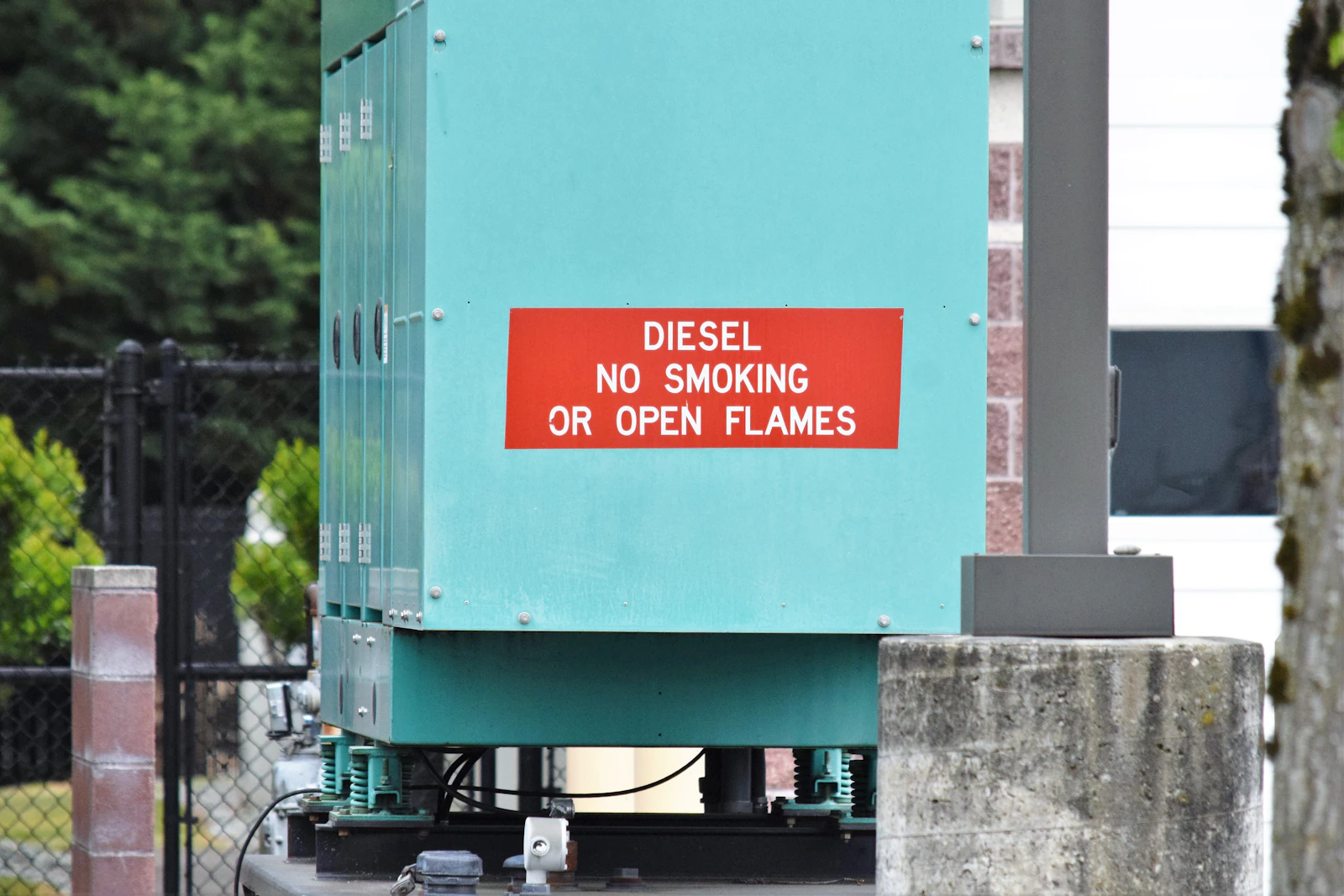
Diesel Generator Hire Costs San Antonio 2026
2026 planning ranges (San Antonio): for an electrical panel upgrade needing temporary power, budget $175–$650/day, $483–$1,600/week, and $1,070–$4,200 per 28-day month for common towable diesel generator sizes in the 20–100 kW class (single-shift assumptions, excluding fuel, delivery, and distribution). Published rate schedules show examples such as 20 kW at $175/day, $483.12/week, $1,068.63/month; 36 kW at $250.90/day, $664.85/week, $1,564.69/month; 56 kW at $345/day, $925/week, $2,115/month; and 100 kW at $445/day, $995/week, $2,800/month on one contract price sheet (treat as a benchmark, not a guaranteed local quote).
| Vendor |
Daily Rate |
Weekly Rate |
Review Score |
Website |
| Sunbelt Rentals |
$445 |
$995 |
9 |
Visit |
| United Rentals |
$460 |
$1 150 |
9 |
Visit |
| Herc Rentals |
$444 |
$1 121 |
8 |
Visit |
| Sunstate Equipment |
$430 |
$1 050 |
10 |
Visit |
| EquipmentShare |
$450 |
$1 100 |
9 |
Visit |
For San Antonio electrical panel upgrade work (service change, main switchboard/panel replacement, or extended shutdown), the diesel generator equipment hire cost is rarely just the base rental. Total spend is usually driven by (1) right-sizing to handle inrush and HVAC loads, (2) distribution gear (camlock cables, distro panels, spider boxes, ramps), (3) delivery windows and after-hours mobilization, and (4) run-hour allowances that trigger overtime charges when the generator runs beyond the contracted hours. In San Antonio, national rental houses and power specialists commonly support this scope; however, a rental coordinator should still build a line-item estimate that anticipates weekend billing, off-rent cutoffs, refuel expectations, and return-condition documentation rather than relying on “headline” day rates.
How Panel Upgrade Scope Changes Diesel Generator Equipment Hire Pricing
Electrical panel upgrade projects create a specific temporary-power profile that changes generator hire costs versus “general construction power.” The three cost-impacting questions your electrician/PM should answer before you reserve the set are:
- Is the load continuous or intermittent? If the building needs to stay operational (IT closets, security, refrigeration, elevators on limited service), the generator may run 24/7 and exceed typical weekly/monthly run-hour allowances, creating overtime charges.
- Is the tie-in simple (single feeder) or complex (multi-circuit)? A multi-circuit cutover usually requires more distribution: additional camlock runs, multiple distro panels, breakers, GFCI protection, ramps, and labeling—often costing as much as the generator base rent on short jobs.
- Is there a hard outage window? If the cutover must occur at night or on a weekend, plan on after-hours delivery/pickup premiums and less flexibility on off-rent timing.
San Antonio-specific planning note: for occupied facilities during warm months, derating and cooling load can push you from a 36 kW into a 56 kW or 100 kW class quickly. That single step-up can add roughly $90–$200/day in base hire (before accessories) based on published example schedules.
Diesel Generator Rental Rates by Common Size Bands (Planning Ranges)
The ranges below are intended for 2026 estimating in San Antonio. Assumptions: towable diesel units, single-shift pricing, normal demand conditions, and a “month” frequently treated as 4 weeks / 28 days in rental contracts (verify your vendor’s billing calendar and proration rules).
- 20 kW class (small temp power / limited circuits): $175–$260/day, $483–$750/week, $1,070–$1,950/28-day month. Published examples include $175/day, $483.12/week, $1,068.63/month.
- 36 kW class (mid-size panels, light HVAC, partial building): $250–$400/day, $665–$1,000/week, $1,565–$2,300/28-day month. Published example: $250.90/day, $664.85/week, $1,564.69/month.
- 56 kW class (more headroom for inrush and multiple circuits): $345–$500/day, $925–$1,300/week, $2,115–$3,100/28-day month. Published example: $345/day, $925/week, $2,115/month.
- 100 kW class (larger service upgrades, multi-distro, heavier HVAC): $445–$650/day, $995–$1,600/week, $2,800–$4,200/28-day month. Published example: $445/day, $995/week, $2,800/month.
- 200–350 kW class (when you’re effectively running a site, not just bridging a panel): plan $1,250–$1,700/week and $3,750–$5,100/month, plus materially higher cable/distro and fuel logistics. One published rate schedule shows 200 kW at $1,250/week and $3,750/month and 350 kW at $1,700/week and $5,100/month with overtime adders.
What Drives Diesel Generator Equipment Hire Costs in San Antonio?
For electrical panel upgrade work, the following cost drivers routinely swing the equipment hire budget by 30%–100%:
- Run-hour allowance and shift multiplier: Many schedules are built around a weekly/monthly run-hour cap, then charge overtime beyond it. One published schedule states 40 running hours per week and 176 running hours per monthly rental, with double shift at 1.5× and triple shift (unlimited running) at 2× the single-shift rate.
- Overtime (usage) charge: Usage above allowance is commonly billed per hour. Example published overtime adders range from $9/hour (30–40 kW classes) up to $15/hour (100–150 kW) and $20/hour (200–350 kW).
- Downtown access and delivery windows: In central San Antonio (narrow access, staging constraints, traffic windows), you may need timed delivery (e.g., pre-7:00 a.m. placement) or smaller truck access—both can increase freight costs and reduce “same day” flexibility.
- Heat management: High ambient temperature and poor airflow in alleys/yards can increase derating risk and drive selection of a larger kW class or additional cable length to relocate the set for ventilation (more cable, ramps, and labor).
- Noise constraints: Near hospitals, hotels, or residential boundaries, you may be forced into a quieter enclosure class or different placement, increasing delivery complexity and cable quantities.
Hidden-Fee Breakdown for Diesel Generator Rentals
Use this section to pressure-test quotes and prevent change orders. These are typical line items that show up on invoices for diesel generator equipment hire in San Antonio:
- Pickup/delivery: often charged as a flat each-way fee plus mileage. A published pricing sheet for pickup & delivery shows an example structure of $120 each way + $3.25 per loaded mile (treat as a benchmark for how vendors commonly itemize freight; confirm local branch policies).
- After-hours / scheduled window delivery: plan $150–$300 premium when you must hit a strict outage window (night cutover) or require a narrow acceptance window.
- Minimum billing: many branches enforce 1-day minimum even if the unit is on site for a few hours; disaster/emergency rules can harden minimums (some rental terms explicitly bill certain generator types at a one-week minimum during declared emergencies).
- Damage waiver / rental protection plan: commonly 10%–15% of base rent (not a substitute for liability or builder’s risk—confirm what it covers).
- Environmental / admin fees: often 2%–5% of rent (plus taxes) depending on contract language.
- Fuel and refuel: diesel is frequently billed separately; if returned below agreed level, plan a refuel charge plus fuel cost, commonly modeled at $4.00–$6.50/gal in 2026 budgeting (site access can add a service fee).
- Cleaning: expect $75–$250 if the unit returns muddy or with concrete splatter; panel upgrades in active remodel zones tend to trigger this more than expected.
- Late return / extra day: if you miss the off-rent cutoff, you may be billed an additional $175–$445/day (depending on generator size) rather than a “pro-rated” fraction.
Distribution Gear Adders (Where Panel Upgrade Budgets Usually Blow Up)
For an electrical panel upgrade, you are rarely renting “a generator only.” You are renting a temporary power system. The highest-frequency accessories that change total hire cost are:
- Camlock feeder cable: published example pricing shows 4/0 camlock cable (50') at $26.41/day, $53.10/week, $125/month per 50-foot section. Longer runs add up fast when you need to place the generator away from doors/intakes or behind barriers.
- Bandable feeder cable (smaller gauge): published example: 50' #2 banded 5-wire at $15.67/day, $47.03/week, $141.79/month.
- Cable ramps: published example: $10/day, $35/week, $75/month per ramp set (often required for pedestrian/vehicular crossings in active facilities).
- Spider box cable: published example: 50' spiderbox cable (6/4) at $35.10/day, $108.61/week, $320/month.
- Panels / distro boxes / load centers: plan $75–$250/day each depending on ampacity and breaker configuration; multi-circuit cutovers can need 2–4 units plus labeling and lockout provisions.
- Temporary ATS or manual transfer gear: plan $150–$450/day depending on rating and whether it’s a simple manual throw or an engineered temporary ATS package.
- Grounding and bonding kit: plan $25–$75/day when not included; many sites require documented grounding method before energization.
Example: Weekend Electrical Panel Upgrade With Temporary Power (San Antonio)
Scenario: Retail tenant improvement near central San Antonio. Panel upgrade requires a hard shutdown Friday 10:00 p.m. to Sunday 6:00 a.m. Critical loads must remain live (POS, refrigeration, minimal HVAC). Electrician estimates 72 hours of generator availability, with actual runtime about 50 hours due to staged cutover and testing.
- Generator selection: 56 kW class (headroom for inrush + future circuits). Planning benchmark: $345/day base rent.
- Weekend billing reality: even if you only “use” the generator 2.5 days, you may still be billed for 3 calendar days plus delivery/pickup because off-rent cannot occur until the branch reopens; build a contingency of 1 extra day at $345.
- Run-hour allowance risk: if your contract assumes 40 hours/week included and you run 50 hours, you could see 10 hours overtime. At a published overtime example of $10/hour for this size band, that’s $100 (confirm your vendor’s actual adder).
- Distribution adders: assume 4 x 50' camlock sections for placement + routing: 4 × $26.41/day = $105.64/day just in feeder cable, plus 2 ramp sets × $10/day = $20/day.
- Freight and outage window premium: budget $300–$750 round trip for delivery/pickup, plus $150–$300 after-hours placement if you must hit the 10:00 p.m. outage window.
- Protection and fees: add 10%–15% damage waiver on base rent, plus 2%–5% environmental/admin fees depending on contract.
Estimator takeaway: on short, high-constraint outages, distribution, logistics, and overtime rules can push total diesel generator equipment hire costs to 1.5×–2.5× the base day-rate math if you don’t pre-plan cable lengths, delivery timing, and off-rent coordination.
Budget Worksheet (San Antonio Diesel Generator Equipment Hire)
Use the following as a non-table worksheet to build a PO-ready allowance for an electrical panel upgrade:
- Diesel generator base rent (size band): 20 kW / 36 kW / 56 kW / 100 kW (include an allowance for +1 extra day).
- Shift model: single shift vs double shift (1.5×) vs 24/7 (2×) if your vendor applies multipliers.
- Overtime/run-hour overage allowance: budget 5–20 hours at $9–$20/hour depending on size.
- Delivery and pickup: round trip freight allowance $300–$750 (or per-mile structure; include downtown access premiums as needed).
- After-hours / scheduled delivery window: $150–$300.
- Fuel: allowance 50–250 gallons at $4.00–$6.50/gal depending on load and runtime.
- Damage waiver: 10%–15% of base rent.
- Environmental/admin fees: 2%–5% of rent.
- Distribution: camlock cable (e.g., $26.41/day per 50' sections), banded cable (e.g., $15.67/day per 50'), ramps ($10/day each), and distro panels ($75–$250/day each).
- Return condition: cleaning allowance $75–$250, plus refuel variance.
Rental Order Checklist (PO, Delivery, Off-Rent, Return)
- PO scope language: specify generator kW/kVA, voltage (208/120V 3Ø or 480V 3Ø), camlock size, and whether you need a neutral-ground bonding configuration compatible with the facility plan.
- Delivery instructions: site contact, gate/lockbox, truck restrictions, staging location, and required delivery window (include after-hours approval if needed).
- Accessories list: feeder cable length plan (total feet), ramps quantity, distro panels/spider boxes, grounding kit, spill containment, and any required signage/barricades.
- Commissioning plan: who lands cables, who verifies phase rotation, who performs load test, and who signs energization.
- Off-rent rules: confirm daily cutoff time (often early afternoon) and weekend/holiday billing approach; schedule pickup before you request off-rent.
- Return documentation: photos of hour meter, fuel level, cable counts, and any pre-existing dents/scrapes; confirm return yard hours.
Off-Rent Timing, Weekend Billing, and Why Your “3-Day” Job Becomes a 5-Day Invoice
For San Antonio panel upgrade outages, the invoice is frequently determined by branch operating hours, not your outage window. Three common patterns to plan for in equipment hire estimates:
- Weekend lock-in: If a generator delivers late Friday and cannot be picked up until Monday, many contracts bill the weekend as full days even if runtime is minimal. This matters most for 56–100 kW sets where one extra day can add $345–$445 base rent plus waiver/fees.
- Off-rent cutoff: If your off-rent request misses the cutoff, you can be billed another day. Build a procedural control: request off-rent only after your electrician confirms punch list completion and temporary feeders are safely removed.
- “Month” definition and proration: Many rental agreements define a month as 4 weeks / 28 days and may state weekly and 4-week rates are not prorated. This can be beneficial when your project slips a few days (you might still be inside the 4-week period), but it can also hurt if you expected a true calendar-month pro-rate.
Managing Run-Hour Allowances on Temporary Power for Electrical Panel Upgrades
Rental coordinators often underestimate run-hour economics. If the generator is feeding a facility overnight for security loads, refrigeration, or minimal HVAC, the unit can exceed weekly allowance quickly. One published schedule sets weekly allowance at 40 running hours and monthly allowance at 176 running hours, with additional usage billed by an hourly overtime charge and higher multipliers for multiple shifts (e.g., 1.5× for double shift, 2× for unlimited).
Practical control: If your cutover plan can isolate and shut down noncritical loads overnight, you may reduce runtime by 8–12 hours/night, which can be the difference between included hours and overtime billing. When overtime is $9–$20/hour depending on size, even a modest reduction can protect the equipment hire budget.
San Antonio-Specific Cost Drivers to Call Out in the Estimate
- Heat and placement: In summer, avoid placing the set in tight courtyards where airflow is limited. Longer cable runs to get the generator into a ventilated spot can add multiple 50' sections of camlock cable (e.g., $26.41/day per 50') plus additional ramps ($10/day).
- Downtown logistics: If you’re near the core with limited staging, plan for smaller delivery vehicles, spotters, or timed windows. Add $150–$300 for scheduled-window handling and assume at least $300–$750 round-trip freight depending on distance and access constraints.
- Dust-control in occupied spaces: For panel upgrades inside occupied facilities (healthcare, hospitality), dust barriers and controlled routing can force cable to run longer, and require additional ramps, warning signage, and protective mats to prevent floor damage—each a small line item that accumulates.
Emergency and Peak-Demand Conditions (Why Minimums Can Change)
Power-event conditions can change generator equipment hire terms overnight. Some published rental terms for a 100 kW diesel generator specify that during a declared emergency or pending natural disaster, rentals of that generator type are billed at a one-week minimum for 24-hour usage per day (pre-existing rentals may be treated differently). If your panel upgrade schedule sits in storm season, build schedule flexibility or lock in equipment earlier.
Negotiation Levers That Actually Move Diesel Generator Hire Costs
Instead of pushing only on day rate, focus on the levers that drive total invoice value for temporary power equipment hire:
- Bundle the distribution: A generator quote that looks cheap can become expensive once you add feeders, ramps, spider box cabling, and distro panels. Request a bundled package rate for “generator + standard distro kit” based on your one-line diagram.
- Cap freight: Ask for a not-to-exceed freight line (or clarify mileage bands). Where vendors use an each-way + mileage model (e.g., $120 each way + $3.25/loaded mile as a published example), confirm how “loaded miles” are calculated and whether deadhead applies.
- Lock shift assumptions: Put in writing whether the job is single shift, double shift, or continuous, and what triggers multipliers (some schedules explicitly list 1.5× and 2× rules).
- Clarify overtime metering: Confirm whether overtime is based on hour meter, telematics, or assumed runtime, and how partial hours are rounded (e.g., to the nearest 0.1 hour vs full hour).
When to Consider a Larger Set (And Why It Can Reduce Total Hire Cost)
It sounds counterintuitive, but a larger generator can sometimes reduce total cost for a panel upgrade. If a 36 kW unit is forced to run near maximum output and struggles with inrush, you may see nuisance trips and extended runtime, which can create (1) overtime run-hour charges, (2) additional labor standby, and (3) extended rental days. Moving to a 56 kW or 100 kW class increases base rent (published examples show steps like $250.90/day to $345/day to $445/day), but may decrease total rental duration and project risk if it prevents delays.
Compliance, Documentation, and Return-Condition Controls
To keep diesel generator equipment hire costs predictable on a panel upgrade, treat documentation as a cost-control tool:
- Pre-delivery inspection photos: take photos of panels, outlets, camlocks, and hour meter at delivery.
- Daily log: record hour meter, fuel level, and any alarms. This helps dispute overtime and refuel adders.
- Return-condition package: photograph cleaned exterior, cable counts, ramps, and fuel level prior to pickup to avoid $75–$250 cleaning charges or missing accessory charges.
- Spill and fuel management: clarify whether the vendor requires a spill kit or secondary containment; if not included, add $25–$60/day allowance for containment solutions to avoid site compliance issues that delay energization.
Quick Reference: Cost Callouts to Include in 2026 Estimates (No Surprises)
- Base generator rent benchmarks: 20 kW $175/day; 36 kW $250.90/day; 56 kW $345/day; 100 kW $445/day.
- Freight model benchmark: $120 each way + $3.25 per loaded mile.
- Camlock feeder benchmark: 4/0 50' at $26.41/day.
- Cable ramps benchmark: $10/day.
- Run-hour allowance benchmark: 40 hours/week, 176 hours/month.
- Shift multipliers benchmark: 1.5× double shift, 2× unlimited/triple shift.
- Overtime adders benchmark: $9–$20/hour by kW size.
- Damage waiver allowance: 10%–15% of rent.
- Environmental/admin allowance: 2%–5%.
- Cleaning allowance: $75–$250.
- After-hours delivery allowance: $150–$300.
- Fuel allowance: $4.00–$6.50/gal plus any service fees.
If you want, share the approximate service size (amps/voltage), which loads must stay energized, and whether the outage is weekend/night. With that, I can tighten the 2026 San Antonio equipment hire budget ranges (generator size + distro + freight + typical overtime exposure) for your exact electrical panel upgrade scenario.