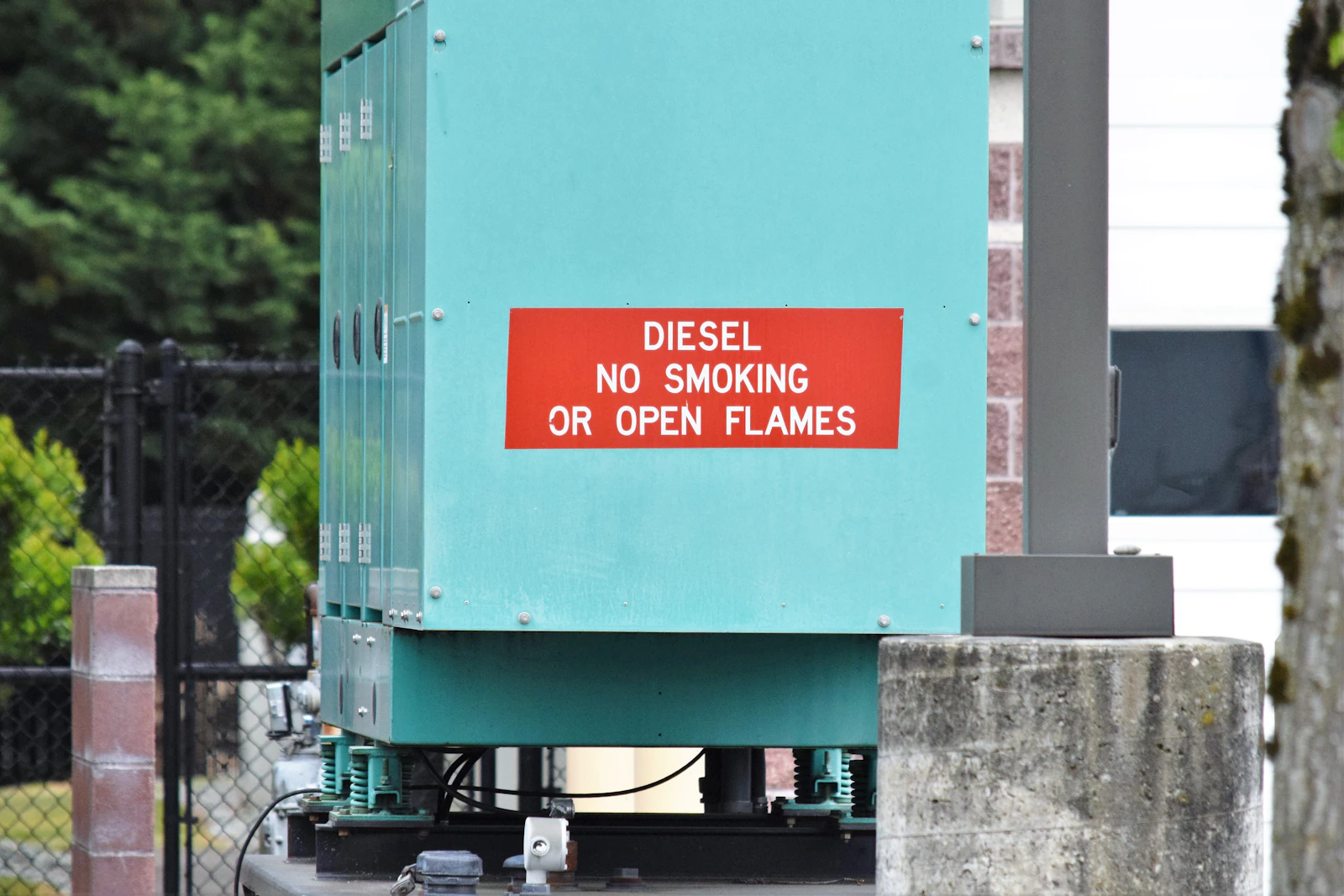
For a San Francisco electrical panel upgrade, 2026 planning budgets for diesel generator equipment hire typically land in these all-in base hire ranges (generator only, before fuel and accessories): 20–25 kW at $175–$325/day, $500–$850/week, $1,150–$2,250/28-days; 60–100 kW at $450–$950/day, $1,250–$2,300/week, $3,200–$6,100/28-days; 125–200 kW at $800–$1,650/day, $2,100–$4,400/week, $5,700–$11,500/28-days; and 250–500 kW at $1,000–$3,000/day, $2,400–$7,500/week, $6,300–$19,500/28-days, depending on Tier, sound attenuation, voltage options, and whether you’re quoting standby (single shift) vs prime (24/7). Most Bay Area projects source through national rental houses (United Rentals, Sunbelt Rentals, Herc Rentals) and regional power specialists; pricing variability in SF is usually driven more by logistics, compliance, and distribution gear than the sticker day rate.
| Vendor |
Daily Rate |
Weekly Rate |
Review Score |
Website |
| United Rentals |
$418 |
$1 152 |
9 |
Visit |
| Sunbelt Rentals |
$350 |
$935 |
10 |
Visit |
| Herc Rentals |
$444 |
$1 121 |
8 |
Visit |
| Redwood Rental & Repair |
$200 |
$800 |
10 |
Visit |
Diesel Generator Hire Costs San Francisco 2026
The numbers above are deliberately expressed as 2026 planning ranges for budgeting and estimating. When you request a quote for diesel generator rental for electrical panel upgrade work in San Francisco, suppliers will typically ask for: (1) kW/kVA requirement, (2) voltage and phase (120/208V 3Ø, 277/480V 3Ø, etc.), (3) run profile (standby vs prime, day-shift vs overnight tie-in), (4) distribution needs (distro panels, cam-lock sets, feeder cable lengths), and (5) site access/delivery constraints. Any one of those can swing the total hire cost by 20%–80% even if the generator model stays the same.
Rate Ranges By Generator Size for an Electrical Panel Upgrade
Electrical service upgrades often need temporary power for critical loads (IT closets, elevators on manual control, life-safety monitoring, refrigeration, sump pumps, security, lighting, and temporary construction power). A practical way to budget temporary power equipment hire is by generator class:
- 20–25 kW towable Tier 4 diesel generator hire (small commercial outages / tools / limited critical circuits): plan $175–$325/day, $500–$850/week, $1,150–$2,250/28-days. Contract/market basket references show 20 kW class day/week/4-week pricing in the low hundreds to low thousands depending on agreement and region.
- 36–45 kW towable diesel generator rental (mid-size critical loads, small multifamily common areas): plan $250–$500/day, $650–$1,200/week, $1,900–$3,600/28-days. A public statewide contract example shows a ~43 kW class at $280/day, $655/week, $1,975/month (contract pricing, not an SF guarantee).
- 60–100 kW diesel generator hire (typical for panel change-outs where tenants need continuity): plan $450–$950/day, $1,250–$2,300/week, $3,200–$6,100/28-days. A Bay Area/CA weekly reference point for a 100 kW class unit is around $1,245/week (published rate example; actual SF quotes vary).
- 125–200 kW diesel generator rental (larger commercial buildings, more HVAC, more elevators, longer outage windows): plan $800–$1,650/day, $2,100–$4,400/week, $5,700–$11,500/28-days. A California published weekly example for a 125 kVA / 100 kW generator is $1,595/week (useful anchor for budgeting, not a firm SF quote).
- 250–500 kW towable diesel generator hire (very large temporary services, multiple panels, or when you’re feeding a temporary switchboard): plan $1,000–$3,000/day, $2,400–$7,500/week, $6,300–$19,500/28-days. A published price list example shows a 500 kW class at roughly $930/day, $2,584/week, $6,707/month (again, agreement-based pricing). (g
San Francisco estimator note: if your outage is only 1–2 days, you may still get hit with a one-week minimum during emergency periods or when availability is tight (especially for common sizes like 60–100 kW). Sunbelt explicitly notes one-week minimum billing behavior for certain declared emergency conditions on generator categories.
Assumptions Behind These Equipment Hire Numbers
- Billing period: “Monthly” is treated as 28 days (4-week rate) unless your MSA states calendar-month rules.
- Shift/usage: Many rental programs assume single shift (often aligned with 8 hours/day or 40 hours/week) for metered equipment. If your electrical panel upgrade requires overnight tie-ins plus continuous building support, request prime power or 24/7 pricing up front.
- Fuel excluded: Diesel is almost always separate, and in SF the logistics of fueling can outweigh the generator base rate on longer outages.
- Does not include accessories: distro panels, cam-lock whips, feeder cable, grounding, load bank, spill containment, barriers, and security locks are typically separate line items.
What Actually Drives Total Temporary Power Equipment Hire Cost in San Francisco
For diesel generator equipment hire for electrical panel upgrade work, the “generator” is frequently only 40%–70% of the spend once you include distribution, fuel management, and SF delivery constraints. Cost drivers that repeatedly show up in Bay Area closeouts include:
- Distribution gear package: plan $175–$450/week for a basic 200A–400A distro panel, and $35–$95/week per GFCI stringer (site-dependent and vendor-dependent).
- Feeder cable: plan $25–$75/week per 50 ft section (4/0 sets and cams), and budget extra if you need 200–400 ft runs around an occupied building.
- Sound attenuation adders: in noise-sensitive neighborhoods, budget $35–$125/day premium for “quiet” configurations or additional acoustic measures (especially for overnight work windows).
- Automatic transfer / temporary switch interface: plan $250–$900/week depending on amperage and whether you need a configured temporary switchboard.
- On-call service / technician time: for nighttime energization support, budget $150–$225/hour (portal-to-portal) for a power tech, with common minimums of 2–4 hours.
Hidden-Fee Breakdown
When you’re comparing diesel generator rental rates in San Francisco, insist on an “all-in” quote structure so your team doesn’t under-carry allowances. Common fee mechanics (and realistic 2026 planning ranges) include:
- Delivery & pick-up: in SF proper, budget $350–$850 each way for towable units depending on access, stairs/ramps, wait time, and whether a truck-mounted forklift is required. If the vendor prices by mileage, plan $6–$12 per loaded mile plus a base dispatch.
- Downtown access / wait time: if curb space is constrained, you can see $95–$185/hour truck wait time after an included window (often 30–60 minutes).
- After-hours delivery or recovery: plan $250–$600 surcharge if your building only allows delivery/pickup outside business hours (common for tenant-heavy properties).
- Weekend/holiday billing rules: some programs bill “free weekends” on certain categories; others bill continuously once the unit is on rent. Treat weekend assumptions as a risk item and carry 15%–25% contingency for short rentals that cross a weekend.
- Damage waiver: plan 10%–18% of base hire unless you provide acceptable insurance certificates and decline coverage.
- Environmental/energy fees: plan 3%–10% as a separate line item in many rental systems.
- Fueling: if the vendor fuels and bills back, plan $4.50–$7.50/gal for bill-back diesel pricing depending on market conditions, plus a $75–$175 trip charge per fueling event in dense SF areas.
- Refuel-on-return fee: if returned under the agreed level (commonly “full” or “same as delivered”), plan $6–$9/gal refuel fee and a $40–$95 admin/environmental add-on.
- Spill containment & compliance accessories: plan $45–$95/week for spill kits, $60–$180/week for berms/containment, and $25–$65/week for safety barriers/cones if not already on-site.
- Cleaning: if the unit comes back with concrete slurry, drywall dust, or overspray, plan $125–$450 cleaning. Indoor/garage placements increase this risk substantially.
- Metered overtime (if applicable): if the rental is sold as “single shift” and you run extended hours, budget $8–$25 per engine hour beyond the included allowance (structure varies by supplier and MSA).
- Deposit / credit hold: smaller accounts commonly see $500–$5,000 deposits or credit holds depending on generator size and accessory package.
San Francisco-Specific Cost Drivers You Should Price (Even for Short Outages)
- Delivery windows and staging: many SF sites require a booked elevator, loading dock reservation, or a dedicated traffic-control person. Carry $250–$900 allowance for traffic control/spotters if the delivery blocks a lane or sidewalk in a busy corridor.
- Noise and neighborhood constraints: if the generator must run overnight near residential neighbors, you may need additional sound attenuation or relocation away from façades, driving longer cable runs and higher cable rental.
- Air-quality compliance: California/Bay Area projects may require Tier-rated equipment and documented maintenance status. If Tier 4 Final is mandatory, budget a 10%–20% premium vs older fleets during constrained availability periods.
Example: 3-Day Electrical Panel Upgrade With Overnight Tie-In (Occupied Building)
Scenario: A mid-rise commercial property in San Francisco needs a panel swap with a planned outage window starting Friday 6:00 PM and ending Monday 6:00 AM. The building requires continuous power for security systems, sump pumps, select lighting, and IT closets. You decide to hire a 100 kW Tier 4 towable diesel generator with a small distribution package. Because the rental crosses a weekend and involves after-hours work, you budget it like a one-week event.
- Generator base hire: carry $1,250–$2,000 for the week (100 kW class planning band; published weekly examples exist around $1,245/week in some markets).
- Delivery + pick-up: carry $650 each way due to downtown access constraints and booked windows (total $1,300).
- After-hours delivery window surcharge: carry $350 (Friday evening arrival).
- Distro panel + cam-lock set: carry $450/week.
- Feeder cable: carry $300/week (e.g., ~200 ft total runs with routing constraints).
- Sound mitigation allowance: carry $250 (quiet configuration / placement constraints).
- Fuel (vendor bill-back): carry 120 gallons at $6.25/gal = $750 plus $125 trip/service (total $875).
- Damage waiver: carry 14% of base hire and accessory rent (exclude fuel and freight per typical rules).
Resulting budget reality: even with a “$1,250/week” generator number in mind, the projected temporary power equipment hire total can easily land in the $4,500–$7,500 range once SF delivery, distro, fuel, and waivers are included—before electrician labor, permits, and tie-in supervision. This is why panel-upgrade generator hire is best estimated as a package, not a single line item.
Budget Worksheet (Estimator-Friendly, No Surprises)
- Diesel generator equipment hire (size: ____ kW; Tier: ____; voltage: ____): $_____ / day or $_____ / week (carry 1-week minimum if weekend or emergency risk)
- Distribution package allowance (distro + breakers + cam-lock tails): $350–$900/week
- Feeder cable allowance (length: ____ ft; routing constraints): $200–$900/week
- Delivery & pick-up allowance (SF access/wait time): $700–$2,200 total
- After-hours / scheduled window surcharge: $250–$600
- Fuel allowance (gal/day x days) + service trips: $600–$2,500
- Spill containment / berm / spill kit: $75–$300/week
- Sound attenuation / mitigation premium: $150–$750
- Damage waiver: 10%–18% of eligible rent
- Cleaning contingency (dust/slurry/overspray): $150–$450
- Tech support (if required for energization): $150–$225/hour with 2–4 hour minimum
- Contingency for off-rent timing, weekend billing, and access delays: 10%–20%
Rental Order Checklist (PO, Delivery, Return, Off-Rent Controls)
- PO specifies billing start/stop rules (clock stops on call-off vs physical pickup) and off-rent cutoff time (e.g., before 2:00–4:00 PM local)
- Confirm generator kW/kVA, voltage, phase, and connection type (cams, lugs, receptacles)
- Confirm run profile: single shift vs 24/7 prime power; document any included hour allowances
- Delivery requirements: exact address, delivery window, dock reservation, contact name/phone, and whether a liftgate/forklift is needed
- Site constraints: curb space plan, traffic control/spotter requirements, and SF neighborhood noise constraints for overnight run
- Fuel plan: who fuels, target tank level on return, and any on-site fueling restrictions
- Return condition documentation: photos of meter hours, tank level, cables, distro condition, and any pre-existing dents
- Accessories list attached to PO (distro, feeder sets, grounding, spill kit, barriers) to avoid missing-item charges
How to Get Cleaner Quotes From Suppliers
To keep your diesel generator hire costs in San Francisco aligned with closeout, request quotes in three blocks: (1) generator base hire (day/week/28-day), (2) package accessories (distro, cables, ATS/temporary switch gear), and (3) logistics (delivery, pickup, after-hours, fueling). This structure makes it obvious where cost creep is coming from and prevents a low day rate from masking high SF freight and compliance adders.
How to Scope the Right Diesel Generator Package for a Panel Upgrade
Most cost overruns on diesel generator equipment hire for electrical panel upgrades come from underscoping the package. Before you lock the rental, validate the following so the supplier can quote the correct class and avoid midstream change orders:
- Connected load vs starting load: elevator motors, compressors, and pumps can drive short duration inrush; consider whether you need soft-start or a larger generator class to avoid nuisance trips.
- Voltage and distribution topology: if your building is 277/480V 3Ø but you also need 120/208V circuits, you may need an additional transformer or a dual-voltage capable set—often adding $200–$900/week in equipment hire.
- Placement and cable routing: in San Francisco, “closest curb spot” is not always available. If you must place the unit farther away, longer cable runs can add $150–$650/week quickly.
Accessories That Commonly Add 20%–60% to Diesel Generator Hire Costs
- Extra fuel capacity (aux tank / fuel cube): plan $45–$120/day or $180–$550/28-days for common portable fuel solutions, plus separate delivery/pickup. (Fuel accessories are frequently underestimated on dense SF sites where daily fueling is impractical.)
- Load bank (testing / commissioning): if commissioning requires load testing, plan $450–$900/day for a load bank plus $150–$225/hour tech time, and carry a 4-hour minimum for night work.
- Grounding package: plan $25–$85/week for basic grounding rods/clamps/cable where required by the electrical plan and site conditions.
- Security / anti-theft: plan $35–$120/week for locks, chains, and fencing adders, and carry $150–$400 if a temporary fence panel rental is needed for curbside placement.
Off-Rent, Weekend Billing, and Return-Condition Rules That Change Real Cost
These items are not “extras” in San Francisco—they’re cost levers. Put them in the PO and kickoff call:
- Off-rent cutoffs: many yards require same-day call-offs before an afternoon cutoff (often 2:00–4:00 PM) to avoid another day billed. Carry a 1-day exposure if your panel upgrade has uncertain inspection timing.
- Weekend billing treatment: don’t assume free weekends. If you schedule a Friday drop and Monday pickup, a conservative budget assumes 3–4 billable days unless the contract clearly states otherwise.
- Meter hours and overtime: if the supplier sells single-shift rates, confirm the included hours and the overtime mechanism (budget $8–$25/hour beyond allowance as a planning band).
- Return readiness: if cables aren’t coiled, cam-locks aren’t capped, or the unit is blocked by stored materials, you can pay additional truck time at $95–$185/hour and risk an extra day of rent.
- Fuel level on return: document the agreed target level (full vs same-as-delivered). Avoid refuel penalties in the $6–$9/gal band plus admin adders.
San Francisco Operational Constraints to Carry in Your Estimate
- Delivery radius norms: Bay Area suppliers may price a “local” radius (often ~20–30 miles) with higher adders once you cross bridges or add travel time. A public contract example shows a power generation delivery structure of $250 each way within 30 miles (contract context, but it illustrates how radius rules are applied).
- Hills and tow access: steep grades and tight alleys can force a different truck configuration or a smaller towable, which may push you into a higher $/kW bracket.
- Indoor dust-control expectations: if the generator is outside but cables route through finished interiors, carry $75–$250 for protection (mats, corner guards, temporary covers) and $150–$450 cleaning exposure if drywall dust migrates onto distro gear.
2026 Planning Notes for Diesel Generator Equipment Hire in the Bay Area
For 2026 budgeting, the Bay Area market tends to show two consistent patterns: (1) Tier 4 compliant towable diesels command higher utilization in regulated regions, and (2) total cost is often logistics-driven in dense cities like San Francisco. If you need a common class like 20 kW, published contract references show day/week/4-week numbers around $175/day, $483/week, $1,068/4-weeks under some agreements; your SF project quote may be higher after freight, waivers, and availability are applied.
Compliance and Documentation Notes (Non-Legal, Practical)
- Emissions documentation: request Tier documentation and maintenance status with your rental file (helps avoid last-minute substitutions that can change cost and schedule).
- Noise plan: if you anticipate complaints, plan for a documented placement strategy and be prepared to pay for sound mitigation or longer cable runs.
- Inspection-ready closeout: keep photos of nameplate, meter hours, fuel level, and accessory counts at both delivery and pickup to reduce disputed charges and missing-item fees.
Quick Recap for Rental Coordinators
- Budget diesel generator hire as a package (generator + distro + cable + fuel + freight), not a day rate.
- For SF panel upgrades that cross weekends or nights, carry a one-week minimum risk and after-hours surcharges.
- Protect your off-rent date: cutoff times, pickup windows, and return condition documentation routinely decide whether you pay one extra day or not.