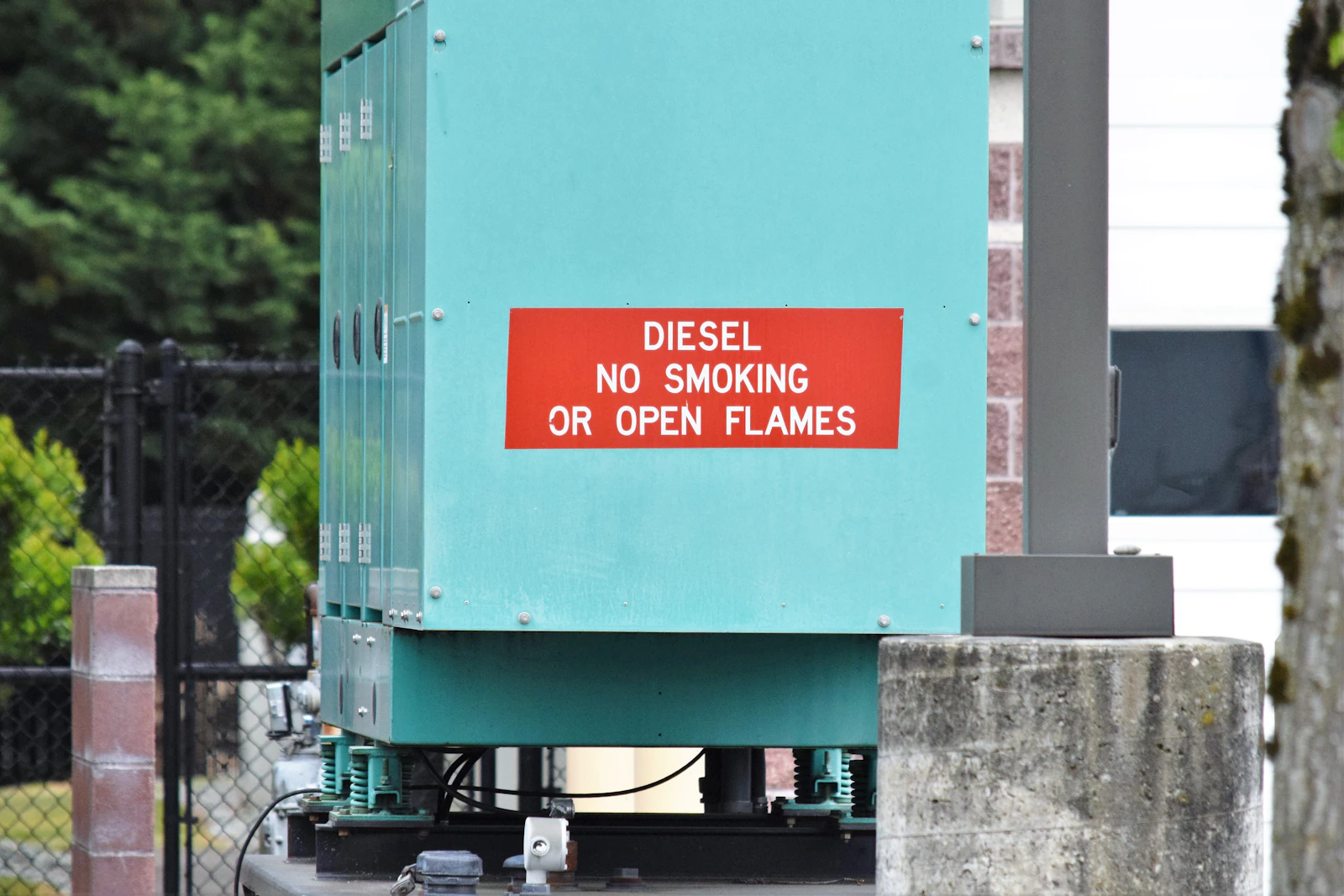
For diesel generator equipment hire in San Francisco, 2026 planning budgets typically land in these portable/towable Tier 4 ranges (excluding fuel and distribution): 20–25 kW at about $275–$450/day, $700–$1,150/week, and $1,600–$2,600/4-weeks; 36–45 kW at $350–$550/day, $900–$1,450/week, and $2,100–$3,400/4-weeks; 56–70 kW at $450–$700/day, $1,150–$1,750/week, and $2,700–$4,200/4-weeks; and 90–100 kW at $650–$950/day, $1,650–$2,500/week, and $3,800–$6,200/4-weeks. These ranges assume a standard single-shift rate structure, a sound-attenuated unit, and normal utilization (not 24/7 runtime). In the Bay Area, availability and logistics are as important as the sticker rate; larger national providers (for example United Rentals, Sunbelt, and Herc) and established regional rental houses all compete in the temporary power equipment hire market, but San Francisco delivery constraints and compliance requirements frequently become the deciding cost drivers.
| Vendor |
Daily Rate |
Weekly Rate |
Review Score |
Website |
| Sunbelt Rentals (South San Francisco / Bay Area) |
$345 |
$925 |
6 |
Visit |
| Herc Rentals (San Francisco Bay Area coverage via national network) |
$330 |
$812 |
9 |
Visit |
| CD & Power (GoTpower.com) — Northern California |
$256 |
$767 |
9 |
Visit |
| Allied Rental Company (Novato / SF Bay Area) |
$399 |
$1 200 |
9 |
Visit |
Portable Generator Hire
This article is scoped specifically to portable generator hire for a diesel generator in San Francisco, with an estimator/rental-coordinator focus: daily/weekly/4-week hire costs, metered-hour rules, delivery realities in the city, and the add-on items that usually control total cost (cables, distro, refueling, sound control, and documentation).
San Francisco Diesel Generator Hire Rate Ranges for 2026 Planning
Use the ranges below to set a 2026 budget prior to firm quoting. They are anchored to published market examples (which often reflect specific branches, contracts, and dates) and then expanded to reflect common San Francisco equipment hire premiums (tight access, staging limits, and after-hours constraints). For reference, a Bay Area rental house has published a 25 kVA (20 kW) towable diesel generator at $295/day, $750/week, and $1,695/4-weeks. A public Sunbelt contract price sheet (older, contract-specific) shows 20 kW at $175/day, $483.12/week, $1,068.63/month and 56 kW at $345/day, $925/week, $2,115/month. A separate published example shows 25 kVA at $340/day, $836/week, and $1,672/month.
- 20–25 kW towable Tier 4 diesel generator hire (most common “small” jobsite unit in the city): plan $275–$450/day, $700–$1,150/week, $1,600–$2,600/4-weeks.
- 30–45 kW towable Tier 4 diesel generator hire: plan $350–$550/day, $900–$1,450/week, $2,100–$3,400/4-weeks.
- 56–70 kW towable Tier 4 diesel generator hire: plan $450–$700/day, $1,150–$1,750/week, $2,700–$4,200/4-weeks.
- 90–100 kW towable diesel generator hire (often for larger temp power or multi-trade packages): plan $650–$950/day, $1,650–$2,500/week, $3,800–$6,200/4-weeks.
Assumptions (state these on your RFQ): towable/sound-attenuated unit; Tier 4 diesel; normal utilization (single shift); standard receptacles/camlocks typical to class; excludes fuel; excludes cable ramps/traffic control; excludes electricians and any tie-in labor; excludes permits; excludes spill containment unless specifically included.
Sanity check on sizing: United Rentals’ marketplace categories show the common rental bands used by major fleets (e.g., 20–25 kW, 36–40 kW, 56–64 kW, and 90–100 kW towable diesel units). Those bands are useful for aligning a scope to how hire rates are actually quoted.
How San Francisco Job Conditions Shift Your Diesel Generator Equipment Hire Total
In San Francisco, the base hire rate is rarely the final number. Expect total cost swings driven by (1) how the unit gets onto the site, (2) when it can run, and (3) what documentation and accessories are required to satisfy owners, GC safety plans, and city constraints.
- Delivery access and curb constraints: narrow streets, tow-away zones, and limited laydown areas increase the likelihood of a “must-deliver-within-window” requirement and waiting-time exposure.
- Vertical logistics: if the generator cannot be staged at grade, you may end up hiring additional distribution (longer feeder runs, extra spider boxes) rather than relocating the generator.
- Noise-driven operational limits: if you need to run at night (or do night work in the right-of-way), you may need a permit and more aggressive sound planning; this can add cost via additional sound attenuation measures and restricted delivery/pickup hours. San Francisco Police Code Section 2908 restricts noisy construction work between 8:00 p.m. and 7:00 a.m. if it exceeds ambient by 5 dBA, unless a special permit is granted.
- Emissions/compliance coordination: for larger generators, confirm early whether you need air district permitting or portable registration; CARB explicitly advises contacting the air district before you purchase, rent, or use a large (>50 bhp) generator for local permitting requirements.
Rate Structures: Daily Vs. Weekly Vs. 4-Week (And When “Overtime” Starts)
Generator hire is frequently governed by metered-hour assumptions, even when the quote looks like a simple day/week/month number. A common industry approach is to include 40 running hours per week and 176 running hours per month, with additional hour usage billed as an hourly charge; some providers also state 1.5x for double shift and 2.0x for triple shift/unlimited running time.
San Francisco practical impact: if you are running 24/7 (security loads, dewatering, temporary HVAC, IT cutovers), your rental coordinator should assume the quote will move toward either (a) a higher shift factor or (b) a “continuous run” program with required refueling/service baked in. If you don’t clarify utilization up front, you can end up paying a low single-shift rate and then getting hit with high overage hours.
Hidden-Fee Breakdown for Diesel Generator Hire in San Francisco
These are the cost lines that repeatedly show up on San Francisco portable generator hire invoices. Use them as allowances (not promised pricing) until you have a vendor quote and site logistics plan.
- Delivery and pickup: allow $175–$450 each way for standard local delivery and retrieval, plus $6–$12/mile when mileage is applied beyond a base radius.
- SF access premium: allow $75–$175 for constrained curb access/spotting support, and $95–$165/hour for driver wait/standby after a minimum free window (often 30–60 minutes).
- After-hours / weekend logistics: allow $150–$300 for scheduled after-hours delivery/pickup windows and a 10%–20% weekend/holiday logistics surcharge when required by the site plan.
- Minimum rental term: common minimum is 1 day, even if you off-rent early the same shift.
- Off-rent rules: many branches require off-rent notice before a daily cutoff (commonly around 2:00–3:00 p.m.) or you may be billed an extra day; allow an admin exposure of $0–$75 for late off-rent processing depending on contract terms.
- Damage waiver / rental protection: allow 10%–17% of the base rental rate unless you provide certificates meeting the owner’s insurance requirements.
- Environmental / shop / admin fees: allow 3%–7% as a blended “environmental/shop” line where applicable.
- Deposit / authorization hold: allow $500–$2,500 depending on account status, generator size, and whether accessories are included.
- Cleaning and decon: allow $75–$250 if returned with concrete splatter, heavy mud, adhesive, or tape residue on sound panels/doors; allow $150–$400 if spill containment is contaminated and needs special handling.
- Fuel policy: allow $6–$10/gal as a refuel service rate exposure when you return the tank below the agreed level (this is a planning allowance; actual charges vary by supplier and fuel market).
- Battery / no-start / service call: allow $195–$450 for a service dispatch if the unit is inaccessible, out of fuel, or repeatedly cycled incorrectly.
City-specific note (San Francisco): if you are staging a towable generator at the curb, confirm early whether you need additional traffic control, cones/barricades, or a dedicated spotter during delivery. Those items frequently cost more than the difference between two competing base hire rates.
Accessories and Temporary Power Distribution Adders (Where Generator Hire Budgets Get Won or Lost)
Most “diesel generator rental San Francisco” scopes fail at the accessory level. You can often secure a competitive generator day/week/4-week rate, but still blow the budget on distribution, cable protection, and refueling.
- Spider box / 50A distro box hire: published examples show $35/day, $81/week, $242/4-weeks for a 50A spider box style unit. (Use this as a reference point; Bay Area rates may differ.)
- Additional spider boxes: allow $25–$60/week each when you need multiple drops per floor or per trade package.
- Feeder cable: allow $2–$6/ft/week depending on size and whether cable ramps are required for pedestrian protection.
- Cable ramps / cord covers: allow $15–$35 each/week for standard ramps, and $35–$90 each/week for heavy-duty multi-channel ramps used in public paths of travel.
- Camlock/bates adapters: allow $20–$60/week per adapter set where interface mismatches exist between generator outputs and site distribution.
- Grounding kit: allow $25–$75/week (rod, clamp, bonding jumper) when required by the site’s temporary power plan.
- Spill kit and secondary containment: allow $40–$120/week (often owner-mandated on urban sites).
- Remote fuel tank / extended run: allow $150–$350/week for an auxiliary tank package where 24/7 runtime is required and refuel windows are limited.
Indoor/near-intake constraints: if the unit must run close to building air intakes or in constrained courtyards, you may be required to add exhaust routing, additional CO monitoring, and stricter fueling controls; treat this as a scope-driven cost adder, not a “nice to have.”
Fuel Planning: Turn Run Hours Into a Real Cost Forecast
Fuel is not part of the hire rate, but it can exceed the rental charge on longer runs. A published Bay Area 25 kVA towable generator spec shows fuel consumption of about 1.62 gph at full load, 1.26 gph at 3/4 load, 0.94 gph at 1/2 load, and 0.67 gph at 1/4 load, with a tank capacity of 41.7 gallons.
- Rule of thumb for budgeting: if your expected average load is ~50% and runtime is 10 hours/day, plan on ~9.4 gallons/day (0.94 gph × 10 hours), plus a contingency for idling and peak starts.
- Refuel window risk in SF: if refueling must occur only before 7:00 a.m. or after 6:00 p.m. due to site operations, plan on a premium for scheduled service windows and standby time.
Example: 25 kVA Diesel Generator Hire for a 3-Week Tenant Improvement in SoMa
Scenario: TI build-out in SoMa needs a towable diesel generator to support temporary lighting and tool loads during a service upgrade. The unit must be staged at grade in a loading area with a strict delivery window (7:00–8:30 a.m.), and the building requires quiet operations after business hours. Work cannot assume unrestricted night activity; San Francisco night construction constraints are a real planning factor.
- Base equipment hire: if a published reference rate is $750/week for a 25 kVA class towable unit, three weeks at weekly could be $2,250.
- 4-week conversion check: if the same class is available at $1,695/4-weeks, it may be cheaper to carry the unit a full 4-week term than to stack weeklies (savings example: $2,250 − $1,695 = $555 before fees).
- Delivery + pickup allowance: $300 × 2 = $600 (city access window + constrained staging).
- Damage waiver allowance: 14% of base rental (e.g., $237 on a $1,695 4-week hire).
- Spider boxes: 2 units at an allowance of $60/week each for 3 weeks = $360 (or use published benchmarks such as $81/week per 50A spider box as a reasonableness check).
- Feeder cable: 150 ft at an allowance of $4/ft/week for 3 weeks = $1,800.
- Cable protection: 10 ramps at $25/week for 3 weeks = $750.
- Fuel planning: assume average 0.94 gph at 50% load and 10 hours/day for 15 working days ≈ 141 gallons of diesel (0.94 × 10 × 15), plus contingency.
What this example shows: on an SF TI job, accessories and logistics (cable, ramps, delivery constraints) can legitimately exceed the generator hire line. That is normal for temporary power equipment hire when the building is occupied and access is controlled.
Budget Worksheet (Diesel Generator Equipment Hire – San Francisco)
- Diesel generator hire (select band): 20–25 kW / 36–45 kW / 56–70 kW / 90–100 kW (carry both weekly and 4-week scenarios).
- Delivery + pickup: allowance $350 each way + $125 contingency for waiting/spotter.
- Damage waiver: allowance 12%–16% of base rental.
- Environmental/shop fees: allowance 3%–7%.
- Temporary distribution: spider boxes (2–6 units), adapters, grounding kit.
- Feeder cable: allowance 100–300 ft based on generator location and floor plan.
- Cable protection: ramps/cord covers (allow 6–20 units depending on pedestrian paths).
- Fuel: gallons based on expected gph × run hours; include refuel service premium if windows are restricted.
- Spill control: secondary containment + spill kit allowance.
- Contingency for metered-hour overage: allowance 10%–25% if runtime is uncertain or trending toward continuous operation.
Rental Order Checklist (Portable Diesel Generator Hire)
- PO details: generator kW class, voltage needs (e.g., 120/208V 3φ, 277/480V 3φ), camlock vs receptacle outputs, sound attenuation requirement.
- Site logistics: delivery address, contact name/number, delivery window, staging plan, street/curb constraints, and whether a spotter is provided.
- Insurance: COI requirements; decide waiver vs certificate route (price impact typically 10%–17% of base rental).
- Accessories: spider boxes, feeder length, ramps, grounding kit, spill containment, signage/lockout hardware if required by the site safety plan.
- Fuel plan: who fuels, refuel frequency, and return fuel level expectation.
- Off-rent procedure: confirm the cutoff time (often around 2:00–3:00 p.m.) and required notice method (email/portal) to avoid an extra bill day.
- Return condition documentation: photos on delivery and pickup; note dents, hour meter, fuel level, and any alarms.
Compliance reminder: confirm noise and operational hour expectations up front. If your plan includes nighttime work that could exceed ambient limits, understand the permitting pathway and constraints (San Francisco Police Code Section 2908).
How to Control Total Portable Generator Hire Cost Without Creating Power Risk
Cost control for diesel generator equipment hire in San Francisco is mostly about preventing “scope drift” between the generator and the distribution plan. The generator is one line item; the temporary power system is a package. The strategies below reduce spend while protecting schedule and safety.
- Right-size the kW band early: switching late from a 20–25 kW to a 56–64 kW class unit can increase base hire by hundreds per week, but the bigger cost hit is often the change in distro (larger feeder, more adapters, heavier ramps). Use the common rental bands published by major fleets to align the request with market availability.
- Choose the correct term: always compare stacked weekly rates to a 4-week rate. Real-world published examples show a 25 kVA class unit at $750/week and $1,695/4-weeks; at three weeks, the 4-week term can still be cheaper.
- Declare utilization (single shift vs continuous): a common stated structure is 40 hours/week and 176 hours/month, then hourly overages and higher multipliers for double/triple shift. If the job is trending to “always-on,” plan for the correct program and avoid surprise hour charges.
Common San Francisco Scope Gaps That Trigger Change Orders on Generator Hire
- Noise management is treated as “operations,” not a cost: if the plan evolves to nighttime work, your temp power package may need re-staging, additional sound barriers, or a revised delivery schedule. San Francisco Police Code Section 2908 is a frequent driver of these operational constraints.
- Fueling responsibility is unclear: if the site later prohibits fueling during business hours, plan for premium fueling windows and potential standby time (allow $95–$165/hour waiting exposure).
- Return condition requirements are not documented: missing delivery photos often turns minor cosmetic damage into a claim. Budget a 15-minute photo/hours/fuel walkdown at delivery and at pickup.
- Power distribution is under-scoped: one “spider box” rarely serves a real TI floor. Published benchmarks show spider box hire can be as low as $35/day or $81/week in some markets, but quantity and cable lengths are what drive the final bill.
Negotiation Targets That Actually Move Diesel Generator Hire Cost
Instead of negotiating only day/week/month, negotiate the lines that repeatedly drive cost in San Francisco logistics:
- Delivery window and waiting time: ask for a defined free waiting period (e.g., 60 minutes) before standby billing starts.
- Off-rent cutoff: get the cutoff time written (many branches operate around 2:00–3:00 p.m.); late off-rent notice can cost an extra day.
- Damage waiver approach: decide whether you will carry a waiver (often 10%–17%) or provide insurance. Make the decision early so you don’t re-price midstream.
- Service cadence for long runs: if you expect >176 hours/month, clarify whether preventive maintenance visits are included or billed separately; if billed separately, carry an allowance of $275–$450 per PM visit plus filters/consumables.
- Refuel service rate and minimum: if the vendor fuels, clarify minimum dispatch (e.g., 50 gallons) and after-hours premium (allow $75–$200).
Compliance and Documentation That Can Add Cost (Plan It, Don’t Fight It)
For San Francisco projects, compliance is often a gating item and therefore a cost driver.
- Noise constraints: for construction work at night, Section 2908 sets the baseline restriction (8:00 p.m. to 7:00 a.m. and 5 dBA above ambient) unless a permit is granted. If your generator must run overnight for critical loads, plan for sound attenuation strategy and neighbor-facing mitigation.
- Air district coordination: CARB’s guidance to contact the local air district before renting/using a large (>50 bhp) generator is a practical reminder that permitting/registration can land on the renter, depending on use case. Carry schedule contingency for approvals if you are in an emergency standby or long-duration configuration.
Ownership vs. Hire: When Long-Term Portable Generator Hire Stops Making Sense
For most San Francisco projects, renting remains the correct approach because it shifts maintenance, compliance, and fleet availability risks to the provider. However, if your utilization is consistently continuous (approaching triple shift) and your accessory package is stable (repeatable distro and cable sets), ownership can become competitive. A quick internal trigger for review is when you are repeatedly paying: (1) a higher shift multiplier (up to 2.0x in some stated structures), plus (2) recurring refuel/service callouts, plus (3) recurring delivery/pickup because projects move frequently.
Practical Closeout: What to Do the Day Before Pickup (To Avoid Extra Billing)
- Off-rent notice: submit before the branch cutoff (plan around 2:00–3:00 p.m.) and get written confirmation.
- Fuel level: return to agreed level; if not, carry refuel exposure of $6–$10/gal plus a possible minimum service charge.
- Clean condition: wipe down spills; remove tape and zip ties; budget $75–$250 cleaning exposure if returned excessively dirty.
- Documentation: photograph hour meter, fuel gauge, and all sides of the unit; spend 10–15 minutes to prevent weeks of disputes.
- Accessory reconciliation: count spider boxes, adapters, cable lengths, ramps, grounding kit components; missing pieces are a common back-charge vector (carry a loss/damage contingency of $150–$600 on accessory-heavy packages).
If you want, share your kW requirement, voltage (208V vs 480V), expected runtime (hours/week), and whether the unit must run after 8:00 p.m. in San Francisco, and I can turn the above into a tighter 2026 hire budget with a risk register (still without naming or scoring specific vendors).