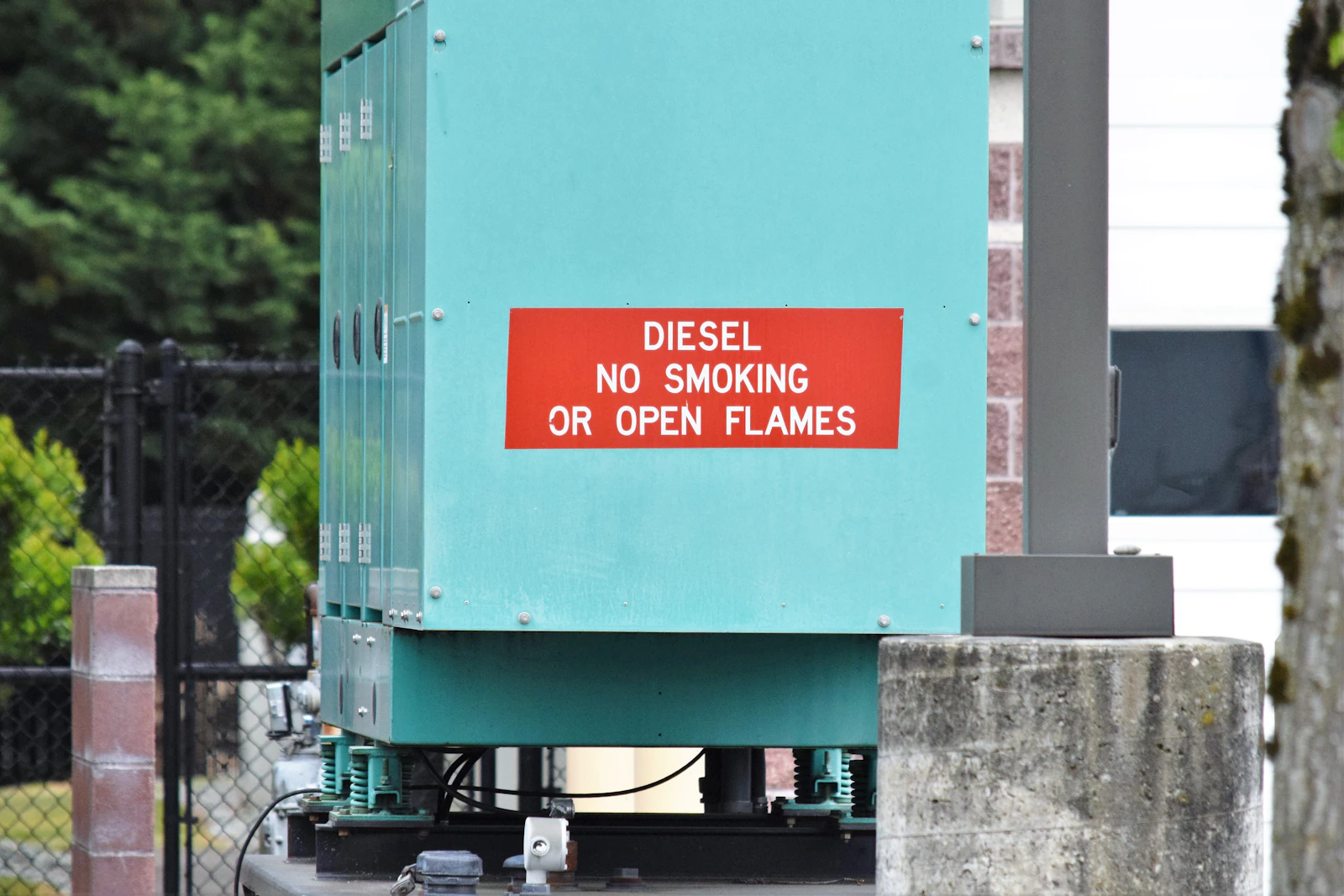
For Seattle diesel generator equipment hire in 2026, a practical planning budget (before fuel, delivery, and distribution) is typically $200–$325/day, $650–$950/week, and $1,600–$2,500 per 4-week period for the common 20 kW towable diesel generator class; $300–$550/day, $700–$1,400/week, and $2,100–$4,200 per 4 weeks for 56–150 kW; and $600–$1,450/day, $1,700–$4,000/week, and $4,100–$12,000 per 4 weeks for 200–400 kW packages when you include the reality of demand, accessories, and shift billing. These 2026 planning ranges are anchored to Washington State contract benchmarks and common national rental schedules, then widened to reflect Seattle-area delivery constraints and temporary-power add-ons. In practice, fleets serving Seattle’s construction, marine, and facilities work frequently overlap with the same large suppliers (e.g., United Rentals, Sunbelt Rentals, Herc Rentals) plus regional independents—so the biggest swings in your portable generator hire total are usually driven by distribution gear, run-hours/shift rules, and fueling logistics rather than the base day-rate alone.
| Vendor |
Daily Rate |
Weekly Rate |
Review Score |
Website |
| United Rentals |
$300 |
$900 |
9 |
Visit |
| Sunbelt Rentals |
$290 |
$870 |
9 |
Visit |
| Herc Rentals |
$310 |
$930 |
8 |
Visit |
| The Cat Rental Store (N C Machinery - Seattle metro) |
$340 |
$1 020 |
8 |
Visit |
| The Cat Rental Store (National Catalog - Power Systems) |
$325 |
$975 |
8 |
Visit |
Portable Generator Hire
When rental coordinators say “portable generator hire” in the Seattle market, they usually mean one of three diesel generator deployment patterns:
- Towable diesel generator rental (20–200 kW) for jobsite temp power, shutdown windows, and emergency bypass loads.
- Larger towable or trailer packages (250–400 kW) paired with cam-lock feeder, panels, and spill containment for commercial facilities and critical-path construction.
- Container/roll-off diesel generator rental (500–1000 kW) where distribution and logistics become a project in themselves (rigging, forklift/crane, multi-drop distribution, and sometimes a dedicated fuel tank plus scheduled fueling).
Assumption used throughout this cost guide: “Monthly” pricing is treated as a 4-week/28-day rental period unless your supplier uses a calendar-month construct. Also, many contracts meter usage by “shift” or “equipment hours” (details below), which can materially increase cost on 24/7 loads.
Seattle Diesel Generator Rental Rate Ranges (Daily, Weekly, Monthly)
The ranges below are suitable for 2026 estimating in Seattle and are intentionally shown as ranges (not “exact vendor pricing”). Where available, Washington State contract line-items provide a transparent benchmark for diesel generator hire rates by kW class.
20 kW / 25 kVA towable diesel generator (common small jobsite class)
- Planning range (Seattle, 2026): $200–$325/day; $650–$950/week; $1,600–$2,500 per 4 weeks.
- Benchmark examples: WA contract pricing shows $180/day, $575/week, $1,395/month for a 20 kW/25 kVA towable diesel unit; a Seattle-area independent listing shows a $675/week figure for a 20 kW diesel generator.
36–56 kW towable diesel generator (mid-size temporary power)
- Planning range (Seattle, 2026): $250–$475/day; $700–$1,200/week; $1,900–$3,500 per 4 weeks.
- WA benchmark points: 36 kW class at $215–$225/day, $595–$695/week, and $1,500–$1,995/month; 56 kW class at $315/day, $675/week, $2,050/month.
76–176 kW towable diesel generator (facility shutdowns, larger distribution)
- Planning range (Seattle, 2026): $400–$750/day; $1,000–$2,100/week; $2,900–$5,500 per 4 weeks.
- WA benchmark points: 76 kW at $389/day and $975/week; 100–136 kW at $425–$465/day and $1,275–$1,425/week; 160–176 kW at $485–$525/day and $1,630–$1,655/week.
200–373 kW towable diesel generator (higher-power sites, multi-panel distribution)
- Planning range (Seattle, 2026): $650–$1,450/day; $1,700–$4,000/week; $4,100–$12,000 per 4 weeks.
- WA benchmark points: 200 kW class at $580/day, $1,690/week, $4,092/month; 264 kW at $775/day, $1,998/week; ~326 kW at $962/day, $2,542/week; ~373 kW at $1,282/day, $3,866/week, $10,792/month.
500–1000 kW container diesel generator rental (large temporary power)
At this scale, your equipment hire cost is often eclipsed by distribution engineering, delivery logistics, cabling, and fueling. For 2026 budgeting, it’s common to validate pricing via a written quote that includes the full accessory schedule.
- Planning range (Seattle, 2026): $1,300–$3,100/day; $3,200–$6,500/week; $7,500–$16,000 per 4 weeks (unit only, excluding distro and fuel).
- Benchmark points (national schedule example): 500 kW shown at $1,290/day and $3,103/week; 1000 kW shown at $2,479/day and $5,311/week. (g
What Actually Drives Diesel Generator Hire Costs in Seattle?
Seattle diesel generator rental rates can look competitive until the job moves into the city core (restricted access), operates overnight (shift multipliers), or needs a compliant, documented temporary-power setup (distribution, containment, and test documentation).
- Run-hours and shift billing: Some contracts define daily/weekly/monthly with included equipment hours. For example, one published policy defines Daily = 24 hours with 8 equipment hours, Weekly = 7 days with 40 equipment hours, and Monthly = 28 days with 160 equipment hours. If you exceed those caps, you can trigger overtime/shift rates.
- Double-shift and triple-shift multipliers: A common structure is double shift = 1.5× and triple shift = 2× of the day/week/month rate for diesel-driven equipment. If your “temporary” generator is actually running 24/7, treat the base week-rate as only the starting point.
- Distribution requirements (distro): Spider boxes, feeder panels, disconnects, cam-lock cable, and cable ramps often add 10%–60% to the generator hire cost, depending on how many drops you have and how far the loads are from the set point.
- Fueling and maintenance logistics: Downtown Seattle fueling access and after-hours access protocols can be a bigger cost driver than the diesel price itself.
- Delivery constraints: Tight delivery windows, elevator/freight coordination, curb-space controls, and waiting time (truck idling) regularly show up as accessorial charges.
Hidden-Fee Breakdown For Portable Generator Hire (Allowances)
Use the allowances below as estimating artifacts for Seattle diesel generator equipment hire. These are not promises of vendor pricing; they are the line-items that most often cause budget variance.
- Delivery and pick-up: allow $175–$450 each way inside a typical metro radius; add $4–$8 per loaded mile when outside the standard radius; allow $150–$300 for after-hours/expedite delivery.
- Minimum rental charge: commonly 1 day minimum; some suppliers enforce a 1 week minimum in declared emergencies.
- Waiting time / jobsite detention: allow $95–$185/hour if the driver cannot offload due to blocked access, missing forklift, or no receiving contact.
- Damage waiver (rental protection plan): allow 10%–15% of the rental charges unless you provide a certificate of insurance that meets the supplier’s requirements.
- Environmental/spill compliance: allow $25–$75/week for spill kits/signage or rent a berm; one published schedule shows an 8' x 16' containment berm at $73/day, $216/week, $416/4-week. (g
- Cleaning fees: allow $150–$450 if returned with concrete splatter, heavy mud, or oil residue; allow $50–$150 for cable cleaning and re-banding when feeder comes back wet and gritty.
- Late return: allow 1/5 to 1 full day rate if return misses cutoffs; also confirm “off-rent” notification rules (some suppliers require same-day notice by a morning cutoff).
- Refueling surcharge: if returned low, allow $5.00–$8.00 per gallon equivalent (vendor-set) plus a service fee.
Distribution Gear Adders That Commonly Surprise Budgets
Distribution is where diesel generator hire cost estimates either stay tight—or drift. If you’re supporting multiple trades, don’t wait until mobilization to define distro: it impacts cable lengths, panel count, and how many protected circuits you need.
Published rental schedules show how quickly these adders accumulate:
- Spider box (example schedule): $48/day, $112/week, $291/4-week. (g
- 200A quad-box panel: $113/day, $226/week, $588/4-week. (g
- 200A spider box feeder panel: $124/day, $290/week, $799/4-week. (g
- 1200A multi-panel (I-line panel): $177/day, $377/week, $1,102/4-week. (g
- Cam-lock feeder (examples): 4/0 cam-lock cable 50' at $15/day and 100' at $34/day; cable ramps $11/day. (g
- Breaker adders: a published schedule shows a 200A 3-pole I-line breaker at $28/day, $83/week, $255/4-week. (g
Seattle-specific note: In the wet season, expect more emphasis on cable management (ramps, matting, and keeping connections elevated). That can add small but real cost, and it can also affect labor if your GC mandates covered pedestrian paths or protected egress.
Fueling Strategy: Budgeting Diesel, DEF, and Service Calls
Fuel is usually treated as “pass-through,” but your project cost depends on whether you self-fuel, schedule a fueling vendor, or request the rental supplier to handle fueling/maintenance. A Seattle-area fueling provider lists these benchmark service items:
- Generator fueling service: $49/service (plus fuel).
- Fuel tank rental & service: $200/week for a 500-gallon tank with weekly service (example listing).
- DEF (diesel exhaust fluid): $3.25/gal with a stated 10-gallon minimum (example listing).
Planning tip: For any generator expected to run more than 12 hours/day, treat fueling as a scoped subcontract: define access hours, lockbox/badge needs, spill response, and whether the GC requires drip pans/berms under the generator and under auxiliary tanks.
Example: Seattle Downtown Shutdown Package (Realistic Constraints)
Scenario: A tenant improvement team needs a towable diesel generator for a 2-week overnight shutdown window (Mon–Fri nights) near Seattle’s downtown core. The building requires deliveries only between 6:00–8:00 AM, and the GC requires spill protection plus documented return condition photos. The load is intermittent but peaks when temporary HVAC and tool loads overlap.
- Generator size selection: budget a 120 kW class towable diesel generator at roughly $445/day or $1,355/week as a WA benchmark, then widen for 2026 planning based on shift policy.
- Shift/runs: because the unit runs ~12 hours/night, allow for potential double-shift exposure (1.5×) if the supplier enforces shift multipliers on metered equipment hours.
- Distribution package: 2 spider boxes ($48/day each), 1 feeder panel ($124/day), 4 cam-lock cables at 100' ($34/day each), and 2 cable ramps ($11/day each) as published schedule examples. (g
- Containment: 1 containment berm at $73/day (published schedule example). (g
- Accessorials: allow $250 delivery + $250 pick-up (tight window) and $125 for jobsite waiting time risk if the loading dock is blocked.
- Risk allowances: damage waiver at 12% of rental charges unless insured; cleaning allowance $250 because equipment is staged in a mixed-use alley with debris and standing water.
Why this matters for estimating: Even when the generator week-rate is stable, a Seattle downtown access window can force (a) higher delivery costs, (b) higher risk of detention, and (c) stricter documentation expectations at off-rent—each of which should be carried as explicit allowances in your equipment hire budget.
Budget Worksheet (Seattle Diesel Generator Equipment Hire)
- Base diesel generator hire (kW class, rate plan: day/week/4-week)
- Shift multiplier allowance (0% if day-shift only; +50% if double-shift; +100% if triple-shift/24-7 potential)
- Delivery + pick-up (two-way) allowance: $350–$900
- Downtown access/detention allowance: $95–$185/hour (carry 1–2 hours)
- Damage waiver / rental protection: 10%–15%
- Distribution gear package (spider boxes, panels, disconnects, cable, ramps)
- Containment/spill control (berm or drip pan, spill kit)
- Fuel plan (self-fuel vs scheduled): include $49/service if using scheduled fueling (plus fuel)
- Aux tank rental (if needed): include $200/week for a 500-gallon class service example
- Cleaning/return condition allowance: $150–$450
- Testing/commissioning (if required): load bank rental or electrical verification
Rental Order Checklist (PO, Delivery, Off-Rent, Return)
- PO includes: generator kW, voltage, phase, receptacles/cam-lock config, sound attenuation requirement, and emissions tier requirement (if specified)
- Confirm billing basis: day/week/28-day and included equipment hours; confirm shift multipliers and meter reading rules
- Delivery instructions: site contact + phone, delivery window, dock/curb location, liftgate vs forklift offload, and any badge/escort requirements
- Seattle access planning: curb-space reservation/flagger needs, alley restrictions, and whether the truck must clear by a hard cutoff time
- Set location requirements: level ground, drainage control, exhaust direction, and minimum clearances from doors/air intakes
- Fueling plan: who fuels, where fueling occurs, spill containment plan, and DEF requirements (if applicable)
- Documentation at delivery: photos of panels/cables, accessory count, and “as-delivered” condition
- Off-rent procedure: who can request off-rent, cutoff time, and required return condition (full tank vs minimum level, wiped down, cables re-banded)
- Return documentation: meter reading, fuel level, and photo set to reduce closeout disputes
Seattle-Specific Cost Drivers That Change the Real Hire Total
Two Seattle realities routinely change the diesel generator hire cost between estimate and invoice: (1) logistics friction in the urban core, and (2) weather-driven protection and housekeeping requirements.
- Delivery radius norms and access: In the Seattle metro, the “normal” delivery radius can be functionally shorter once you add downtown congestion, stadium-event traffic, or restricted curb access. If your site is in South Lake Union, Belltown, or near the waterfront, carry extra contingency for re-delivery, waiting time, or rescheduled pickups.
- Wet-weather management: Seattle rain increases the likelihood you’ll need cable ramps, additional matting, and more stringent return cleaning. It also increases the risk of muddy cable returns—especially on mixed gravel sites—so include a return-condition allowance.
- Environmental sensitivity near waterways: When staging near the Duwamish corridor, ship canal, or waterfront work zones, GCs frequently mandate more visible spill protection. Translating that to equipment hire: berms, drip trays, absorbents, and documented inspections are time and money.
How To Control Diesel Generator Equipment Hire Costs Without Under-Specifying
Cost control for portable generator hire is mostly about preventing “scope creep” in distribution and usage hours.
- Right-size kW and voltage early: If you only price the generator but haven’t confirmed 208V 3-phase vs 480V 3-phase, you risk last-minute transformer rental or re-cabling. A published schedule shows a 150 kVA isolation transformer at $150/day, $394/week, $985/4-week—an avoidable adder if the spec is resolved at bid time. (g
- Minimize cable length and number of drops: Every additional feeder run adds rental lines plus handling time. For example, published schedules show 4/0 cam-lock cable at $34/day for 100' and $15/day for 50'. Four extra 100' lengths over 4 weeks can outweigh the delta between two generator sizes. (g
- Lock down run-hours and shift assumptions: If your generator will run nights and weekends, model it as double-shift exposure until confirmed otherwise. Policies that define 8 equipment hours/day (with overtime above that) are common enough to materially change your cost forecast.
- Bundle containment and compliance from day one: If spill protection is required, include it as a planned line item (not a last-minute scramble). An example published rate shows an 8' x 16' berm at $216/week. (g
Testing, Commissioning, and Load Bank: When It Shows Up in Real Budgets
Facilities work (shutdowns, emergency bypass, planned maintenance) can require documented testing. If your client requires load verification, incorporate load bank rental and associated labor.
- 100 kW resistive load bank (example schedule): $250/day, $412/week, $893/4-week. (g
- 400 kW resistive load bank (example schedule): $326/day, $700/week, $1,860/4-week. (g
Estimator note: Load bank rental is rarely the whole story. Also carry (a) electrician time for connection, (b) access coordination, and (c) any requirements to isolate building loads or coordinate with switchgear procedures.
Fuel, Service Intervals, and What “Return Full” Really Means
Most generator hire agreements expect the unit to be returned in a defined condition. Clarify this at PO stage because it changes closeout cost.
- Fuel level at return: confirm if “return full” is mandatory or if a minimum level is acceptable. If your jobsite cannot self-fuel, it may be cheaper to schedule a fueling service rather than accept vendor refuel charges.
- Scheduled fueling and tanks: A Seattle-area provider lists $49/service for generator fueling plus fuel, and a $200/week example for a serviced 500-gallon tank. Those two items can stabilize your operations when access is constrained.
- DEF planning: If the unit requires DEF, treat it as a consumable with procurement constraints (e.g., an example listing shows $3.25/gal with a 10-gallon minimum).
Contract Language Checks That Prevent Cost Disputes
Before you release a PO for diesel generator equipment hire in Seattle, align on these commercial terms (they are common sources of change orders):
- Off-rent notice and pickup timing: define who can call off-rent and by what time; confirm whether pickup happens same-day or next-day and how billing stops.
- Weekend and holiday billing: confirm whether Saturday/Sunday are billed on daily rentals, and whether weekly rates assume a 7-day calendar period.
- Shift policy: confirm the included equipment hours and the multiplier structure (e.g., 1.5× for double shift; 2× for triple shift).
- Accessory accountability: cables, cam-lock turnarounds, ramps, and breakers are frequently lost on busy sites. Require a delivery count sheet and return sign-off with photos.
When Long-Term Hire Beats Repeated Weekly Rentals
If your Seattle project needs a generator longer than 6–8 weeks, you usually gain leverage by requesting a structured 4-week rate with clear run-hour assumptions and a defined maintenance plan (especially if the generator is supporting critical operations). Your cost stability improves when the quote includes the planned service cadence, fueling approach, and a pre-agreed accessory schedule.
As a reality check, WA benchmark pricing for towable diesel generators ranges from $1,395/month for 20 kW class up through $10,792/month in the ~373 kW class—before distro, delivery, and any shift multipliers. Those anchor points help you spot when a quote is out of family.
Practical Closeout Tips To Reduce Backcharges
- Photograph returns: take date-stamped photos of all sides, panels, receptacles, and accessory bundles (especially feeder cable and spider boxes).
- Document meter readings: capture the hour meter at off-rent to prevent disputes if shift billing applies.
- Clean before pickup: a $150–$450 cleaning allowance is cheaper than downtime—wipe down panels and remove tape/labels before the driver arrives.
- Stage accessories: consolidate all cam-lock, ramps, and small parts into a marked pallet or gang box to prevent “missing accessory” charges.
Summary: 2026 Seattle Diesel Generator Hire Cost Planning
For Seattle portable generator hire in 2026, start with the correct kW class and rate basis (day/week/4-week), then immediately build out the total installed cost: delivery/pickup, shift exposure, distribution gear, containment, and fueling. If you treat distro and run-hours as first-class scope items—rather than “miscellaneous”—your diesel generator equipment hire budgets will land much closer to invoice reality.