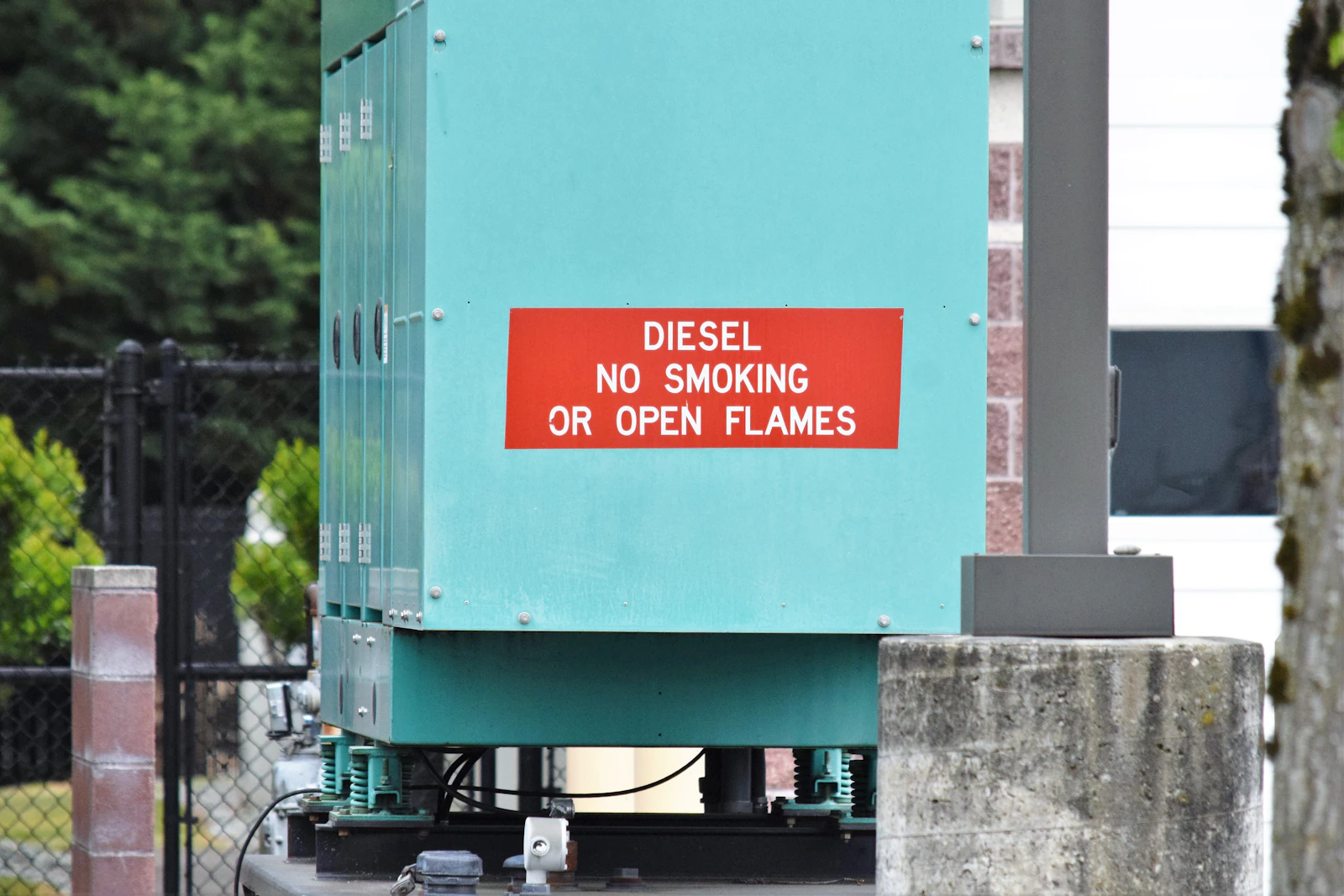
For Washington, DC electrical panel upgrade work in 2026, budget diesel generator equipment hire (towable, sound-attenuated, jobsite class) in these planning ranges: 25–45 kW at $225–$475/day, $675–$1,350/week, $2,000–$3,900/month; 60–100 kW at $350–$850/day, $1,050–$2,550/week, $3,200–$7,400/month; 125–200 kW at $525–$1,250/day, $1,575–$3,750/week, $4,800–$10,800/month. These ranges assume Tier-class engines commonly stocked by national providers (e.g., United Rentals, Sunbelt Rentals, Herc Rentals, Sunstate) and exclude fuel, delivery, distribution, and electrician tie-in. Publicly available rate sheets and published overtime/shift rules show why “base rent” is rarely the final number for temporary power on occupied facilities.
| Vendor |
Daily Rate |
Weekly Rate |
Review Score |
Website |
| United Rentals |
$300 |
$750 |
6 |
Visit |
| Sunbelt Rentals |
$345 |
$925 |
6 |
Visit |
| Herc Rentals |
$222 |
$481 |
8 |
Visit |
| Aggreko |
$380 |
$1 300 |
8 |
Visit |
Diesel Generator Hire Costs Washington 2026
This article is scoped specifically to diesel generator hire costs in Washington, DC for electrical panel upgrade projects (service swaps, panel replacements, switchboard work, and planned shutdowns where you need temporary power continuity). If your “Washington” refers to Washington State, your delivered pricing and taxes will differ; the cost logic and fee structure below still applies, but delivery radius norms and permitting will change.
When you request quotes for diesel generator rental rates in Washington, DC, you’ll typically see one of these rental constructs:
- Single-shift / running-hour allowance pricing (common for jobsite generators). A published example shows 40 running hours per week and 176 running hours per month, with an overtime charge per hour once you exceed the allowance; some providers also price double shift at 1.5× and triple shift at 2×.
- “Week minimum” triggers during declared emergencies. For example, a major rental provider states a one-week minimum for a 150 kW class unit during certain emergency conditions and bills at 24-hour usage rates in that case.
- Standby vs prime use cases. “Standby” can look inexpensive until you add distribution, delivery, overtime running hours, and site support; “prime/unlimited” eliminates hour-meter surprises but is priced higher.
For temporary power equipment hire supporting an electrical panel upgrade, your most important cost-control move is aligning the rental structure to your outage plan: if you need continuous power for a weekend cutover, plan for unlimited run / triple-shift or explicit 24/7 terms; if you’re only maintaining critical loads during daytime work, insist on clear running-hour allowances, overtime per hour, and off-rent cutoff language in writing.
How Generator Size and Voltage Drive Hire Cost on Panel Upgrades
Generator “size” decisions directly change your diesel generator equipment hire cost because you are buying (1) kW capacity, (2) voltage/ampacity compatibility, and (3) distribution complexity.
- Load size: A 60–100 kW class towable is common when you’re carrying a subset of loads (life safety, elevator bank on rotation, server closet, sump pumps, limited lighting). A 125–200 kW class unit becomes common when you’re carrying larger HVAC or multiple critical panels.
- 480V three-phase vs 208V: If your building distribution is 480V and you need 208/120 downstream, budget for a step-down transformer or appropriate distro. Transformer and multi-panel adders can rival the generator’s weekly rent on short outages.
- Starting current / inrush: Motors (pumps, compressors) can force you into a larger generator or a soft-start plan. Oversizing increases rent, but undersizing creates nuisance trips and overtime labor.
For estimating, don’t price the generator alone. Price the temporary power system: generator + cables + camlock/distro + grounding + protection + metering + (often) a tech to commission.
Distribution And Accessory Adders That Move the Total Hire Number
On an electrical panel upgrade, distribution is usually the silent budget killer. A published rate sheet (older but still useful for “what gets billed”) shows separate line items for multi-panels, distribution boxes, and feeder cables. (g
Use these 2026 planning adders (Washington, DC metro) when building a diesel generator hire cost estimate:
- Camlock feeder cable (4/0, 50 ft): plan $20–$55/day per run; many jobs need 4–10 runs depending on distance, routing, and redundancy. (A published example shows a 4/0 50' cable as a separate billed item.) (g
- 600A–1200A multi-panel / multi-tap distribution: plan $175–$475/week each (often 1 main + 1 spare/secondary for segmentation). (g
- 200A hardwire panel: plan $120–$300/week each when you’re landing multiple subfeeds. (g
- Spider boxes / jobsite distribution boxes: plan $45–$110/week per box depending on config; count 2–8 boxes for typical floor-by-floor staging.
- Automatic transfer switch (ATS) / docking interface (where required): plan $150–$500/day or $450–$1,500/week depending on amperage and whether you need an outdoor-rated enclosure.
- Load bank (commissioning / verification): plan $300–$900/day if the AHJ, client, or SOP requires a functional test before you carry critical loads.
- Sound attenuation / “quiet pack” premium: plan +5% to +20% on base rent if nighttime noise constraints are strict (common in dense DC corridors).
Hidden-Fee Breakdown
To keep your equipment hire costs aligned with the PO, explicitly pre-price these “not in base rent” items for Washington, DC deliveries and panel upgrade outages:
- Delivery / pickup: commonly quoted as a flat mobilization plus mileage. A published delivery example shows $120 flat charge each way plus $3.95 per mile after that on a rate sheet; in DC, also expect access constraints and possible after-hours coordination. (g
- Downtown access constraints (DC-specific): plan an extra $75–$250 if the truck needs a specific delivery window, escort, or return trip due to curb-lane control, alley restrictions, or federal/security perimeter routing.
- Minimum rental charges: many branches enforce a 1-day minimum; emergency clauses can force a 1-week minimum on higher-kW units under specific conditions.
- Running-hour overtime: if your agreement includes a weekly allowance (example: 40 hours/week) then exceeding it can trigger an hourly charge. A published schedule shows overtime charges such as $15/hour (example value) at certain generator sizes.
- Shift multipliers: published terms may price double shift at 1.5× and triple shift/unlimited at 2× of single shift.
- Damage waiver / physical damage protection: plan 10%–18% of the rental (often with a $25–$75/day minimum). Decline only if your insurance certificate and contract language clearly covers rented equipment and third-party damage.
- Cleaning fee: plan $75–$250 if returned dusty; $250–$750 if concrete slurry/mud intrusion requires pressure wash (common when staging in active construction loading areas).
- Fuel & refuel service: plan $4.25–$7.25/gal when billed by the rental provider (often higher than retail due to service and compliance). If you require “wet fueling,” plan a dispatch fee of $95–$225 per trip.
- DEF / emissions fluid (Tier engines): plan $3–$6/gal if billed as a consumable line item; clarify if the unit must be returned “full DEF” similar to fuel expectations.
- Environmental containment: plan $45–$150/week for spill kit/drip pan requirements depending on site policy.
- Late return / missed off-rent cutoff: many branches use a daily cutoff (often early afternoon). Budget a “mistake allowance” of 1 extra day if your shutdown has uncertain end time and the off-rent call misses the cutoff.
Washington, DC Considerations That Change Diesel Generator Hire Cost
- Delivery windows and staging: DC loading docks and curb lanes often require tight windows; missing the window can create a paid redelivery (plan $175–$450) and can push you into another rental day.
- Noise and neighbor constraints: night/weekend cutovers may require quiet configurations and farther placement (longer feeder cable runs). Every extra 50 ft of feeder length can mean additional cable rentals plus added labor to dress and protect the run.
- Summer heat/humidity derate: hot rooftop courtyards and tight alleys can reduce effective output and increase fuel burn—often pushing you to a larger kW class than the nameplate calculation suggests.
Example: Diesel Generator Hire for a 2-Day Electrical Panel Upgrade (Occupied Building)
Scenario: You’re replacing a main distribution panel in an occupied commercial building near central Washington, DC. You need temporary power from Friday 6:00 PM through Sunday 6:00 PM (48 hours), carrying critical loads and limited lighting. Site has a 480V service and wants a quiet footprint.
- Generator: plan a 150 kW towable diesel unit at $700–$1,100/day (or alternatively price a weekly minimum if your provider won’t do weekend day-rates cleanly).
- Shift/running-hours: because you need 48 continuous hours, plan for unlimited/triple shift (2×) terms or explicit 24/7 language; otherwise you risk overtime hours billed on the meter.
- Delivery/pickup: plan $240–$650 total (two-way) plus potential downtown constraints.
- Distribution: plan $450–$1,200 for multi-panel + spider boxes + grounding set depending on how many circuits are being carried.
- Feeder cable: assume 6 runs of 4/0 at $20–$55/day each for a protected path; for two days, that’s $240–$660 just in feeder rental.
- Electrician / generator tech tie-in: plan $140–$190/hour with a 4-hour minimum for initial landing and commissioning, plus a return visit for demobilization.
- Damage waiver: plan 12%–18% of rental subtotal if you take the waiver for schedule certainty.
- Fuel: if the unit burns a conservative average and you plan 150–300 gallons across the weekend (load-dependent), budget $640–$2,175 at $4.25–$7.25/gal (plus a service fee if wet fueled).
Operational constraint to note: If the panel upgrade finishes early Sunday, you still may be billed through Monday if the provider’s weekend off-rent rules require a weekday pickup window. Confirm weekend pickup availability and the exact off-rent notification deadline before you schedule the outage.
Budget Worksheet (Estimator-Friendly Allowances)
- Diesel generator hire (select kW class): allowance $1,050–$3,750 (weekend outage often prices like 1 week depending on branch policy)
- Distribution package (multi-panel, spider boxes, grounding): allowance $450–$1,500
- Feeder cable set (4/0 camlocks, quantity and length): allowance $300–$1,200
- ATS/docking interface (if required): allowance $450–$1,500/week
- Delivery & pickup (two-way, incl. downtown constraints): allowance $240–$850
- Fuel (provider-billed) & DEF: allowance $750–$2,500
- Damage waiver / physical damage protection: allowance 12%–18% of rental subtotal
- Cleaning / return condition reserve: allowance $150–$500
- After-hours support / troubleshooting reserve: allowance $250–$900
- Contingency for schedule slip (extra day): allowance 1 day of base rent + 1 day of distro
Rental Order Checklist (PO-to-Return)
- PO scope language: include generator kW/kVA, voltage, phase, sound attenuation requirement, Tier requirement, and “unlimited run vs running-hour allowance.”
- Delivery instructions: exact address, dock entry, alley constraints, truck length limits, delivery window, onsite contact phone, and staging photo if possible.
- Site readiness: confirm pad/cribbing, clearance for exhaust, barricades, cable protection (ramps/mats), and indoor CO controls if near occupied air intakes.
- Accessories confirmed: camlock set lengths, distro amperage, grounding kit, lugs/adapters, and any transformer needs.
- Fuel plan: “return full” expectation, wet-fuel authorization, spill-prevention requirements, and refuel documentation.
- Commissioning documentation: record hour meter at arrival, photo of serial number, photo of cable landings (pre-energization), and any alarm codes cleared.
- Off-rent rules: cutoff time, weekend/holiday billing rules, pickup scheduling lead time, and where equipment must be staged for pickup.
- Return condition proof: photos at pickup, cable count/length confirmation, and signed ticket showing pickup date/time.
If you want, share the service size (e.g., 200A/400A/800A), voltage (208/480), and which loads must remain live; I can tighten the kW class and the accessory bill-of-material allowances so your equipment hire costs track the outage plan.
How to Quote Diesel Generator Equipment Hire for Panel Upgrades Without Getting Burned
For Washington, DC panel upgrade outages, the cost risk isn’t usually the headline diesel generator rental rate—it’s mismatch between contract terms and your real operating profile. Use the steps below to keep equipment hire costs predictable.
Lock the Rental Structure to Your Outage Schedule (And Put It on the PO)
- Define “week” and “month” in the quote: is it 7 consecutive days (calendar) or shift-based? Is the month a 4-week block or a calendar month? Don’t assume.
- Confirm running-hour allowance: published terms can be 40 hours/week and 176 hours/month with overtime beyond that. If your outage is a true 24/7 continuity requirement, you need an unlimited-run construct (or you need the overtime rate clearly stated).
- Ask for the overtime rate in dollars (not just “overtime applies”). A published schedule shows overtime charges that scale by generator size (example values include $15/hour, $20/hour, $25/hour, and higher for large machines).
Delivery, Off-Rent, and Weekend Billing Are Where Washington, DC Costs Swing
DC logistics can convert a two-day outage into a billed week if you don’t plan pickup correctly. Build these controls into your rental coordination:
- Delivery window cutoffs: if your building only takes deliveries 7:00 AM–10:00 AM, confirm the branch can hit that window; otherwise, plan a standby labor buffer and a possible $175–$450 redelivery risk.
- Weekend pickup policy: if pickups only occur Monday–Friday, your “Sunday off-rent” may still bill through Monday (and sometimes through Tuesday if the ticket isn’t processed by cutoff). Put a named dispatcher contact and pickup appointment in writing.
- Downtown access adders: in DC, plan $75–$250 for constrained access jobs (tight alleys, curb lane controls, security routing). It’s cheaper to budget the adder than to eat a second mobilization.
Fuel, Refueling, and Return Condition: Write the Rules Before the Generator Arrives
For electrical panel upgrades, generators often run at low to moderate load for long stretches. That creates two practical cost outcomes: (1) fuel deliveries are unpredictable unless you meter and log, and (2) low-load operation can require management (load bank time or load planning) to avoid performance issues.
- Fuel billing: if the rental provider bills fuel, set a not-to-exceed allowance (planning range $4.25–$7.25/gal).
- Wet fueling dispatch: plan $95–$225 per refuel trip (separate from fuel cost) if you need the provider to handle it.
- Return full expectations: confirm whether you must return full fuel and full DEF; budget DEF at $3–$6/gal if billed.
- Cleaning: set internal rules for dust control (filters protected, cable ramps used, no slurry exposure). Budget $75–$250 for light cleaning risk; $250–$750 for heavy cleaning exposure.
Cost Control Levers for Multi-Week Panel Upgrade Programs
If you have a campus program (multiple panels over several weeks), you can reduce total diesel generator equipment hire cost by changing the commercial structure rather than fighting day rates:
- Convert to monthly pricing once you pass ~3 weeks of need. Many rate structures effectively price a month at ~3–4 weeks depending on policy; ask for the best “4-week” block.
- Bundle distribution where possible. If you’re repeating the same rig, negotiate distro as a package and keep it on rent to avoid repeated delivery charges and missing parts risk.
- Standardize cable lengths (e.g., commit to 50 ft and 100 ft sets) so the vendor can stage repeatable kits and you reduce swap-outs.
Reference Anchors From Public Rate Sheets (Use for Sanity Checks, Not Promises)
Even if your DC branch requires “quote only,” published sheets help validate whether a proposal is in family. Examples include:
- A published listing for a 70 kVA diesel generator shows a $407 24-hour/day rate, $1,693.12 week rate, and $3,386.24 month rate (plus the voltage/phase details). Use these as anchors when a quote seems out of band.
- A published (older) price list shows separate billed items for distribution panels, distribution boxes, and 4/0 feeder cable, and it also shows an example delivery structure of $120 each way plus $3.95/mile. The exact numbers will differ in 2026 DC, but the “everything is line-itemed” reality is consistent. (g
- Federal ceiling-rate schedules publish upper limits for portable and towable generator categories (useful when you’re working on federal sites that reference ceilings).
Practical Closeout: What to Document So You Don’t Pay Extra
- At delivery: photo the hour meter, fuel level, DEF level (if present), and accessory count (distro, cables, ramps/mats).
- During run: log meter readings every 8–12 hours on weekend cutovers so you can reconcile any overtime-hour disputes.
- At pickup: photo the meter, fuel level, and cable condition; get a signed pickup ticket with date/time to defend off-rent cutoff issues.
Net: for Washington, DC electrical panel upgrades, treat diesel generator hire as a logistics-and-terms procurement, not a single line item. If you want to reduce total equipment hire costs, the biggest wins usually come from (1) locking the run-hour/shift structure, (2) right-sizing distribution, and (3) preventing an avoidable extra day due to pickup timing.