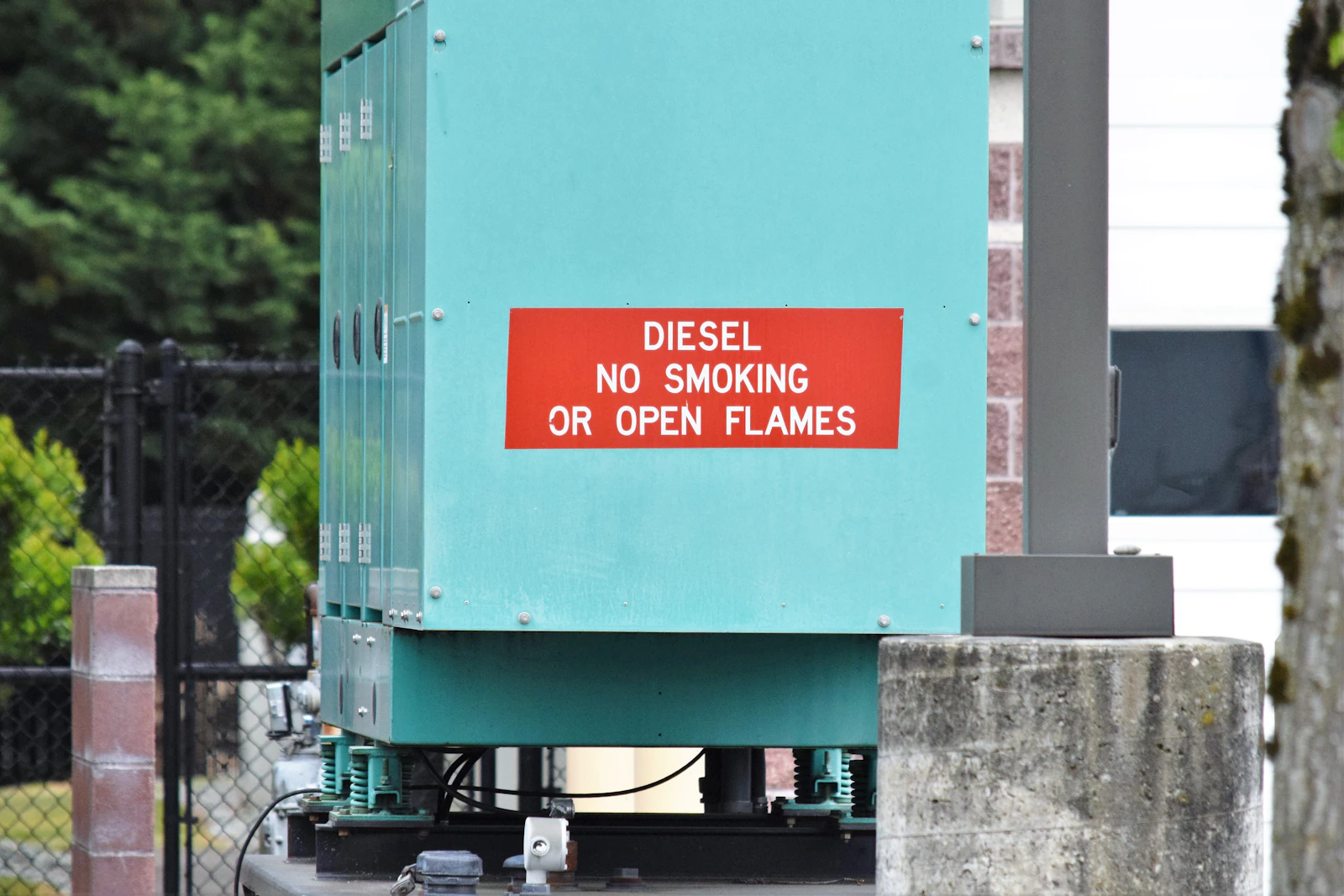
Diesel Generator Equipment Hire Costs Washington 2026
For Washington, DC portable generator hire planning in 2026 (diesel, towable, jobsite/temporary power), budget managers typically see base hire rates land in the following bands before accessories, freight, fuel, and protection fees: $240–$1,600/day, $600–$3,700/week, and $1,250–$9,800 per 4-week (monthly) billing cycle, driven primarily by kW size, Tier/emissions package, and whether the hire is priced as “single shift” usage. Published rate sheets and regional listings show 20 kW diesel towable units at about $199–$260/day, 100 kW units around $415/day, and 150 kW class units around $499–$600/day, with 4-week pricing frequently set well below four weekly charges. In the DC metro, national rental houses (for example, the large “big three” generalists) and regional portable power specialists can all supply diesel generator packages, but your total equipment hire cost is usually won or lost in delivery windows, off-rent rules, metered-hour policies, and the distribution/cabling scope—not the generator line item alone.
| Vendor |
Daily Rate |
Weekly Rate |
Review Score |
Website |
| United Rentals |
$300 |
$750 |
9 |
Visit |
| Sunbelt Rentals |
$320 |
$800 |
7 |
Visit |
| Herc Rentals |
$409 |
$975 |
9 |
Visit |
| Carter Rental (The Cat Rental Store) — Carter Machinery |
$247 |
$618 |
9 |
Visit |
| Aggreko |
$450 |
$1 200 |
9 |
Visit |
2026 Washington, DC diesel generator hire planning ranges by size (assumes Tier 3/4 towable set, single-shift basis; excludes fuel, taxes, freight, and add-ons):
- 20–25 kW diesel generator hire: plan $240–$340/day, $600–$900/week, and $1,250–$2,000/4-week. A published regional listing shows a 20 kW towable diesel generator at $260/day, $625/week, and $1,250/month.
- 40–60 kW diesel generator equipment hire: plan $260–$450/day, $650–$1,100/week, and $1,800–$2,700/4-week. A national rate sheet lists 40 kW at $274/day and 56 kW at $302/day. (g
- 80–100 kW portable diesel generator hire: plan $380–$600/day, $950–$1,450/week, and $2,650–$4,200/4-week. Published pricing examples show 100 kW towable diesel at $415/day, $1,039–$1,245/week, and $2,669–$3,320/4-week.
- 120–200 kW diesel generator hire: plan $500–$950/day, $1,250–$2,250/week, and $3,000–$5,600/4-week. A national rate sheet lists 150 kW at $499/day, 200 kW at $646/day, and a regional listing shows 150 kW towable at $600/day, $2,100/week, $4,500/4-week.
- 250–350 kW diesel generator equipment hire: plan $750–$1,350/day, $1,800–$3,000/week, and $4,600–$7,500/4-week. A national rate sheet lists 300 kW at $899/day and 350 kW at $952/day. (g
- 500 kW diesel generator hire (towable or skid): plan $900–$1,750/day, $2,500–$3,900/week, and $6,700–$9,800/4-week. A national rate sheet lists 500 kW towable at $930/day, $2,584/week, $6,707/4-week (and a separate 500 kW non-towable line item at $1,290/day). (g
Key assumption to state on the estimate: most published “day/week/4-week” rates are built on a single-shift usage concept (often 0–8 hours/day, 40 hours/week) with multipliers for longer daily usage on metered assets. One published national rate sheet explicitly notes single shift = 0–8 hours, double shift = 9–16 hours at 1.5×, and triple shift = 17–24 hours at 2×. (g
What Size Diesel Generator Are You Actually Hiring?
For Washington, DC projects, the common estimating miss is treating “diesel generator” as a single line item. Hire cost scales non-linearly with kW, and oversizing can raise both rental and fuel burn. As a practical procurement step, define the hire in these terms:
- Electrical output class: 20–25 kW for small temp panels/site trailers; 40–60 kW for small builds and limited HVAC; 80–100 kW for heavier construction power; 150–200 kW for larger mechanical loads; 300–500 kW for multi-panel distribution or partial-building backup.
- Voltage and connectors: 120/208V 3Ø, 277/480V 3Ø, and whether you need camlocks, lugs, or receptacles. Mismatch here becomes an accessory and labor cost.
- Emissions package: Tier 4 Final units can be required by some owners/specs; they may also introduce DEF handling and additional compliance expectations.
- Duty cycle: standby/backup vs. prime power (continuous). If you plan 24/7 operation, treat it as a different commercial model than “daytime-only” construction power.
Hidden-Fee Breakdown For Portable Generator Hire In Washington, DC
Base equipment hire rates are only the start. Build your estimate with explicit allowances for the items below, because most rental terms state that published rental rates do not include items such as fuel, freight, or surcharges.
- Delivery and pickup (freight/trip charges): allow $175–$450 each way inside the Beltway, and $4–$8 per mile beyond a typical service radius; if the job requires a smaller truck due to tight alley/loading constraints, allow a $150–$300 re-delivery or transload premium.
- Minimum rental charge: many branches enforce a 1-day minimum even if the set is on-site for only a few hours; for event standby, assume 2-day minimum if it crosses a weekend.
- Environmental or shop fees: budget 3%–8% of rental revenue as an “environmental” or “facility” fee; some national providers publish an Environmental Fee concept as a non-government charge.
- Rental protection / damage waiver: plan 6%–15% of the rental charges if you accept the waiver instead of providing a certificate of insurance; industry guidance commonly places damage waiver fees in this band. (g
- Fuel / refuel charges: if the diesel generator is required to be returned “full,” budget a back-charge premium of $6–$10 per gallon if you return short (many rental programs treat fuel as an optional/prepay or a back-charge item).
- DEF consumable (Tier 4 sets): allow $4–$7 per gallon of DEF plus handling; also include a $45–$95 “service call minimum” risk line if the unit derates due to low DEF/alerts.
- Cleaning fee: even though generators are not earthmoving assets, DC jobsites can still trigger cleaning/degassing requirements (mud on trailers, concrete dust intrusion, spilled diesel). Carry $95–$350 as a cleaning allowance; published rental policies in the market show cleaning fees can run up to about $200 on general equipment.
- Late return / holdover: include a $75–$250/day exposure if return documentation is incomplete and the unit cannot be immediately processed off-rent.
- On-rent cancellation: if you cancel after dispatch, assume you still pay at least $150–$300 in freight/handling.
Delivery, Access, And Security Constraints In Washington, DC
Washington, DC (assumed: Washington, DC metro, not Washington State) has access constraints that materially change diesel generator equipment hire cost because they change freight, standby time, and redelivery risk:
- Delivery window cutoffs: many downtown sites have hard receiving windows (for example, 7:00–10:00 AM) or require after-hours; budget an after-hours premium of $150–$300 plus potential 2-hour driver wait time.
- Federal / secure facilities: if escorts, badging, or vehicle screening adds 60–90 minutes to drop, you can see extra charges or fewer available delivery slots. Put a note in the PO that delivery includes security screening time.
- Street occupancy and staging: if the generator must sit on the public right-of-way (common on tight downtown retrofits), add a permitting and traffic-control line item; even when the permit is owner-provided, your cost risk is extra mobilizations if the delivery is turned away.
- Noise sensitivity: near hotels/residential areas, you may need a “quiet” set or additional sound attenuation; budget $35–$120/day premium for “quiet” spec or barrier requirements.
- Summer derate planning: if you’re bidding July–August in DC, carry a 10%–15% capacity buffer to avoid load-shed calls that become emergency service charges.
Metered Hours, Overtime, And Weekend Billing Rules
If you do not clarify the duty cycle, you can get hit with overtime/multi-shift multipliers even when the generator is physically on-site but running limited hours. A widely circulated rate schedule model is single shift (0–8 hours), then 1.5× for 9–16 hours/day and 2× for 17–24 hours/day. (g Use these estimating rules of thumb for portable generator hire:
- Write “single shift” or “continuous” on the PO: for 24/7 outage coverage, carry 1.5×–2.0× the base daily rate unless you have a written prime-power package rate.
- Weekend billing varies: some suppliers charge calendar days; others treat week rates as inclusive. If the job is schedule-sensitive, include a 10%–25% weekend/holiday premium contingency for swap-outs and call-outs.
- Off-rent timing: submit off-rent notices before branch cutoff (often 12:00 PM local) or you can get billed an extra day; treat this as a process control item for the superintendent and the rental coordinator.
Add-On Equipment That Changes Diesel Generator Hire Cost
Most DC generator hires fail budget because the electrical distribution scope gets bolted on late. Carry these adders from the start (ranges reflect common market practice; confirm per supplier branch):
- Distribution boxes / spider boxes: published regional pricing shows $30/day, $120/week, $360/4-week.
- Camlock cable sets (per set, per term): allow $35–$120/day depending on ampacity and length; for longer terms, carry $180–$450/4-week per set.
- Feeder cable by the foot: budget $2.50–$6.00/ft per 4-week (common on 200–500 kW packages where lengths stack up fast).
- External sub-base tank (belly tank): allow $55–$150/week or $180–$450/4-week; this is often cheaper than daily fueling service if the set runs nights/weekends.
- Fuel cube / temporary diesel storage (if owner allows): allow $90–$250/week plus compliance costs for containment; add a $35–$85/week spill kit/absorbent allowance.
- Remote monitoring (run hours/alarms): allow $8–$25/day plus setup; it can prevent after-hours emergency calls that cost $250–$600 each.
- Load bank testing: if acceptance testing is required, carry $450–$1,200/day for a load bank plus cabling and electrician time.
Example: 150 kW Diesel Generator Hire For A 10-Day Downtown DC Outage
Scenario: Tenant improvement project near Metro with a planned 10-day utility shutdown. The GC needs a 150 kW towable diesel generator, 480V service, and two distribution points. Deliveries are restricted to 7:00–9:00 AM, and the set must run 16 hours/day for weekdays plus 8 hours/day on the weekend.
Budget build (illustrative):
- Base generator hire: start with a published 150 kW example at $600/day or $2,100/week and use weekly pricing for a 10-day term (2 weeks) as the baseline.
- Overtime exposure: because weekdays are 16 hours/day, apply a 1.5× factor for those days unless you negotiate a prime-power rate in writing. (g
- Distribution boxes: 2 units at a published $30/day each, or use weekly.
- Freight: allow $350 delivery and $350 pickup due to tight window and downtown access.
- Damage waiver: carry 10% of rental charges unless COI is provided (within the broader 6%–15% band). (g
- Environmental fee: carry 5% of rental charges.
- Fuel plan: at the published fuel burn example for a comparable large towable set (often several gallons per hour at load), your fuel cost can exceed the base hire cost on a 16-hour/day schedule—carry a separate diesel allowance and clarify who refuels.
Operational constraint that changes total cost: if security rejects the truck and you miss the 7:00–9:00 AM window, the re-delivery can add $150–$300 and burn a full day of schedule float. Put the delivery window, contact, and backup contact on the PO and the receiving plan.
Budget Worksheet (No Tables)
Use this as a rental coordinator’s line-item checklist (adjust quantities and terms to your job):
- Diesel generator equipment hire (size: ___ kW; voltage: ___; Tier: ___): allowance $____/day or $____/week
- Mobilization (delivery): $175–$450
- Demobilization (pickup): $175–$450
- Downtown access / after-hours delivery premium: $150–$300
- Environmental/facility fee allowance: 3%–8% of rental subtotal
- Damage waiver / rental protection plan: 6%–15% of rental subtotal (g
- Distribution boxes (qty ___): $30/day or $120/week each (published example)
- Camlock cable sets (qty ___): $35–$120/day per set
- Feeder cable (___ ft): $2.50–$6.00/ft per 4-week
- Sub-base tank / external fuel tank: $55–$150/week
- Spill containment/absorbents: $35–$85/week
- Cleaning allowance (return condition): $95–$350 (carry risk)
- Late return / documentation failure contingency: $75–$250/day
Rental Order Checklist For Diesel Generator Hire
- Scope confirmation: kW/kVA required, voltage, phase, connector type (camlock/lugs/receptacles), and whether neutral/ground bonding requirements are owner-driven.
- Commercial terms: day/week/4-week rate; clarify single shift vs continuous and overtime multiplier triggers. (g
- Insurance: provide COI and endorsements if declining damage waiver; otherwise approve waiver percent (typically 6%–15%). (g
- Delivery plan: delivery address, exact on-site contact, delivery window, truck access notes, security instructions, and any escort/badge requirements.
- Receiving requirements: confirm offload method (drop trailer vs forklift/crane), pad requirements, and required clearances for cooling airflow and exhaust routing.
- Fuel/DEF plan: who refuels, where fuel is staged, and return condition (full/empty policy).
- Metering documentation: record start hours at delivery; take photos at drop and at pickup to defend against holdover and fuel back-charges.
- Off-rent rule: who is authorized to place the off-rent call, cutoff time, and required return paperwork (asset tag, hours, condition photos).
Contract Terms That Control Off-Rent And Back-Charges
In Washington, DC generator equipment hire, the largest “silent” cost is frequently billing leakage after the power need ends. Put these controls in place:
- Off-rent notice timing: standardize an internal rule that the superintendent emails/texts the rental coordinator by 10:00 AM on the off-rent day with photos of the meter and the asset tag. This protects you if pickup slips to the next day.
- Return condition documentation: capture 6 photos minimum at pickup (all sides, control panel, trailer tongue/axle, and meter reading). This reduces disputes on cleaning and damage.
- Holdover exposure: carry $75–$250/day in contingency for projects with uncertain turnover dates, then claw it back when you have written pickup confirmation.
- Freight reattempts: if your site is “missed” (no contact, blocked access), a second trip can add $150–$300. Treat receiving as a scheduled activity, not a best-effort delivery.
Fueling Plan And Consumables Often Exceed The Hire Line
Rental rates for generators are commonly structured to exclude fuel and certain surcharges/fees. If you are running nights or covering an outage, the diesel plan should be estimated like a separate subcontract scope:
- Diesel cost allowance: carry a unit cost plus a weekend/after-hours fueling premium (for example, $125–$250 per fueling trip) if your site cannot store fuel.
- Fuel back-charge risk: if you return a unit not “full,” some rental programs treat refueling as an option/back-charge item; include a premium back-charge band of $6–$10/gal if you do not control the return fill.
- DEF planning: for Tier 4 units, add $4–$7/gal plus a $45–$95 service-minimum risk line for preventable derate callouts.
- Spill prevention: budget $35–$85/week for absorbents and $25–$60/week for drip pans/secondary containment items when required by the owner or site EHS plan.
How To Reduce Total Diesel Generator Hire Cost Without Under-Scoping
- Bid the distribution package early: for many jobs, you can spend 20%–60% of the generator base hire again on distro boxes, camlocks, and feeder cable if it’s added late and expedited.
- Use weekly or 4-week pricing intentionally: published examples show meaningful savings in 4-week pricing versus stacking weeks (for example, a 150 kW towable example at $2,100/week versus $4,500/4-week, and a 100 kW example at $1,245/week versus $3,320/4-week). If your expected term is 18–22 days, ask for a pro-rated 4-week rate in writing before you commit.
- Control shift/overtime exposure: if you truly need only 8 hours/day, put start/stop expectations in the work plan. If you need 16–24 hours/day, negotiate a continuous/prime-power package rather than accepting a surprise 1.5×–2× multiplier after the fact. (g
- Clarify what fees apply: include explicit acceptance for (or rejection of) environmental fees and optional charges, since some suppliers publish separate “fees and optional charges” programs (including environmental fee concepts and fuel options).
- Right-size using measured loads: if you can log actual amperage for 48–72 hours before the outage, you can often reduce from a 200 kW class rental to a 150 kW class rental (or avoid needing a second set), saving both hire and fuel.
Washington, DC-Specific Considerations To Put On The Estimate Notes
- Traffic and staging: assume downtown deliveries may require shorter trucks or specific routing; add $150–$300 contingency for reattempts/transloads on constrained blocks.
- Noise and neighbor constraints: include a $35–$120/day allowance for quiet-spec requirements or additional sound mitigation on sensitive sites (hotels, residential edges).
- Heat/humidity operations: add a 10%–15% load buffer for summer runtime in DC so you are not forced into an emergency upsizing (which can add $150–$500/day midstream plus swap freight).
Procurement Notes For “Portable Generator Hire” Scopes
When the scope is described as portable generator hire, you’ll usually get better budget certainty by requesting a written quote that separates:
- Base diesel generator equipment hire (day/week/4-week) by kW class
- Freight (delivery + pickup, plus any wait-time rules)
- Accessories (distribution, cabling, tanks, monitoring)
- Usage basis (single shift vs continuous; hour allowance and overtime multipliers)
- Fees/optional charges (environmental fee %, damage waiver %, fuel option/refuel policy)
If you want, share your target kW (or the loads you’re covering) and the expected runtime schedule (8-hour, 16-hour, or 24/7). I can tighten the 2026 equipment hire cost range to a narrower band and call out which add-ons are “must-carry” versus “risk allowances” for a Washington, DC delivery.