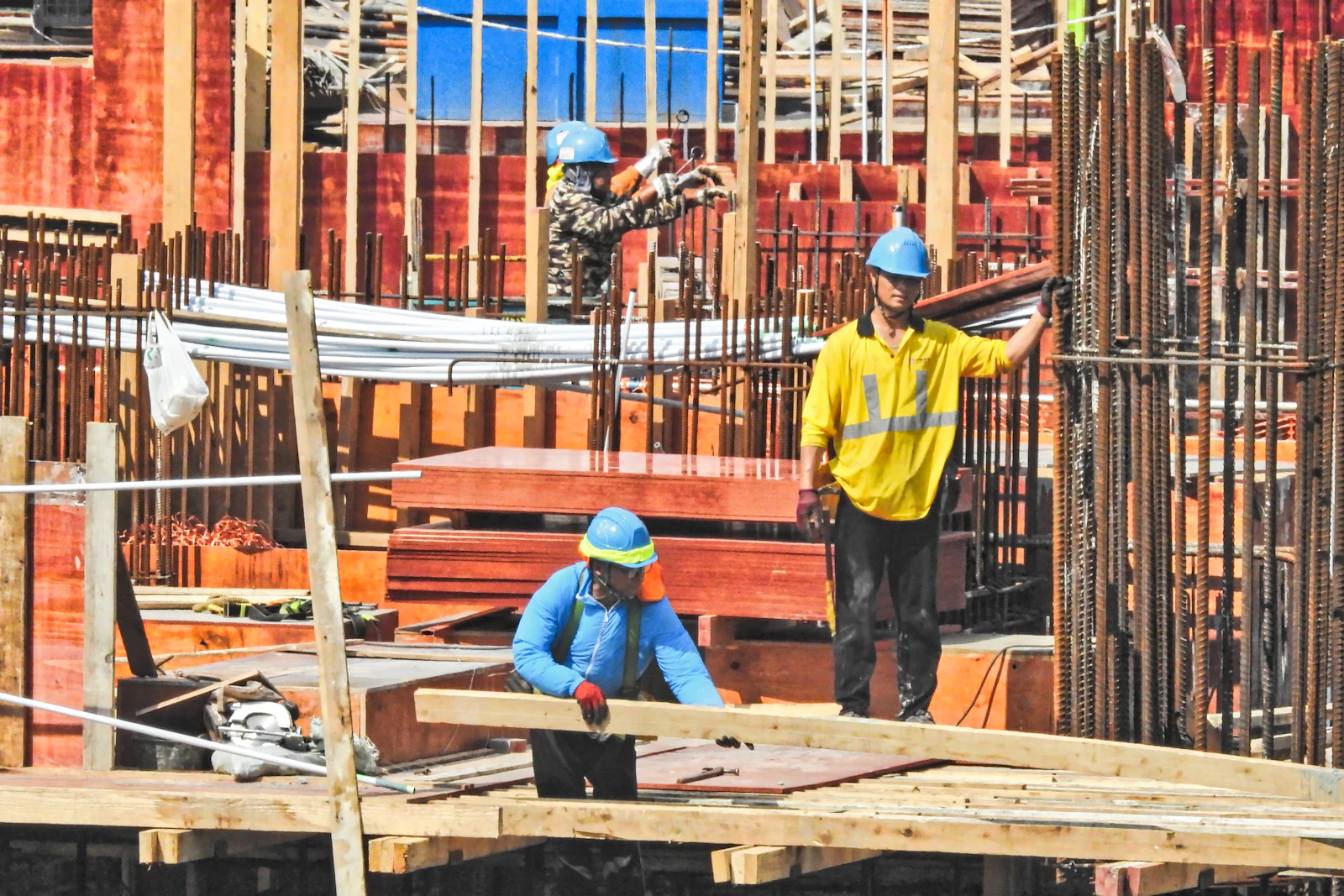
For heavy equipment hauling in Washington (assumed Washington, DC metro), 2026 planning budgets for a dolly set equipment hire (typically a jeep dolly + booster dolly package used with a lowboy/RGN) commonly land in these bare-rental ranges: $450–$875/day, $1,700–$3,300/week, and $5,000–$9,800 per 4-week month. These ranges assume you are hiring the dolly set only (no tractor, no RGN/lowboy, no hydraulic neck trailer), the set is properly compatible with your trailer kingpin/5th-wheel geometry, and the rental house is not providing the driver, routing, permits, escorts, or load/unload labor. In the DC market, lead time, delivery constraints, and off-rent rules can swing the effective cost per day as much as the base rate—especially around weekend/holiday moves and restricted delivery windows.
| Vendor |
Daily Rate |
Weekly Rate |
Review Score |
Website |
| Sunbelt Rentals |
$250 |
$650 |
7 |
Visit |
| United Rentals |
$210 |
$630 |
8 |
Visit |
| Herc Rentals |
$90 |
$265 |
9 |
Visit |
| LGH (Lifting Gear Hire) |
$150 |
$750 |
9 |
Visit |
| Mid-Atlantic Lift Systems |
$650 |
$1 950 |
8 |
Visit |
Dolly Set Rental Rates Washington 2026
What “dolly set” means for heavy equipment hauling. In heavy haul terms, a “dolly set” is usually a combination of detachable axle groups (most commonly a jeep at the front and a booster at the rear) used to meet bridge/axle weight requirements when hauling excavators, cranes, transformers, or oversized construction plant. Some fleets quote and dispatch these as individual components (single jeep, tandem booster, tridem booster), while others quote a single dolly set hire line item tied to a specific trailer.
Directional rate benchmarking. Published North American heavy-haul rental rate charts show (as a reference point) items like a Single Jeep at roughly $100/day, $430/week, $1,300/month and a Tandem Axle 20 Ton Booster at roughly $200/day, $800/week, $2,400/month (with additional distance/usage structures shown on some charts).
Washington, DC 2026 planning ranges (recommended for estimating). Because DC-area dispatch, traffic, and jobsite access constraints are materially different from rural heavy-haul work, most rental coordinators should carry a higher planning allowance than “yard rates” published elsewhere. Use the ranges below for budgeting and bid work; then firm up with a written quote and the rental agreement.
- 2-axle jeep dolly hire (standalone): $175–$325/day; $650–$1,150/week; $1,900–$3,500/4-week month (availability and compatibility dependent).
- 2-axle booster dolly hire (standalone): $275–$550/day; $1,050–$2,100/week; $3,100–$6,200/4-week month.
- Typical “dolly set” package (2-axle jeep + 2-axle booster): $450–$875/day; $1,700–$3,300/week; $5,000–$9,800/4-week month.
- Higher-capacity packages (tridem jeep and/or tridem booster): add +$125–$300/day per additional axle group (common when a route or permit requires it).
Assumptions you should state on the estimate. Clarify whether your quote is based on a 24-hour day and whether the supplier applies usage caps for a “day/week/month.” Many construction rental agreements define a 1-day as up to 8 hours of use, a 1-week as 7 days up to 40 hours, and a 1-month as 28 days up to 160 hours—and also note that rental charges can continue until the equipment is returned or you call off (no automatic off-rent). (s
What Drives Dolly Set Equipment Hire Costs in Washington, DC?
For heavy equipment hauling, the dolly set itself is only part of the cost picture. In the DC metro, the real cost drivers tend to be compatibility, axle count, dispatch logistics, and how your rental period interacts with weekend billing and permit windows.
- Axle configuration and capacity (the biggest driver): Moving from a 4-axle “set” (2+2) to a heavier configuration can add +$500–$2,000/week depending on what axle group(s) change and how scarce those groups are in the region.
- Compatibility and matching hardware: Budget $75–$185/day for adapter kits or specialty hardware when you need kingpin/5th-wheel inserts, spacers, extra crossmembers, air/electrical pigtails, or a specific ride height to match your RGN geometry.
- Delivery logistics inside the Beltway: Many rental yards are outside the District; mobilizing dollies into DC during peak congestion frequently introduces standby and failed-delivery exposure if the receiving site cannot accept at the scheduled time.
- Security-controlled sites: Federal or high-security projects can require pre-clearance, strict appointment windows, and staged arrival. A missed window can trigger a redelivery charge (often $250–$500) plus a second dispatch.
- Weekend/holiday billing rules: If you pick up Friday and return Monday, many suppliers treat that as 2–3 billable days (or charge a weekend minimum). This is where the “effective daily rate” jumps on short moves.
Line-Item Adders to Carry on a Dolly Set Hire Estimate
To keep your heavy equipment hauling estimate defensible, separate the base dolly set equipment hire from the adders below. These adders are where DC-area projects most often blow past the initial “day rate.”
- Mobilization / yard load-out: $150–$300 per dispatch (covers yard labor, positioning, and hook-up time when not included).
- Delivery and pickup (two-way): $275–$450 each way within a typical local radius; beyond that, plan $6.00–$9.00/mile (often with a $350–$600 minimum per trip).
- After-hours gate / weekend dispatch: $75–$150 per event (common when your move window is nights/weekends to avoid DC traffic constraints).
- Standby/time-on-site due to no access: $125–$195/hour after the first 30–60 minutes.
- Damage waiver (if elected): typically 10%–15% of the rental charges (not a substitute for liability and does not cover all losses).
- Refundable deposit / authorization: commonly $2,500–$10,000 depending on replacement value, credit terms, and whether you have an established account.
Hidden-Fee Breakdown
In heavy equipment hauling, “hidden fees” are usually not truly hidden—they are triggered by contract terms that get missed during dispatch. Build these into your internal checklist so they do not surprise the job cost report.
- Minimum rental period: often 1-day minimum; some specialty axle groups carry a 3-day minimum in high-demand weeks.
- Late return penalty: $95–$200/hour, or an additional full day charge once you exceed a grace period.
- Cleaning and de-mudding: $175–$350 per occurrence (higher if concrete splatter or cured material requires chipping).
- Missing pins, clips, or safety chains: $25–$90 per item (small parts add up quickly on multi-axle gear).
- Tire and wheel damage: $425–$650 per tire plus mounting; bent aluminum wheel replacements can exceed $800 if billed at replacement cost.
- Brake/air system repairs billed back: $85–$160 per brake chamber; $40–$90 per airline/hose plus labor where damage is attributable to use.
- Hydraulic hose leaks/damage (if applicable): $150–$250 per hose plus cleanup, depending on routing and fittings.
- Administrative/environmental fees: $15–$35 per contract (sometimes shown as shop supplies).
Washington, DC Dispatch Realities That Change the Invoice
Two quotes with identical day/week/month pricing can land very differently in Washington, DC because dispatch windows and off-rent rules are stricter than many crews expect.
- Delivery cutoffs: If your receiving site cannot accept deliveries after (for example) 2:00–3:00 PM, you may be forced into next-day billing even when the equipment is physically nearby.
- Off-rent is not automatic: Many agreements require you to call to terminate (especially on delivered rentals), and charges can continue until the call-off is logged and/or equipment is received back at the yard. (s
- Weekend billing: If your move touches Saturday/Sunday, confirm whether the supplier offers “1-day weekend” treatment or bills full weekend days. Carry a 15%–25% weekend premium if the policy is unclear.
- Staging space: Many DC sites cannot stage multi-axle dollies curbside. If you need an external staging yard, plan $45–$90/day for secure laydown space plus an extra local shuttle.
Example: DC Metro Heavy Equipment Hauling Dolly Set Hire for a Short, Constrained Move
Scenario. You need a 4-axle dolly set (2-axle jeep + 2-axle booster) for a 62,000 lb excavator move from a staging yard in Northern Virginia to a downtown DC site with a 6:00–9:00 AM delivery window. The project manager wants the set Friday–Monday due to restricted street occupancy and crane availability.
- Base dolly set hire: 3 billable days at $650/day = $1,950 (Friday pickup triggers weekend billing; negotiated down from 4 days).
- Delivery into DC and pickup back to yard: $400 each way = $800.
- After-hours/early dispatch allowance: $125 (pre-peak arrival to hit the window).
- Damage waiver: 12% of base rent = $234.
- Standby risk allowance: 2 hours at $150/hour = $300 (only incurred if access is delayed).
Planning total (before tax and any permits/escorts): $1,950 + $800 + $125 + $234 + $300 = $3,409. The key operational constraint is that a missed 6:00–9:00 AM receiving window may cause both redelivery and an extra day of hire, which can add $900–$1,400 in a single day when you combine dispatch and rental time.
Budget Worksheet
Use this bullet-format worksheet to build a dolly set equipment hire budget that survives schedule slippage and DC access constraints (no tables, line items only).
- Dolly set equipment hire (4-axle set): $450–$875/day × ____ days (carry a weekend minimum if applicable).
- Upgrade allowance (extra axle group / higher-capacity dollies): +$125–$300/day (if route/permit dictates).
- Delivery and pickup (two-way): $550–$900 total local; +$6.00–$9.00/mile beyond local radius; $350–$600 trip minimum.
- Mobilization / yard load-out: $150–$300 per dispatch.
- Damage waiver (if elected): 10%–15% of rental charges.
- Deposit / authorization: $2,500–$10,000 (cash flow allowance if not on account).
- Standby allowance (access/escort delays): $125–$195/hour × ____ hours.
- Cleaning/return condition allowance: $175–$350 per occurrence (mud/concrete/contamination exposure).
- Parts-loss allowance (pins, clips, airlines): $150–$400 lump sum for short-term urban work.
- Staging/secure laydown (if site cannot store dollies): $45–$90/day × ____ days.
Rental Order Checklist
Use this checklist to reduce preventable charges on a dolly set rental for heavy equipment hauling in Washington, DC.
- PO and billing: Confirm legal entity, job number, PO, and whether the supplier requires a signed rate confirmation before dispatch.
- Insurance and risk: Provide COI meeting supplier requirements; confirm whether you are taking a damage waiver (10%–15%) or relying on your own physical damage coverage.
- Configuration lock: Specify axle count (2+2, 3+2, 3+3), capacity class, and compatibility requirements (kingpin height, air/electrical connectors, ride height constraints).
- Delivery requirements: Provide exact delivery address, site contact, gate instructions, and an appointment window; include DC-specific access notes (restricted streets, no-staging zones, security checkpoints).
- Delivery window and cutoff: Ask the supplier for the latest daily delivery time and what happens if access is denied (standby at $125–$195/hour vs. failed delivery at $250–$500).
- Off-rent rule: Get the call-off procedure in writing (who calls, by what time, and whether weekends count). Many rental policies require an explicit call to terminate and do not auto-call-off. (s
- Return condition documentation: Require return photos (all four corners, VIN/ID, tires, brake/air lines, hydraulic components, and any existing damage) and keep them with the closeout packet.
Term Strategy: How to Stop Paying Daily When You Should Be Paying Weekly
For dolly set equipment hire, the DC metro cost trap is holding the set “just in case” across a weekend or a permit delay. If you’re past 3 billable days, it is often cheaper to negotiate a weekly rate or a modified week rate (especially when the supplier defines the week as 7 days with a usage cap). (s
- Rule of thumb for estimating: If your daily rate is $650/day and the weekly rate is $2,400/week, you break even at about 3.7 days (2,400 ÷ 650).
- Dispatch reality in DC: If a jobsite can only accept deliveries Mon–Thu or only before 9:00 AM, you may unintentionally create a 5–6 calendar-day rental for 1–2 days of actual hauling activity.
- Operational tactic: If you cannot return the dollies before the supplier’s cutoff, plan a same-day return with a $150–$300 yard load-out fee rather than incurring another day at $450–$875.
Return Condition and Off-Rent Closeout (Where Costs Commonly Leak)
Closeout discipline matters more on a dolly set than on most general rental items because tire, air, and small-hardware bill-backs are common and hard to dispute without documentation.
- Fuel/recharge equivalent for dollies: Confirm expectations for air system moisture purging, grease points, and hydraulic reservoirs (if hydraulic steer/lift is present). If the supplier bills a “service/inspection” on return, clarify whether it is fixed (e.g., $75–$125) or condition-based.
- Cleaning standard: If the dollies return with mud/concrete contamination, expect $175–$350 cleaning charges; schedule a wash-down before return when feasible.
- Late-return exposure: If your return misses a cutoff, you may pay $95–$200/hour or a full extra day; confirm the grace period in writing.
- Photo set for disputes: Take time-stamped photos at pickup and drop-off (tires, wheels, lights, airlines, gladhands, kingpin/5th wheel contact points, hydraulic hoses).
2026 Market Notes for Dolly Set Equipment Hire in the DC Metro
- Availability is the hidden driver: Specialized axle groups can be scarce. If you need a specific configuration (for example, tridem components), carry a contingency of +10%–20% on the base rate to avoid last-minute premium sourcing.
- Urban constraints add indirect days: DC delivery windows, security-controlled access, and limited staging space can turn a 2-day move into a 4-day invoice. Carry at least 1 extra billable day in the estimate when the project schedule is not locked.
- Quote structure matters: Ask whether the supplier is quoting by calendar day or by a defined day/week/month with hour caps (commonly 8/40/160). That definition affects how “standby” and short-interval use is treated. (s
If you confirm whether “Washington” means Washington, DC or a city in Washington State (e.g., Seattle/Tacoma/Spokane), and whether your “dolly set” is a heavy-haul jeep/booster set or a machinery-moving dolly/skate set, I can tighten the 2026 equipment hire cost ranges and the dispatch assumptions to match your exact use case.