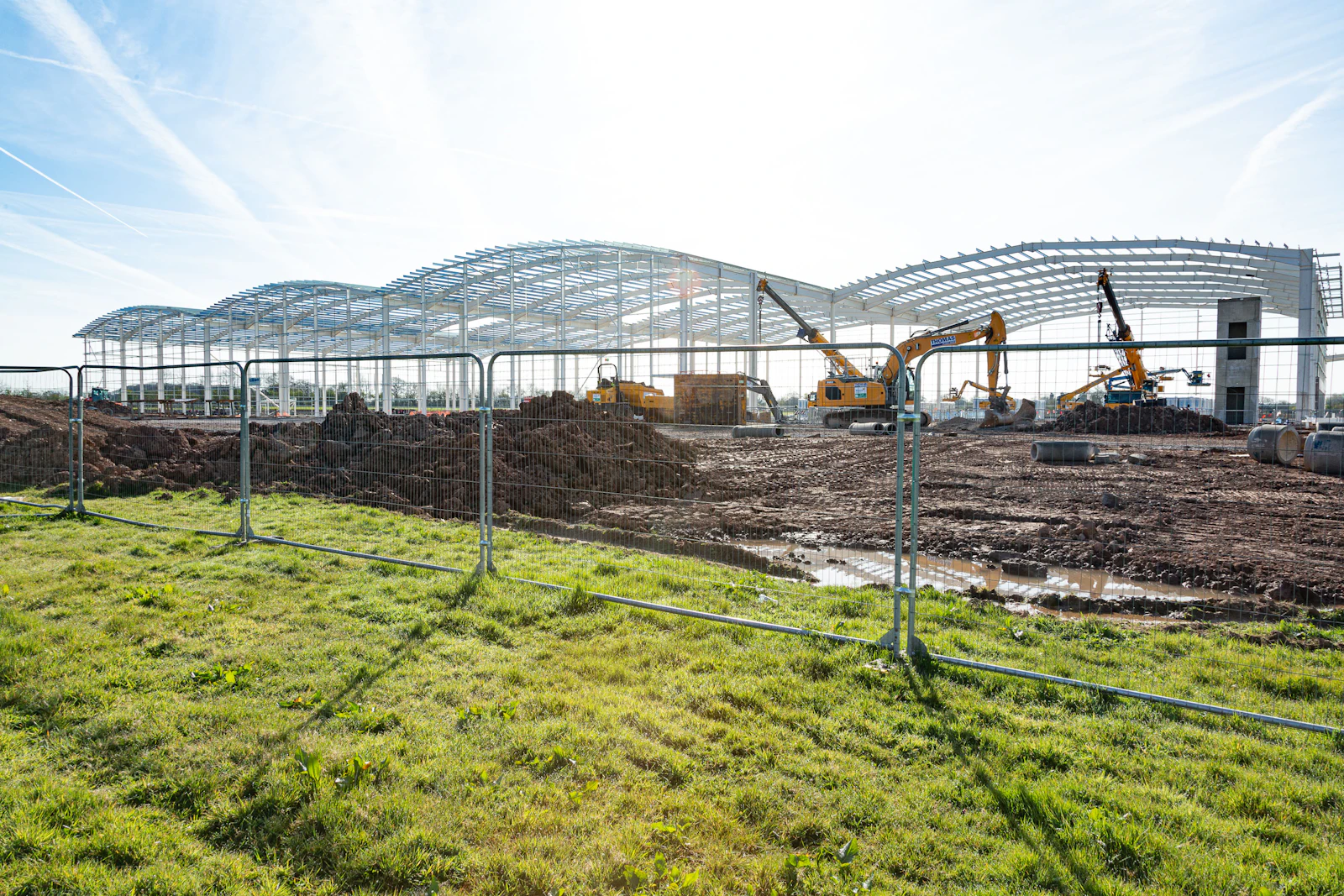
Excavator Rental Rates Chicago 2026
For Chicago stormwater retention system scopes in 2026, excavator equipment hire budgets typically land in these planning ranges (USD, before tax): mini excavators (3,500–7,500 lb) about $200–$350/day, $550–$950/week, and $1,250–$2,300 per 4-week period; compact/utility excavators (8–10 ton) about $350–$650/day, $1,100–$1,900/week, and $2,900–$5,200 per 4-week period; and full-size excavators (13–25 ton)$650–$1,250/day, $1,900–$3,800/week, and $4,700–$9,500 per 4-week period. These ranges assume standard “one-shift” usage (commonly budgeted at 8 hours/day, 40 hours/week, 160 hours/4 weeks) with overtime billed on a pro-rated basis when you exceed the shift allowance. For reality-checking, marketplace data published in March 2026 indicates a broad North American average around $719/day, $2,021/week, and $5,108/month (wide variance by class). In Chicago, national networks (for example, United Rentals, Sunbelt Rentals, and Herc Rentals) and regional heavy-equipment yards can all service stormwater retention excavation, but your delivered cost will be driven as much by logistics and terms (delivery windows, attachments, off-rent rules) as by the base rate.
| Vendor |
Daily Rate |
Weekly Rate |
Review Score |
Website |
| United Rentals |
$272 |
$728 |
9 |
Visit |
| Sunbelt Rentals |
$320 |
$880 |
9 |
Visit |
| Herc Rentals |
$270 |
$777 |
7 |
Visit |
| Chicago Machinery Inc. |
$556 |
$1 667 |
9 |
Visit |
| BigRentz |
$520 |
$1 664 |
8 |
Visit |
Which Excavator Class Should You Budget For A Stormwater Retention System In Chicago?
Stormwater retention system work (detention/retention basins, underground storage, manhole/structure setting, overflow tie-ins) commonly uses two excavator “bands” on the same project: (1) a compact unit to work around existing utilities and tight access, and (2) a heavier excavator to cut volume, load out, and place stone more efficiently. From a rental coordinator perspective, the cheapest daily rate is rarely the cheapest delivered cost if you under-size and burn time, trigger overtime hours, or keep the machine on rent while waiting on inspections or haul-off.
Use the following sizing logic to align excavator hire costs with stormwater retention production needs:
- 3,500–7,500 lb mini excavator (indoor courtyards, alleys, utility daylighting): plan on 12–18 in trench buckets and a grading bucket; consider a rubber track option for hardscape protection. A published contract schedule shows examples around $218.50/day, $584.25/week, $1,296.75 per 4-week for a 3,500 lb mini excavator, and around $232.75/day, $622.25/week, $1,344.25 per 4-week for a 6,000 lb mini excavator (rates vary by contract and market).
- 8–10 ton compact excavator (most stormwater trenching and structure setting in tight ROW): budget higher if you need minimal tail swing, blade, angle bucket, or a long-stick configuration; allow for heavier haul permits and more expensive delivery.
- 25,000–35,000 lb excavator (13–16 ton class; basin cuts and stone handling): a published contract schedule shows an example around $622.25/day, $1,596.00/week, $3,367.75 per 4-week for a 30–34K hydraulic excavator (again: treat as a reference point, not a guaranteed Chicago rate card).
- 45,000–50,000 lb excavator (20–23 ton class; higher production, heavier lifts): published contract examples show around $631.75/day, $1,952.25/week, $4,759.50 per 4-week. In Chicago, expect real-world pricing to swing upward when fleet is tight (peak civil season) or when you specify low-hour Tier 4 Final units.
How Attachments And Specs Change Excavator Equipment Hire Cost In Chicago
For stormwater retention system scopes, attachments and “spec compliance” can move your excavator hire cost materially. If you quote a bare machine and then add a thumb, quick coupler, multiple buckets, or a breaker after mobilization, you will often pay higher day-rate adders, plus additional trucking (or at minimum additional handling fees).
Practical 2026 planning adders (confirm with your yard; these are budgeting ranges, not promises):
- Hydraulic thumb (often required for riprap, pipe/structure handling, and debris control): allow $20–$60/day, $60–$180/week. One published contract schedule shows a hydraulic thumb for a 45,000 lb excavator around $22.80/day, $45.60/week, $137.75 per 4-week.
- Hydraulic breaker/hammer (frost, old concrete collars, utility encasement removal): allow $200–$450/day depending on carrier class. A published schedule shows a mini-excavator hydraulic hammer in one category at about $251.75/day, $636.50/week, $1,448.75 per 4-week.
- Quick coupler (if you are swapping trenching + cleanup + rock buckets): allow $25–$75/day and confirm compatibility (pin grabber vs wedge).
- Bucket package (typical stormwater retention trench set): allow $15–$45/day per additional bucket beyond “one standard bucket included,” and specify widths (12 in, 18 in, 24 in) up front to avoid a mid-rent swap-out charge.
- Specialty buckets (ditching/tilt grading): allow $40–$120/day when required for pond slopes, swales, or fine grading to subgrade around chambers.
Spec-driven premiums to watch in Chicago include: zero/short tail swing (tight alleys and curb lines), rubber pads for finished pavement, and cold-weather packages during shoulder season. Those items reduce site risk but can add 5%–15% to the base equipment hire cost if availability is limited.
Hidden-Fee Breakdown For Chicago Excavator Equipment Hire
Most cost overruns on excavator hire for stormwater retention systems show up as “small” invoice lines. Build a consistent fee model so your estimates do not get surprised when the machine is off-rented.
- Delivery and pickup (mobilization): in Chicago, budget either as (a) a flat each-way charge plus mileage or (b) a zone rate with a surcharge for distance/congestion. A published schedule example shows $120 each way + $3.25 per loaded mile. For 2026 planning in the Chicago metro, many teams carry $150–$350 each way plus $3.50–$6.50 per loaded mile outside the included radius, especially for heavier classes and downtown access constraints.
- Minimum rental charges: assume a 1-day minimum once delivered, even if you only run the excavator for 2 hours (jobsite receiving issues, locates not cleared, etc.).
- Overtime/extra shift hours: if you exceed the included shift, plan for pro-rated hourly billing. One published explanation (example policy) bills excess time at 1/8 of the daily rate per hour, 1/40 of the weekly rate per hour, or 1/160 of the 4-week rate per hour.
- Damage waiver / rental protection: budget 10%–15% of the rental charge unless your contract requires you to waive it and carry risk via insurance. (Terms vary; confirm whether protection covers theft, rollover, glass, and attachments.)
- Environmental / emissions / operational surcharges: many national providers disclose emissions/environmental and maintenance-related surcharges and reserve the right to update them. Carry 2%–5% as a planning allowance unless your master agreement fixes it.
- Transportation surcharge layers: some providers apply a transportation services surcharge in addition to base delivery/pickup, and disclose fixed components (for example, 12% or a minimum fee) plus variable fuel components depending on region and month.
- Refuel / recharge expectations: plan to return diesel units “full,” or carry a refueling allowance such as $5–$8 per gallon equivalent service charge if returned short (exact charge is typically posted at the branch and can change).
- Cleaning fees (mud, clay, concrete, asphalt millings): carry $150–$500 for excessive cleaning risk on stormwater basins and wet subgrades; many providers explicitly state customers are responsible when equipment is returned excessively dirty.
- Weekend/holiday billing: some branches apply “free weekend” conventions in certain categories while others bill calendar days. For Chicago 2026 budgeting, assume 1–2 extra billable days can occur around weekend pickup delays unless your agreement defines off-rent timing precisely.
- Loss/damage administration: plan $25–$75 administrative exposure for lost keys/fobs plus recovery costs, and assume attachments are treated as separate line items with separate replacement values.
Chicago Operational Constraints That Change Excavator Hire Cost For Stormwater Retention Work
Chicago adds a few predictable constraints that can inflate equipment hire cost if they are not scheduled into the rental plan:
- Downtown delivery windows and access: Loop and near-Loop sites often restrict deliveries to early-morning windows; if you miss the receiving window, you can burn a full billable day. Carry an after-hours or re-delivery contingency of $75–$150 plus potential additional trucking.
- Congestion and staging: if you cannot stage the machine curbside, a driver may require a hard “hands-off” unload area. If a second truck roll is required, assume a second mobilization line of $150–$350.
- Freeze/thaw and frost teeth: early spring stormwater retention excavation can require frost teeth or a breaker; include the attachment adder above and consider that production loss can keep the excavator on rent 3–7 additional days even when crews are on standby.
- Wet subgrades/high water table: retention systems often expose wet soils; if you are waiting on dewatering or stone delivery, the excavator is still accruing time. A realistic estimator allowance is 10%–20% standby time on the excavator term unless the schedule is tightly controlled.
- Off-rent rules and cutoff times: many rental operations use same-day cutoff times for pickup dispatch. As a planning assumption, if you call off-rent after 1:00–3:00 PM, pickup may slide to the next business day, adding 1 billable day depending on contract terms.
Budget Worksheet
Use this no-table worksheet to build a Chicago excavator equipment hire cost ROM for stormwater retention system work. Adjust quantities to your planned term.
- Base excavator hire (primary unit): ______ days or ______ weeks at $____/day or $____/week.
- Secondary excavator hire (utility mini, if needed): ______ days at $____/day.
- Attachments (allowances): hydraulic thumb ($20–$60/day); quick coupler ($25–$75/day); extra bucket(s) ($15–$45/day each); tilt grading bucket ($40–$120/day); breaker/hammer ($200–$450/day).
- Mobilization: delivery + pickup at $150–$350 each way (plus mileage if applicable). Use ______ miles at $3.50–$6.50/loaded mile if outside included radius.
- Overtime hours allowance: ______ hours at (1/8 daily) or (1/40 weekly) pro-rate; carry 5–15 hours/week if you anticipate extended shifts.
- Damage waiver / protection: ______% (plan 10%–15%) of base hire.
- Environmental/operational surcharges: ______% (plan 2%–5%) of base hire.
- Fuel/refuel risk: ______ gallons at $5–$8/gal equivalent if return is not full.
- Cleaning allowance: $150–$500 (mud/clay, basin work, concrete residue).
- Contingency for access delays and re-delivery: 1 additional day + $150–$350 trucking.
Example: Six-Week Chicago Stormwater Retention Excavation With Downtown Delivery Constraints
Scenario: You are installing an underground stormwater retention chamber system in Chicago with a constrained staging area (single-lane closure) and a required morning delivery window. You plan on a 30–34K excavator for mass excavation and stone handling plus a mini excavator for tie-ins.
- Primary excavator (30–34K class): budget 6 weeks at $1,900–$2,600/week = $11,400–$15,600 (base hire range).
- Mini excavator (6,000 lb class) for utility tie-ins: budget 10 days at $230–$340/day = $2,300–$3,400.
- Hydraulic thumb on primary unit: budget $60–$180/week × 6 = $360–$1,080 (or use the published contract reference point as a lower-bound check).
- Delivery/pickup: 2 mobilizations for two machines at $250 each way average = $1,000 (carry +$250–$500 if a missed downtown receiving window forces a re-delivery).
- Overtime exposure: assume 10 extra hours/week on the primary excavator during stone placement. If your weekly rate is $2,200, the pro-rated overtime basis is roughly $55/hour (1/40 of weekly), yielding $550/week or $3,300 over six weeks (confirm your contract’s overtime method).
- Waiver + surcharges: carry 12% damage waiver plus 3% environmental/operational fees on base hire as a placeholder until the branch quote is issued.
- Cleaning + refuel: carry $350 cleaning and $250 refuel service exposure for wet subgrade work.
Estimator takeaway: On this type of stormwater retention system scope, overtime and logistics can add $4,000–$6,000+ beyond the base equipment hire cost if delivery windows, standby time, and shift limits are not controlled.
How To Quote Excavator Equipment Hire Costs For Stormwater Retention Systems In 2026
To keep excavator rental rates for stormwater retention work defensible in Chicago, align your estimate with how rental providers actually bill: rate structure, shift-hour limits, rerates, and off-rent timing. A recurring issue is assuming a “month” is calendar-based, when many agreements use a 4-week (28-day) billing period with a defined hour cap (commonly 160 hours). If your stormwater schedule slips into a fifth week due to inspections, weather, or material lead times, the incremental week may price at the weekly rate rather than being pro-rated unless your agreement explicitly allows pro-rating.
Rate And Term Pitfalls That Commonly Inflate Chicago Excavator Hire Cost
- Partial-week exposure: If you are planning a “6-week” term, consider whether you will actually need 6 full weeks on rent, or 5 weeks + 3 days (which could bill as a full week depending on rerate rules). Carry a 3–5 day schedule float when stormwater retention chambers, stone, or geotextile deliveries are not fully locked.
- Off-rent call vs pickup date: Some providers stop rent on the off-rent call, others on actual pickup, and many have cutoff times. For planning, assume calling off-rent after mid-afternoon (1:00–3:00 PM) risks an additional billable day.
- Weekend standby: If your site is closed weekends but the excavator is trapped behind fencing or traffic control, it still rents unless the provider retrieves it. Carry 1–2 days of weekend standby in urban Chicago schedules unless you have guaranteed pickup access.
- Hour-meter compliance: If your superintendent runs the excavator beyond shift hours, the pro-rated overtime mechanism can become a major cost driver. The published example policy uses 1/8 daily or 1/40 weekly per hour for excess shift.
Insurance, Damage Waiver, And Return-Condition Costs
For stormwater retention excavation, loss/damage exposure is real (wet subgrade rollovers, hidden concrete, rebar, riprap contact). Coordinate insurance and protection up front so you do not pay twice or under-insure:
- Security deposit / authorization: budget $500–$5,000 depending on machine class and credit terms.
- Damage waiver / rental protection: if you accept it, budget 10%–15% of rental charges; if you decline it, ensure your inland marine coverage includes attachments and “rented equipment” endorsements (and confirm deductible impact).
- Cleaning and restorative charges: published terms commonly state the customer is responsible for cleaning when returned excessively dirty (concrete, paint, mud). Carry $150–$500 as a stormwater retention-specific allowance due to wet soils and aggregate dust.
- Fuel service charges: some providers disclose refueling service charges if not returned full, with the rate posted at the branch and subject to change. Carry $200–$600 per machine per month if field fueling discipline is inconsistent.
Reducing Total Excavator Hire Cost In Chicago Without Cutting Production
Cost control for excavator equipment hire in Chicago is usually about preventing non-working days and “avoidable extras,” not squeezing $25/day out of the base rate.
- Lock access and receiving: confirm delivery truck path, overhead clearance, and a receiving contact. Missing a downtown delivery window can cost $150–$350 in extra trucking plus 1 wasted billable day.
- Bundle the attachment package on day one: adding a thumb or bucket mid-term can trigger extra hauling; carry a mid-term swap allowance of $150–$350 each occurrence if your scope is uncertain.
- Control hour-meter creep: if your weekly rate is $2,400, the pro-rated overtime basis is about $60/hour (1/40). Ten unnecessary idle hours/week becomes $600/week.
- Document return condition: photos of undercarriage, bucket teeth, hydraulic lines, and cab condition reduce disputes; avoiding one cleaning/restoration invoice can save $250–$500.
- Plan for Chicago weather: freeze/thaw can create stop-start excavation. If you anticipate weather standby, consider a smaller “utility” machine on rent with the larger excavator mobilized only during cut/fill windows (often reduces total paid weeks).
Rental Order Checklist
Use this checklist to reduce total excavator equipment hire cost risk on Chicago stormwater retention system projects.
- PO and commercial terms: PO number, quoted rate basis (daily/weekly/4-week), included hours (8/40/160 assumption), overtime method, rerate rules, waiver/insurance selection, and any agreed caps on surcharges.
- Delivery requirements: jobsite address + gate/entrance, delivery window (especially downtown), laydown/staging plan, ground bearing concerns, and a named receiver with phone.
- Attachments and specs: bucket widths, thumb/coupler requirement, track type (steel vs rubber pads), Tier 4 requirement, and any lift-plan constraints (if using the excavator for setting structures).
- Jobsite controls: refueling plan (return full), daily inspections, grease intervals, and indoor/near-building dust-control expectations if working near occupied facilities.
- Off-rent and pickup: required notice, cutoff time (plan 1:00–3:00 PM), pickup access, and confirmation of when billing stops (off-rent call vs actual pickup).
- Return condition documentation: meter hours at off-rent, photos/video of undercarriage and attachments, notes on any existing damage, and sign-off by the pickup driver when feasible.
2026 Planning Ranges For Chicago Excavator Hire Budgets
If you are building a 2026 stormwater retention system estimate in Chicago without a firm quote, carry escalation and seasonal variability explicitly:
- Peak season premium: carry +5% to +15% for May–October availability constraints on mid-size and full-size excavators.
- Winter/shoulder volatility: base rates can soften, but total cost can rise due to breaker use, frost delays, and standby days (carry +3 to +7 days standby exposure on weather-sensitive basins).
- Logistics inflation: trucking, congestion, and surcharges can add $300–$900 per machine per mobilization cycle when access is constrained or when your site requires re-delivery.
For best results, treat the excavator hire cost model as a mini budget: base rent + attachments + logistics + hour-meter controls + return-condition discipline. That is the difference between a clean closeout and a stormwater retention job where the equipment invoice becomes the change-order battleground.