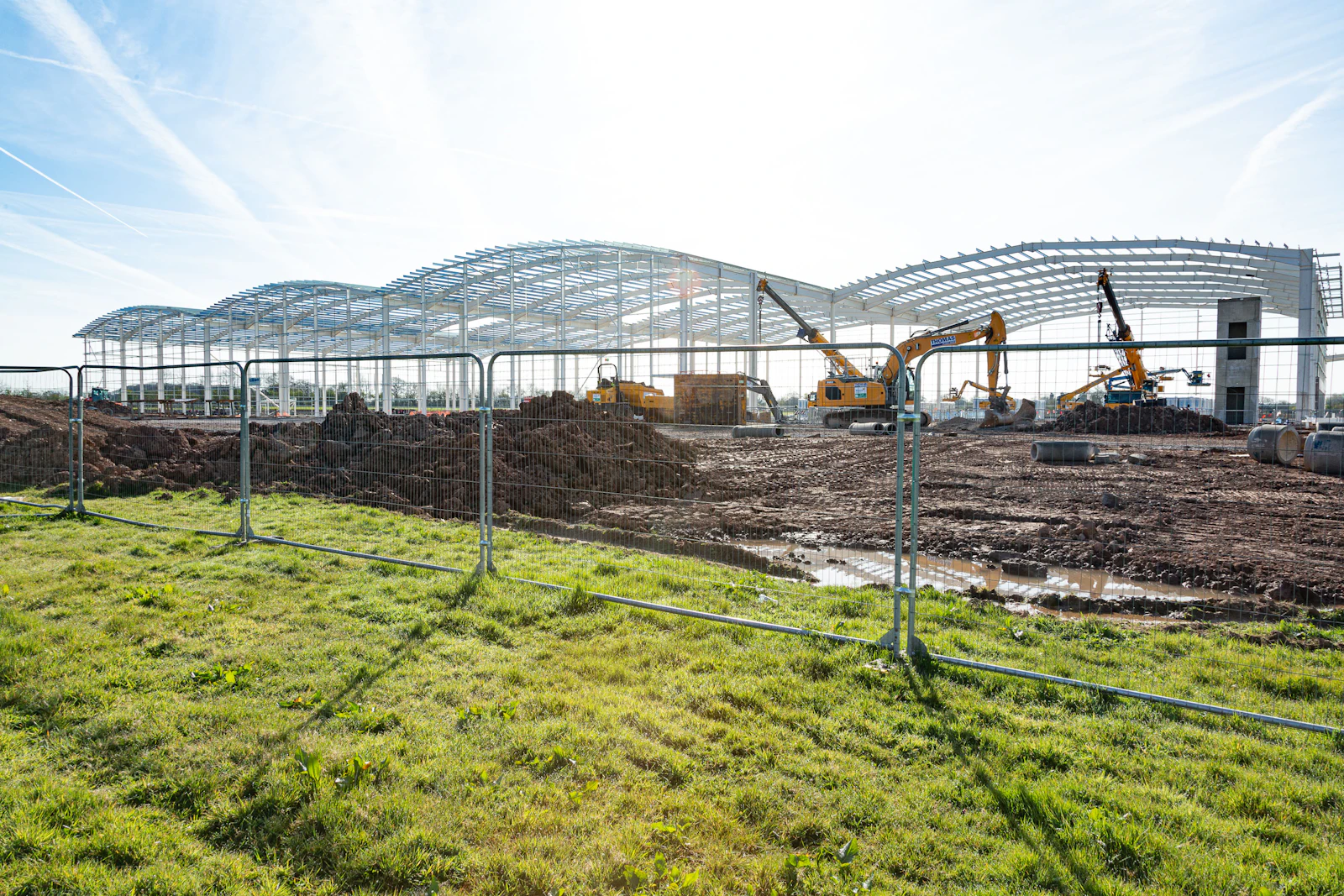
Excavator Rental Rates Denver 2026
For Denver-area excavator equipment hire supporting a stormwater retention system (detention/retention basins, outlet structures, infiltration galleries, and associated trenching), 2026 planning ranges typically land in these brackets before delivery, waiver/insurance, taxes, and attachments: $325–$575/day, $925–$1,495/week, and $2,250–$3,595/4-week for compact excavators up to roughly the 6-ton class; $630–$875/day, $1,875–$2,450/week, and $4,645–$6,195/4-week for heavier compact-to-small “large excavator” sizes suitable for basin shaping and bulk cut/fill. These ranges assume a common rental structure of ~8 billable operating hours/day, ~40 hours/week, and ~160 hours per 4-week period, with one standard digging bucket included. In the Denver metro, managers commonly solicit quotes from national houses (United Rentals, Sunbelt Rentals, Herc Rentals) alongside local dealer-rental yards (for example, regional Bobcat and Cat dealers) to balance availability, delivery windows, and stormwater-spec attachments.
| Vendor |
Daily Rate |
Weekly Rate |
Review Score |
Website |
| United Rentals |
$353 |
$943 |
8 |
Visit |
| Sunbelt Rentals |
$233 |
$622 |
9 |
Visit |
| Bighorn Rentals |
$300 |
$900 |
10 |
Visit |
Choosing The Right Excavator Size For Stormwater Retention System Scope
Stormwater retention work tends to look “light” on paper (cut a basin, shape side slopes, trench in pipe, set a few structures), but it becomes expensive fast when the excavator is undersized for Denver soils (clay with cobbles), when export hauling is constrained, or when compaction and grade tolerances drive rework. The most cost-effective hire plan is usually built around production-per-shift rather than the lowest day rate.
Typical sizing logic for retention/detention and WQ facilities in the Denver area:
- 1–2 ton class (micro/mini): Tight access, utility daylighting, and shallow trench tie-ins. Expect planning around $325/day, $925/week, $2,250/4-week for a comparable posted Colorado compact excavator example.
- 2–3 ton class: Small inlet/outlet trenching, shallow structure over-excavation, and grading in constrained sites (ROW edge, behind existing curb). Plan around $360–$425/day, $975–$1,275/week, $2,350–$2,895/4-week depending on powertrain (diesel vs electric) and cab configuration.
- 3–6 ton class: Common “workhorse” for retention pond shaping on smaller sites, outlet structure excavation, riprap placement support (with thumb), and 12"–24" storm pipe trenching where depth is moderate. Plan around $430–$575/day, $1,250–$1,495/week, $2,725–$3,595/4-week.
- 8–10 ton class (heavy compact): Often the “sweet spot” for basins with meaningful cut volume, tighter schedule windows, and mixed materials. A posted Colorado example for an ~8–9 ton compact excavator is $630/day, $1,875/week, $4,645/4-week.
- 14–16+ ton class (small large excavator): Where you need reach to shape slopes efficiently, load trucks continuously, or handle heavier precast. A posted Colorado example shows $875/day, $2,450/week, $6,195/4-week.
Denver-specific consideration: at ~5,000+ ft elevation, naturally aspirated performance is not the issue, but overall power/torque and hydraulic response can feel different compared with near-sea-level production assumptions, especially when you’re pushing a smaller machine in dense, dry clay. When your stormwater retention system excavation is on a tight critical path, it can be cheaper to step up one size class than to “save” $100–$200/day and lose a full day of production.
What Your Excavator Hire Rate Typically Includes (And What It Usually Does Not)
To keep excavator equipment hire costs in Denver predictable, confirm what the base rate actually covers and what will be billed as an “extra.” Even when the day/week/4-week rate looks aligned, the out-the-door cost often diverges due to attachments, delivery, and off-rent rules.
- Usually included: one standard digging bucket; basic safety decals/backup alarm; standard tracks; basic onboard tool kit.
- Commonly not included: delivery/pickup; damage waiver/LDW; fuel/DEF; cleaning; additional buckets; hydraulic thumb (if not factory-equipped); grade-control add-ons; trenching/shoring equipment.
Hidden-Fee Breakdown
Use the following equipment hire cost allowances when budgeting a Denver stormwater retention system package. These are planning figures (confirm with your rental house and your prime contract terms):
- Delivery & pickup (within metro): $175–$350 each way inside a typical ~15–25 mile radius; minimum haul charge often lands at $250 even for short moves.
- Out-of-area mileage: $6–$9 per loaded mile beyond the included radius (or a higher flat rate for mountain corridors and restricted access).
- Damage waiver / LDW: budget 10%–15% of the base rental line (some accounts can opt out with certificate of insurance, but confirm deductibles/exclusions).
- Environmental / energy surcharge: budget 2%–5% of invoice subtotal if the vendor applies a pass-through surcharge.
- Cleaning fee (mud, clay, concrete, riprap dust): $150–$450 depending on condition and whether tracks/undercarriage require pressure washing.
- Refuel charge: if returned low, plan $6–$8 per gallon diesel plus a $25–$75 fueling service fee.
- DEF top-off: $6–$10 per gallon if billed by the vendor; some sites prefer the contractor supplies DEF to avoid markups.
- Meter-hour overage: budget $60–$140/hour on compact excavators if you exceed the included hours (varies by size class and contract structure).
- Weekend/holiday billing: if your yard is closed Sunday or has limited Saturday receiving, you may pay an extra day because you cannot off-rent/return inside their cutoff.
- Service call (field dispatch): $125–$175/hour portal-to-portal plus a trip charge (often $75–$175) if the issue is not warrantable.
Delivery, Access, And Denver Metro Jobsite Constraints That Change Hire Cost
In Denver, the “soft costs” of excavator hire for stormwater retention construction usually show up in time: getting the machine on-site when you need it, keeping it billable only while productive, and avoiding unplanned extra days due to return constraints.
- Delivery cutoffs: many rental yards schedule deliveries in morning windows. If you miss a same-day cutoff (often around 1–2 p.m.), the machine may arrive the next day—creating either standby labor or schedule compression costs.
- Off-rent timing: if you call off-rent after the vendor’s daily cutoff, it is common to be billed another day even if the machine sits idle overnight (confirm the exact cutoff and notice requirement in writing).
- Downtown/urban staging: when stormwater scopes land in tighter Denver infill corridors, plan for a smaller machine plus more trucking, or budget for traffic control/flagging that can delay pickup and add a billable day.
- Dust control and tracking: dry summer conditions can force watering and limit grading visibility; muddy shoulder seasons can trigger undercarriage cleaning to avoid track damage and yard refusal on return.
Attachments And Add-Ons That Drive Excavator Equipment Hire Costs For Stormwater Retention
Retention basins and associated conveyance often require more than “one bucket.” If you don’t lock attachments at the time of booking, you can end up paying premium add-on rates or losing half a shift waiting for a swap.
Common adders (budget allowances):
- Bucket assortment: In the Denver metro, some smaller yards publish standalone bucket rental lines as low as $30/day for a 12" bucket, $30/day for a 24" bucket, and $45/day for a 36" bucket on compact equipment.
- Hydraulic thumb: $75–$150/day if not included; highly recommended for riprap placement, structure bedding adjustments, and handling pipe/box sections.
- Grading/ditch-cleaning bucket: $40–$90/day; helps shape basin bottoms and side slopes faster than a toothed bucket when finish grading tolerances matter.
- Compaction wheel (trench): $60–$120/day, or $200–$450/week, depending on width and coupling.
- Hydraulic breaker (for cobble/ledge or demo): $250–$650/day depending on carrier size; also confirm greasing requirements and chisel wear billing.
- Laser receiver/mast (basic grade checking): $35–$85/day if rented as an accessory.
- Machine control (2D/3D): $250–$450/day when available; can reduce rework on basin grades but increases daily spend.
- Non-marking tracks / pads: if required for hardscape protection, budget $50–$150/day premium or a one-time install fee.
Example: Denver Stormwater Retention Basin Cut And Outlet Trench (Costed Hire Scenario)
Scenario: 3-week schedule (15 working days) to cut a small retention basin, shape 4:1 side slopes, and trench/bed ~250 LF of storm line to an outlet structure. Urban-suburban Denver metro site with a narrow delivery lane, no weekend receiving, and clay soils after a spring rain.
- Excavator selection: ~8–9 ton compact excavator class at a posted Colorado example of $630/day, $1,875/week, $4,645/4-week.
- Planned billing approach: budget 3 weeks at weekly rate = 3 × $1,875 = $5,625 (confirm whether a 4-week cap can apply early; many contracts only cap at 28 days).
- Delivery/pickup: $300 each way = $600 (tight access + scheduled window).
- Damage waiver: 12% allowance on base rent ($5,625) = $675.
- Attachment adders: ditching bucket $65/day × 10 days = $650; compaction wheel $90/day × 5 days = $450.
- Meter-hour overage: plan 10 extra hours during two long days at $95/hour = $950 (avoid this by sequencing work to stay inside included hours).
- Cleaning fee: $300 allowance (spring clay + undercarriage wash) = $300.
Budgetary out-the-door subtotal (before tax): $5,625 + $600 + $675 + $650 + $450 + $950 + $300 = $9,250. This is why coordinators treat “excavator hire cost” as a package (machine + logistics + usage + return condition), not just the posted weekly rate.
Rate Structure Details That Change Your Out-The-Door Excavator Hire Cost
Before you issue a PO for excavator equipment hire in Denver, align your internal cost model to the vendor’s billing rules. Small differences in “what counts as a day” can swing cost more than the machine size selection.
- Shift/hour limits: Many rental agreements treat a “day” as a 24-hour possession period with an included meter-hour limit (often 8 hours). If you run longer, you’ll pay overage rather than another full day—until you cross a threshold (for example, “over 4 hours = an additional day” is a common structure on some rate sheets).
- Overtime formula (example of a national policy): One published approach bills excess usage at an hourly fraction of the base charge (for example, 1/8 of the daily charge per hour on a daily rental, 1/40 of the weekly charge per hour on a weekly rental, and 1/160 of the 4-week charge per hour on a 4-week rental). Treat this as a planning benchmark and confirm your vendor’s actual language.
- Weekend reality: If your site cannot accept pickup Saturday and the yard is closed Sunday, a Friday delivery plus Monday pickup can become a 3–4 day billed event depending on their policy. Don’t assume “free weekend days” unless it’s written on the quote.
- Off-rent vs pickup timestamp: Some vendors stop billing at the off-rent call time; others stop at physical pickup. If pickup is delayed by weather or access, the difference can be one extra day.
Budget Worksheet
Use this bullet worksheet as an estimator-friendly way to carry excavator hire costs for stormwater retention system construction in Denver without resorting to tables. Adjust line items for your spec (pipe diameter, trench depth, basin cut volume, access constraints).
- Base excavator hire (compact 3–6 ton): $430–$575/day, $1,250–$1,495/week, $2,725–$3,595/4-week.
- Alternate base excavator hire (8–10 ton): $630/day, $1,875/week, $4,645/4-week (planning anchor).
- Mobilization (delivery + pickup): $500–$900 combined (allow $650 if the site has narrow access or strict delivery windows).
- Damage waiver / LDW: 10%–15% of base rental (carry 12% unless your COI is accepted for waiver removal).
- Bucket package allowance: $150/week for one extra bucket; or use published small-yard bucket lines where applicable (e.g., $30/day for 12" and $45/day for 36" on compact equipment).
- Thumb allowance: $300/week (or confirm included thumb on the specific machine SKU).
- Compaction wheel allowance: $250/week.
- Grade control allowance: $0 if using stakes/laser only; $1,250/week if renting advanced control (as available).
- Fuel/DEF allowance (contractor-supplied): $60–$120/day depending on idle time, haul road, and soil conditions; add $25/week for DEF if Tier 4 Final.
- Cleaning/pressure wash allowance: $250 per return event (add $150 if you expect spring mud and cobble packing).
- Overtime/overage allowance: $500/week for long shifts, or model explicitly using the vendor’s hourly fraction rule.
- Standby day contingency: 1 extra day at your chosen class (common when inspections, 811 locates, or structure delivery slip the schedule).
Rental Order Checklist
To reduce disputes and surprise charges on Denver-area excavator hire, confirm these items at PO and again at delivery:
- PO and contract: include exact machine class/SKU, rate period definition (day/week/4-week), included meter hours, and overtime billing method.
- Insurance: provide COI and verify whether it replaces LDW or sits alongside it; confirm deductibles and theft/vandalism responsibility.
- Delivery details: address, contact, gate codes, delivery window, unload surface requirements, and whether a tilt-deck can access the laydown.
- Return/off-rent rules: cutoff time for off-rent calls, pickup lead time, and whether billing stops at off-rent or pickup.
- Condition documentation: photos/video at delivery and at pickup; document bucket count, track condition, glass, and any existing dents.
- Fuel/DEF expectations: return-full policy, acceptable fuel type, and whether the vendor bills a service fee plus per-gallon refuel.
- Cleaning standard: confirm whether “broom clean” is acceptable or whether undercarriage wash is required for mud/clay jobs.
- Attachments: list each attachment serial/model (bucket widths, thumb, coupler, compaction wheel) and verify coupler compatibility before dispatch.
Practical Ways Denver Teams Lower Excavator Equipment Hire Cost Risk
- Schedule delivery for the first productive hour: a 7:00 a.m. drop that sits until afternoon is still a billable day in most contracts.
- Plan inspection and structure lead times: stormwater retention systems often wait on precast, outlet control assemblies, or inspection holds; coordinate so the excavator is off-rented before idle days accrue.
- Pre-negotiate “stuck in mud” recovery: clarify whether extraction is billed time-and-material or treated as wear/tear; Denver shoulder seasons make this a real cost driver.
- Use attachments to avoid machine upsizing: a ditching bucket + thumb can reduce rework and handling time, often cheaper than stepping up a class for finish work.
If you want, share your expected basin cut volume (CY), trench depth, pipe size, and site access constraints (fence gates, curb cuts, delivery restrictions). I can convert the Denver 2026 excavator equipment hire cost ranges above into a scoped allowance (base + attachments + logistics + overage + return condition) tailored to your stormwater retention system sequence.