

Create an itemized estimate for your project, with materials, labor, and quantities you can review and edit.
Create my estimateStart a 7-day free trial. Sign up, then enter your project details.
For Detroit-area stormwater retention system work in 2026, most rental coordinators should budget excavator equipment hire (dry hire, machine-only) in three practical bands: compact/mini excavators (roughly 2–6 ton) at $300–$500/day, $1,200–$1,900/week, and $3,400–$5,400 per 4-week “month”; mid-size excavators (roughly 8–16 ton / ~18,000–35,000 lb) at $650–$950/day, $1,600–$2,600/week, and $3,400–$6,200 per 4-week cycle; and full-size excavators (roughly 20–30 ton) at $800–$1,250/day, $2,000–$3,400/week, and $5,200–$8,500 per 4-week cycle. These are planning ranges that assume typical hour caps (commonly 8–10 hours/day and 40 hours/week) and exclude transport, waiver/insurance, fuel/DEF, cleaning, and attachment adders—items that frequently decide the final “all-in” hire cost on retention basin and detention vault scopes. National providers (e.g., United Rentals, Sunbelt, Herc) and Michigan dealers (e.g., Cat and Bobcat channels) can all service Detroit, but availability and trucking windows are often the real constraint in peak civil season.
| Vendor | Daily Rate | Weekly Rate | Review Score | Website |
|---|---|---|---|---|
| United Rentals | $875 | $2 250 | 6 | Visit |
| Sunbelt Rentals | $850 | $2 200 | 8 | Visit |
| Herc Rentals | $860 | $2 230 | 8 | Visit |
| MacAllister Rentals (Cat Rental Store) | $830 | $2 180 | 9 | Visit |
Below are practical 2026 planning bands for excavator hire rates in Detroit, aligned to the kind of production and reach you typically need for a stormwater retention system (excavating basins, shaping side slopes, trenching for inlet/outlet structures, setting riprap, and trimming subgrades). Where published rate sheets exist, the numbers below stay directionally consistent; where they don’t, ranges reflect typical market movement plus a modest 2026 uplift assumption (roughly 3%–6%) and the fact that “monthly” is usually billed as 28 days / 4 weeks, not a calendar month.
Compact / mini excavator (2–6 ton) equipment hire (Detroit planning ranges): $300–$500/day, $1,200–$1,900/week, $3,400–$5,400 per 4-week cycle. As a reality check, published compact excavator pricing in Michigan (dealer channel) shows day/week/4-week structures in the mid-$300s per day and $3,900–$5,100 per 4-week range depending on model size.
Mid-size excavator (roughly 14,000–35,000 lb) equipment hire (Detroit planning ranges): $650–$950/day, $1,600–$2,600/week, $3,400–$6,200 per 4-week cycle. Published rate sheets for ~15,000–18,000 lb class machines can sit around $725–$800/day and $4,500–$5,000 monthly, and some published schedules show ~30–34k class excavators around the low $600s/day with a monthly in the mid-$3k range (often tied to contract terms, availability, and utilization assumptions).
Full-size excavator (20–30 ton) equipment hire (Detroit planning ranges): $800–$1,250/day, $2,000–$3,400/week, $5,200–$8,500 per 4-week cycle. Published schedules show 25-ton-class pricing in the ~$739/day and ~$5,268/month band in at least one contract schedule, which is a useful anchor—Detroit spot-market rates can float above or below depending on fleet tightness and trucking complexity.
For stormwater retention systems, the “right” excavator class is usually dictated by reach, lift, and grading control—not just bucket capacity. In Detroit-area work, you’ll often see these patterns:
Excavator equipment hire costs for a Detroit stormwater retention system swing most on (1) machine class and hydraulic options, (2) attachments and couplers, (3) transport and access constraints, and (4) billing rules tied to meter-hours and off-rent. The same “$850/day” excavator can become a materially different cost once you add trucking, waiver, bucket package, and overage hours.
1) Hour caps and meter-hour overages: Many agreements treat a “day” as up to 8 hours (sometimes 10), and a “week” as ~40 hours. If you run 55–60 hours in a week to beat weather, you can trigger overage charges. Budget a $75–$150/hour meter-hour overage band on mid-size/full-size excavators when you exceed included hours (actuals vary by contract). Use this as an estimator’s allowance, then confirm in the rental contract.
2) Transport to and from the jobsite: A mid-size excavator typically requires lowboy transport, and transport is frequently priced separately from the base hire rate. For Detroit planning, carry $250–$450 each way for local lowboy on a mid-size machine, then add mileage beyond a radius. One published schedule shows $120 each way + $3.25 per loaded mile for an excavator class in the ~25k–35k lb band; treat that as a useful benchmark for how quickly mileage can overtake “cheap” base rent.
3) Delivery windows and re-delivery risk: Detroit traffic patterns, industrial site rules, and plant cutoffs create real costs. If a site has a hard receiving window (e.g., 7:00–9:00 a.m.) and the lowboy misses it, you can eat a re-delivery charge. As a planning allowance, include $150–$300 for a failed delivery / reattempt when access control is strict (badge delays, escort requirement, or security holds).
4) Attachments and configuration adders: For stormwater retention, you’re often shaping slopes, setting riprap, and trimming grades. Common adders to budget (typical planning ranges):
5) Damage waiver / rental protection: Damage waiver commonly lands around 10%–15% of base rental (sometimes with a deductible), and it is not the same as liability insurance or inland marine coverage. If you carry your own inland marine, you may be able to decline or reduce waiver—subject to contract requirements.
6) Fuel, DEF, and “return full” expectations: Plan that the excavator arrives fueled and must be returned fueled (and with DEF topped off if applicable). If you return it short, budget a premium refuel charge such as $6.50–$9.50/gal diesel equivalent and $4.00–$6.00/gal DEF equivalent as a planning band (verify on the ticket). This matters on retention work because dewatering support, frequent tracking, and idling during structure setting can inflate burn without obvious production.
7) Cleaning and undercarriage washout: Detroit-area cohesive soils and wet basin cuts can cake undercarriages. Budget $150–$350 for undercarriage cleaning on mid-size machines if returned with heavy clay/mud, and up to $400–$750 if invasive species wash protocols, heavy buildup, or winter salt/slush cleanup is required. Cleaning fees are common on published rental schedules (even for smaller items), so carry an allowance rather than hoping it’s waived.
Delivery radius norms: In the Detroit metro, it’s common for “local” delivery pricing assumptions to be based on a short radius, then billed per loaded mile beyond that. If your retention basin is in an out-county industrial park, mileage can dominate. Carry mileage beyond the first 15–25 miles as a separate allowance in your budget, and confirm whether the billing uses one-way loaded miles or round-trip.
Soil moisture and water table: Retention basins often involve wet cuts and standing water. Even though pumps are separate scope, wet work increases track slippage and cleaning risk; plan a higher probability of the $150–$350 cleaning line item and consider a longer hire duration buffer (weather delays + soft access roads).
Winter/shoulder season impacts: If you’re building a retention system late fall through early spring, frozen subgrade can push you into ripper tooth use or breaker standby. Carry a contingency of $200–$400/week for “frozen-ground inefficiency” on compact excavator scopes (extra days on rent rather than higher day rate).
Scenario: A commercial site in Detroit needs a detention/retention basin excavated and trimmed over 18 working days (weather risk), with a mid-size excavator on site for a full 4-week cycle to avoid demob/remob. Access is controlled: deliveries only 7:00–9:00 a.m. and returns must be scheduled 48 hours ahead.
Planning takeaway: even with a “$4,800/month” headline, it is easy for a realistic stormwater retention system excavator hire total to land around $6,500–$7,800 before tax once you carry the predictable adders (transport + waiver + attachments + cleaning). That is why retention scopes should be budgeted as a package, not as a day rate.
Estimator note: If you need a quick sanity check against broader market averages, one pricing guide summarizes an average excavator rental cost around $719/day, $2,021/week, and $5,108/month based on aggregated quotes; Detroit will vary by class and season, but it helps validate whether your budget is inside reasonable bounds.
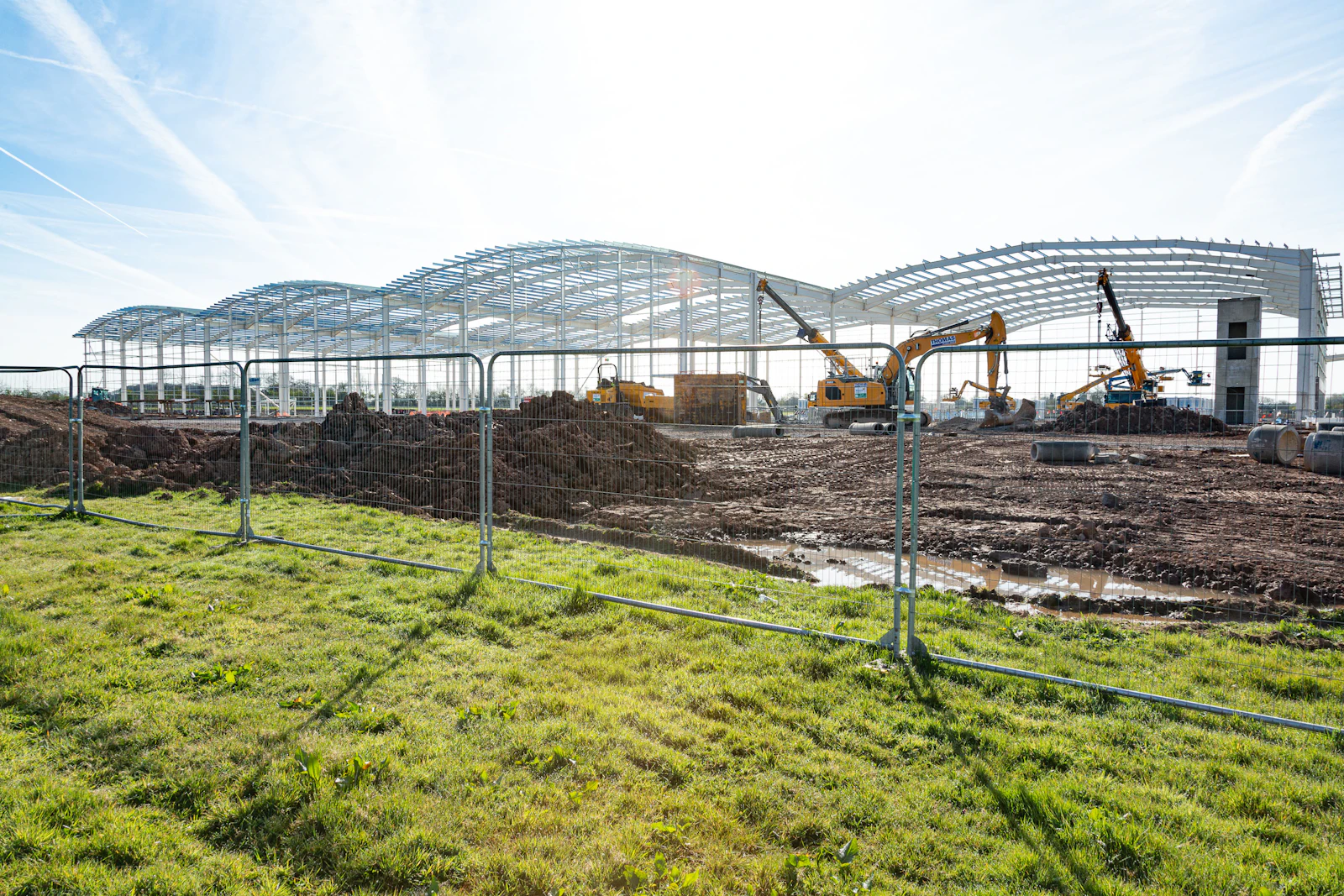
Stormwater retention system scopes are notorious for “schedule stretch”: rain events, soft access, inspections, and sequence conflicts with utilities can all add idle days. The most reliable way to control excavator equipment hire cost in Detroit is to align the rental term with realistic utilization, then manage the operational triggers that cause extra days billed (off-rent cutoffs, weekend billing, and return-condition fees).
Excavator hire is usually structured so that weekly rates become economical once you cross a few days, and 4-week rates become economical once you cross a couple of weeks. As a planning heuristic (not a contract rule), many markets behave roughly like “weekly ≈ 3× daily” and “4-week ≈ 9× daily,” but your vendor may also apply automatic rate transitions when accumulated charges hit a cap. Your best control lever is to avoid bouncing on/off rent if the next mobilization will require another transport charge and another minimum term.
Practical recommendation for Detroit retention work: If you expect multiple mobilizations (rough cut, then return for structures and final trim), price two options in precon:
On stormwater retention systems, attachments are not “nice-to-haves”—they are schedule insurance. A $45–$95/day grading bucket can prevent a day of handwork and rework, and a thumb can reduce labor time placing riprap or handling inlet/outlet components. If you only carry one attachment adder beyond the standard digging bucket, the grading bucket is usually the highest ROI for basin finish.
Attachment cost allowances to carry in Detroit bids (typical planning ranges):
Most rental agreements will require some mix of (a) your insurance certificates (liability and potentially inland marine), (b) a damage waiver/rental protection product, and (c) a security deposit or credit authorization depending on account status. Plan these as cost and process items, not just “paperwork.”
Two Detroit-specific realities impact excavator equipment hire cost more than most teams expect:
If you need a single “all-in” planning envelope for Detroit stormwater retention system excavator equipment hire (excluding operator labor), a defensible approach is to budget the base rent plus:
Used consistently, these allowances keep excavator equipment hire costs predictable in Detroit and prevent the most common retention system failure mode: under-budgeting the “non-rental” rental charges that show up after demob.
Continue with estimating workflows, reviewed plan quantities, or cost guides organized by topic.
