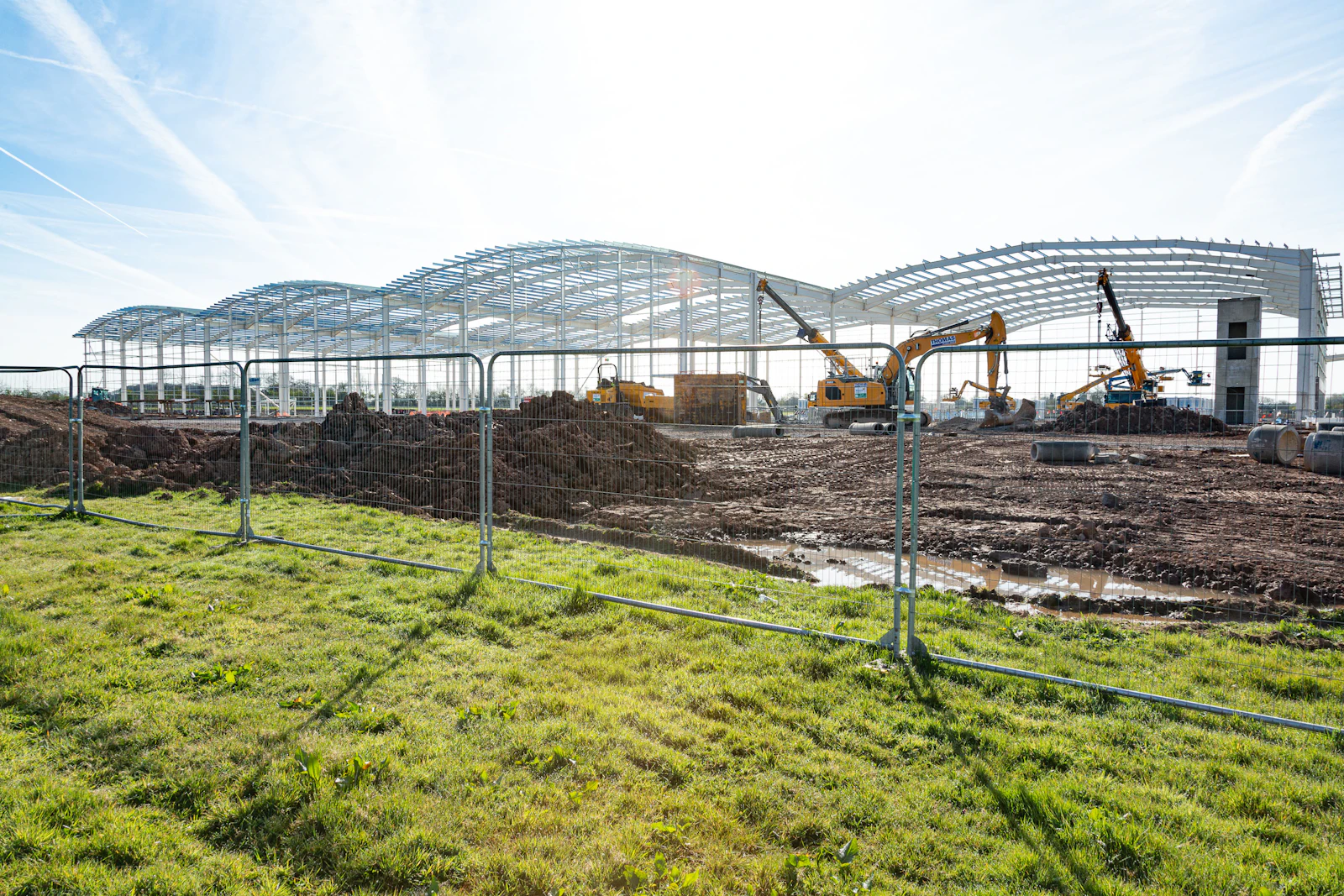
For Houston stormwater retention system work in 2026, excavator equipment hire budgets typically plan around (1) mini/compact units for tight access and utility-intensive tie-ins and (2) mid-size tracked excavators for basin/pond excavation, berm shaping, and outlet structure grading. As a planning range for bare excavator hire (machine only, no operator), many contractors in the Houston metro will see roughly $250–$450/day, $800–$1,500/week, and $2,400–$4,200/4-week for 2–3 ton mini excavators; $450–$750/day, $1,300–$2,100/week, and $3,200–$5,800/4-week for ~5–8 ton compact excavators; and $600–$1,000/day, $1,600–$3,000/week, and $3,300–$7,800/4-week for ~15–20 ton class machines, depending on availability, spec, and compliance requirements. Large national fleets (often used on Houston civil scopes) and strong local independents can both be competitive—your final hire cost is usually decided by delivery, attachments, off-rent rules, and wet-clay cleaning exposure more than the base day rate.
| Vendor |
Daily Rate |
Weekly Rate |
Review Score |
Website |
| Sunbelt Rentals |
$562 |
$1 516 |
8 |
Visit |
| United Rentals |
$704 |
$1 810 |
6 |
Visit |
| Herc Rentals |
$514 |
$1 534 |
8 |
Visit |
| EquipmentShare |
$678 |
$1 836 |
6 |
Visit |
Excavator Equipment Hire Costs Houston 2026
The ranges below are structured the way estimators and rental coordinators actually buy excavator hire: by operating weight/class, expected seat-hours, and the attachment package required to hit grade and production. Unless your contract says otherwise, assume a “day” is an 8-hour rental shift, a “week” is 40 hours, and a “4-week” month is 160 hours; excess hours commonly convert at fractional day/week rates (for example, one large renter publishes 1/8 of the daily rate per extra hour on a daily rental, and 1/40 of the weekly rate per extra hour on a weekly rental).
Planning ranges by excavator class (bare machine hire):
- 2–3 ton mini excavator hire (tight urban access, utilities, inlet/outlet tie-ins): $250–$450/day; $800–$1,500/week; $2,400–$4,200 per 4-week.
- 5–8 ton compact excavator hire (yard piping trenches, underdrains, forebays, small basins): $450–$750/day; $1,300–$2,100/week; $3,200–$5,800 per 4-week. (A Houston-area listing example shows $250/day and $800/week for a ~2.5 ton unit; treat this as a low-end market check, not a guaranteed rate.) (g
- 30–34K lb tracked excavator hire (common civil “main dig” size for retention grading): $575–$900/day; $1,500–$2,400/week; $3,200–$6,000 per 4-week (a published price sheet example shows $622.25/day, $1,596/week, and $3,367.75/month for a 30–34K hydraulic excavator class).
Houston stormwater retention system note: In Harris County soils, “gumbo” clay and frequent rain events increase your probability of undercarriage cleaning charges and/or transport delays. If your spec requires strict track-out control, include an allowance for washdown time and documentation photos at off-rent (see “Hidden-Fee Breakdown” below). This is one of the most common reasons the actual excavator hire invoice exceeds the estimator’s initial base rate.
What Drives Excavator Hire Pricing On Stormwater Retention Work In Houston?
Excavator hire cost on stormwater retention systems is production-sensitive: you pay for the machine whether the site is running or not, so the right class and attachment kit typically costs less overall than “cheaper” iron that can’t keep up after rain or in sticky clays.
- Size class vs. cycle time: A 2–3 ton mini excavator can be the right hire cost choice for utility-dense tie-ins, but it can become the most expensive option per cubic yard if it’s expected to bulk-excavate a basin.
- Undercarriage condition and track type: Rubber tracks reduce surface damage risk on finished areas but can carry higher damage exposure (cuts/tears). Steel tracks improve traction in wet subgrades but can create restoration backcharges on paved access routes.
- Hydraulic flow and auxiliary plumbing: If your retention scope includes removing old concrete headwalls or cutting riprap subgrade, confirm whether the hired excavator supports a hydraulic breaker without derating. A breaker-capable unit can carry a higher base hire rate but avoids a second mobilization.
- Delivery radius and windows (Houston logistics): Houston traffic patterns and jobsite delivery constraints (tight gates, school zones, refinery corridors) can push deliveries into premium windows, which increases total equipment hire cost even if the day rate is unchanged.
Attachment Adders That Commonly Make Or Break Your Excavator Hire Budget
Stormwater retention systems rarely run “bucket only.” Most overruns come from attachment adders that were not on the original rental PO. The following are common planning adders for excavator hire packages in Houston (verify availability and compatibility by coupler type and pin size):
- Hydraulic thumb: add $90–$160/day (or $250–$450/week) when placing riprap, handling structures, or pulling debris.
- Quick coupler: add $35–$75/day for multi-bucket workflows (trenching bucket + grading bucket). If the machine already has a coupler, confirm whether the renter charges for “equipped” vs “base.”
- Grading/ditching bucket (wide): add $25–$60/day; often the cheapest way to improve finish productivity on basin slopes and berm crowns.
- Compaction wheel or plate compactor attachment: add $175–$300/day where backfill compaction behind structures is part of the same crew’s scope.
- Hydraulic breaker: add $250–$450/day plus bits/wear; also confirm whether the hire contract includes greasing requirements or a cleaning charge on return.
- Laser receiver/mast integration (if required for grade control): allow $75–$200/day depending on system; some renters bundle grade control as a separate line item, not “included on the excavator.”
Hidden-Fee Breakdown For Excavator Equipment Hire (Houston Reality Check)
To keep excavator equipment hire costs predictable on stormwater retention jobs, treat the items below as “likely” rather than “possible,” especially during Houston’s wet periods. These are not universal charges, but they are common enough to warrant explicit allowances and PO language.
- Delivery / pickup: published examples include $120 each way plus $3.25 per loaded mile for a heavy excavator class delivery program; local independents may quote a flat metro fee instead. Plan $150–$350 each way for mini/compact units and $250–$650 each way for 30–34K class, with premiums for constrained access or after-hours windows.
- Minimum rental term: common minimum is 1 day; some specialty specs (grade control, long stick) can carry a 2-day minimum. Include at least 1.0 day minimum exposure even if you expect “half-day” utilization.
- Weekend billing rules: one Houston-area rate page markets a Friday 3 PM to Monday 8 AM return as 1.5× the daily rate (useful for retention sites that shut down for inspections or weather). Not all suppliers offer this; many will bill Saturday/Sunday as full days if the yard is open.
- Overtime hours: if you run past the included shift, a common structure is 1/8 of the daily rate per extra hour on a daily rental (and 1/40 of the weekly rate per extra hour on a weekly rental). Build an allowance if you expect 10-hour days.
- Damage waiver / rental protection plan: often 10%–15% of the base rental (machine + attachments), sometimes with a minimum charge of $15–$35/day. Clarify whether it covers undercarriage and glass.
- Environmental / admin fees: allow $10–$30/day (shop supplies, environmental recovery, admin) depending on supplier policy and jurisdictional practices.
- Fuel and DEF: assume “full out, full back.” If returned short, plan $4.50–$6.50/gal for diesel plus a $25–$75 service fee, and $6–$10/gal for DEF if applicable.
- Cleaning (Houston clay exposure): allow $175–$600 for pressure wash/undercarriage cleaning if the unit returns with packed clay, grass matting, or concrete slurry. Include a requirement for jobsite washout location if you’re planning to self-clean.
- Late return / off-rent cutoffs: some suppliers require off-rent notice before a cutoff (commonly 12 PM–2 PM) for same-day off-rent; otherwise the next day bills. Put the off-rent cutoff time on the PO and in the superintendent’s closeout checklist.
Estimating The Right Excavator Hire Mix For Retention Basins (Practical Guidance)
For stormwater retention system scopes, excavator hire costs are usually lowest when you match each machine to a distinct workface and off-rent aggressively:
- Mini excavator (2–3 ton): bring in for 2–5 days for inlet/outlet tie-ins, small structure excavations, and trenching near utilities. Overbuying days here can be expensive because the mini tends to sit while the main basin excavation is underway.
- Main excavator (30–34K class): budget 1–3 weeks for bulk excavation, berm shaping, and subgrade prep, but include rain contingency: even 1–2 lost production days can still bill as rental days unless you off-rent early.
- Attachment strategy: a grading bucket and coupler often reduce total hire duration by improving finish speed; on retention basins, that can be worth more than negotiating $25/day off the base machine.
Example: Stormwater Retention Basin Excavation (Houston, 2026 planning numbers)
Scope: 1 retention basin with shallow side slopes, one outlet structure excavation, and riprap placement at the outfall. Constraints: delivery only after 7:00 AM due to school traffic; off-rent cutoff at 1:00 PM; site has clay subgrade with standing water after rain.
- Machine 1 (30–34K tracked excavator): 2 weeks at $1,600–$2,200/week = $3,200–$4,400 base hire.
- Machine 2 (2–3 ton mini excavator): 4 days at $300–$400/day = $1,200–$1,600 base hire.
- Attachments: hydraulic thumb 4 days at $110/day = $440; grading bucket 2 weeks at $45/day equivalent = ~$450.
- Delivery/pickup: 2 mobilizations at $350–$650 each way total exposure = $700–$1,300 (higher end if access is constrained).
- Damage waiver: 12% of base rental lines (machines + attachments) = roughly $600–$900.
- Cleaning allowance: $350 (packed clay undercarriage after rain).
Resulting hire cost planning total: roughly $6,940–$10,740 before tax—most of the swing comes from delivery logistics, protection plan %, and whether the main excavator is kept on rent through weather delays versus off-rented and re-mobilized.
Documentation Practices That Reduce Disputes On Excavator Hire Charges
On stormwater retention jobs, excavators come back dirty and occasionally damaged—so the best cost control is documentation, not arguing after the fact. Require these items on every equipment hire:
- Pre-rental condition photos: cab glass, counterweight corners, boom/stick, bucket ears, and both track frames.
- Hour meter at delivery and off-rent call: document with timestamped photos; this is critical where overtime hours (beyond the included shift) may be billed.
- Attachment serial numbers and pin sizes: prevents “wrong bucket returned” disputes and accelerates swap-outs.
- Delivery ticket sign-off: confirm delivery window, access notes, and any exceptions (e.g., forklift required to unload attachments).
If you want, I can tailor the above to the excavator size you actually plan to run (e.g., 6-ton vs 15–17 ton) and whether this is bare hire or operated equipment hire (with operator), because the cost drivers and risk items change significantly.
How To Write A Rental PO That Protects Your Excavator Hire Budget
Most Houston excavator hire overruns happen because the PO is missing operational terms that trigger billing: off-rent notice timing, weekend treatment, included hours per shift, and return condition expectations. The goal is to make the supplier’s billing model match your superintendent’s plan—especially on stormwater retention systems where rain and inspections can stop production without stopping the rental clock.
Budget Worksheet (Excavator Equipment Hire Cost Allowances)
- Base excavator hire (main machine): ____ weeks at $1,600–$2,400/week (30–34K class planning) or ____ days at $600–$900/day for short bursts.
- Support excavator hire (mini/compact): ____ days at $300–$450/day for tie-ins, utility daylighting, and structure excavation.
- Attachment package allowance: $400–$1,800 total (e.g., thumb $90–$160/day; coupler $35–$75/day; grading bucket $25–$60/day; breaker $250–$450/day).
- Delivery/pickup allowance: $700–$1,800 total for two machines (assume 2–4 trips at $150–$650 each, depending on size and access).
- Mileage-based transport (if applicable): allow $3.25/loaded mile beyond base zone when supplier uses a published mileage structure.
- Damage waiver / protection plan: 10%–15% of rental lines (set a not-to-exceed if your supplier permits).
- Cleaning and undercarriage exposure (Houston clay): $175–$600 per off-rent event; increase if you expect saturated subgrade or concrete slurry contact.
- Fuel/DEF true-up: $150–$450 (diesel short return + service fee), plus $25–$75 labor if refuel is performed by supplier.
- After-hours / premium delivery windows: $150–$400 per event if your site restricts deliveries to narrow windows (common near schools or high-security facilities).
- Downtime contingency: 1–3 additional rental days per month for weather and inspection holds (off-rent aggressively to avoid paying this as pure standby).
Rental Order Checklist (What Your Coordinator Should Collect Before Delivery)
- PO details: job name (stormwater retention system), cost code, and equipment hire start date/time.
- Rate structure confirmation: day/week/4-week definition (included hours) and overtime conversion (e.g., 1/8 daily per extra hour on daily rentals).
- Off-rent policy: cutoff time for same-day off-rent processing; who to email/text for off-rent notice; whether pickup lag time continues billing.
- Weekend and holiday treatment: confirm whether weekend days bill as full days, partial days, or a weekend multiplier; some local programs advertise 1.5× daily for Friday-to-Monday windows—verify before relying on it.
- Delivery requirements: gate width, ground conditions at drop point, and whether a lowboy can turn around onsite; specify “call 60 minutes out.”
- Utility and safety constraints: overhead clearance, underground locate status, and any site-specific requirements (spark arrestor, fire extinguisher, backup alarm type) that can change which unit is dispatched.
- Return condition plan: where the machine will be washed down (if allowed), what “broom clean” means for tracks/undercarriage, and required photos at off-rent.
- Damage reporting procedure: who to notify and within what time window if glass is chipped, cylinder seals seep, or tracks are damaged.
Cost Control Tactics Specific To Houston Stormwater Retention System Jobs
Houston retention scopes have a few predictable cost traps that you can plan around:
- Rain-driven standby days: If your basin is too wet to cut grade, your excavator hire still runs unless you off-rent. Consider a plan that allows a same-day off-rent call before the supplier cutoff (commonly early afternoon) so you don’t pay an extra night/day for weather. (Put the cutoff time in writing.)
- Undercarriage packing and clay balls: Cleaning charges are more likely in wet clay. Budget a $250–$600 cleaning exposure and assign a laborer 0.5–1.0 hour/day for track cleaning in heavy mud to reduce end-of-rent fees.
- Traffic and delivery windows: If you require delivery between 9:00 AM and 11:00 AM only, you may trigger a premium or a failed-delivery fee. Add a $150–$300 “missed delivery window” allowance if your site has hard restrictions.
Worked Micro-Scenario: When Weekly Hire Beats Daily (And When It Doesn’t)
Example: You need a 30–34K tracked excavator for retention basin shaping plus finish work around a control structure. You estimate 3.5 days of seat time, but the schedule spans 7 calendar days because inspections and rain are likely.
- Daily approach: 4 billed days at $650–$850/day = $2,600–$3,400, plus overtime if you push 10-hour days (add 2 extra hours/day × 4 days × 1/8 daily each hour = roughly +$650–$850 equivalent over the period).
- Weekly approach: 1 week at $1,600–$2,200/week = $1,600–$2,200, but only if you can keep utilization within included hours and avoid weekend billing surprises.
- Decision point: If the machine will sit through weather, weekly can still win—but only if you can off-rent and re-mobilize without paying two heavy deliveries. If you will pay $500 each way to re-mobilize (typical for larger iron), it may be cheaper to keep it on rent through a short stand-by rather than churn the rental.
Rates You Can Use As Market Anchors (Not Guarantees)
When you need a defensible budget basis for 2026 Houston excavator equipment hire, it helps to sanity-check your negotiated quote against published references from the broader market:
- Market-average guidance: A 2026 pricing guide based on a large sample of rental quotes reports a Houston average around $550/day, $1,420/week, and $3,322/month (useful for checking whether a quote is materially above market for a standard configuration).
- Published rate-sheet example: A price sheet example lists a 30–34K excavator class at $622.25/day, $1,596/week, $3,367.75/month and shows delivery structured as $120 each way plus $3.25 per loaded mile (helpful for modeling transport).
- Local Houston rental marketing example: One Houston-area rental page lists an excavator model at $600/day and $1,500/week and states daily rentals include 8.5 hours of machine time (useful reminder to confirm hour limits and overtime rules).
Closeout: How To Off-Rent Cleanly And Avoid Extra Days
- Off-rent email/text: send before the supplier’s cutoff (confirm whether it’s 12:00 PM, 1:00 PM, or 2:00 PM) and request written confirmation of the off-rent timestamp.
- Return photos: hour meter, fuel level, all sides of machine, bucket/coupler, and undercarriage condition.
- Machine readiness: bucket secured, cab locked, keys handled per supplier policy, and machine staged where a lowboy can safely load without additional labor.
- Dispute prevention: note any pre-existing damage on the pickup ticket and keep it with your rental file.
If you share your expected excavator class (e.g., 6-ton vs 17-ton), project duration, and whether you need a thumb/coupler/breaker, I can tighten the 2026 Houston equipment hire allowances to a narrower range and align it to your off-rent and delivery constraints.