

For Jacksonville, Florida stormwater retention system scopes (pond excavation, outfall/inlet trenching, and structure subgrade), 2026 excavator equipment hire planning budgets typically land in these base ranges (dry hire, machine-only, before taxes and most fees): $220–$450/day, $600–$1,450/week, and $1,300–$4,300/28-day month for mini excavators (roughly 3,500–9,000 lb class); $365–$650/day, $1,050–$1,950/week, and $2,500–$4,800/28-day month for compact-to-mid units that are common on commercial retention ponds (roughly 10,000–19,000 lb); and $620–$900/day, $1,600–$2,200/week, and $3,350–$5,500/28-day month for 30,000–38,000 lb hydraulic excavators used when you need production in open cuts and mass grading. National networks (often via Sunbelt, United, and Herc) and Jacksonville-area independents publish enough public rate anchors to build realistic 2026 equipment hire cost allowances—provided you also carry delivery, waiver/surcharges, meter-hour overages, and cleaning/return-condition exposure in the estimate.
| Vendor | Daily Rate | Weekly Rate | Review Score | Website |
|---|---|---|---|---|
| Sunbelt Rentals | $400 | $1 100 | 9 | Visit |
| United Rentals | $280 | $750 | 9 | Visit |
| Herc Rentals | $744 | $1 827 | 7 | Visit |
| Ring Power (The Cat Rental Store) | $395 | $875 | 8 | Visit |
Mini excavators (3,500–7,500 lb) are usually the lowest acquisition-cost option for stormwater retention system tie-ins on tight sites (curb line, existing utilities, behind fencing), but they can become a high total-cost choice if your plan set includes mass excavation, long pushes, or frequent rehandles. Public Florida/region price sheets show day rates in the low-to-mid $200s for 3,500–6,000 lb minis, with week and 28-day month pricing that rewards longer holds.
Compact excavators (10,000–19,000 lb) are often the “sweet spot” for retention ponds when you need more reach and bucket payload without jumping into full-size transport complexity. A Jacksonville-area yard publishes daily/weekly/monthly mini/compact classes including 10k–13k cab units at $365–$420/day, $1,050–$1,260/week, and $2,700–$3,000/month, and a 19k cab at $590/day, $1,800/week, $3,600/month. Use these as budget anchors, then adjust for couplers, thumbs, and any mandated safety/accessory requirements (backup alarm spec, beacon, fire extinguisher, etc.).
Standard hydraulic excavators (roughly 28,000–38,000 lb / 12–17 ton) are where retention pond excavation starts to look like production earthwork: wider buckets, longer stick options, higher cycle efficiency, and less sensitivity to wet subgrades. A public Sunbelt price sheet lists a 25,000–35,000 lb excavator at $622.25/day, $1,596.00/week, and $3,367.75/month. A State of Florida contract schedule for 2025–2026 shows a 28,000–38,000 lb excavator at about $744/day, $1,827/week, and $4,883/month (noting that ancillary fees still apply). Treat the spread between these two anchors as a realistic “procurement variance band” for Jacksonville in 2026 when fleet availability is tight (end-of-quarter civil pushes, storm clean-up periods, or hurricane-related demand).
Larger units (45,000–50,000 lb / ~20–22 ton) can be cost-effective on retention basins when the schedule penalty of under-sized gear exceeds the higher day rate. The same Sunbelt sheet lists a 45,000–50,000 lb excavator at $631.75/day, $1,952.25/week, and $4,759.50/month. Even if your day rate is only marginally above a smaller standard excavator, the real cost inflection is usually transport logistics, access, and ground bearing pressure controls (matting, haul route improvements, and daily de-mudding).
Jacksonville logistics and site conditions change real excavator equipment hire costs more than most rate sheets. Three recurring local considerations for stormwater retention system excavation:
Spec choices that change the rate: enclosed cab/AC, reduced tail swing, long stick, auxiliary hydraulics, quick coupler, and telematics/grade-ready packages can all move you up a class code or trigger adders. For retention systems, the two most common cost-impact options are (1) auxiliary hydraulics to run a compaction wheel or breaker on structure removals, and (2) hydraulic thumb to handle pipe bedding material, riprap, and inlet/outlet structures safely.
Most professional excavator hire agreements still price around a standard shift concept: 8 hours meter time per 24-hour “day”, 40 hours per 7-day “week”, and 160 hours per 28-day “month”, with overage charged when you exceed included hours. One North Florida policy set (commonly used across contractor rentals) explicitly states 8/40/160 and bills overage at 1/8 of the daily rate per hour on weekly/monthly rentals—an important estimator artifact if you expect double-shifts, weekend pushes, or rain-delay “catch-up” days.
Late return exposure is real money: the same policy set also discloses a late fee of 25% of the daily rate per hour for some durations if returned after the agreed end time (often capped at a full additional day). In practical terms, a $600/day excavator that misses the return cut-off by 2 hours can create a four-figure invoice swing once you add delivery re-trips and waiver/surcharges.
Weekend/holiday billing can help or hurt: some yards offer defined “weekend rentals” (Friday pickup/return Monday morning) with fixed included hours; others simply keep the clock running. For stormwater retention systems, your critical control is aligning delivery/pickup with your erosion-control and dewatering plan so you are not paying for weather idle time across a weekend you cannot legally discharge or disturb.
To keep excavator equipment hire cost forecasts realistic for Jacksonville stormwater retention jobs, carry these allowances separately from the base day/week/month rate:
Stormwater retention system work frequently needs attachments beyond the standard digging bucket. Published price sheets show that even small attachment adders compound quickly across multi-week terms:
Scenario: 3-week excavation window for a commercial stormwater retention basin on the Westside with a tight delivery gate (7:00–3:30 only), sandy soils, and periodic dewatering downtime. You choose a 28,000–38,000 lb excavator class to control schedule risk.
Why this matters: even if you “won” a base rate negotiation, the retention basin total equipment hire cost can still swing by $2,000–$3,000 on delivery constraints, waiver/surcharges, and overtime meter hours alone. For stormwater retention system job costing in Jacksonville, manage the rental like a submittal: confirm included hours, confirm off-rent cutoffs, pre-approve delivery windows, and document return condition.
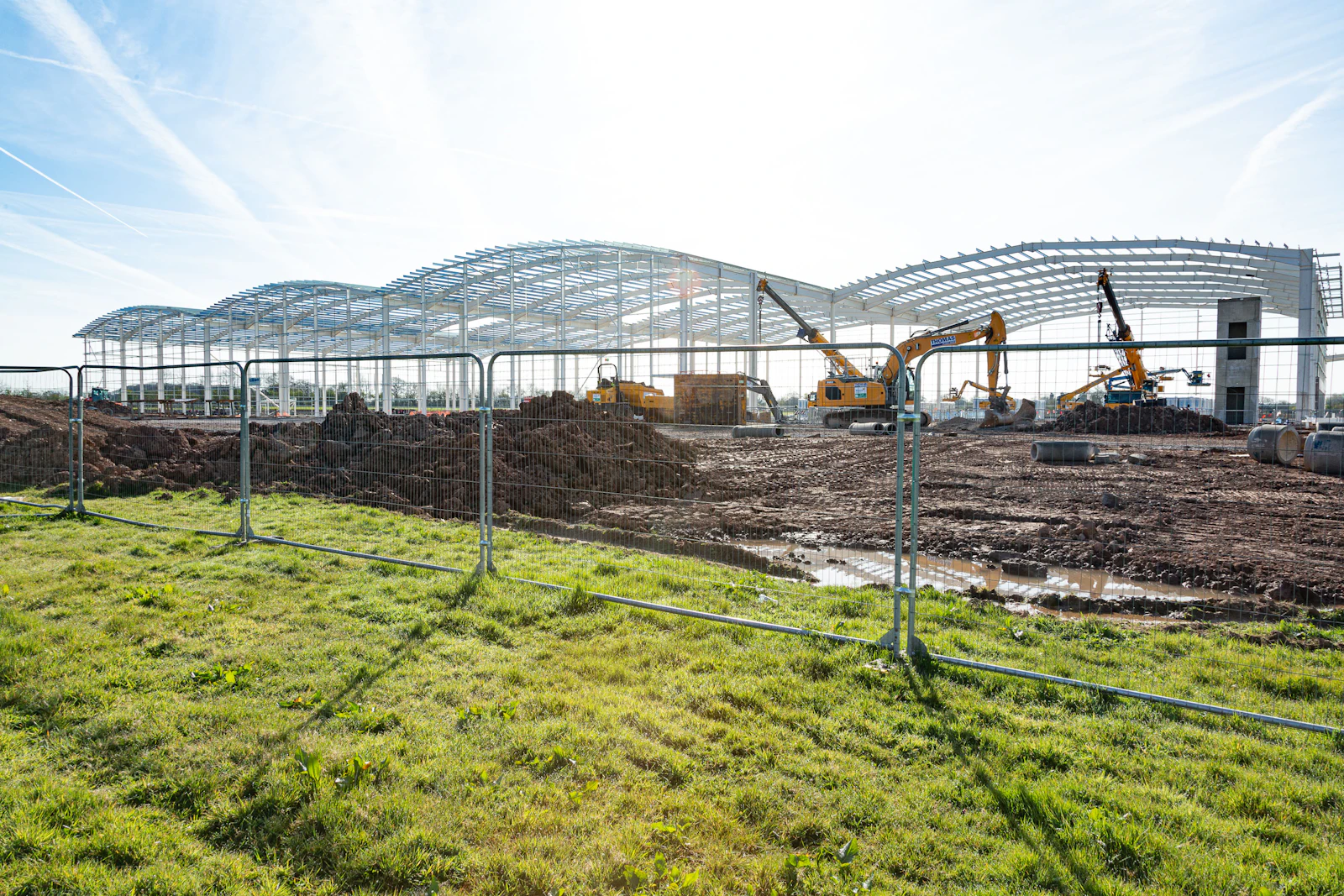
Use the following as a no-table budget worksheet framework for excavator equipment hire costs tied to stormwater retention system scopes. Adjust quantities to your schedule and carry all allowances explicitly so PMs don’t “hide” them in earthwork production.
Use this rental order checklist to prevent common invoice disputes on excavator equipment hire in Jacksonville.
1) Convert the term early instead of paying for “one more day” repeatedly. For stormwater retention systems, the schedule is frequently impacted by rainfall, dewatering, and inspection sequencing. If you are past day 3–4 and you’re still moving spoils, ask for the weekly conversion and lock in the included 40 hours before daily creep erodes your unit-cost.
2) Treat delivery as a managed scope, not a pass-through. If you have multiple Jacksonville sites, coordinate a “milk run” strategy: deliver excavator + attachments together and avoid split shipments. Use published pricing structures as negotiation anchors: a tier bundle (e.g., $250 standard zone) or a formula approach ($120 each way + $3.25/loaded mile).
3) Control meter-hour overage with shift planning. If your weekly/monthly includes 8 hours/day and you’re planning a second shift to catch up, you may be better off taking a larger excavator class for fewer days rather than paying overage at 1/8 daily per hour.
4) Specify the right retention-pond accessories up front. If you know you will handle riprap, precast inlet structures, or pipe sticks, budget the thumb/coupler on day one. Published adders (e.g., $137.75/month thumb anchor on one sheet) show that attachment adders are usually cheaper than mid-rental change costs and schedule disruption.
On Jacksonville stormwater retention system work, dry hire (excavator only) is usually the default for GCs and civil subs with in-house operators. Wet hire (excavator with operator) can be cost-effective when (a) you are short an operator, (b) the scope is short-duration but high-risk (utility daylighting near active services), or (c) the cost of rework is high (pipe grades, outlet structure elevations). As a planning reference only, carry an operator component of $85–$135/hour on top of the machine when wet hire is required, and still clarify whether fuel, mobilization, and standby are billed separately.
For 2026 Jacksonville excavator equipment hire cost control on stormwater retention systems, the practical rule is: the base rental rate is only the starting number. Delivery structure, waiver/surcharges, and meter-hour discipline usually decide whether your retention basin excavation stays within budget.
