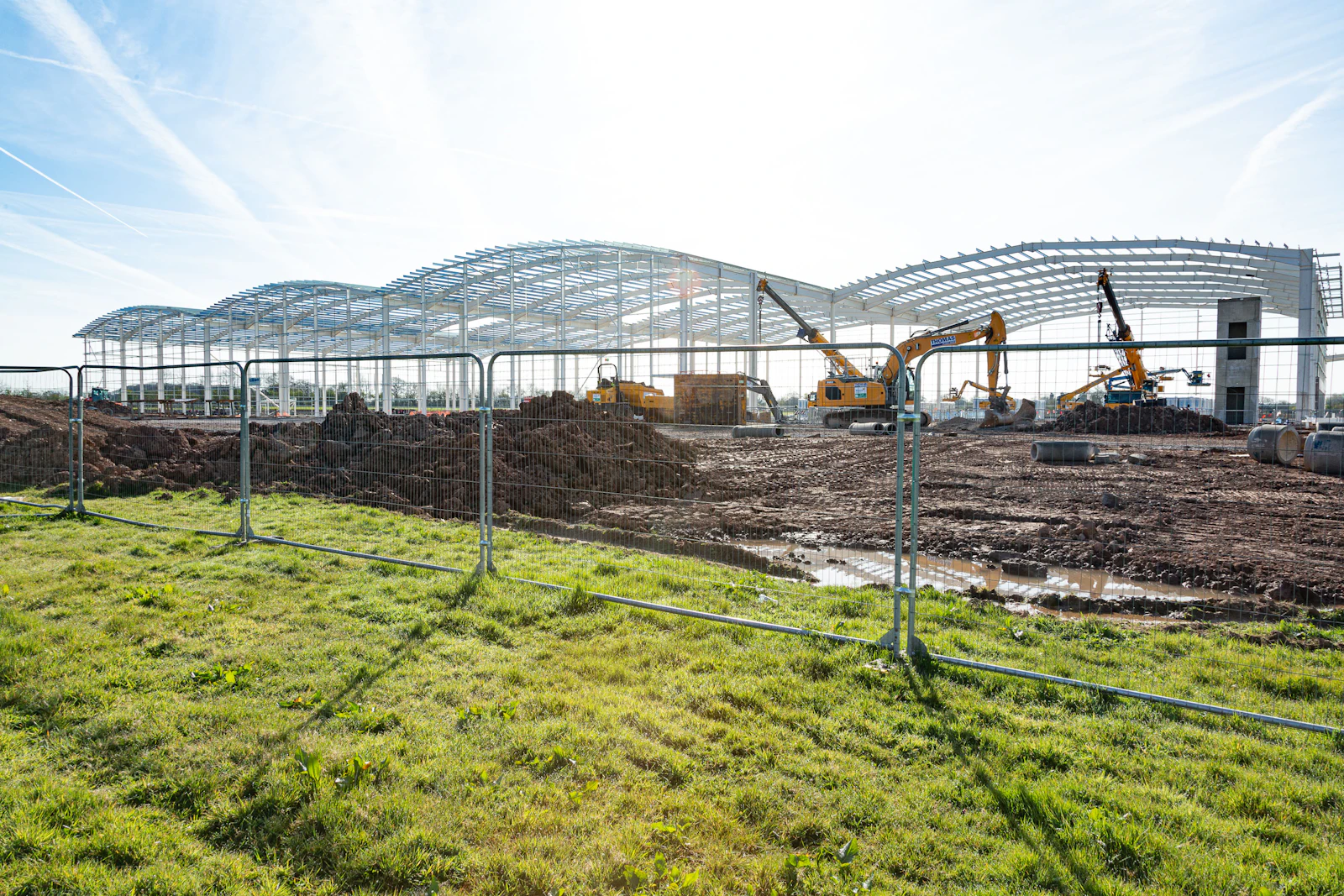
Excavator Rental Rates Los Angeles 2026
For Los Angeles stormwater retention system work in 2026, plan excavator equipment hire costs (equipment-only, no operator) in these budget bands: micro/mini (1–2 ton) $250–$450/day, $900–$1,450/week, $2,100–$3,600 per 4-week; mini (3–5 ton) $325–$650/day, $1,150–$2,250/week, $2,900–$5,900 per 4-week; midi (6–8 ton) $450–$850/day, $1,700–$3,000/week, $4,200–$7,800 per 4-week; full-size (12–16 ton) $650–$1,150/day, $2,400–$4,200/week, $6,200–$11,200 per 4-week; and heavy (20–30 ton) $900–$1,600/day, $3,300–$5,900/week, $8,900–$16,500 per 4-week. These ranges reflect a national rental data baseline plus typical LA logistics/availability pressure and Tier 4 emissions expectations. As reference points for LA-area availability, published mini excavator pricing in Los Angeles shows $197/day to $416/day bands by operating weight, and local rental advertising in the LA/Long Beach/OC market posts 4-week pricing for 8,000 lb and 11,000 lb minis around $3,100–$3,600.
| Vendor |
Daily Rate |
Weekly Rate |
Review Score |
Website |
| United Rentals |
$280 |
$750 |
9 |
Visit |
| Sunbelt Rentals |
$320 |
$880 |
6 |
Visit |
| Herc Rentals |
$425 |
$1 220 |
9 |
Visit |
| High Reach Equipment Services |
$375 |
$1 150 |
10 |
Visit |
In practice, most retention-basin scopes in LA County rent through national accounts (United Rentals, Sunbelt Rentals, Herc Rentals) and regional heavy equipment houses (including Cat dealer rental operations) depending on fleet age, delivery lead time, and attachment availability. Budget accuracy comes from matching machine class to production (not just trench width), then controlling time-based billing (shift hours, weekend exposure, off-rent timing) and back-end charges (transport, waiver/insurance, cleaning, fuel, and wear items).
How LA Stormwater Retention System Scopes Change Excavator Hire Cost
Stormwater retention systems often combine cut/fill for basins, trenching for inlet/outlet structures, over-excavation for media layers, and fine grading around pipe penetrations and structures. That mix drives three equipment-hire cost decisions:
- Size class and tail swing: A 3–5 ton zero-tail/short-tail mini is common for tight setbacks and utility congestion, but a 12–16 ton class can materially reduce cycle time when you are bulk excavating basin volumes. Moving up a size class can add $250–$700/day in base hire, but can remove 2–4 calendar days of rental on a schedule-driven basin excavation (where weekends and delivery cutoffs are costly).
- Attachments that are “not optional” for retention work: Expect at least two buckets (trenching + cleanout/grading). Local published attachment adders in the LA market show small buckets around $25/day ($100/week; $300/4-week) and larger buckets like a 36-inch around $50/day ($200/week; $600/4-week).
- Ground conditions and spoils handling constraints: If you are digging engineered media zones, you may need a clean bucket policy and documented return condition (to avoid cleaning charges). If you are in clays or wet silts, undercarriage cleanup and track-out control become a real cost driver.
Rate Assumptions Rental Coordinators Should Confirm (Shift, Meter Hours, 4-Week)
Excavator equipment hire is rarely “all you can run.” Many contracts define one shift as 8 hours/day, 40 hours/week, and 160 hours per 4-week, with overages billed by a fractional hourly rate. Herc Rentals, for example, publishes a shift-rate concept where over-one-shift use is charged at 1/8 of the daily rate per hour on daily rentals, 1/40 of the weekly rate per hour on weekly rentals, and 1/160 of the 4-week rate per hour on 4-week rentals.
Also confirm how the vendor defines a “month.” Many national rental agreements treat “monthly” as a 28-day (4-week) period and base weekly on a 5-day week; Sunbelt’s public contract language illustrates this common approach.
Planning implication for LA retention work: If your basin excavation is scheduled 10 working days but your site access or inspection sequencing forces a weekend hold, you can accidentally slide from a 2-week plan into a 3-week bill (or into a 4-week minimum on some items) unless you lock down off-rent rules and pickup windows.
2026 Planning Ranges by Excavator Class (Equipment-Only)
Use these ranges as a starting point for excavator equipment hire costs in Los Angeles when budgeting stormwater retention scopes:
- 1–2 ton micro/mini excavator (utility daylighting, tight basins, gate access): $250–$450/day; $900–$1,450/week; $2,100–$3,600 per 4-week. If you can self-haul on a trailer, you can often reduce transport cost exposure (but verify tow ratings, tie-down requirements, and yard hours).
- 3–5 ton mini excavator (most retention trenching and structure work): $325–$650/day; $1,150–$2,250/week; $2,900–$5,900 per 4-week. National data commonly shows $150–$400/day for minis and $750–$1,050/week for a 3-ton baseline, with LA frequently trending higher once delivery windows and attachments are included.
- 6–8 ton midi excavator (production trenching, moderate basin cuts): $450–$850/day; $1,700–$3,000/week; $4,200–$7,800 per 4-week.
- 12–16 ton excavator (bulk excavation, faster loading, longer reach over cut): $650–$1,150/day; $2,400–$4,200/week; $6,200–$11,200 per 4-week.
- 20–30 ton excavator (deep basins, mass excavation, higher production): $900–$1,600/day; $3,300–$5,900/week; $8,900–$16,500 per 4-week. If you are considering long-reach for side slopes or working from mats, add lead time and transport complexity.
Operator (wet hire) note for estimating: If the project structure pushes you toward wet hire (operator + excavator), budget commonly lands in the $140–$220/hour range in Southern California depending on size class, operator source, and shift structure, often with a 4-hour minimum and travel/mob rules. Treat this as a separate procurement path (different insurance, different standby rules) versus equipment-only.
Los Angeles-Specific Cost Drivers That Often Move the Final Invoice
- Delivery windows and traffic: LA-area deliveries often require early-morning windows. If your jobsite only accepts deliveries between 6:00–8:00 AM, plan a time-window surcharge or standby time when the driver is stuck at a gate or in a queue. Carry $125–$195/hour for transport waiting time as a planning allowance.
- Transport pricing structure: For minis delivered on a tag trailer, a common budgeting allowance is $250–$450 each way inside a short radius; for 12–16 ton class, carry $450–$900 each way; for 20–30 ton lowboy moves, carry $650–$1,250 each way depending on distance, permits, and time of day. If mileage applies, carry $6–$9/mile beyond the included radius.
- Tier 4 / CARB expectations: LA fleets commonly prioritize Tier 4 Final machines for compliance and jobsite acceptance. Newer fleet age can carry a rate premium, but may reduce downtime risk and improve fuel efficiency (which matters when you are fueling from a wet-hose vendor or jobsite tank with minimum drops).
- Dust control and clean return condition: Retention basins frequently sit in dust-sensitive corridors (schools, hospitals, traffic corridors). If you require daily track wash or debris control, budget $250–$600 for a track wash/undercarriage clean event and $175–$450 for a final cleaning charge risk if the excavator returns with dried clay, concrete, or slurry on the chassis.
- Heat and idle time: In hot inland pockets of LA County, machines may idle longer for cab cooling and hydraulic temperature management. Idle hours can trigger shift overages on metered contracts even if production is low—build your meter-hour plan around actual shift utilization, not just “days on site.”
Attachment Adders That Commonly Apply to Retention Systems
Stormwater retention work typically requires more than a standard bucket. Plan attachment adders (equipment hire costs) as follows, then validate availability against your delivery date:
- Additional buckets: As a real LA-market reference point, published bucket adders can be as low as $25/day for smaller buckets and $50/day for a larger 36-inch bucket.
- Hydraulic thumb: $85–$180/day; $250–$525/week; $650–$1,350 per 4-week (highly dependent on excavator size and whether it is factory plumbed).
- Hydraulic quick coupler: $60–$140/day; $180–$420/week; $500–$1,100 per 4-week (often worth it if you will swap trenching and grading buckets daily).
- Breaker/hammer (if you hit old concrete, riprap, or boulders): Plan $325–$750/day; $975–$2,000/week; $2,700–$5,200 per 4-week for larger breaker classes on 20-ton-plus carriers.
- Tilting grading bucket (finish work on basin slopes): $90–$220/day; $270–$650/week; $700–$1,700 per 4-week.
Hidden-Fee Breakdown (Where Budgets Commonly Blow Up)
Use this checklist to prevent “surprise” excavator equipment hire costs on LA retention jobs:
- Damage waiver / rental protection plan: Commonly 12%–18% of the base rental (equipment + attachments). Confirm whether it covers theft, vandalism, glass, undercarriage, and hydraulic damage.
- Environmental / energy / admin fees: Carry 3%–5% of rental subtotal as a planning allowance if your vendor applies program fees.
- Fuel and DEF: Equipment typically goes out full and returns full. If the vendor refuels, carry $6.00–$9.00/gal effective charge (fuel plus service). If DEF is billed separately, carry $4.00–$8.00/gal equivalent.
- Meter-hour overages: If a 4-week rate assumes 160 hours, and your superintendent runs two shifts for 10 days, you can stack 30–60 hours of overage quickly. Using the published shift-overage concept, a $1,200/day excavator implies $150/hour (1/8 of daily) beyond included hours on a daily contract.
- Weekend/holiday billing exposure: Some LA yards are open Saturdays; a Friday delivery can still turn into a billed Saturday/Sunday depending on contract language and pickup timing. Treat “weekend free” as not guaranteed—confirm in writing.
- Cleaning and wear items: Carry $175–$450 cleaning; $25–$60 per missing bucket tooth; $90–$175 for damaged cutting edge segments (varies by bucket); and $75–$150 for missing keys/lockout devices if your policy requires machine lock-up.
- Downtime rules: Many national contracts state that billing pauses during vendor-caused downtime, but the documentation burden is on the renter (photos, timestamps, service ticket numbers). Build this into your closeout process rather than hoping for a credit later.
Example: LA Retention Basin Excavation With Real Constraints (10 Working Days)
Scenario: You are excavating and fine grading a neighborhood stormwater retention basin with a constrained access gate, no weekend work permitted by the municipality, and deliveries restricted to 6:00–7:30 AM due to school traffic.
- Machine: 12–16 ton excavator at $850–$1,050/day (or $2,900–$3,900/week) planned for 2 weeks.
- Attachments: Trenching bucket + grading bucket (allow $25/day each) plus hydraulic coupler (allow $100/day) to reduce labor and pin risk during swaps.
- Transport: Two-way mobilization allowance $700–$1,600 total due to time-window and traffic (include potential $150 after-hours/priority dispatch fee if you miss the morning slot).
- Billing risk controls: Schedule off-rent notification by Thursday noon of Week 2 so pickup can occur Friday; missing pickup can roll into a weekend charge depending on contract.
- Return condition: Require end-of-rent photo set (both sides, undercarriage, bucket edges, hour meter) and a signed return ticket to defend against $250–$600 cleaning/undercarriage claims.
Estimator takeaway: The “cheap” daily rate is rarely the lever; the lever is controlling transport windows, attachment mix, and whether the rental slips into an extra week because of inspections, rework, or pickup timing.
How to Quote Excavator Equipment Hire Costs for LA Stormwater Retention (Estimator Method)
When you are building a 2026 retention-system estimate in Los Angeles, treat excavator hire as a package: base machine + attachments + transport + usage rules + return condition. A reliable method is to budget to the likely term (weekly or 4-week), then add explicit allowances for the items that routinely hit final invoices.
Step 1 (Pick the billing unit you intend to pay): If the retention excavation will run 6–9 working days, price it as a 2-week rental, not “10 dailies.” If it will run 12–18 working days with utility conflicts, jump straight to a 4-week plan so you do not get trapped paying three weeks at weekly rates when a 4-week would have capped exposure. National rental guidance commonly indicates that longer terms materially reduce effective daily cost (monthly can be 60%+ cheaper than daily on an effective basis), but only if your off-rent timing and pickup are controlled.
Step 2 (Set a meter-hour plan): For basins, the excavator often becomes a “support machine” for pipe crews, concrete crews, and inspectors. If your foreman expects the machine to be available 10 hours/day, you must price the overage. A published approach used by large vendors is 8 hours/day included, with overage billed as a fraction of the daily/weekly/4-week rate.
Budget Worksheet
Use these line items (no tables) as an estimator-ready worksheet for excavator equipment hire costs in Los Angeles. Adjust the quantity/term to your schedule and add a contingency if the basin is permit/inspection-driven.
- Base excavator hire (select size class): Allow $2,900–$3,900/week for a 12–16 ton excavator (or $6,200–$11,200 per 4-week), depending on fleet age and Tier 4 requirements.
- Attachment allowance: $25/day per additional bucket (or $50/day for larger grading buckets), plus $60–$140/day for a coupler, plus $85–$180/day for a thumb when material handling is expected.
- Transport (round trip): Mini class: $500–$900; 12–16 ton: $900–$1,800; 20–30 ton lowboy: $1,300–$2,500 (include LA traffic/time-window exposure).
- Time-window / standby risk: $125–$195/hour, carry 2–4 hours total if your site has strict gate controls or police-assisted lane closures.
- Damage waiver / protection plan: 12%–18% of rental subtotal (decide whether you take waiver or rely on your inland marine policy; confirm exclusions either way).
- Fees (program/admin/environmental): 3%–5% of subtotal as a planning allowance.
- Cleaning / undercarriage: $175–$450 cleaning allowance; add $250–$600 if you anticipate wet clay or slurry that cakes tracks.
- Fuel/DEF true-up: $6.00–$9.00/gal effective fuel service; add $75–$150 if vendor charges a minimum service call for refuel.
- Wear items allowance: $150–$400 for teeth/edges on longer basins (especially if excavating granular base with fines). Include a photo log to defend what is “normal wear” versus “damage.”
- Overtime/overage allowance: If running 10-hour days on a daily rate, budget 2 hours/day at the contract’s overage method (often aligned to 1/8 of daily per hour for daily rentals).
Rental Order Checklist
This is the practical checklist a rental coordinator should run before releasing a PO for an excavator supporting a stormwater retention system in Los Angeles:
- PO scope: Confirm excavator class (operating weight/ton class), tail swing requirement, track type (rubber vs steel), and any site restrictions (gate width, overhead clearance, working on mats).
- Attachments and spares: List every bucket size needed (trenching + grading at minimum), coupler, thumb, and any specialty tooling. Confirm pins/hoses are included and compatible.
- Billing structure in writing: Daily (8 hours), weekly (40 hours/5 days), and 4-week (160 hours/28 days) rules; overtime/overage method; and whether partial weeks prorate (many do not).
- Delivery and pickup windows: Specify a firm delivery time, driver call-ahead, and site contact. Add a written note about access staging (where the machine will be set, where the truck can turn, and whether escort is required).
- Off-rent rule: Confirm what triggers off-rent (notification time vs physical pickup) and what “equipment accessible” means (no locked gates, no parked cars blocking, no spoils piled around tracks).
- Insurance package: COI naming requirements, limits, and whether waiver is accepted. Confirm theft/vandalism responsibilities and storage expectations (fencing/locks) if the basin is in a public area.
- Condition documentation: Require delivery inspection photos (including bucket edges and undercarriage) and return photos with hour meter. Keep the signed delivery ticket and signed return ticket for closeout.
- Fuel policy: Document “out full / back full” and where refueling is allowed (some LA sites restrict fueling near storm drains without BMPs).
- Dust-control and track-out: Note whether the vendor expects cleaned tracks prior to pickup and whether washdown is permitted on site (stormwater BMP constraint that can force off-site washing and add cost).
Negotiation Levers That Actually Reduce Excavator Hire Cost (Without Cutting Spec)
- Bundle the term correctly: If the schedule is uncertain, ask for a “cap” to 4-week once a threshold is hit (common in large-account structures). The goal is to avoid paying 3 full weeks when you could have priced a 4-week intentionally.
- Lock attachment availability early: A missing coupler or grading bucket causes schedule slips that cost more than the attachment rental itself. In LA, attachment shortages can force substitution that increases daily rate and transport.
- Minimize remobilizations: Two short rentals often cost more than one continuous rental because you pay two deliveries, two pickups, and you double your exposure to time-window/standby charges.
- Standardize return condition: If your team consistently returns machines “inspection-ready,” you reduce cleaning and damage disputes that create non-productive back-office time and credit-chasing.
Closeout Notes for LA Stormwater Retention Jobs
Retention work has more third-party interfaces (municipal inspectors, environmental monitors, traffic control, utility coordinators). That makes rental closeout discipline important. Before you approve the final invoice, reconcile: (1) on-rent date/time and delivery ticket; (2) off-rent notice timestamp; (3) pickup ticket; (4) hour meter reading (to confirm included-hour vs overage); and (5) any back-end charges (waiver %, fees %, cleaning, fuel, wear items). The invoice is usually “correct” per the contract—cost control is mostly won earlier, at ordering and at off-rent.